
Categories
eCommerce Fulfillment

The Complete Guide to Merchandise Fulfillment for eCommerce Brands

Key Takeaways

    Fulfillment costs can be significant but are controllable. They typically run 12 to 20% of total revenue, making them one of the largest and most manageable cost levers in an eCommerce business.
  • Merchandise fulfillment for apparel and branded goods requires specialized handling. Size runs, colorways, polybags, hangtag placement, and kitting requirements go beyond what a generalist 3PL is built to handle.
  • Returns are a revenue opportunity, not just a cost. With online apparel return rates reaching 25% or higher, a fulfillment partner with a fast inspect-grade-restock process gets units back on the shelf and generating revenue instead of sitting in a queue.
  • Technology integrations are non-negotiable. Your 3PL needs certified connections to Shopify, NetSuite, and EDI systems. Manual workarounds create errors and slow down the process.
  • Understand your all-in cost. In addition to standard line items for receiving, storage, pick and pack, kitting, returns processing, and client success management, account for additional items such as peak surcharges, minimum commitments, and account setup fees when evaluating your fulfillment provider.

Fulfillment brings your product to your customer’s doorstep, and if you’re like many other founders, the cost is often a gray area in the process. You know your COGS down to the cent. But can you say the same for your all-in fulfillment cost per order?

According to Capital One’s e-Commerce Fulfillment Statistics, fulfillment costs run between 12 to 20% of total revenue. Your fulfillment cost is one of the largest, but also one of the most controllable costs in your business.

Every leg of the fulfillment process affects these costs, and with this guide, you’ll know every lever you can pull to tighten your fulfillment leg. Companies offering apparel fulfillment services that understand the nuance of pricing in merchandise can provide you with a comprehensive picture of everything entailed throughout the fulfillment process.

What Is Merchandise Fulfillment?

Merchandise fulfillment is an important supporting layer of eCommerce and covers the complete process of turning your merchandise and branded goods from a concept into a concrete deliverable. Your fulfillment supply chain for merchandise includes:

  • Receiving goods
  • Storing goods
  • Picking and packing
  • Generating the label
  • Handing off to a courier
  • Processing any returns that come back

Your brand can win a repeat customer at each step in this process. If you have apparel or branded merchandise, this supply chain is longer and more complex than standard product categories such as electronics or home goods.

How Merchandise Fulfillment Differs From Standard Order Fulfillment

Standard order fulfillment treats all deliveries the same with no real concern over brand image or the unboxing experience. With merchandise fulfillment, especially at the apparel and branded goods level, you treat each SKU as a brand asset.

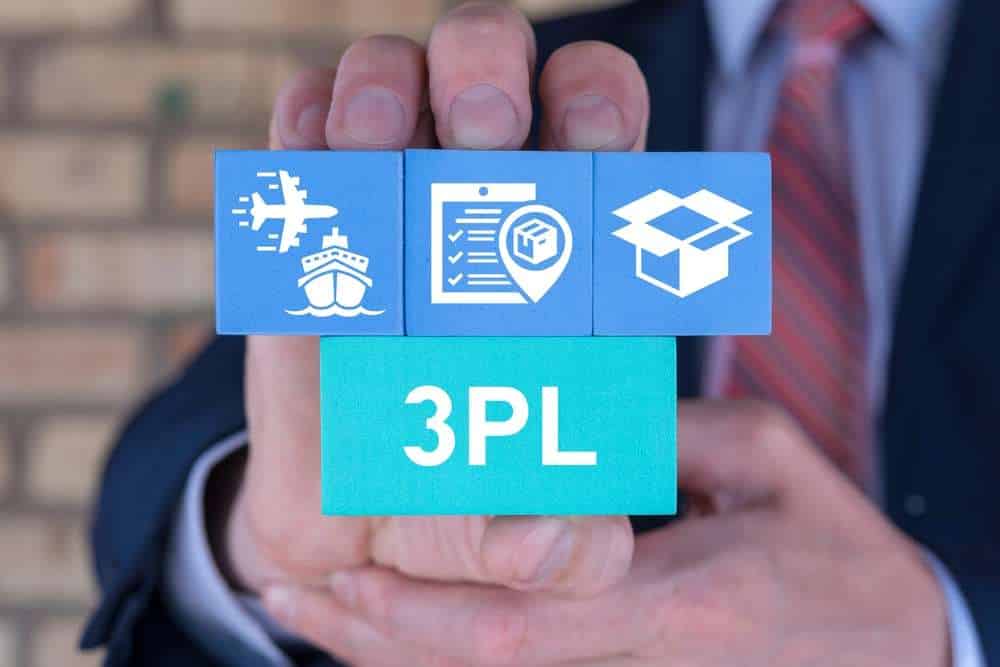
A standard third-party logistics (3PL) provider optimizes for throughput, but when you work with an apparel fulfillment specialist, you receive the benefit of optimization for more:

  • Throughput and unboxing standards
  • Size accuracy
  • Hangtag placement
  • Polybag specs
  • Returns grading

These details are what separate a forgettable delivery from a repeat customer. The difference shows up in your accuracy rates: a generalist 3PL operating at 99% pick accuracy sounds strong, but at 5,000 orders per month, that’s 50 errors. Fifty return labels, fifty customers whose experience fell short of your marketing promise.

Why Apparel and Branded Goods Need Specialized Handling

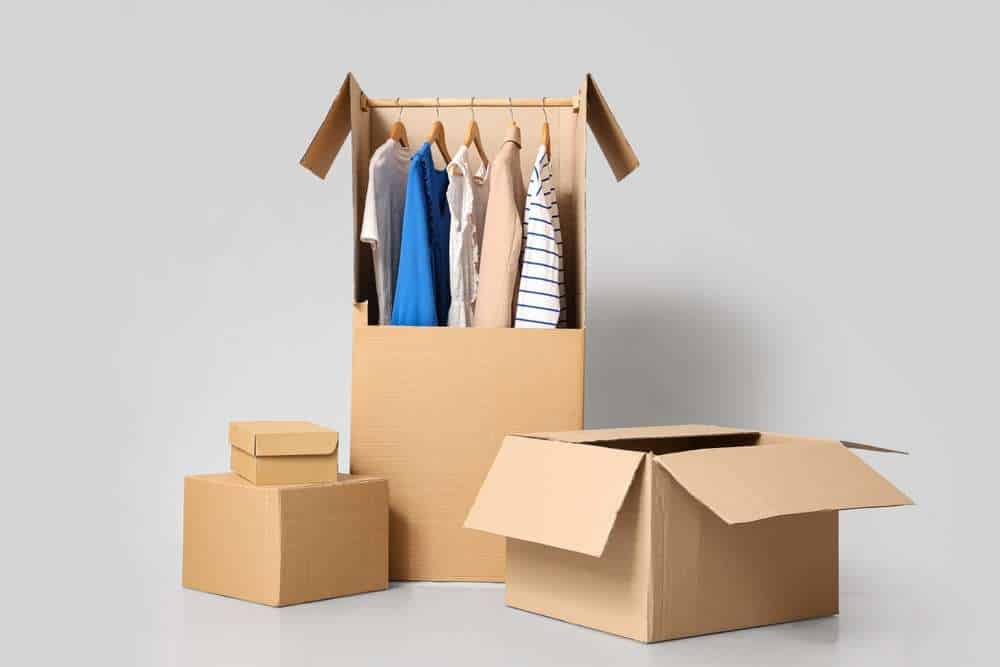
There’s a lot that happens behind the scenes with apparel fulfillment, as it carries complexity that most SKUs don’t. Your 3PL needs to consider size runs, colorways, seasonal variants, and polybags. If you include branded merchandise, the list grows to corporate gifting kits and influencer packages. Each of these has its own kitting requirements and presentation layers that a generalist warehouse isn’t equipped to handle.

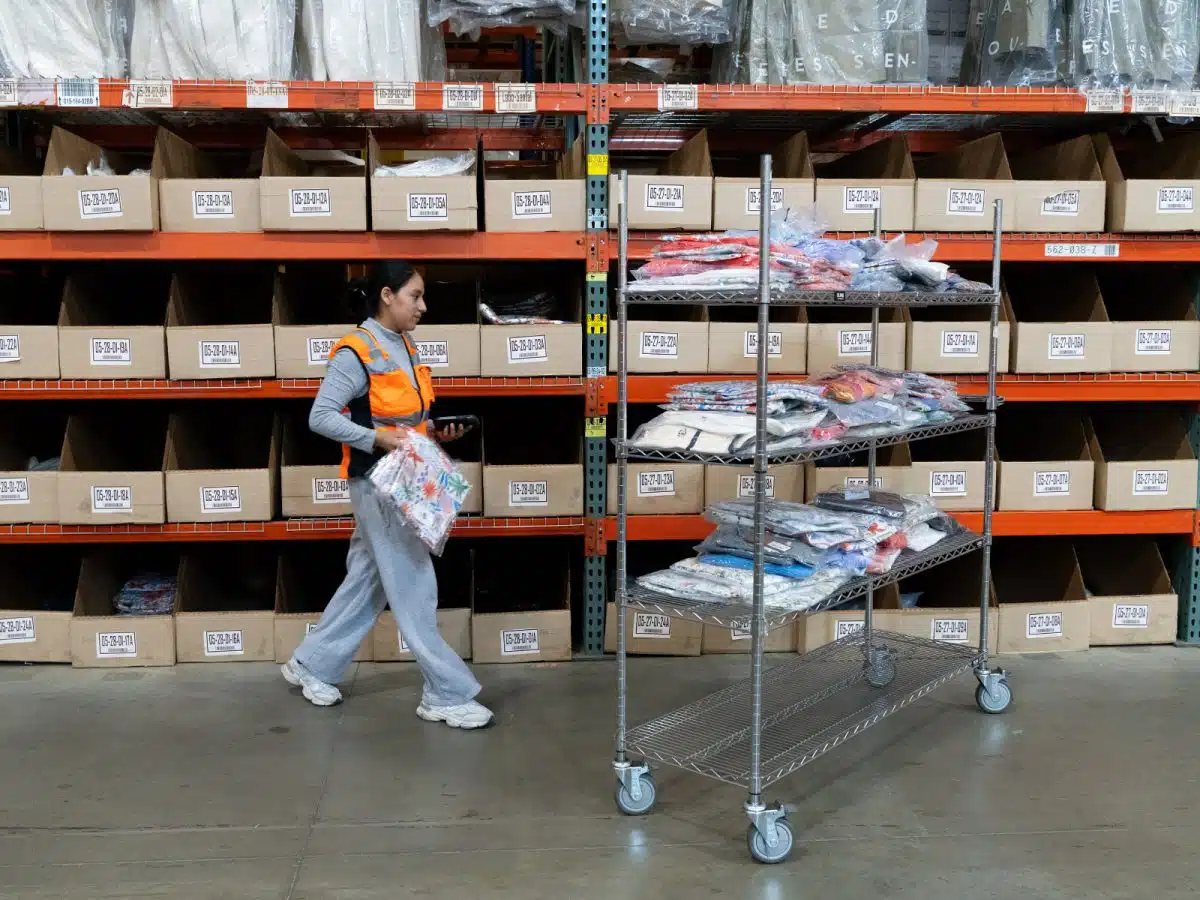
A merchandise fulfillment specialist receives a shipment of 500 hoodies and sorts them immediately by size, colorway, and SKU into dedicated bin locations mapped to pick paths. When peak season arrives, pickers pull the right size on the first reach because the storage system was built around apparel logic from the start.

Types of Merchandise Fulfillment Services

Not every merchandise brand needs the same fulfillment setup. The right service model depends on your product type and your sales channels. It’s all about the unboxing experience and exceeding customers’ expectations.

General Merchandise Clothing Fulfillment

General merchandise clothing fulfillment covers the full DTC and wholesale apparel cycle: receiving your goods, packing them to your brand’s specifications, and getting orders out the door. This end-to-end coverage is the baseline, and the quality gap between providers is wider than most brands expect.

Branded Merchandise Fulfillment

Branded fulfillment raises the stakes beyond pick-and-pack accuracy. Corporate gifting programs and swag box subscriptions all require you to assemble items in a specific configuration, so you can include custom inserts and personalized cards. 3PLs offering this service should ideally become an extension of your brand marketing team at the physical layer.

Precision matters here more than in standard eCommerce, because these packages often go to high-value contacts. A correctly assembled influencer kit reflects well on your brand in a way that no paid placement can replicate. Common branded merchandise fulfillment configurations include:

  • Corporate gifting sets with custom tissue, branded boxes, and personalized cards
  • Influencer kits with curated product selections and presentation-grade packaging
  • Employee welcome packs with onboarding materials and company swag
  • Event merchandise bundles pre-assembled for conference or trade show distribution

Brands investing in this level of detail are building customer loyalty through the experience itself.

Accessory Fulfillment

Goods such as sunglasses, jewelry, belts, and small leather goods require a different packaging approach than apparel or branded kits. You’ll need bin-level small-part organization and accurate bundle assembly. Even if the items are at a lower price point, you still have to meet high presentation expectations. Getting the small details right reinforces relationships with your customers with every delivery.

DTC vs. B2B and Wholesale Merchandise Fulfillment

When you run your storefront through platforms like Shopify, you’ll likely have many individual consumer orders, and even if you have high volumes, the unit value per shipment is often low. Your customers expect fast turnaround, which is the core offering of DTC fulfillment.

B2B and wholesale fulfillment work a little differently. You offer retail replenishment, which means fewer orders in larger shipments. Your products get sent to retail distribution centers or brick-and-mortar locations, which often require electronic data interchange (EDI) compliance and retailer routing guides.

Some 3PLs are better suited to handling B2B and wholesale fulfillment. If your brand sells in both channels, confirm that your fulfillment partner can provide documented experience with the retailer’s compliance requirements before signing a contract.

How Merchandise Fulfillment Works End-to-End

The service type you choose matters, but execution at each stage is what determines whether your customers get the experience your brand promises.

Receiving, Inspection, and Storage

The receiving process for inbound freight sets the stage for successful fulfillment. During receiving, carton counts are verified, SKUs are confirmed, product condition is inspected, and putaway is completed into the warehouse management system. Your merchandise fulfillment operation runs at brand-grade standards. Your 3PL team also logs discrepancies, including damaged units and count shorts, so nothing goes unrecorded.

How accurately your team receives inventory determines how smoothly everything downstream runs, starting with where and how your goods are stored. Your apparel inventory needs to be sorted by style, size, and colorway so pickers can pull the right item on the first reach, even during high-volume periods. Your 3PL’s warehouse should provide climate control, hanging versus folded storage, and poly or non-poly storage as a bare minimum.

Pick, Pack, Kitting, and Quality Control

Not every 3PL runs the same quality control checkpoints, so ask what verification happens before a package leaves the warehouse. In a best-practice operation, a picker pulls the correct items from bin locations, a packer prepares each order to spec: confirming polybag selection, tissue paper, branded inserts, and hangtag verification.

For high-volume SKU bundles, kitting lets you pre-build your most common combinations before orders arrive. That reduces each bundled order to a single scan at fulfillment, which pays off fast when seasonal spikes hit. This way pick, pack, and QC build as one sequence, and kitting stands as a distinct efficiency play.

Deliveries, Returns, and Reverse Logistics

Your 3PL’s carrier relationships are one of the biggest cost advantages of outsourcing fulfillment. Because your provider ships at high volume across multiple carriers, they access negotiated rates that a single brand typically cannot match.

The practical benefit: your lightweight parcels go USPS, larger or time-sensitive orders route through UPS or FedEx, and dense urban markets may use regional carriers for faster, cheaper last-mile delivery. You don’t have to manage those relationships or rate-shop every order. But the delivery is only half the equation.

Your returns are where a well-run merchandise fulfillment operation earns its keep. Online apparel return rates reach 25% or higher, and each return costs between 20% and 65% of the item’s original value. The volume of returns represents a real revenue opportunity when reverse logistics run well: your restocked inventory sells again, and graded returns feed secondary channels. A fast refund experience builds customer loyalty.

A good returns process should follow four steps:

  • Scan in on receipt
  • Inspect and grade each item
  • Re-tag if needed
  • Restock within 48 hours

Your fulfillment team flags unsalable units for your review before they write anything off. A 3PL that can tell you its average time from return receipt to resalable inventory is one that takes reverse logistics seriously. The faster a return gets inspected, graded, and restocked, the sooner that unit is generating revenue again instead of sitting in a processing queue.

Standard Fee Categories for Merchandise Order Fulfillment

Once you understand how the fulfillment process works, the next question is what each stage costs and how those costs add up across your order volume. Merchandise fulfillment is component-based.

  • Receiving: Typically charged per hour, per pallet, or per item.
  • Storage: Typically charged per pallet, per cubic foot, or per bin.
  • Pick and pack: A per-order base fee for a single-item order, with an additional per item for multi-item orders.
  • Kitting: Typically charged per hour or per unit with pricing per unit depending on complexity.
  • Returns processing: Structured as a base fee plus a fee per item.
  • Client success management: A monthly fee that ranges depending on the provider and level of support included.

Know what to look for beyond the standard rate card to be aware of any other costs. Watch for:

  • Long-term storage charges
  • Peak season surcharges
  • Minimum order commitments
  • Non-standard packaging fees
  • Account setup fees

These line items give you a baseline for comparing provider quotes. The next decision is whether a provider’s operational fit justifies the total cost.

How to Choose a Merchandise Fulfillment Partner

The right provider for your brand comes down to more than price. Location and category experience each carry equal weight in the decision.

Evaluating Order Fulfillment Companies: Location, Capacity, and Vertical Fit

Geography affects your cost per delivery and your transit time promises. A fulfillment center in New Jersey places your inventory within one to two days’ ground delivery of the most densely populated region in the United States. If your customers are concentrated in the Northeast and Mid-Atlantic, that footprint translates into faster delivery promises and lower express delivery reliance.

Vertical fit also matters more than location for many brands. A 3PL processing 10 million apparel units already solves the challenges you might encounter when you scale. One that primarily handles electronics or vitamins will need time to build that expertise, so it’s worth verifying category experience during your evaluation.

Order Fulfillment System Requirements: Shopify, NetSuite, ERP, and EDI Integrations

At minimum, your 3PL needs a certified Shopify integration that syncs orders in real time, pushes tracking numbers back automatically, and updates inventory levels without manual intervention. If you’re on NetSuite or another ERP, confirm that a direct integration exists. If you’re selling into wholesale or retail channels, confirm EDI capability.

SLAs, Brand-Care Standards, and Apparel eCommerce Fulfillment Expertise

An SLA protects your brand and ensures that you have clear expectations of your fulfillment relationship. Some of the SLAs you should negotiate include:

  • Same-day or next-day pick and pack cutoff
  • 99.8% or higher order accuracy in writing
  • Returns processing within 48 to 72 hours
  • Photos of packed orders from current apparel clients
  • Packing spec changes mid-season

A 3PL that answers these with concrete examples is one operating at genuine apparel eCommerce fulfillment standards.

Your Quick Decision Framework for Choosing a Merchandise Fulfillment Partner

Before you request proposals from 3PLs, score each candidate against these five variables:

  1. Apparel and merchandise experience: Can they show documented volume and client references from brands in your category?
  2. Location fit: Does their fulfillment center footprint cover your customer base within your delivery promise?
  3. Technology: Does their WMS integrate with your eCommerce platform and ERP without a manual workaround?
  4. Cost transparency: Can they produce a complete landed cost per order that includes storage, pick, pack, returns, and client success management?
  5. Peak capacity: Do they have written capacity commitments for your peak season volume?

A provider that scores well on all five is worth a deeper conversation. Opt for one that answers each question with concrete data and client references in your category.

Get a Custom Merchandise Fulfillment Quote From Boxzooka Today

Every decision in this guide points to your fulfillment strategy. Does your fulfillment operation support the brand you’re building, or is it holding your brand back? The right 3PL handles all the variables, from receiving standards and returns grading to peak season capacity.

Build a fulfillment operation your brand can grow into. Get your custom apparel and merchandise fulfillment quote and see your all-in cost per order from a specialist who has handled it before.

Frequently Asked Questions

What is merchandise fulfillment?

A: Merchandise fulfillment is the end-to-end process of receiving, storing, picking, packing, shipping, and processing returns for physical goods. For apparel and branded merchandise, it includes specialized handling such as size sorting, polybag selection, hangtag verification, and kitting for corporate gifts or influencer packages.

How much does merchandise fulfillment cost?

Merchandise fulfillment costs typically run between 12% and 20% of total eCommerce revenue. Component-level pricing break downs include receiving, storage, pick and pack, kitting, returns processing, and client success management. Additional costs to account for include applicable peak surcharges, long-term storage fees, and minimum order commitments.

What is the difference between merchandise fulfillment and standard order fulfillment?

Standard order fulfillment optimizes for throughput without regard for brand presentation or product-specific handling. Merchandise fulfillment, especially for apparel and branded goods, adds layers including size run accuracy, polybag specifications, hangtag placement, unboxing standards, and returns grading. A generalist 3PL may operate at 99% pick accuracy, but at 5,000 orders per month that equals 50 errors per month. A merchandise fulfillment specialist builds its operation around apparel and branded goods logic from the start.

How do I choose an apparel merchandise fulfillment partner?

A: Evaluate merchandise fulfillment partners against five variables: apparel and merchandise category experience with verifiable client references; fulfillment center location relative to your customer base (a New Jersey facility, for example, reaches over 50% of the U.S. population within two days via ground shipping); technology integrations with your eCommerce platform and ERP; a fully itemized landed cost per order; and written peak-season capacity commitments. Prioritize providers who answer each question with concrete data, not general assurances.

What integrations should a merchandise fulfillment partner support?

At minimum, your 3PL needs a certified Shopify integration that syncs orders in real time, pushes tracking numbers automatically, and updates inventory without manual intervention. If your brand runs on NetSuite or another ERP, confirm a direct native integration exists. For brands selling into wholesale or retail channels, EDI capability is required. Manual workarounds at the integration layer create errors and slow fulfillment.

What are common hidden fees in merchandise fulfillment pricing?

Beyond the standard rate card, watch for long-term storage charges (typically triggered after 90 to 180 days of low inventory movement), peak season surcharges applied during Q4 and major sale events, minimum monthly order commitments, non-standard packaging fees for custom boxes or branded inserts, and one-time account setup fees. Ask any prospective 3PL to produce a complete cost estimate that includes all line items before signing a contract.

What SLAs should I require from a merchandise fulfillment partner?

Key SLAs to negotiate include: same-day or next-day pick and pack cutoff times, 99.8% or higher order accuracy in writing, returns processing within 48 to 72 hours, documented packing specifications with photos from current apparel clients, and the ability to execute packing spec changes mid-season. A 3PL that commits to these standards in writing is one operating at genuine apparel eCommerce fulfillment standards.

When should an eCommerce brand move from in-house fulfillment to a 3PL?

Clear signals that you have outgrown in-house fulfillment include: shipping volume that consistently overwhelms your team, inability to scale labor during peak season without significant cost, return processing backlogs that delay restocking, and growing errors in pick accuracy. After moving to a 3PL, most brands see improvement in per-order cost, delivery speed, and order accuracy, while freeing operations leadership to focus on growth rather than daily shipping logistics.

What is reverse logistics and why does it matter for apparel brands?

Reverse logistics covers the process of receiving, inspecting, grading, and restocking returned merchandise. For apparel brands, online return rates reach 25% or higher, and each return costs between 20% and 65% of the item’s original value. A well-run reverse logistics operation inspects and grades each return on receipt, re-tags units where needed, and restocks resalable inventory within 48 hours. The faster a return moves through this process, the sooner that unit generates revenue again.
Categories
eCommerce Fulfillment

What is eCommerce Fulfillment (and How to Choose the Right Partner)?

A plain-language guide for growth-stage brands in fashion, beauty, and apparel

Key Takeaways

  • eCommerce fulfillment is the full process of storing inventory, picking and packing orders, shipping them to customers, and handling returns after an online sale.
  • Most growing brands hit a point where in-house fulfillment caps their growth. A 3PL provides warehouse space, technology, and a shipping network without the capital cost of building it yourself.
  • Strong fulfillment can improve delivery speed, order accuracy, customer experience, and total cost per order.
  • When comparing eCommerce fulfillment companies, weigh technology and integrations, location and delivery reach, accuracy, peak season scalability, and transparency.
  • Ask to see the provider’s WMS and reporting tools. The technology behind the operation directly affects inventory visibility, order accuracy, and the ability to scale.

Your marketing brings the order in. Fulfillment is the part of the experience your customer actually feels. The box on the doorstep, on time and intact with a great unboxing experience, is what turns a first purchase into a repeat one.

For growth-stage brands in fashion, beauty, and apparel, fulfillment quietly determines whether you can scale. Get it right and you free up cash, shorten delivery windows, and keep customers coming back. Get it wrong and shipping costs, stockouts, and late deliveries chip away at the brand you worked hard to build.

Here is what eCommerce fulfillment actually involves and how to choose a partner that fits the way your business is growing.

What eCommerce Fulfillment Actually Means

eCommerce fulfillment is the entire process of getting an online order from your storefront into your customer’s hands. It starts the moment a shopper clicks “buy” and ends when the product arrives or comes back as a return. Four core steps sit inside that process:

  • Receiving and storage: Inventory arrives at the fulfillment center, gets counted, and is logged into a warehouse management system (WMS) so stock levels stay accurate across every sales channel.
  • Inventory management and order processing: Products are organized by the warehouse management system (WMS) to allow for workers to pick and pack as orders flow.
  • Pick and pack: When an order comes in, the team pulls the right items, packs them to protect the product and reflect your brand, and preps them for carrier handoff.
  • Shipping: Orders go out through the carrier and service level that balance speed and cost, with tracking passed back to the customer.
  • Reverse logistics: Returns are received, inspected, and either restocked or processed, so revenue and inventory data stay clean.

When executed well, all of this is invisible to the customer. They simply see a fast, accurate delivery. Done poorly, every step becomes a place where the experience breaks down: a delayed shipment, the wrong item, a return that takes weeks to process. Fulfillment is where your brand promise is either kept or broken, one order at a time.

Why Fulfillment Decides Whether You Scale or Stall

Think about this. Fast, reliable delivery used to be a perk. After the Amazon effect, it is the baseline shoppers expect from all businesses, including independent brands.

That expectation puts pressure on three numbers that follow you everywhere: how fast you deliver, how accurately you ship, and what each order costs to fulfill. Strong fulfillment moves all three in the right direction at the same time.

It also protects your cash. Holding your own warehouse, hiring seasonal labor, and negotiating carrier rates as a small shipper ties up money and attention you could be spending on product and marketing. When your business reaches the point when outsourcing becomes economically and operationally practical, you can refocus your time and resources on your brand rather than fulfillment.

There is an upside worth naming, too. When fulfillment runs well, it stops being a cost center and starts working as a competitive advantage. Faster delivery and reliable tracking lift customer experience, which drives repeat purchases and better reviews. Accurate inventory keeps your bestsellers in stock during the times that matter most. Handled right, logistics puts brands in the driver’s seat instead of leaving them reacting to problems.

In-House vs. a 3PL: When to Make the Switch

Plenty of brands start by shipping orders from a garage, a back room, or a small warehouse. That works until it does not. The signs are familiar: orders take longer to go out, mistakes creep in, peak season turns into a scramble, and shipping costs climb because you do not have the volume to earn better rates.

A third-party logistics provider (3PL) takes on the warehouse, the technology, the labor, and the carrier relationships for you. Instead of building all of that, you tap into infrastructure that already exists and a team that does this every day. Because a 3PL ships for many brands at once, it earns carrier rates and buys packaging at a scale most individual companies cannot reach on their own. A technology-enabled 3PL connects directly to your store, syncs inventory in real time, and gives you one place to see what is happening across every channel.

The switch usually makes sense when fulfillment starts pulling your attention away from growing the business. If you are spending more time in the warehouse than on the brand, it is time to look at outside help.

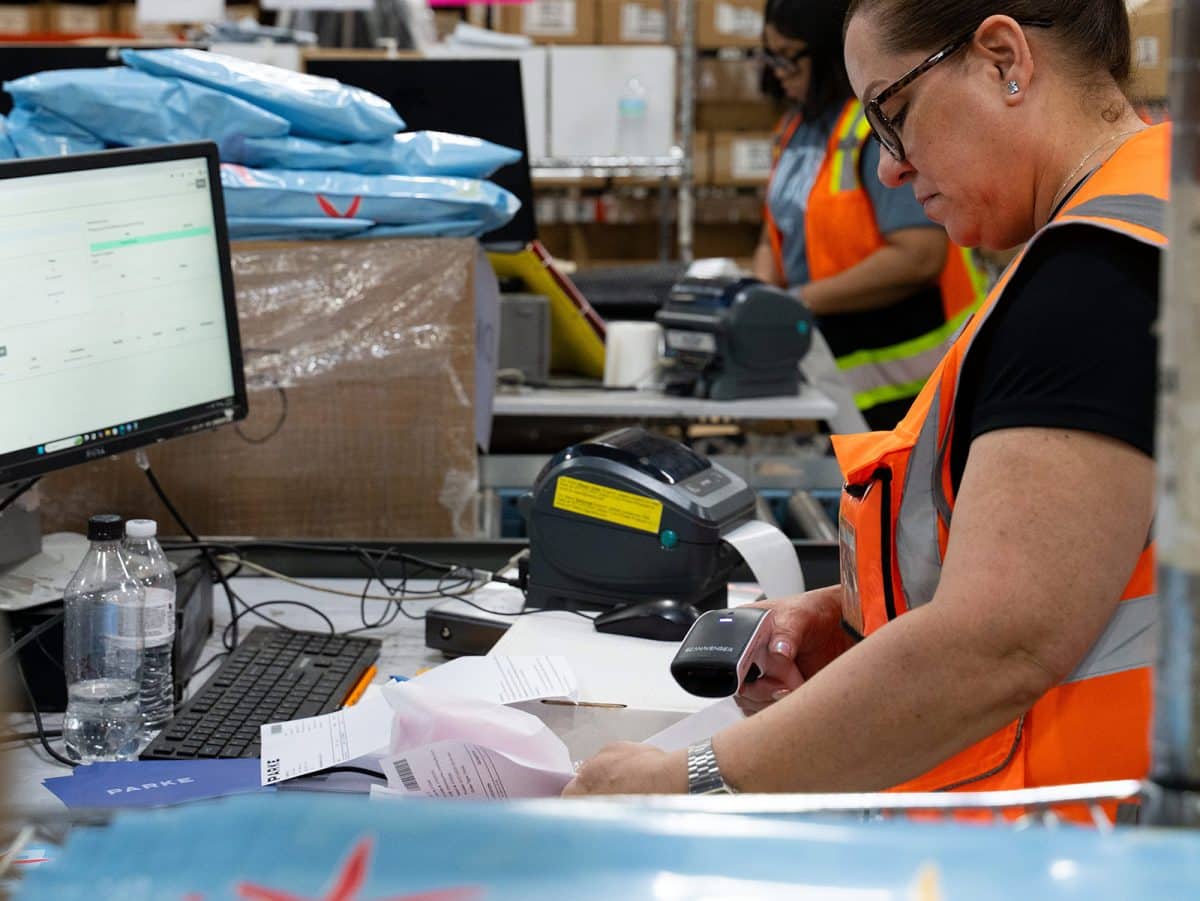
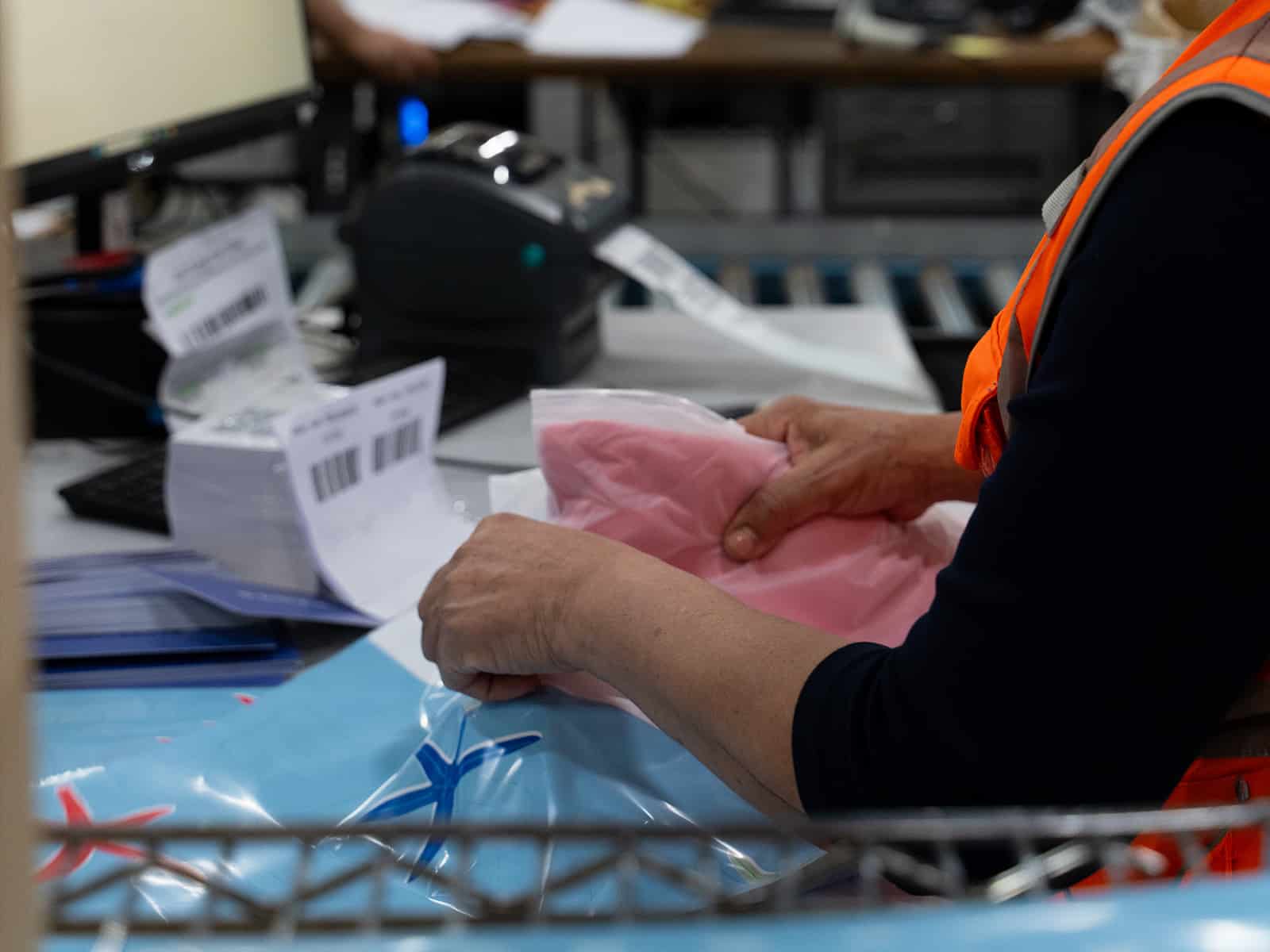
a worker assembles an order at a ship station

What to Look for in an eCommerce Fulfillment Partner

Not every provider fits every brand. Use these criteria to compare eCommerce fulfillment companies and find the one that matches how you operate.

  1. Technology and integrations. Look for a strong WMS, real-time inventory, and seamless integration with your store and sales channels. Omnichannel support matters if you sell across your site, marketplaces, and retail.
  2. Location and delivery reach. Where a provider’s warehouses sit determines how fast and how affordably you reach your customers. Strategic geography near shipping hubs optimizes speed while split distribution across multiple locations shortens delivery windows and lowers shipping cost.
  3. Accuracy and pick and pack quality. Ask about order accuracy rates. A small error rate at scale means a lot of frustrated customers and a lot of avoidable returns.
  4. Scalability for peak season. Your partner should handle your busiest weeks without dropping service. Ask how they staff and plan for peak, and how they manage SKU depth and SKU velocity as your catalog grows.
  5. Cross-border and landed cost. If you sell internationally, look for cross-border shipping experience and clear landed cost visibility, so there are no surprises for you or your customer.
  6. Returns and reverse logistics. A strong reverse-logistics process quickly identifies, inspects, refurbishes when necessary, and returns sellable products to inventory. This protects the customer experience while recovering inventory value and reducing the amount of capital tied up in returned merchandise.
  7. Transparency and communication. You want proactive communication and transparency, not a black box. Clear reporting and a proactive client success team can be as important as the physical warehouse operation.

Questions to Ask Before You Sign

A short conversation up front saves a lot of friction later. Before you commit, ask:

  • Can you demonstrate your WMS, client portal, and reporting capabilities?
  • What does your pricing include, and how do I calculate my fulfillment cost per order?
  • Do you charge peak-season storage, labor, account-management, technology, or project fees?
  • How do you select carriers and service levels for each shipment?
  • How do you integrate with my platform, and how quickly will inventory sync?
  • What are your average order accuracy and on-time shipping rates?
  • How quickly are returns inspected and returned to available inventory?
  • Who will manage our account, and where is that person located?
  • How have you performed against SLAs during your busiest periods?
  • What does onboarding look like, and how long until I am live?

A confident partner answers these plainly. Vague answers are a signal worth paying attention to.

The Boxzooka Approach

Boxzooka is a technology-enabled 3PL built to help growing consumer brands deliver a consistently strong customer experience as they scale. We combine advanced warehouse technology and real-time visibility with high-touch operational and client success support.

Our teams understand the complexity that comes with deep SKU catalogs, branded packaging, personalization, retail distribution, seasonal peaks, and high return volumes. Rather than forcing every client into a standardized operating model, we build solutions around each brand’s products, channels, customers, and growth plans.

Our goal is to be the best fulfillment partner for our clients, not simply the biggest provider in the market. That means staying close to the operation, communicating proactively, and continuously identifying ways to improve service, efficiency, and the customer experience.

Let’s Talk About Your Fulfillment

If your current setup is starting to hold you back, let’s talk. Book a consultation with our team and we will walk through your volume, your goals, and how the right fulfillment partner can help your business scale and thrive.

Frequently Asked Questions

What is eCommerce fulfillment?

eCommerce fulfillment is the full process of getting an online order from your storefront to your customer. It covers receiving and storing inventory, picking and packing orders, shipping them with tracking, and handling any returns.

What are the main steps in the eCommerce fulfillment process?

There are four core steps: receiving and storing inventory in a warehouse, picking and packing each order, shipping it through the right carrier with tracking, and processing returns through reverse logistics.

When should a brand switch from in-house fulfillment to a 3PL?

The switch usually makes sense when fulfillment starts limiting growth: orders ship more slowly, errors increase, peak season becomes a scramble, or shipping costs climb. A 3PL provides the warehouse, technology, labor, and carrier rates so you can focus on the brand.

How do you choose the right eCommerce fulfillment partner?

Compare providers on technology and integrations, warehouse location and delivery reach, order accuracy, peak season scalability, cross-border and landed cost visibility, returns handling, and transparency. The best fit depends on how your brand operates and where your customers are.

How do you calculate fulfillment cost per order?

To calculate fulfillment cost per order, total all fulfillment-related expenses for a defined period, including receiving, storage, pick and pack, packaging, account fees, shipping, and applicable surcharges, and divide that amount by the number of orders shipped during the same period. Because 3PLs structure and label fees differently, all costs should be normalized before comparing providers.

Categories
Fulfillment Technology

The Role of Transportation Management Systems in Supply Chain Optimization from Boxzooka’s CEO

In a newly published article for Supply & Demand Chain Executive, Boxzooka CEO Brendan Heegan outlined the role of 3PL Transportation Management Systems (TMS) in optimizing global and domestic supply chains.

Brendan’s piece, “Why Transportation Management Systems are Essential to Supply Chain Optimization” (April 18, 2025) explains how retailers and e-commerce brands can use TMS technology to reduce shipping costs while also improving delivery speed and the customer experience (CX).


Supply & Demand Chain Executive logo


Supply Chain Disruption: What To Know

Heegan discusses the different supply chain disruptions over the last few years — from pandemic-era slowdowns to the Panama Canal’s low water levels to tensions around 2025’s new tariffs — that made inbound logistics increasingly complicated. For brands importing goods internationally, flexibility and intelligent planning have never been more important.

Heegan writes that contingency planning is the term of today and tomorrow. A well-integrated, intelligent 3PL TMS helps companies shift modes quickly and manage the domestic leg of their journey through trucking and rail more efficiently.

How To Increase Conversion at Checkout

On the domestic front, Heegan writes that e-commerce success hinges on meeting consumers’ rising expectations. Half of online shoppers abandon their carts due to high shipping costs or long delivery times. Successful companies rely on TMS platforms to convert leads into sales and keep customers coming back.

Heegan shared these tips with Supply & Demand Chain Executive:

  • Rate Shopping: A modern TMS compares shipping options across multiple carriers to find the best method and price.
  • Regional Distribution: TMS systems help companies connect fulfillment across geographically diverse warehouses. This helps retailers cut shipping times and costs.
  • Transportation Analytics: TMS platforms, like the one at Boxzooka, give companies instant insights into shipping performance, returns, and cost trends in real-time.
  • Branded Tracking: With a TMS, retailers don’t have to worry about losing possible revenue when they have to send customers to third-party carrier sites. Instead, integrated tracking tools maintain brand visibility with the added potential of additional sales.
  • Returns Management: Heegan points out that 91% of shoppers prefer merchants who offer no-cost returns (free shipping labels and free boxes) for an easy refund process.

TMS platforms don’t only make the returns process easier for shoppers but also cut down on waste. With a TMS, building customer trust through branded touchpoints, optimizing for last-mile delivery, increasing revenue through smarter returns, and more are all on the table.

Boxzooka’s Scalable Fulfillment Strategy

As a leading e-commerce fulfillment and global logistics company, Boxzooka brings our clients scalable solutions to grow their business and their ROI. Boxzooka empowers businesses with fully customizable technology, worldwide shipping capabilities, and exceptional client support.

Our proprietary platform streamlines order management, warehouse operations, and transportation management. Thanks to our comprehensive reports, clients get full, real-time visibility and complete control of their fulfillment and shipping strategies.

From the first click to the final mile (and beyond), Boxzooka helps brands keep their customers and stakeholders happy with our smarter shipping strategies powered by our one-of-a-kind 3PL Transportation Management System. TMS platforms aren’t just logistics tools — they’re strategic assets for overcoming supply chain disruptions.

Boxzooka can find you the best shipping methods, fastest transit time, and most cost-effective fees — get a quote to find out what we can do for you!


Categories
Fulfillment Guides Subscription Box

How to Choose the Best Subscription Box Fulfillment Partner for Your Business

You’re not just in the subscription business. You are in the business of making wishes come true and creating hope and expectation for exciting unboxing experiences. You make magic happen on special occasions and turn dull days into pure joy. Delivering these moments is wonderful, but requires a sharp focus on the core functions of your business: 

  • Maintaining strict delivery timing 
  • Consistent product presentation at scale 

To achieve these metrics, you will need the right subscription box fulfillment partner that gets your packages delivered on time. The global subscription box market was valued at $37.55 billion in 2024, and is projected to grow by an explosive 19.5% CAGR through 2033. eCommerce subscription services need to have the edge over their competitors to feature in this increasingly competitive space. 

This guide will help you choose a subscription order fulfillment service that ticks all the boxes — from speed and accuracy to accountability and impeccable support. 

Why Subscription Fulfillment is Different 

Subscription services differ from other fulfillment services because they’re cyclical, highly brand-sensitive, and timing-critical. Every part of the order experience impacts customer satisfaction, and the best subscription box fulfillment partners understand which value-added services elevate that experience. 

Social Sharing 

Unboxing is a social trend that offers users unique insight into products as it’s removed from its packaging. It’s usually shared in a video format on social media and tends to cover the features and benefits of the product too. 

According to research, unboxing videos are the fourth most influential way to reach customers on social media, and consumers have viewed at least 60 million hours’ worth of unboxing videos on YouTube. If you’re running a subscription service, you’ll want to use a subscription box fulfillment center that will deliver your parcel in video-ready condition. Services that you want to engage in are high-touch packaging and presentation, and kitting, bundling, and customization.

The Unboxing Experience 

Unboxing isn’t a social trend for nothing. Every part of the experience plays a role here, and it starts in the warehouse. You need packaging that reflects your brand, fits the product perfectly, satisfies your customers, and — for eco-conscious companies — incorporates sustainable materials. 

A recent survey showed that more than half of consumers, 52%, report buying a product after watching an unboxing video. The same survey also showed that unboxing videos can drive a 20% conversion rate for e‑commerce brands. 

If you’re trying to create a memorable and fun unboxing experience, know that your customers appreciate that. Unboxing videos are fun and relevant, and consumers use them to feel informed about their purchases. A 2025 report further highlights the importance of unboxing videos for consumers — 75% of viewers in the survey say they watch unboxing videos to evaluate products before purchase. 

However, there’s also a flipside. Subscription box businesses commonly experience median churn rates of approximately 7.5%. This demands continuous refinement and innovation in your service delivery. Because unboxing fosters a strong emotional connection, the delivery of each box plays a vital role in maintaining subscriber engagement. 

What to Look For in a Subscription Box Fulfillment Center 

One of the first steps is to select a subscription box fulfillment center that excels in custom kitting, real-time inventory integration, and on-time, scalable deliveries. You want your 3PL to ensure every unboxing is consistent, timely, and on-brand. With North America commanding 83.6% of the global subscription box revenue in 2024, superior subscription fulfillment is non-negotiable to avoid mistakes as you scale your business. 

Kitting and Custom Packaging Expertise 

When you’re dealing with direct-to-consumer (DTC) packaging, you need to take extra care to make sure that the packaging is suitable and offers your unique branding features and requirements. The fulfillment services need to put it all together for you in a single, ready-to-ship package, which usually includes special inserts, branded materials, and standard presentation. 

Your fulfillment service will pre-assemble the items, for instance, multiple SKUs, samples, and promotional materials into one bundle for delivery. The custom packaging brings the service together and helps to turn the delivery experience into part of the product. 

Timing and Recurring Cycle Support 

Due to the cyclical nature of a subscription service, your outsourced fulfillment service needs to work according to your clock. You have a fixed schedule, which makes it possible to plan the logistics side of things. The fulfillment service would need to coordinate: 

  • Inventory receiving
  • Kitting 
  • Packing 

To ensure this process moves effortlessly, your 3PL would use time scheduling tools, labor planning, and carrier management to handle these recurring cycles efficiently. A true test of your 3PL’s reliability is how they handle seasonal spikes and challenging logistics situations such as peak traffic. 

Inventory Management Visibility

For a subscription box business, inventory management visibility means always knowing exactly what products are in stock so you can build every box on time, avoid last-minute substitutions, and keep subscribers happy. The best subscription box fulfillment partners offer warehouse management services (WMS) that include: 

  • Inventory management: You know exactly what’s going out and what’s coming in, in real time. 
  • Detailed reporting: You should have full access to transactional history, including sales and service level agreements. 
  • Data transparency: Every touch point is recorded, from inventory receipt right through to subscription delivery. 
  • Self-serve control: Access to your orders, including returns and order maintenance.
  • Order location: Keep an eye on the delivery, and enable this feature for your customers too. 

Integration With Your Platform

3PL teams that integrate directly with your sales platform, including Shopify, Amazon, and NetSuite, is like the endgame for subscription service fulfillment. Your orders flow automatically from your store to the warehouse in real time. 

This seamless connection means every new order is instantly visible to the fulfillment team. Picking, packing, and kitting processes flow without a hitch, and manual uploads are eliminated. You can finally say goodbye to errors and welcome increased processing speeds. 

For subscription services, where timing is critical and orders often need to be batched and shipped on a fixed schedule, automation helps ensure boxes go out on time every time. Integration also keeps inventory perfectly in sync across all your sales channels. 

Order syncing prevents overselling popular products and avoids last-minute substitutions. If an item in your next subscription box is running low, you will know immediately and can reorder or adjust before it impacts customers.

Real-time visibility reduces surprises, improves forecasting, and helps plan for seasonal spikes more effectively. For subscribers, the benefits are clear:

  • Faster processing
  • Accurate stock levels
  • Timely order location updates

When customers see that their orders are processed and shipped without delay and that delivery information arrives promptly, it reinforces your reliability. That reliability builds trust and encourages long-term loyalty.

Returns Management

Returns management is about protecting your brand and your subscriber relationships by simplifying the process. A strong fulfillment partner can process returns quickly, keeping you updated through real-time inventory management. Your customers benefit from a high level of care as the 3PL service handles each return with the same care and branding as the original delivery. 

Every touchpoint builds trust and encourages customers to keep subscribing. Plus, a simplified returns process is valuable to consumers. Two statistics make favorable online return policies important: 

  • Around 16.5% of all online sales are returned
  • 80% of customers say they’ll switch brands if the returns policy isn’t favorable

Transparent SLAs

Subscription services should know that transparent service level agreements (SLAs) set clear, measurable expectations. These SLAs are in place for accuracy, delivery timelines, and error resolution, which are critical for keeping recurring deliveries consistent. When you measure and track these metrics openly, it builds accountability with your fulfillment partner. Measuring your delivery fulfillment helps you spot performance issues early and protects the subscriber experience from avoidable mistakes.

Scalable Pricing

Scalable pricing in fulfillment means your costs adjust fairly as your order volumes grow, without hidden fees or penalties for scaling up. This ensures you can handle seasonal spikes or rapid subscriber growth while keeping margins healthy and fulfillment quality consistent.

Red Flags to Watch Out For With Subscription Box Fulfillments

Treating packaging and fulfillment as a cost instead of an investment can undermine customer loyalty, as outdated WMS systems and one-size-fits-all models erode efficiency, transparency, and the quality of the unboxing experience. Knowing how to spot possible red flags on your fulfillment journey early on can save you money and customer churn. 

One-Size-Fits-All Fulfillment Models 

No two subscription services are the same. There are different products, volumes, and customer needs to consider. By using the same fulfillment model across the board, you’re tied to a rigid structure. Without some breathing space, your fulfillment team is open to higher error rates, inconsistent presentation, and limited scalability.

A more flexible approach ensures your kitting, recurring deliveries, and branded packaging needs are met. You’ll also receive the support you need during delivery cycles and demand peaks, and your specialized orders receive the care and attention they need. 

Manual Processes or Outdated Warehouse Management Systems (WMS)

A manual process is simply not feasible in modern fulfillment. There’s simply too much to consider, from inventory control to picking and packing, and when you do this manually, there’s not much room for growth. Opting for a service with a WMS is more feasible, but to remain relevant in the fast-paced subscription industry, it needs to be up-to-date and industry-relevant. The right WMS can:

  • Prevent stockouts or overselling 
  • Reduce mispicks, delays, and inaccurate deliveries 
  • Automate your fulfillment successfully
  • Provide real-time, accurate reporting 

Lack of Cycle Deliveries or Kitting Support 

Cycle deliveries and kitting support form the foundation of your subscription business.

  • Cycle deliveries: A cycle schedule allows your fulfillment service to deliver your orders on time. For instance, if your subscription service runs in bi-monthly cycles, your 3PL partner needs to put the measures in place for the next run. Without a schedule, you would need to plan this all manually, which could lead to delays, missed deliveries, inconsistent arrival times, and customer frustration. 
  • Kitting support: Kitting support brings your orders together seamlessly, pre-assembling them into branded, curated packages. This ensures faster fulfillment, fewer errors, and a consistently elevated unboxing experience for every subscriber. 

Poor Visibility Into Order Status or Fulfillment Costs 

As a subscription service, you want eyes on the fulfillment process every step of the way to avoid common issues, including:

  • Possible delays 
  • Missed delivery windows
  • Inconsistent delivery times 
  • Mispicks and carrier delays
  • Inventory shortages 

All of these eventually affect the customer. The lack of transparency also makes it difficult to keep subscribers informed about their orders. 

Boxzooka’s Subscription Fulfillment Solution

In such a hot market, you want a subscription fulfillment service that combines solutions that work for your delivery needs.

We provide a solution that matches your order rates and kitting customization needs to ensure maximum retention for your brand. We work according to your schedule, whether you decide to ship weekly or bi-monthly. For us, it’s about helping your brand grow and scaling according to your projected forecast. We’re in it to provide a sublime subscription experience for your customer, and in return, you get to lower your churn and return rates. Our value adds are:

  • Tailored kitting, custom packaging solutions, and flexible delivery schedules 
  • Real-time WMS access for clients  
  • Support for direct-to-customer (DTC) brands with recurring fulfillment models 
  • Nationwide reach for fast delivery 

Your Path to Scalable, Reliable Subscription Fulfillment

Finding the right subscription box fulfillment partner is a key step in building loyalty and driving growth. Subscription growth demands precision, visibility, and flexibility. Boxzooka delivers all three — from tailored kitting and branded packaging to real-time inventory management and nationwide 2-day deliveries.

With Boxzooka, we aim to provide you with a fulfillment service that meets customer expectations. In the subscription box business, you face a tightrope of cyclical order cycles, but you still have to accommodate orders that fall outside the norm and require fulfillment flexibility. We partner with you to keep to those strict delivery times and consistent product presentation. 

Ready to scale your subscription business? Contact a client success manager at Boxzooka to discover why leading DTC brands trust us as their best subscription box fulfillment partner. 


Categories
Fulfillment Guides

How Does a 3PL Handle Returns in Philadelphia

Returns are a natural part of online retail for industries like fashion, beauty, and direct-to-consumer (DTC). Even with standout products and strong customer service, up to 30% of online orders will be sent back.

Managing returns internally requires time, focus, and the right systems to scale smoothly. Many brands turn to third-party logistics providers (3PLs) to streamline and strengthen their post-purchase workflows as order volumes grow.

How a 3PL handles returns in Philadelphia matters. Boxzooka’s Pennsylvania-based fulfillment center leverages its proximity to I-95, the Pennsylvania Turnpike, and the Port of Philadelphia to speed up return deliveries, reduce transit times, and improve your customers’ post-purchase experience.

See what makes regional fulfillment a smart strategy for brands delivering in and out of Pennsylvania with Boxzooka.

What Does the 3PL Returns Process Look Like?

Return handling plays a major role in the overall customer experience. Brands with a clear, tech-enabled system benefit from faster turnaround times, cleaner inventory management, and greater customer satisfaction. Consistency in 3PL logistics solutions is key to fixing the returns problem in eCommerce, where high volumes and slow coordination often lead to missed expectations.

This is how a 3PL handles returns in Philadelphia, which has a booming eCommerce sector. It uses a structured process backed by real-time technology and regional fulfillment.

Step 1: The Customer Starts the Return

The return journey begins when a customer initiates the process through your eCommerce platform. A branded return label and clear steps help guide them through the process with minimal confusion.

Step 2: Shipment Is Logged on Arrival

Once the return arrives at the Pennsylvania facility, it’s scanned, verified, and registered in the warehouse system for immediate tracking.

Step 3: Inspection and Sorting

Each item is checked and processed based on brand preferences, whether restocking, repackaging, or recycling.

Step 4: Refund or Exchange Finalized

Approved returns trigger an automated refund or exchange through integrated eCommerce tools.

This approach is the foundation of a reliable 3PL returns process with which Philadelphia brands can scale. By optimizing proven 3PL logistics solutions, retailers improve speed, visibility, and inventory flow. Efficiency is an essential edge as consumer returns in the retail industry continue to rise yearly.

Regional Advantages of Using a 3PL Near Philadelphia

Positioned at the heart of the Northeast Corridor, Philadelphia offers unmatched access to road, rail, and port infrastructure—making it one of the region’s most strategic logistics and distribution hubs. This makes 3PL logistics solutions in the area highly efficient for managing returns and reverse logistics. Brands that ship in and out of the East Coast benefit from shorter transit times, lower return shipping rates, and quicker customer resolution.

Customers who send returns to a Philadelphia fulfillment center reach the warehouse faster. That means items can be inspected and restocked sooner, keeping inventory accurate and refund timelines on track.

As the eCommerce industry evolves, many brands are reimagining their post-purchase strategies to stay competitive. Partnering with a regional 3PL enables more efficient zone-based return deliveries, helping to control costs while elevating the customer experience.

For growing companies, using a 3PL for returns offers the flexibility to meet demand without the delays caused by national rerouting. Localized processing provides a strategic edge for brands serving major metropolitan areas such as Philadelphia, New York, Washington D.C., and Baltimore, ensuring faster resolutions and happier customers.

Key Capabilities to Look For in Returns-Focused 3PLs

When evaluating 3PL logistics solutions providers for returns management, Philadelphia-based brands need partners that can handle the complexities of reverse logistics while maintaining their customers’ precision and efficiency demands. 

Here’s what to look for when using a 3PL for shipping returns:

Smart Return Inspections

A great 3PL returns process in Philadelphia should have a streamlined inspection system that automatically sorts returns based on your brand’s rules. A smart 3PL logistics solution identifies any issues with the return and what should happen next.

Quick Refund Automation

The right 3PL for shipping returns has real-time tracking, which is seamlessly integrated with whatever platform it’s servicing, such as Shopify, Amazon, or NetSuite. This allows for quick refunds as soon as the item has been inspected.

Re-stock, Re-kit or Recycle?

Whether an item needs repackaging, refurbishing, or even reselling, your 3PL warehouse storage service in Philadelphia should be able to handle it. From re-kitting bundles to fixing minor flaws, you should be able to recover as much value as possible. 

Total Team Transparency

In effective 3PL returns management, there’s no room for guesswork. Customer service and operations teams need instant access to a centralized returns dashboard to keep processes moving quickly. With full visibility, teams can immediately see where each return stands, eliminating the need to dig through layers of red tape to get answers.

Bespoke Business Customization

No two businesses are going to have the same needs and so must be treated uniquely. The right 3PL logistics partner offers you policies that are flexible and can adapt to your varying daily needs, no matter what they are.

Does this sound good to you? Contact Boxzooka today for faster fulfillment, reduced costs, and satisfied customers.

Storage and Restocking Options in Pennsylvania 

After returned items have been inspected, they’ll often need to be temporarily stored or reconfigured before they go back into inventory. A well‑run facility in Philadelphia, Pennsylvania, dedicates space to returns to separate them from outbound stock.

Climate controls protect fabrics and beauty products while they await restocking. When an item is ready to sell again, the warehouse management system (WMS) may direct it to another warehouse in your network — ensuring that goods returned in Philadelphia can be redeployed to serve demand elsewhere on the East Coast or beyond. 

For items requiring refurbishing or new packaging, on‑site kitting and quality assurance services save an extra trip. These 3PL warehouse storage services in Pennsylvania ensure that every product maintains its value during the reverse journey.

Why Choose Boxzooka for Reverse Logistics in the Philadelphia Area

With its dense urban population, using a 3PL for shipping returns in the Philadelphia area has various advantages. Pennsylvania’s central location on the Northeast Corridor means unparalleled access to major metropolitan areas. A fulfillment center for East Coast services means same-day or next-day returns processing for items from Philadelphia and surrounding areas, such as New York, Baltimore, and Washington D.C. This results in lower costs and fewer delays. 

However, it’s not just about the proximity of the fulfillment centers — using 3PL warehouse storage services in Philadelphia means returns enter the system earlier in the business day, which allows for faster inspection and processing. This speedy service is significant for industries where time is sensitive and products need to be shipped or returned quickly, such as apparel, shoes, or healthcare. 

Combining advanced WMS with regional operations means enhanced visibility into seasonal trends and return patterns locally. Thanks to real-time tracking, customer service teams can provide accurate updates on the status of returns, while customizable workflows can be optimized to customer expectations and regional shipping patterns.

Turn Returns Into a Competitive Advantage

Efficient returns are crucial for any eCommerce business. Returns are costing retailers more than $103 billion yearly. Brands that don’t learn to optimize their reverse logistics risk major profit losses and unsatisfied customers. 

For brands based and operating in the Philly area, they need to make sure they are living up to the expectations of their customers. This means creating a seamless returns experience with visibility and fast resolutions. 

Partnering with a regional 3PL is one of the most effective ways to overcome these operational challenges. The right provider combines strategic location advantages with advanced technology to deliver the speed, accuracy, and flexibility your business needs.

Contact Boxzooka today to learn more about how our returns management solutions can work for you and your Philadelphia-based business. 

Categories
Fulfillment Guides

What Questions to Ask Before Signing a 3PL in Boston

Choosing a third‑party logistics partner is one of the highest‑leverage decisions a brand can make. The right 3PL fortifies margin, stabilizes inventory, and protects the unboxing experience. Boston traffic congestion decreased by 10% between 2023 and 2024, yet the city still ranks among the most congested in the U.S., so having a smart delivery plan is essential. Asking the right questions helps avoid heavy traffic and navigate port dynamics.

This guide walks you through what questions to ask before signing a 3PL in Boston — and why each answer matters. We’ll unpack each question, share what a strong response sounds like, and highlight how eCommerce brands use them to size up Boston 3PL providers before making a decision.

Why Asking the Right Questions Matters

While agreements set the stage, it’s the data and clearly defined service level agreements (SLAs) that sustain a successful 3PL partnership. The strongest relationships are built on measurable outcomes and a well-structured approach to logistics management.

That’s why it’s important to seek partners who provide clarity on service levels, seamless technology integration, responsive change management, and accountability when challenges arise. A capable 3PL should operate as an extension of your brand, upholding the same standards of quality and customer satisfaction.

As you evaluate providers, watch for these common risk areas:

  • Long-term commitments without exit options — These can lock you into misaligned operations. Ask about governance processes, performance scorecards, and improvement cadences tied to KPIs like perfect order performance.
  • Technology bottlenecks — Outdated or limited integrations can slow your operation. Confirm that their systems connect orders, inventory, and returns to your stack in real time.
  • Limited transparency — Fulfillment works best with open access. Insist on clear dashboards, regular business reviews, and defined remedies when targets aren’t met.

Questions to Ask Before Signing With a 3PL in Boston

Selecting the right fulfillment partner is a high-impact decision, and knowing what questions to ask before signing a 3PL in Boston can prevent costly missteps. While every eCommerce brand has unique operational needs, certain questions apply universally when vetting Boston 3PL providers. 

Each question includes its purpose, an example of a strong answer, and Boston-specific considerations. This checklist can be used when interviewing 3PL companies to evaluate whether a provider has the capabilities to manage your fulfillment effectively and support sustainable growth.

What SLAs do you guarantee for pick, pack, and deliveries?

  • Why it matters: SLAs are the operational foundation for a strong partnership. Tying them to perfect order performance ensures speed doesn’t compromise accuracy.
  • Strong answers: “Orders received by the agreed cutoff are processed for same-day delivery. We maintain 99%+ on-time fulfillment and under 0.5% mis-picks, with full visibility through our proprietary WMS. If we ever miss, you’ll see the root cause, the corrective steps, and—where appropriate—service credits.”
  • Boston angle: With Boston’s congestion among the highest in the country, ensure cutoff times and carrier handoffs are planned to avoid rush-hour bottlenecks.

Do you operate your own facilities or rely on partners in Boston?

  • Why it matters: Direct control over facilities and processes supports consistency and quality.
  • Strong answers: “We operate our own facilities on the East Coast and follow identical processes in every location. Whether we serve you from Boston or another strategic site, the same proprietary WMS, SOPs, and training standards apply.”
  • Boston angle: Given shifting industrial real estate availability in the region, confirm your provider’s site stability and backup capacity plans. Recent reports show Greater Boston industrial vacancy climbed through 2024 and 2025, affecting availability and pricing.

What integrations are available with your 3PL software?

  • Why it matters: Smooth integrations eliminate manual work and reduce errors.
  • Strong answers: “Our proprietary WMS integrates natively with Shopify, NetSuite, and Amazon, offering real-time data sync and webhooks for speed and accuracy. We also support advanced routing rules so orders flow seamlessly between sales channels and fulfillment.”
  • Boston angle: If weather or traffic delays occur, routing rules should automatically reprioritize deliveries to meet SLAs.

How do you handle seasonal spikes in volume?

  • Why it matters: Seasonal spikes require careful planning to keep service levels high during demand surges.
  • Strong answers: “We forecast capacity well in advance, cross-train our teams, and secure carrier space ahead of peak. For brands with kitting or value-added needs, we pre-build before the spike to keep fulfillment smooth and on schedule.”
  • Boston angle: In winter, snow plus holiday volume can create major slowdowns. Ask how your 3PL pre-stages orders to get ahead of carrier cutoffs.

Can I tour your warehouses or fulfillment centers?

  • Why it matters: A facility tour reveals the true level of safety, efficiency, and culture.
  • Strong answers: “Absolutely. We’ll walk you through inbound receiving, putaway, picking, packing, and value-added services, and share our safety and quality metrics so you can see our standards in action.”
  • Boston angle: “Confirm the facility meets Boston-specific loading, safety, and access requirements to avoid operational disruptions. .

What happens if you miss your SLAs?

  • Why it matters: Accountability is a key indicator of partnership quality.
  • Strong answers: “We address any misses quickly with a root-cause review, documented action plan, and follow-up in your next business review. If applicable, we’ll also issue service credits.”
  • Boston angle: Ask if the provider has disruption-specific plans for port congestion, traffic surges, or severe weather events.

What kind of reporting and analytics tools will I get access to?

  • Why it matters: Accessible, accurate reporting helps you manage your business proactively.
  • Strong answers: “You’ll have role-based dashboards, exportable reports, and real-time alerts through our WMS, with visibility into orders, inventory, and delivery performance metrics.”
  • Boston angle: Ask for performance reporting by ZIP code. Regional averages can hide delivery slowdowns in dense areas.

What’s your average error rate, and how is it tracked?

  • Why it matters: Accuracy impacts customer satisfaction and operational costs.
  • Strong answers: “Our accuracy rates are consistently above 99.5%. Every order is double-scanned, and discrepancies trigger both an immediate fix and process review.”
  • Boston angle: In dense neighborhoods, failed deliveries can be costly. A low error rate reduces those risks.

How do you manage returns and reverse logistics?

  • Why it matters: A seamless returns process preserves revenue and brand reputation.
  • Strong answers: “We offer branded return portals, clear disposition rules, and rapid reimbursements. Our process includes SLA-backed inspections and, where needed, product refurbishment to resellable condition.”
  • Boston angle: Plan return drop-offs and pickups with local curb rules in mind to avoid delays or penalties.

Do you support kitting or value-added services for apparel or subscription boxes?

  • Why it matters: High-quality presentation reinforces brand value and drives loyalty.
  • Strong answers: “Yes. We have dedicated kitting areas, quality checks at each stage, and seasonal labor planning to manage demand spikes without compromising quality.”
  • Boston angle: Ask how kits are built ahead of peak to avoid day-of congestion and weather delays.

How do you ensure safety and compliance on the floor?

  • Why it matters: Safety protects both employees and your orders.
  • Strong answers: “We follow OSHA-aligned training, conduct daily equipment checks, and maintain organized, compliant storage and traffic patterns throughout the facility.”
  • Boston angle: In older buildings, verify the provider’s traffic flow plans for tight aisles and multiple floor levels.

How do you plan the line-haul and carrier strategy for Boston?

  • Why it matters: Strategic routing directly impacts delivery times and customer experience.
  • Strong answers: “We optimize carrier mix, use zone-skipping when beneficial, and build routes based on service standards and real-time conditions—managed through our Transportation Management System.”
  • Boston angle: Ask how your provider uses Conley Terminal’s dedicated truck routes and interstate access to improve delivery consistency.

How to Compare Boston 3PL Providers Effectively

Narrow your list to two or three strong candidates and evaluate how they operate under realistic conditions. This might include an on-site tour, a short trial, and speaking with at least two client references in your industry. Look beyond steady-state operations — assess how their technology, processes, and people respond when challenges arise. This approach keeps what questions to ask before signing a 3PL in Boston front and center as you compare.

Ask for References

Request introductions to current clients with similar order volumes or industry focus. Speaking directly to another brand offers valuable, unfiltered insights. Consider questions like, “How has the provider performed during peak season?” Reputable Boston 3PL providers should be comfortable sharing references and case studies.

Visit In Person

A facility tour provides visibility into safety standards, organization, and culture. Compare how each warehouse is laid out, the condition of equipment, and how confidently staff answer your questions. Remember — you’re not only selecting a facility, but also the people who will represent your brand in every delivery.

Evaluate Responsiveness

Track how each 3PL responds during the sales process. Are they prompt, thorough, and attentive to your specific needs, or do they provide generic replies? Responsiveness early on often reflects the client success management you can expect later.

Compare Tech and Integration Depth

Technology can be a major differentiator. One provider might offer a proprietary WMS with real-time analytics and data-rich dashboards, while another may only provide basic reports. Request a demo to see how the system integrates with all your sales channels. If a needed integration isn’t native, confirm what custom solutions are available and at what cost.

Consider Location and Network

In Boston, warehouse location affects delivery speed and delivery costs. A facility inside the city may shorten transit times for local orders, while one just outside may offer faster access to highways and regional hubs. Also consider whether the provider operates a wider network — for example, both East Coast and West Coast facilities — which can support nationwide growth.

Check for Trial Periods or Flexible Terms

If possible, start with a pilot program or short-term trial. In the absence of a formal trial, review the contract for flexibility, such as month-to-month agreements or low minimum volumes. These terms indicate that the provider is confident in earning your business over time. A no-long-term-contract policy, as offered by companies like Boxzooka, reflects a service-first commitment.

Boxzooka’s Approach to Transparent 3PL Partnerships

When you’re comparing Boston 3PL providers, it pays to partner with a team that operates like an extension of your own. Boxzooka was founded with a technology-first mindset and delivers white-glove fulfillment services for eCommerce and B2B brands nationwide. We pair our proprietary Warehouse Management System with hands-on operational expertise, ensuring your deliveries are fast, accurate, and brand-protective.

Why brands choose Boxzooka:

  • Tech that aligns to your stack: Proprietary WMS with seamless integrations to Shopify, NetSuite, and Amazon, transparent dashboards, and data-rich analytics for complete inventory management.
  • Operational discipline: Low error rates, accuracy-first culture, and client success managers who proactively solve challenges—not just report them.
  • White-glove value-added services: Kitting, customization, and premium packaging that protect your unboxing experience at scale.
  • Flexible growth support: From high-growth DTC launches to complex B2B orders, our East Coast facilities in New Jersey and Pennsylvania enable 1–2-day ground deliveries to Boston and much of the Northeast—without over-promising “local warehouse” proximity.

Whether you’re focused on what questions to ask before signing a 3PL in Boston or building a checklist of questions to ask logistics companies, Boxzooka answers them with clear data, proven processes, and a flexible, contract-free approach that protects your brand at every step.

Ready To Choose Your Boston 3PL?

You’ve got the right questions. Now it’s time to put them to work. The providers who can answer them with precision, and back it up in writing, are the ones who will protect your margins. They are the ones who can keep your deliveries on schedule, and adapt when Boston’s congestion, curb rules, or winter weather put pressure on operations.

Don’t leave your fulfillment to chance. Test their SLAs, push for tech demos, and see how they handle a real-world stress test. The partner who passes with confidence is the one worth signing.

If you want expert eyes on your shortlist, Boxzooka’s fulfillment specialists can walk you through the evaluation process and help you identify the provider that will scale with your brand. Contact us today to connect with one of our Boston 3PL experts!


Categories
Fulfillment

How to Outsource Order Fulfillment in Seattle

Fulfillment is one of the most crucial and complex aspects of any eCommerce business model. In 2024, global warehouse management and order fulfillment generated a $1,868.8 million revenue, and is expected to reach $3,415.4 million by 2030. North America remains the largest revenue generator in the world, and Seattle is fast becoming a strategic West Coast fulfillment hub due to its proximity to ports, access to customers, and tech-forward ecosystem. 

The Seattle metropolitan area offers unique advantages for eCommerce fulfillment, including access to Sea-Tac International Airport for expedited air freight and the Port of Seattle, which handles over 3.3 million TEUs (twenty-foot equivalent units) annually. The region’s robust infrastructure supports seamless connections to major West Coast markets, while its thriving tech sector provides access to cutting-edge logistics innovations and skilled workforce talent.

Many eCommerce businesses find they need to outsource order fulfillment as they grow, reducing overheads and expediting deliveries. In a world where 38% of shoppers will abandon their order if their delivery time is longer than a week, choosing a Seattle fulfillment service provider is an essential step to enable brand growth. 

What Does It Mean to Outsource Order Fulfillment?

When you outsource order fulfillment, you hire a third-party logistics provider (3PL) to manage some, or all, of your fulfillment process. Their responsibilities depend on your unique arrangement, but the typical 3PL process includes: 

  • Receiving and storing inventory: Outsourcing order fulfillment in Seattle means your 3PL fulfillment partner will store and manage your inventory from their own strategic hubs. 
  • Picking and packing: They follow a pick list and retrieve items from the warehouse and pack them for delivery to the end user. 
  • Deliveries and returns: Your Seattle 3PL will schedule and oversee deliveries and facilitate the returns process on your behalf. 

Outsourced fulfillment comes with its own challenges, but when you choose the right provider, you gain an authentic partner, invested in your business success. Premier Seattle 3PLs offer innovative technology, like a warehouse management system (WMS) and integrations with popular eCommerce platforms. 

Outsourcing fulfillment means you can avoid the financial impact of storage space, and the logistical responsibilities of running a warehouse. You can scale with a focus on business growth, generate sales, and build brand awareness free from fulfillment-related tasks. In addition, you have 3PL expertise at your fingertips, helping you boost customer satisfaction while reducing delivery costs. 

Outsourced fulfillment vs. In-House Fulfillment

As an eCommerce business, you have two principal choices for order fulfillment — in-house and outsourced. Each approach has benefits and drawbacks, including:


In-House Fulfillment Outsourced Fulfillment
Strategy You manage your order fulfillment internally, including stocking, deliveries and returns.  You outsource a trusted Seattle 3PL to handle various aspects of your fulfillment process. 
Benefits Complete control over fulfillment operations. Freedom to focus on business growth, reduced costs, and fulfillment expertise. 
Drawbacks You need enough space to store inventory and packing materials. You also need the in-house labor and time to pack, ship, and handle returns. Finding a reliable 3PL can be challenging. 

Why Brands Are Choosing Seattle for Outsourced Fulfillment

Amid the uncertainty of recent tariffs, many eCommerce brands are exploring U.S. distribution centers to cut costs and boost customer satisfaction. Seattle is quickly emerging as a premium solution. Access to international import lanes, ports, and proximity to tech-forward eCommerce operations all offer significant distribution advantages for West-Coast and Northwest markets. 

Seattle’s strategic location enables brands to reach West Coast customers within two days, while maintaining competitive deliveries rates through established carrier networks. The city’s position as a gateway to Asian markets also facilitates efficient international expansion, with direct shipping routes to key Pacific Rim countries. Washington State’s business-friendly tax structure, with no state income tax, creates additional cost advantages for brands establishing fulfillment operations in the region.

One of the best things about outsourcing fulfillment is you can look beyond 3PL warehouses in Seattle alone. Instead, you can shift your focus to nationwide reach and faster turnaround times. Seattle also boasts a growing business ecosystem, creating high-demand for frictionless order fulfillment across Direct-to-Consumer (DTC), subscription box fulfillment, and more. 

Key Features to Look for in a Seattle 3PL Partner

Choosing the right 3PL partner is one of your most critical decisions when you outsource order fulfillment in Seattle. Conduct extensive due diligence to ensure your chosen 3PL can handle your business volume and customer expectations. Some of the most important features to look for in your 3PL partner include:

Proprietary Technology and Real-Time Visibility

When you outsource deliveries and fulfillment, it’s natural to want to know where orders are and how soon they will reach your customers. Look for a 3PL partner with a proven WMS that integrates with eCommerce platforms like Amazon, Shopify, and Netsuite. They should provide clear, real-time insight into inventory management, order status, and delivery metrics from a unified, intuitive dashboard.

Flexible Fulfillment for Multiple Sales Channels

Your 3PL should adjust to changing demands in your business model. Look for a partner who can minimize service disruptions whether you’re handling DTC orders, wholesale deliveries, or international shipments. 

Custom Packaging and Brand Protection

Unboxing videos became an overnight sensation in 2005, and their popularity persists today. A massive 52% of consumers are likely to make repeat purchases if their order arrives in premium packaging, meaning you need a partner who understands your brand’s unboxing goals. Looking for a Seattle 3PL that takes steps to safeguard your product quality at every stage of fulfillment. 

Transparent Service-Level Agreements (SLAs)

Outsourced fulfillment partners should always publish clear SLAs outlining:

  • Pick and pack accuracy rates
  • Ship times
  • Returns processing commitments

A clear SLA is a sign of professionalism and ensures you always know what to expect. 

Effective Transportation Management

A 3PL with robust regional carrier relationships can help you secure competitive delivery rates. Outsource Seattle fulfillment to one with a tech-driven transportation management system (TMS) to compare and manage delivery costs. You should have complete inventory visibility and control, including the ability to update orders, manage refunds, and create deliveries labels. 

Returns Management Capabilities

Returns are an inevitable part of eCommerce. With the right Seattle 3PL partner, you can turn them from a pain point into an opportunity. Choose a 3PL that offers efficient returns processing, from inspection to restocking. Your partner must also keep your customers informed throughout the process, boosting satisfaction and increasing repeat purchases. 

Scalable Fulfillment Services

Your chosen 3PL should easily scale warehouse, space and labor to meet changing business demands. Look for a partner that can protect your brand reputation throughout seasonal spikes and rapid growth without disruption. 

Data-Driven Performance Monitoring

Seattle’s competitive eCommerce market means you need to make decisions based on real-time data. Look for a 3PL that offers detailed reporting on fulfillment accuracy, delivery times, order volumes, and seasonal spike performance. 

Access to accurate 3PL metrics allows you to identify trends and continuously improve your operations. Your chosen 3PL should prioritize transparency and provide actionable insights to improve operational efficiency and boost customer satisfaction. 

Experience in Your Product Vertical

Every product vertical has fulfillment challenges. A 3PL with proven experience in your industry understands beauty, apparel, and consumer electronics nuances. They can tailor their processes to meet industry requirements, including specialized packaging, environmental controls, or kitting requirements. 

Look for a Seattle 3PL that knows your product inside out. They should have the vertical-specific expertise to reduce errors and speed up fulfillment processes. 

6 Common Mistakes to Avoid When Outsourcing Fulfillment

You have several choices when you outsource order fulfillment in Seattle, and it’s easy to overlook critical aspects of your decision. Avoid these common mistakes to ensure you make the right choice for your business: 

1. Being Unclear About Your Fulfillment Needs

Outsourced fulfillment is a partnership, and both parties need to understand the nature of the relationship. Map out your logistics process clearly for your 3PL, including the type of products you deliver, how often, and delivery turnaround times. 

Define your expectations from the outset in terms of inventory storage, management, and returns processing. The more your Seattle fulfillment partner knows about your business and requirements, the better they can streamline your operations. 

2. Focusing Solely on Pricing

3P fulfillment service costs vary in Seattle, but basing your choice entirely on the lowest price can add unnecessary risk. Instead, evaluate pricing in conjunction with other factors, like scalability, technology, and returns processing policies. Low prices could mean hidden fees or limited capabilities, damaging your business in the long term. 

3. Overlooking Technology Integrations

Technology is the beating heart of modern Seattle fulfillment, and one of the most important considerations when choosing a 3PL partner. Establish whether your inventory system will integrate with their WMS to avoid data errors and inventory challenges. 

Your chosen partner should have a robust technology infrastructure. In addition, their software should give you real-time visibility into your deliveries, inventory, and performance metrics. 

4. Underestimating the Value of Scalable Fulfillment Solutions

When you outsource order fulfillment in Seattle, think about future business growth. Instead of selecting a 3PL that can only help you in the present, look for one equipped to support your expansion. They should be able to scale with your business, offering the warehouse space, staff, and infrastructure to support your changing operations. 

Your 3PL must also be flexible, streamlining sales through multiple channels and accommodating seasonal demands. 

5. Prioritizing Operations Over Customer Satisfaction

Your customers are the backbone of your business, and 16% of respondents in a recent survey said they would abandon shopping with a retailer if they receive an incorrect delivery, even once. Another 14% said they would not shop with a brand again if they receive a single late delivery. 

With consumer expectations becoming increasingly stringent, one of the most costly mistakes you can make is choosing a Seattle 3PL that neglects their experience. Your 3PL is an extension of your business, and they should care about your customers. Look for a partner that understands your brand values and customer service expectations to ensure complete alignment. 

6. Skimming Through the Paperwork

Outsourcing order fulfillment in Seattle is about partnership instead of shifting the load. Your relationship requires constant, open communication from the moment you receive your contract. Many businesses sign their contracts and SLAs while missing critical terms about cost, responsibilities and performance goals. 

Examine your contract in detail and choose 3PL that encourages questions. Look for hidden fees, and ask how they will measure performance. Set up regular meetings with your account manager so you can adjust your strategy when needed.

Why Boxzooka Is a Smart Partner for Seattle Fulfillment

Boxzooka offers Seattle brands the scale, technology, and expertise to take your operations to the next level. Our nationwide network includes strategic West Coast reach, so you can serve customers quickly across the country. Whether you’re preparing for seasonal spikes, expanding into wholesale, or launching in new markets, our flexible warehouse solutions are built to adapt alongside your growth.

Our proprietary WMS integrates in real time with platforms like Amazon, Shopify, and Netsuite, giving you complete visibility into inventory and delivery performance. The Boxzooka onboarding process is seamless, supported by a dedicated client success manager who streamlines your operations from day one. 

Boxzooka has grown 194% since 2019 — a testament to our ability to assist high-growth brands scale their operations. Our combination of advanced technology, operational flexibility, and high-touch customer services makes us an ideal partner for Seattle-based fulfillment. We’re ready to help your brand deliver faster, protect quality, and create exceptional customer experiences.

Find the Best Way to Outsource Order Fulfillment in Seattle With Boxzooka

Outsourcing fulfillment in Seattle offers clear advantages—cost savings from optimized operations, the ability to scale quickly without adding internal overhead, and faster deliveries that keep customers coming back. With the right 3PL partner, fulfillment isn’t just a logistical necessity—it becomes a true growth engine for your business, freeing you to focus on product development, marketing, and customer relationships instead of warehouse management.

Boxzooka combines nationwide coverage with strong West Coast reach, flexible warehouse solutions, real-time WMS integrations, and high-touch client service to help Seattle-based brands grow with confidence. From handling seasonal spikes to expanding into new markets, we adapt to your business needs without sacrificing speed, accuracy, or quality.

If you’re ready to transform your fulfillment from a bottleneck into a competitive advantage, contact the Boxzooka team today to explore custom Seattle fulfillment support tailored to your brand. Together, we’ll design a solution that delivers faster, protects your brand, and gives you the operational freedom to scale.


Categories
Fulfillment

How to Choose a Fulfillment Partner in Dallas

With a workforce of just over 750,000 people and well-supported logistics and supply chain operations, Dallas provides a thriving eCommerce shopping experience. Seamless fulfillment holds the key to a greater market share for brands, but for 3PL teams, this type of fulfillment relies on more than just getting orders out of the door. 

In a strategic location such as Dallas, brands will need speed and accuracy to protect the customer’s retail experience. Anything less than order perfection can chip away at a brand’s reputation, which in turn affects margin. Knowing how to select a fulfillment partner in Dallas will help a great deal in avoiding this. 

Brands need 3PL partners that have a strong carrier presence and strategic fulfillment locations to make the most of the centrality of the Dallas logistics leg. At Boxzooka, we serve Dallas-based brands through our East and West Coast facilities, ensuring fast, accurate, reliable deliveries nationwide. Our services are powered by our proprietary Warehouse Management System (WMS) for real-time visibility. 

Why Dallas Is a Growing Fulfillment Hub

Dallas is more than just another South Central city, as it serves as a convergence of logistics for goods traveling from coast to coast. This centrality ensures that shoppers enjoy speedy delivery of their products, and it’s not unheard of for packages to reach distribution centers from one side of the country to the other in as little as 48 hours.

Speedy delivery matters to your consumers. Research shows that around 24% of shoppers abandon their carts due to slow delivery times. Studies also show that faster deliveries increase customer satisfaction, which leads to more orders. The caveat is that customer satisfaction only increases when the order is accurate. 

Another reason why a 3PL Dallas fulfillment partner creates a hotbed for eCommerce 3PL is its low warehousing costs, which translates to lower overall logistics costs. For eCommerce brands, lower costs mean better margins, making it a cost-effective route for fulfillment. 

Step-by-Step: How to Evaluate Fulfillment Providers in Dallas 

Choosing a fulfillment partner in Dallas means looking beyond a sales pitch. It’s about digging into capabilities, technology, service, and long-term fit. You’re not just appointing a service provider, you’re selecting a strategic partner. 

Step 1: Match a Partner’s Capabilities to Your Products

Not all fulfillment requests are the same, which is why it’s important to deal with a service that can help you in your field. For instance, if you’re doing fresh flower deliveries, your fulfillment chain needs climate control and fragile handling capabilities. Documents or apparel have different needs entirely. 

Look for Dallas fulfillment companies that show proven processes, such as: 

  • Offering the right supply chain configuration that ensures your product reaches the end destination in the best possible condition.
  • Performing additional services that match your brand, for instance, kitting for subscription boxes or bundling for seasonal product sets. 
  • Showing a process flow that handles fragile or high-value items, such as tech or expensive jewellery. 

Step 2: Evaluate Technology and Integrations

Technology is the backbone of modern fulfillment, and for fast-growing eCommerce brands, the wrong tech can bottleneck growth. Boxzooka’s proprietary Warehouse Management System (WMS) connects seamlessly with Shopify, Amazon, and NetSuite, providing real-time inventory management, order oversight, and analytics dashboards you can access from anywhere.

The advantages of technological integration into your supply chain are immense. Resilient supply chains with high inventory visibility can recover 60% faster from disruptions. When you’re ready to partner with a Dallas-area fulfillment company, look for the following: 

  • Instant order syncing with your online store
  • Inventory management that’s accessible from anywhere
  • Branded inventory management pages to keep your customer experience consistent
  • A full-fledged returns system that’s customer-centric and offers full visibility

Step 3: Assess Warehouse Location and Carrier Access

Warehouse locations make a significant impact on the fulfillment process. Fulfillment nodes in different locations ensure that packages can reach their destinations in a reasonable time. An example of location impact would be zone-optimized deliveries, where strategically placed warehouses cover large containment areas. 

For Dallas-based brands, proximity to major carrier hubs is key to meeting customer expectations. While Dallas offers excellent geographic advantages, the most competitive 3PLs pair local carrier access with strategically located national facilities to guarantee reach and cost efficiency.

Boxzooka’s East and West Coast fulfillment centers are positioned to optimize Dallas’s central advantage — delivering nationwide in as little as two days while keeping costs predictable. When assessing providers, ask:

  • How far are they from ground hubs? 
  • Can they consistently hit two-day delivery windows? 

Step 4: Check the Service Level Agreement (SLA) Transparency 

Your SLA with your Dallas fulfillment partner acts as a safety net. With it, you can define the service and determine the performance expectation of your agreement. A strong SLA should include: 

  • Receiving timeframes: Determine how quickly inventory stocking takes place, for instance, 24 or 48 hours
  • The pick and pack speed: How many orders are done before a certain cut-off time
  • Accuracy rate: Compare this with the rates of competitors 
  • Error resolution times: How long it takes to respond to queries and for total resolution 

Step 5: Consider the Flexibility and Scale 

Growth can be unpredictable, and for eCommerce businesses, scaling quickly can cause a fulfillment bottleneck. You’ll need to work with a fulfillment partner who understands seasonal spikes, influencer-driven surges, or new product launches. To meet fulfillment demand, your 3PL partners need to be able to: 

  • Staff up quickly without delays 
  • Handle sudden inventory increases
  • Keep your SLAs intact, even at peak volume 

Step 6: Discuss Onboarding and Communication 

A smooth onboarding means that your business operations run as per normal. You don’t have to worry about downtime or hiccups, which means you can focus on your business levers instead. One way to ensure smooth operations is by having a client success manager allocated to your team. An intuitive fulfillment platform should also give you access to real-time reporting, which means less time spent chasing numbers or feedback. 

Red Flags to Watch Out For 

While modern fulfillment is reasonably transparent thanks to online reviews and access to interactive client dashboards, there are times when these services can fall through the cracks. Warning signs that you might want to look a little further before signing up for the service include: 

  • Vague pricing: When there are no clear boundaries in terms of pricing, you can end up paying for services you weren’t aware of. 
  • Reliance on manual processes: Outdated systems can cause delays and errors, and hinder your ability to scale. 
  • Absence of a formal SLA: Without clearly defined roles, measurable benchmarks, and transparent reporting, it’s nearly impossible to hold a 3PL accountable. Boxzooka’s SLAs are data-backed, with performance metrics visible in real time through our WMS — so you always know exactly where you stand.
  • Limited or poor client references: If there aren’t many references, it might mean that there aren’t many clients or that the fulfillment service is new. If there are poor client reviews, it might mean there’s a pattern of poor service delivery. 

The Cost of Choosing the Wrong Fulfillment Partner 

Knowing how to choose a fulfillment partner in Dallas is only one part of it. The other is recognizing when one that you’ve partnered with, no longer suits your needs. It’s essential that you adjust your sails and start again, as the cost of a wrong fulfillment partner is great.  

Damaged Customer Trust 

Late or incorrect orders can frustrate customers and undo months of loyalty-building. Once trust is gone, it’s hard to win it back.

Hidden Operational Costs

Every fulfillment mistake comes with extra handling, re-deliveries, and lost productivity. Over time, these costs cut into your margins.

Missed Growth Opportunities

If your 3PL partner can’t handle seasonal spikes or sudden demand surges, you risk backlogs and lost sales during your most profitable moments.

Brand Reputation at Risk

Fulfillment errors don’t just affect the order. Errors shape how customers talk about your brand, and poor experiences can travel faster than good ones. 

Hidden Minimum Order Numbers 

If you’re unaware that you’re meant to have minimum order numbers, it can place you under severe pressure if you don’t reach them, or have the time to make up the deficit. If the orders don’t match your sales cycles, it can push up prices unnecessarily. 

Limited Reporting Capabilities 

If you don’t have access to the performance data, it’s hard to pivot your fulfillment strategy to accommodate changes. For instance, if you’re unaware that dock-to-stock ratio is off, you might not catch it in time to stop the ripple effect into the rest of your deliveries. 

How to Compare the Best Fulfillment Partners in Dallas 

Consumers aren’t trusting on paid search to find solutions as much as before, and neither should businesses. In fact, a recent survey shows that over 40% of consumers trust generative AI search results more than paid search results. Additionally, 85% of these consumers trust generative AI search results more than search ads.

Topping search results is where SLAs, experience, scalability, and location advantage play a role. Go beyond the marketing and ask for case studies or client success stories, meet with the client success manager, and review independent ratings from trusted business software directories. Verify their performance claims with real data. This due diligence will help you identify a Dallas fulfillment partner that not only ranks well in search results but also meets your operational requirements and customer expectations.

Future Trends in Dallas Fulfillment

The future of fulfillment is looking bright and can largely be attributed to customer demand, technological shifts, and a very competitive fulfillment industry. These are the results: 

Robotics Adoption in Fulfillment Centers 

The global warehouse robotics market is projected to grow from USD 6.51 billion in 2025 to USD 17.98 billion by 2032, driven by increasing automation and demand from e-commerce and logistics sectors. This underscores how fulfillment centers, including those in Dallas, will increasingly leverage robotics and automation to drive efficiency and scale.

Consumer Demand for Sustainable Packaging

In a 2025 U.S. packaging survey by McKinsey, 77% of consumers rated recyclable packaging as “extremely” or “very” important, and 62% prioritized packaging made with recycled content. These preferences highlight the growing importance of sustainable packaging in order fulfillment and brand selection.

Why Brands Trust Boxzooka for Fulfillment 

Brands choose Boxzooka for fulfillment because we understand that our service is about more than just getting packages from point A to point B. We combine technology with a hands-on, customer-first approach. Our proprietary warehouse management system (WMS) integrates with Shopify, Amazon, and NetSuite, giving you complete visibility into inventory, orders, and deliveries. You’ll have access to real-time data, which leads to faster, more informed decision-making. 

You have access to a client success manager who understands your business model and who makes it their business to carve out clear performance expectations. We operate with full transparency by sharing performance metrics where you can measure your results accurately, from day one. 

Our national reach, supported by strategically located East and West Coast facilities, ensures two-day delivery coverage to nearly all U.S. destinations. For brands serving customers in Dallas and across Texas, we tailor fulfillment strategies to maximize Dallas’s central advantage while balancing speed with cost efficiency.

Most importantly, we scale with you through your seasonal spikes, new product lines, or expanding your sales channels. At Boxzooka, we adapt without compromising service, all while supporting your brand even through rapid change.

Make Dallas Fulfillment Your Competitive Advantage

Your business isn’t about package delivery, so why should your focus and energy go into logistics management? Your Dallas 3PL partner provides that fulfillment foundation so you can focus on unlocking margin and scaling easily, no matter the pace. Finding the best fulfillment center in Dallas means looking for a team that recognizes your business needs and adapts accordingly.

While there are common fulfillment pitfalls, it helps knowing possible red flags to look out for to avoid these. By doing some research, you can weed out the 3PL providers that don’t match your business needs, and find one that grows with you. Contact our Dallas-area service team to find out how our strategic fulfillment solution can help you with your 3PL needs. 


Categories
Fulfillment Guides

What to Include in a New York 3PL Contract

All companies value the security that comes with a solid contract. For companies that ship products from, to, and around New York, knowing what to include in a New York 3PL contract is crucial. With the right contract, you can have all the steps in place that help you boost your deliveries and customer satisfaction.  

Understanding what to include in your 3PL logistics contract can help you stay ahead of seasonal demands and avoid congestion within your business operations. When you dive into the nuances of 3PL agreements, you ensure you can benefit your business with a contract that covers all your needs.

Why Contracts Matter in New York Fulfillment

The urban complexities of operating an eCommerce business in New York City are unique. Your contract should reflect your operational and business agreements by anticipating potential obstacles and having workable solutions in place. You can get caught off guard by traffic delays from carrier congestion, or inventory problems caused by surges during holidays and limited warehouse space. Well-structured 3PL contracts protect both your brand and the logistics provider, ensuring you have a work environment that addresses all challenges.

Aligning your contract expectations with New York regional realities can help with legal compliance and regulatory adherence. Additionally, incorporating specific data privacy or shipping restrictions helps your business avoid potential legal issues and penalties.

3PL contracts enable your fulfillment processes to contribute to customer satisfaction consistently, which is essential for long-term growth. A good 3PL should be flexible in adjusting a contract so it prioritizes your New York fulfillment needs and facilitates your business’s expansion. 

Core Elements to Include in a 3PL Agreement

Having a comprehensive agreement is fundamental to protecting your brand and 3PL partnership. Consider the following elements to include in a contract:

SLAs and Performance Benchmarks

Define Service Level Agreements (SLAs) clearly in your New York 3PL contract to establish firm performance benchmarks. They specify everything from timelines for picking, packing, and shipping orders. They also set accuracy targets for your operations, and help you align your 3PLs performance with your brands’ goals.

Storage and Inventory Management

Contracts should clearly define what storage and inventory management terms you want to include in your 3PL contract. The contract should specify the following:

  • Specify storage methods like pallets, bins, and shelves
  • Storage limits or special SKU requirements 
  • Additional fees apply to slow-moving or aging inventory, and how those costs are calculated 
  • Frequency of cycle counts or inventory audits to maintain accuracy

The 3PL’s warehouse management system should provide you with real-time visibility into inventory levels and movements. Specify timelines for handling your inbound shipment, updating inventory counts, and the procedures for your inventory removal or transfers. These terms prevent surprises and guarantee that what you include in your New York 3PL contract brings personalized outcomes.

Returns Processing and Reverse Logistics

Handling returns is standard procedure in eCommerce — particularly in the New York fashion and consumer market. Your 3PL contract should outline how returns and reverse logistics will be managed. A good example of a 3PL contract stipulation is an agreement that defines processing timelines with inspections that must be made within a specific time period.

Setting expectations for handling return volume spikes during peak periods, like holidays or promotions is vital. You can ask the 3PL to outline their plan for scaling up return processing during surges. 

The agreement can transparently list several components, including:

  • Fees related to returns, including handling or restocking fees
  • Who provides return labels
  • Who manages return processes
  • How the service provider can ensure quick refunds or exchanges
  • How the return agreement can help protect customer satisfaction and cost efficiency in the demanding market of New York City

Fee Structures and Transparent Billing

Clear fee structures and transparent billing are crucial elements of a 3PL agreement. Be as thorough as you can in this regard, specifying all your potential charges like receiving fees per pallet or carton, monthly storage fees, and fulfillment fees for picking and packing. List packaging material charges for boxes, tape, and returns processing fees. You will also want to detail and confirm your surcharges, such as peak-season rates, long-term storage costs, or special project fees. 

Ensure the agreement includes payment terms, invoicing frequency, late-payment penalties, early-payment discounts, and annual rate increases. For scalable operations, negotiate volume-based pricing tiers. Transparent billing ensures predictable fulfillment costs and a fair partnership.

Technology and Integrations

Leading New York 3PLs separate themselves with robust technology, making it vital to define technology and integrations that improve your supply chain in your contract. You should confirm that your 3PL provider’s warehouse management system (WMS) integrates seamlessly with your sales channels. In the contract, specify integrations, available APIs, and any related setup fees. 

Another essential component your New York 3PL contract should include is a guarantee of your real-time dashboard access for tracking orders, inventory levels, and shipments.

It is wise to clarify how your 3PL manages technical issues and communicates solutions. Outline responsibilities for resolving integration problems and include tech-driven features like automatic low-stock alerts or order management capabilities. Ensuring your contract promises access to current and future technology without hidden costs helps you maintain an efficient, competitive New York fulfillment operation.

Termination and Exit Terms

You need a clear termination and exit clause in your New York 3PL contract to ensure a smooth transition if you ever decide to end the partnership. Ask to specify the initial term and clarify if it renews automatically. You can also define the termination notice period — commonly 30, 60, or 90 days — to balance your flexibility with the 3PL providers’ operational needs.

Your agreement should also outline responsibilities during the transition period, ensuring the 3PL maintains service levels until the contract is complete. The contract can state how you will retrieve your inventory, and include timelines for collection or shipping to another location. 

You also need to clarify any associated handling fees or freight costs and specify who covers special arrangements. For the most comprehensive agreement, your contract should detail final invoicing procedures and account settlement timelines, protecting you from disruptions.

Geographic Focus for NYC Considerations

Your contract should include New York–specific considerations essential to your fulfillment strategy. When discussing terms, clarify how the 3PL optimizes operations for the unique geography and customer density of the NYC metro area.

You can ask to specify delivery zones your provider covers within one to two days via ground shipping. Additionally, outline carrier arrangements and clearly note cut-off times for same-day handoffs, considering early afternoon deadlines due to NYC traffic.

It is also vital to include details about regional surcharges, additional fees from carriers, or required delivery signatures in particular neighborhoods, and specify billing procedures for these charges. You can specifically discuss the 3PLs strategy for faster deliveries in the New York — area and ways they reduce shipping times. Tailoring your agreement this way ensures it aligns specifically with the New York logistical landscape rather than offering generic terms.

Questions to Ask Before Signing

Before you sign any agreement, it’s worth having a candid conversation with your prospective 3PL. Here are some key questions to ask that can flush out the details and ensure the contract covers all bases:

Do you outsource any part of your process?

If a 3PL subcontracts deliveries or runs a network of partner warehouses, you need to know. Make sure the contract addresses performance and quality standards for any outsourced components so there are no gaps in service.

Can you scale up for peak seasons or sudden volume surges?

New York eCommerce volumes can spike dramatically. Ask how your 3PL plan for capacity increases, including extra staffing, extended hours, and overflow space. This helps you ensure your contract includes provisions that will meet your New York fulfillment needs — even at peak.

Will I have a dedicated account manager and a consistent point of contact?

Communication is key in a bustling market centered on NYC fulfillments. It can make all the difference knowing you have an assigned account manager who understands your business. When possible, your contract should include a dedicated representative overseeing your account’s daily operations.

Do you offer reports or live dashboards?

You want 24/7 visibility into your operations in a city that constantly operates. You can discuss online dashboards and frequent reports that keep you in the loop. You can also confirm how you can monitor performance and stock levels without waiting for manual updates.

Ready to Find Your New York 3PL Service Provider?

Crafting a detailed 3PL agreement is critical for your NYC-based ecommerce brand. Clearly defined SLAs, transparent pricing, technology integration, and New York–specific terms ensure your logistics partner meets your operational needs, even amid heavy city traffic or seasonal surges. 

Take the next step towards New York 3PL fulfillment and contact Boxzooka for a quote or consultation. We are happy to help you ensure your 3PL contract is as strategic and transparent.

Categories
Apparel Fulfillment

7 Tips for Packaging Apparel for Shipping

Consumers continue to move from in-store to online fashion shopping. By 2030, the global apparel market is estimated to reach $2.26 trillion, and 51% of families are shopping early to avoid rising prices due to tariffs. A clear trend exists in the need for more efficient apparel shipping.

An effective fulfillment plan is essential for retailers to navigate this market successfully. Thoughtful strategy can help you meet your customers’ demands, even when those expectations include same-day delivery. A strong strategy will result in fewer returns, better branding, and more loyalty. These seven tips for packaging apparel for shipping can help boost your fulfillment and grow your brand.

1. Choose the Right Packaging Materials for Fashion SKUs

Choosing the right packaging material is an excellent way to enhance your customers’ retail experience. Consider the following for selecting the best packaging materials:

  • Prioritizing brand identity: Packaging has a significant impact on the consumer’s impression of your brand. By using the right colors, logos, and designs, you can attract your ideal customer by addressing consumer preferences and market trends.
  • Choosing sustainable materials: Sustainable materials are a priority for consumers who are mindful of the environment. An increasingly greater number of consumers are willing to pay more for sustainable packaging. 
  • Protecting the product: While being lightweight and easy-to-ship are major requirements, it shouldn’t come at the expense of protecting the product. Choose materials that are durable and weather-resistant. 
  • Choosing the tight-size packaging: Excessive packaging can impact your operations and your consumers. From a business perspective, it’s more costly. For consumers, it’s challenging to dispose of. 
  • Enhance the unboxing experience: The unboxing experience helps you connect with your customer. It’s their first tangible experience with your brand, so it is best to make it memorable. 

2. Protect Delicate Fabrics

Knowing how to ship delicate fabrics is vital in fashion fulfillment. It also addresses some of the pain points that both you and your customers may experience. 

  • Damage during transit: Fragile fabrics are prone to snag, tear, or crease. To ensure they reach their destination in the best condition, fulfillment service providers recommend using padded mailers, tissue, and rigid outer boxes.
  • Moisture and humidity exposure: Moisture-prone areas or longer shipping distances may result in high humidity, which could lead to mold, stains, or odor. Some mailers are excellent for protection from handling, including inner moisture protection is advisable. This simple addition can save you time, effort, and refund costs.
  • Inconsistent brand presentation: Perception is key in branding, especially if you are establishing a boutique or high-end brand. Delicates often fall into these categories, and if the packaging is wrong, damaged, or the cause of a wrinkled garment, the entire brand image can be affected.

3PL fulfillment service providers like Boxzooka offer their customers packaging solutions that protect delicate garments. These solutions may include: 

  • Using void fill and a biodegradable bubble wrap for padding 
  • Wrapping the inner contents with cellulose for visibility and protection 
  • Making custom packaging adjustments based on stock keeping unit (SKU) sensitivity — for instance, shipping lace or silk

3. Fold and Present Like It’s On a Shelf

Unboxing is a social media trend often found on YouTube, TikTok, and Instagram. One of the first things viewers notice is the presentation of the packaged goods. One survey showed that 40% of consumers would share products online because of how it was packaged.

Reasons why you should fold apparel neatly when shipping it include: 

  • You reduce the chances of the product creasing excessively 
  • Your customer has a positive retail experience  
  • It offers an efficient use of the packing space 
  • It presents your brand as professional 
  • Neatly folding the item might prevent returns, especially for items such as wedding dresses or expensive suits that require specialized care to remove creases 

Some tips for packaging apparel for shipping this way are: 

  • Fold neatly and consider the natural crease lines for the garment 
  • Try to reduce tag visibility 
  • Use presentation inserts to enhance the appearance of the packaged goods 

4. Label Accurately

Accurate shipping labels help ensure the safety of your packages and make deliveries quicker and more efficient. The accuracy of your shipping labels will determine whether your apparel fulfillment service can deliver on the promise you made to your customer.  

Some of the reasons why you should improve your label accuracy include: 

    • The correct delivery: Your packages end up where they should, which reduces delivery returns.
    • Faster delivery times: Correct labels simplify the sorting and routing process, which reduces the need to intervene or reprocess manually. 
  • Cost efficiency: a smooth, on-time delivery means you don’t have to worry about re-shipping fees, return shipping, or refund processing. The correct label reduces the time customer service has to spend resolving label-related issues.
  • Reduced risk of lost packages: When packages get lost, both the business and the consumer lose, especially when you’re on a tight timeline, like delivering back-to-school apparel. A precise label ensures traceability throughout the entire supply chain process, especially when it includes additional features such as barcodes, packing slips, SKUs, or smart trackers. 
  • Legal and customs compliance: If your shipments are going across the border, your shipment labels need to be in the right format and include customs details. If not, customs on either side can fine you, or hold or confiscate the goods.
  • Inventory and fulfillment accuracy: A good shipping label helps your business through the most intensive and expensive part of the fulfillment process, also known as the supply chain last mile. The last mile involves getting the goods from the warehouse to the consumer and involves several logistics hurdles to jump through. Your shipping label acts as a wayfinder to get your package to the right destination.

5. Plan for Returns

Returns are a natural order of business, and even the trendiest brands have a consumer-centered returns policy. Having a good return policy is essential, as it deeply impacts consumer decision-making. Naturally, tips for packaging apparel for shipping should include an easy way to return those goods, for instance, include resealable packaging and clear return instructions. 

A frictionless process boosts customer satisfaction and reduces the load on your customer service team. An easy-to-execute returns process allows consumers to take charge without feeling frustrated. A clear policy gives your service team the autonomy they need to make decisions about the returns. 

6. Consider Climate and Transit

Not all your packages are going to handle the shipping process the same way. Two of the reasons products need tailored packaging solutions are climate and transit. For instance, one of your products could be heat sensitive and travel a short distance in an arid, hot region. Another could be delicate and have a long and challenging haul to its destination. 

Consider all the elements that might affect your packaging, and adjust to accommodate these. For instance, add moisture barriers or protective sleeves. 

Transit considerations are not only weather-related. You also need to factor in whether there are several hand-off points in the process. Solutions for these instances can include durable packaging and tamper-evident seals.

7. Work With a Fashion 3PL

Consumers are turning to e-commerce businesses to fulfil their fashion needs, and as such, the apparel logistics market size is expected to grow at a CAGR of 6.5% from 2024 to 2030. Efficient deliveries are a priority, and that’s where a specialized fashion 3PL service steps in. It offers expertise and infrastructure tailored to the unique needs of clothing and accessories. 

More than just warehousing and shipping, a fashion 3PL like Boxzooka brings precision, flexibility, and brand protection to every step of the fulfillment process. Here’s how a fashion 3PL delivers added value.

Inventory Accuracy Built for Fashion

Fashion SKUs move fast, change frequently, and require meticulous organization. An apparel fulfillment partner like Boxzooka uses item-level barcode scanning, multi-SKU bundling, and real-time inventory tracking to ensure 99.9% fulfilment accuracy.

Packing That Protects the Brand

In fashion, packaging is part of the product experience. A top-tier 3PL service offers on-brand, flexible packing options: from eco-friendly polybags to branded tissue and custom kitting. A good 3PL will also prioritize solutions like climate-controlled packaging and the ability to split or combine orders with minimal touchpoints.

Compliance With Retailer Requirements

Big-box retailers and marketplaces each have strict compliance rules: carton labeling, ASN timing, EDI integration, and more. If you’re working with a fashion brand and you don’t meet these requirements, you risk chargebacks and penalties.

Boxzooka’s apparel fulfillment services include pre-configured routing guides for major retailers, EDI mapping, and automated compliance checks. That means your products land on shelves, or at customers’ doorsteps, without friction.

Take the Next Step in Smarter Apparel Shipping

Smarter apparel shipping that delights your customers and increases the likelihood of return business starts with smart tips for packaging apparel for shipping. Proper packaging does more than protect your products; it safeguards your brand, enhances the unboxing experience, and reduces costly returns. 

When you work with a fashion-focused 3PL like Boxzooka, you gain access to precise inventory control, retailer-ready compliance, and flexible packing solutions designed specifically for the apparel industry.

Now is the perfect time to review your current fulfillment and packaging setup. Is it scalable? Is it brand-consistent? Is it protecting your margins as well as your merchandise? Explore our apparel fulfillment services and see how Boxzooka can elevate your logistics game.