
Key Takeaways
- Kitting bundles individual products into one ready-to-ship unit. Custom packaging shapes how that unit arrives. Together they turn fulfillment into a brand and retention lever.
- Outsourcing kitting and fulfillment to a 3PL turns in-house assembly work into a scalable operation, helps you absorb peak-season volume without adding staff, and reduces order errors.
- Packaging drives buying behavior. A 2018 Ipsos survey found 72% of U.S. consumers say packaging design influences their purchasing decisions.
- Boxzooka operates kitting across all of our fulfillment centers in New Jersey, Pennsylvania, and Nevada, on a proprietary WMS and TMS, for both DTC and B2B programs.
Kitting and Custom Packaging Are Quietly Becoming Growth Levers
For most growing eCommerce brands, fulfillment starts as a back-office function. Orders come in, products go out, and as long as nothing breaks, nobody thinks much about it. Then volume climbs, SKUs multiply, and the work of assembling, packing, and shipping starts to eat into margin and the time that should go toward growing the business.
That is usually the moment kitting and custom packaging move from afterthought to strategy. Done well, they do two things at once. They take repetitive assembly work off your plate, and they turn the package on the doorstep into a brand moment that earns repeat purchases.
The numbers back this up. A 2018 Ipsos survey found that 72% of U.S. consumers say packaging design influences their purchasing decisions. Packaging is no longer just protection. It is part of how buyers judge quality before they ever use the product.
This guide breaks down what kitting and custom packaging actually involve, where they fit in an eCommerce operation, and how to evaluate a 3PL partner that can handle both.
What Kitting Actually Means in eCommerce Fulfillment
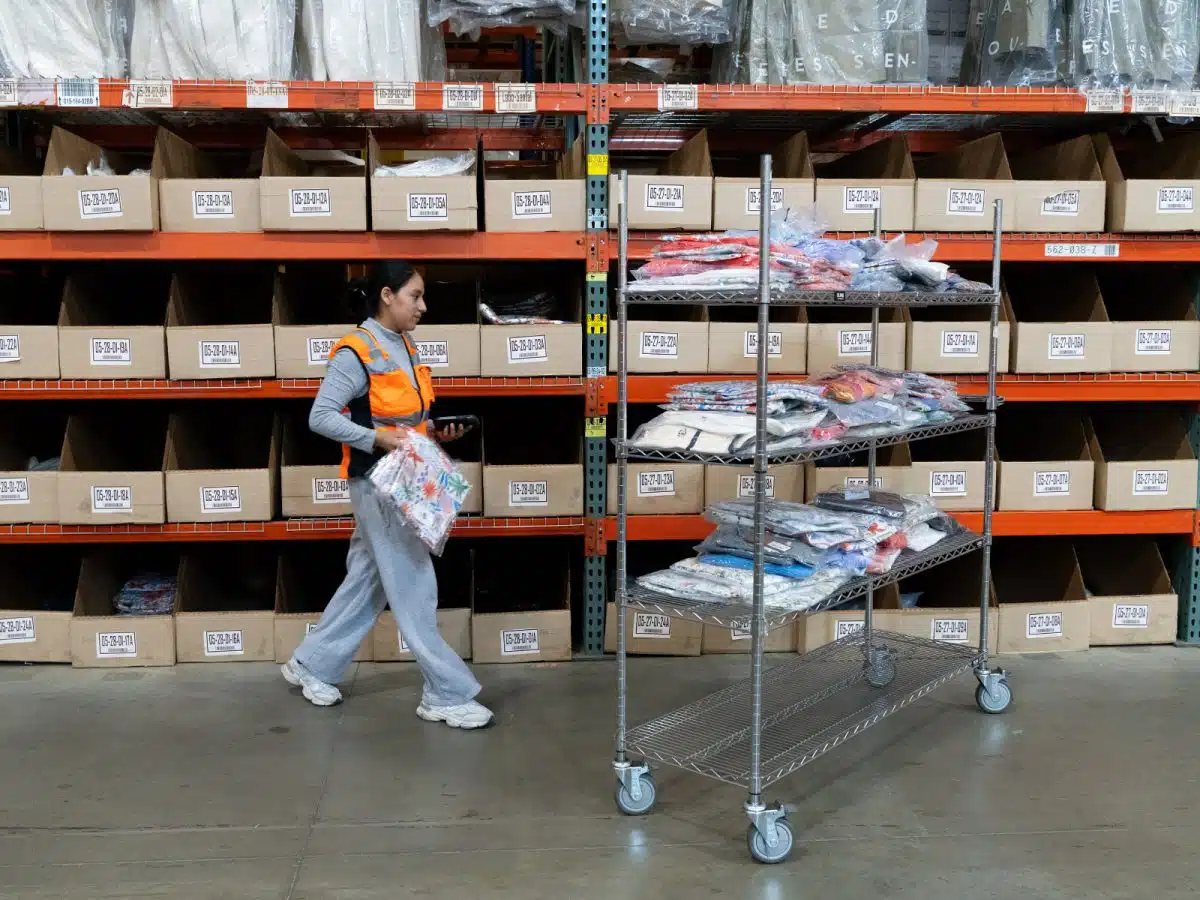
Kitting is the process of grouping individual items into a single, ready-to-ship unit, often assigned its own SKU. Instead of picking three separate products for every order, your fulfillment team picks one pre-assembled kit. The work of combining those items happens once, up front, rather than on every single order.
These are some common examples of kitting:
- A beauty brand bundles a cleanser, toner, and moisturizer into a starter set.
- A subscription company curates a themed monthly box.
- A retailer prepares store-ready displays with products, inserts, and signage already assembled.
Each of these is a kit.
Because the components are combined ahead of time, kitting speeds up order processing, reduces picking errors, and makes inventory easier to forecast. You track one finished kit rather than counting on staff to assemble the right combination under pressure during peak season.
Kitting vs. Assembly: A Quick Distinction
The terms kitting and assembly often appear together, and they overlap, but they are not identical. Kitting groups finished products into a bundle without changing the items themselves. Assembly goes a step further and physically builds or configures a product from parts. A 3PL that offers kitting and assembly can handle both, from simple bundles to light production work like attaching components or inserting promotional materials.
Where Custom Packaging Fits Into the Equation
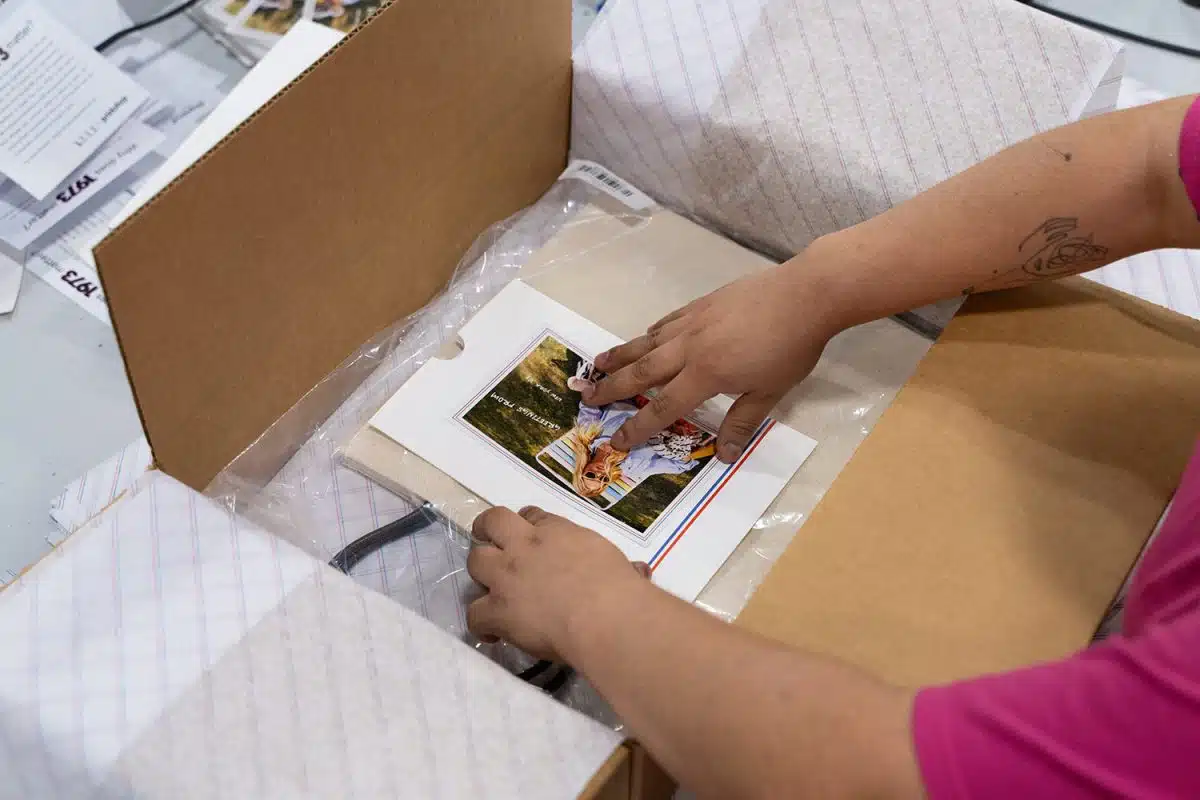
If kitting decides what goes in the box, custom packaging decides how it arrives. For a DTC brand, the package is often the only physical interaction a customer has with you. That makes it a valuable experience.
Custom packaging covers a wide range: branded boxes and mailers, tissue and inserts, custom labeling, thank-you cards, sample drops, and right-sized cartons that eliminate wasted space. Each element shapes the unboxing experience and, increasingly, what customers share online across social media.
Sustainability has become part of this conversation too. NielsenIQ data indicates that 67% of U.S. online shoppers under 40 weigh sustainable packaging and fulfillment practices in their brand preference. Recycled corrugate, compostable mailers, and right-sized packaging are shifting from nice-to-have to baseline expectation for a large share of buyers.
There is a practical cost angle here as well. Right-sizing packaging to product dimensions helps control dimensional weight charges, the way carriers bill on the larger of actual or volumetric weight. The box itself is part of your landed cost, not just your branding.
The Business Case for Outsourcing Kitting and Fulfillment to a 3PL
Plenty of brands start by kitting in-house. It works until it does not. The break point usually arrives during a launch or a peak season, when assembly volume spikes and your team is suddenly spending nights folding boxes instead of selling.
Outsourcing kitting and fulfillment to a 3PL changes that equation in a few specific ways:
- Freed-up internal capacity: Kitting moves off your team’s plate and into a dedicated operation, so your people can focus on sales, product, and customers. You also avoid the staffing burden of hiring, training, and overtime that comes with seasonal spikes.
- Built-in scalability: A 3PL flexes capacity up for peak season and back down afterward, so you are not carrying fixed labor through slow months.
- Higher accuracy: Barcode-driven warehouse management systems (WMS) verify each component, which reduces the wrong-item errors that drive returns and refunds.
- Streamlined fulfillment: Pre-assembled kits reduce pick and pack complexity, because one kit pick replaces several item picks. That improves fulfillment throughput.
- Cleaner forecasting: Tracking finished kits as single SKUs makes inventory planning more predictable.
This matters most in categories built on bundling. The U.S. subscription box market reached an estimated $10.9 billion in 2025 and is projected to approach $46.9 billion by 2034, according to IMARC Group. Every one of those boxes is a kitting and packaging operation that has to run on time, every cycle, or churn climbs.
Common Use Cases, From Subscription Boxes to Retail-Ready Kits
Kitting shows up across both direct-to-consumer and business-to-business operations, and the requirements differ.
DTC Kitting
On the consumer side, kitting powers subscription boxes, gift sets, product bundles, and promotional inserts. The priorities are personalization and presentation: the right items, a clean unboxing, and inserts that encourage the next order. Subscription brands in particular live or die on consistency, since a late or wrong box can prevent a returning customer.
B2B and Retail Kitting
On the business side, kitting supports retail distribution, store displays, wholesale orders, and parts kitting. Volumes are larger, compliance requirements are stricter, and retail-ready packaging often has to meet specific retailer guidelines. Accuracy and on-time delivery against service level agreements are the whole game.
A capable partner adapts to both, scaling the same core process up or down depending on whether a kit is headed to a doorstep or a distribution center.
What to Look For in a Kitting and Fulfillment Partner
If you are evaluating partners, the marketing all tends to sound the same. These questions cut through it:
- Does accuracy come with a number? Ask for a measured fulfillment accuracy rate and the SLAs behind it, not just a promise of care.
- Will it integrate with your stack? Your 3PL should connect cleanly to your store platform, such as Shopify or WooCommerce, so kit inventory and orders sync without manual work.
- Can it handle both DTC and B2B? If you sell direct now and plan to add wholesale or retail later, choose a partner that already runs both.
- How does it manage peak season? Look for a clear answer on how capacity flexes for launches and holidays without accuracy slipping.
- Does it own custom packaging and returns? Bundling kitting, packaging, labeling, and reverse logistics under one roof removes handoffs and finger-pointing.
The right answers point to a partner that treats kitting as an operation to be measured and improved, not a manual chore. For a deeper checklist on the technology side, read our guide to 6 questions to ask before you trust a 3PL and their WMS.
How Boxzooka Approaches Kitting and Custom Packaging
At Boxzooka, kitting is a core service, not an add-on. Every one of our fulfillment centers supports it: our New Jersey headquarters in Secaucus, two centers in Middletown, Pennsylvania, and our Las Vegas facility in Henderson, Nevada. That footprint puts kitted inventory closer to customers on both coasts, which can shorten transit times and help control shipping cost.
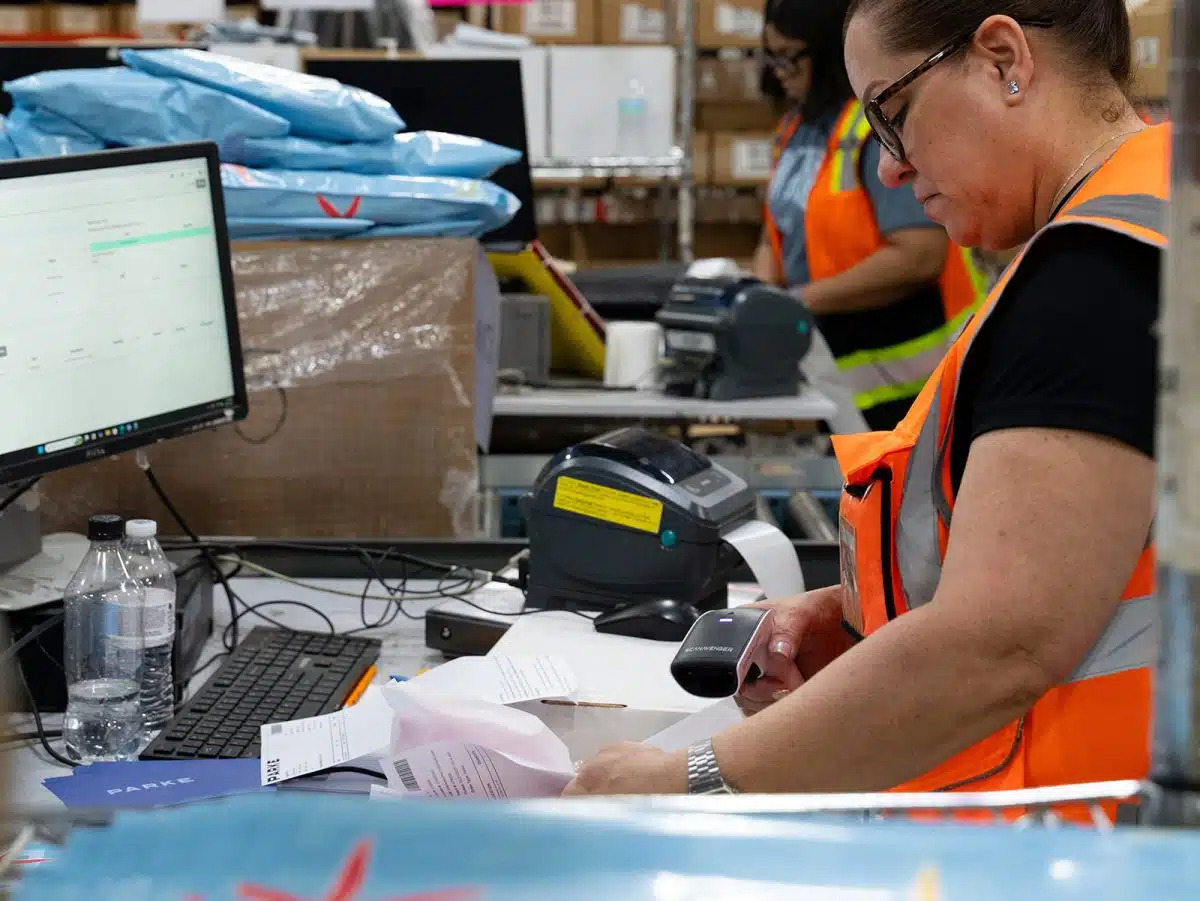
Our process runs in three stages. We discover your requirements, whether that is a product launch, a subscription box, or a promotional kit, and build a tailored plan. We optimize using our proprietary Warehouse Management System (WMS) and Transportation Management System (TMS) to track every item in real time and automate workflows. And we perform, assembling kits against defined service level agreements for quality and delivery.
Because our WMS verifies components as kits are built, quality control happens at the component level and rework stays low. That matters most in subscription and retail programs, where one wrong component multiplies across thousands of boxes.
We handle both DTC and B2B kitting, with value-added services that include custom packaging and labeling, returns management, and real-time reporting on progress and inventory. Brands across apparel, beauty, and consumer goods rely on that combination to keep quality consistent as they scale.
Let’s Find the Right Kitting Operating Model for Your Brand
Kitting and custom packaging are where fulfillment stops being a cost center and starts working as a growth lever. The brands that get it right scale smoothly, return less, and turn the doorstep moment into a reason to buy again.
If you are weighing whether to bring in a partner, we would be glad to talk it through. Share your kit configurations, volumes, packaging requirements, DTC and B2B mix, and any launch or peak-season needs, and we will work with you to determine the right operating model. Contact us to start the conversation, or see our kitting and fulfillment services to learn more about how we work.
Frequently Asked Questions About Las Vegas 3PLs
What are kitting and fulfillment services?
Kitting and fulfillment services combine the bundling of individual products into ready-to-ship kits with the picking, packing, and shipping of those orders. A 3PL receives your inventory, assembles kits to your specifications, and ships them to customers or retailers, which reduces order errors and takes assembly work off your team.
What is the difference between kitting and assembly?
Kitting groups finished products into a single bundle without altering the items. Assembly goes further by physically building or configuring a product from separate parts. Many 3PLs offer both under kitting and assembly services.
How does custom packaging affect eCommerce sales?
Custom packaging shapes the unboxing experience and how customers perceive product quality. A 2018 Ipsos survey found that 72% of U.S. consumers say packaging design influences their purchasing decisions, and strong packaging encourages repeat purchases and social sharing.
What types of products can be kitted?
Most physical products can be kitted, including beauty and cosmetics sets, apparel, subscription boxes, gift sets, promotional bundles, retail displays, and consumer packaged goods. The main requirement is a consistent set of components that can be grouped into a defined unit.
Does Boxzooka handle both DTC and B2B kitting?
Yes. Boxzooka provides kitting for both direct-to-consumer programs, such as subscription boxes and gift sets, and B2B needs, such as retail distribution and store displays, through our multiple fulfillment centers in New Jersey, Pennsylvania, and Nevada.