
Key Takeaways
- A single apparel style offered in multiple sizes and colorways can generate 40 or more SKUs. A seasonal capsule can add hundreds of active SKUs at once, making apparel one of the most complex categories in eCommerce fulfillment.
- Inventory accuracy and order accuracy are different metrics. Inventory accuracy (system counts match physical stock) depends on receiving, cycle counting, adjustments, and returns processing. Order accuracy (the right item ships to the right customer) depends on pick and pack controls such as barcode verification. High-SKU apparel operations need both.
- Most accuracy problems trace back to upstream issues. Incomplete SKU data and weak receiving processes undermine inventory accuracy, while poor slotting of visually similar items drives mispicks.
- Barcode scan-verify at both pick and pack is one of the most effective process controls for order accuracy in high-SKU apparel operations. It significantly reduces mispicks, and relying on visual confirmation by pickers is not a reliable substitute.
- Apparel brands that maintain accuracy through seasonal transitions submit finalized SKU files at least 10 business days before launch, conduct a pre-launch inventory audit after receiving, and track both inventory accuracy and order accuracy at the SKU level rather than relying on an overall rate alone.
- Choosing an apparel fulfillment partner with technology-native operations, including real-time inventory visibility and integrated returns processing, reduces the risk of oversell, mispick, and restock delays as SKU counts grow.
For apparel brands, a new season can mean a new set of problems. Dozens, and sometimes hundreds, of size-color SKU combinations drop at once, and the pressure to ship accurately from day one is immediate. Getting this wrong costs you more than a bad pick rate. It costs you customer trust and diminished brand sentiment.
Apparel is one of the most operationally complex categories in eCommerce fulfillment. A single style launched in five colors and four sizes generates 20 SKUs. As an illustration, a seasonal capsule of 15 styles at that same mix adds up to 300 SKUs overnight, many of which look nearly identical on a shelf. Your own collection may be smaller or larger, but the math scales quickly.
Brands that handle this well don’t do it through brute force. They do it through systems, processes, and a fulfillment partner that was built to handle this level of complexity. Here’s what that actually looks like in practice.
Why Apparel SKU Complexity Is Different From Everything Else
Most fulfillment challenges are about volume. Apparel fulfillment is about variety. The same pick-and-pack operation that handles a single-SKU supplement brand has to completely change its logic when it moves to a brand running several hundred active SKUs across multiple collections.
The variables that create complexity in apparel are well understood, but they compound quickly:
- Size and color proliferation. A single style offered in XS through 3XL and six colorways generates 42 SKUs before you’ve made a single other decision.
- Seasonal turnover. Collections rotate on a regular cycle, which means you’re constantly onboarding new SKUs, retiring old ones, and managing both simultaneously during transition periods.
- Visual similarity. A navy polo and a black polo can look identical at arm’s length. In a busy warehouse, that matters.
- Return rates. Online apparel return rates average roughly 24% in the US, according to Coresight Research (2023). For context, NRF estimates that retailers saw 16.9% of total 2024 sales returned across all channels. Rates vary by brand, price point, and return policy, but the volume means your reverse logistics operation is processing a steady stream of size-exchange items that need to go back into stock accurately.
24.4%
average US online apparel return rate, versus 16.9% of total retail sales returned across all channels
300
SKUs in one illustrative capsule: 15 styles, 5 colors, 4 sizes
99.5%
order accuracy rate Boxzooka maintains across active apparel accounts*
None of this is unique to large brands. Mid-market apparel companies and DTC labels face the same operational pressure at a smaller scale, and often with less margin to absorb mistakes.
Inventory Accuracy and Order Accuracy Are Two Different Metrics
Before we get into fixes, it helps to separate two measures that often get lumped together. Both matter, but they break in different places and call for different controls.
- Inventory accuracy. This measures whether the counts in your system match what is physically on the shelf, by SKU and by location. It depends on receiving, cycle counting, inventory adjustments, and returns processing. When it slips, you see oversells and backorders on items you thought you had.
- Order accuracy. This measures whether the right items, in the right sizes and colors, go to the right customer. It depends on pick and pack controls, including barcode verification. When it slips, you see wrong-size shipments and exchanges.
The two are connected, but fixing one does not fix the other. A brand can have clean counts and still ship the wrong size, or pick flawlessly and still oversell because the system count was off. Throughout this post, we flag which metric each control supports so you can confirm your 3PL covers both.
The Real Source of Accuracy Problems
When accuracy rates drop during a seasonal launch, the instinct is to blame the warehouse team. More often, the root cause is upstream.
Accuracy problems in high-SKU apparel fulfillment typically trace back to one of four places. Each one affects inventory accuracy, order accuracy, or both:
1. SKU data that arrives incomplete or inconsistent
If your 3PL receives a new SKU file with inconsistent naming conventions, missing barcodes, or mismatched UPCs, that confusion gets baked into receiving counts and every pick decision downstream. This one affects both inventory accuracy and order accuracy. A clean, standardized SKU onboarding process is not a nice-to-have. It’s a prerequisite for accuracy.
2. Slotting decisions that weren’t made with apparel in mind
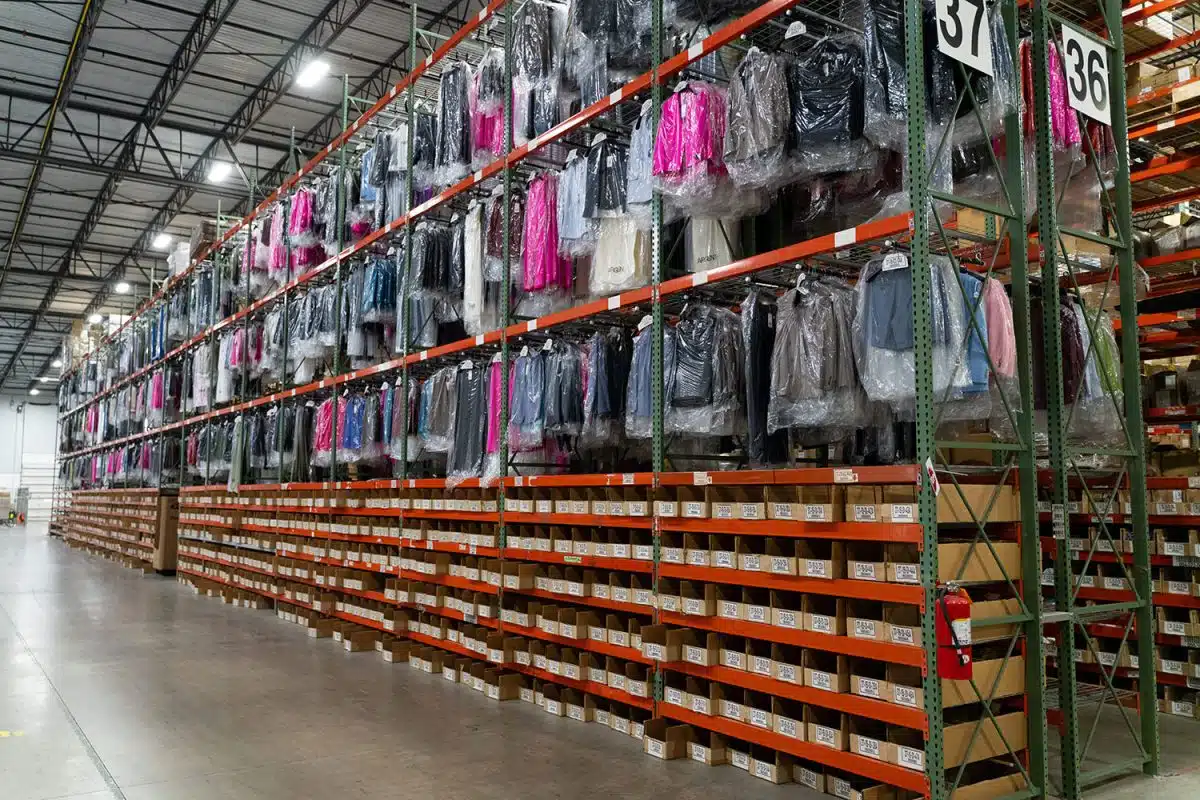
General-purpose 3PLs often slot products by size or weight. Apparel needs to be slotted with visual differentiation in mind. Similar styles in the same colorway should not be adjacent. Size variants for the same style, on the other hand, benefit from proximity to reduce travel time and reduce mispicks. Slotting mainly protects order accuracy.
3. No systematic scan-verify step at pick and pack
In a high-SKU environment, picker memory is not a reliable control. Barcode scanning at pick, and again at pack, is one of the most effective process interventions for order accuracy. The brands that maintain 99%+ order accuracy rates don’t rely on pickers to visually confirm the right item. They rely on a system that blocks or flags a wrong item before it ships, which significantly reduces mispicks.
No scan step catches everything. Damaged barcodes, mislabeled product, and manual overrides still create exceptions, so exception handling and quality checks matter too. Scan-verify also protects order accuracy only. It cannot confirm the count on the shelf, which is where receiving comes in.
4. Inadequate receiving processes for new seasonal drops
New collections arrive with new SKUs that haven’t yet been mapped to locations. If the receiving process doesn’t include a rigorous count-and-verify step against the expected SKU manifest, errors enter the system before a single order is picked. Receiving is where inventory accuracy is won or lost, and a bad count stays bad until a cycle count catches it.
How to Structure SKU Management for Seasonal Collections
There’s no single tactic that solves high-SKU complexity. It’s a combination of data integrity, process design, and technology that compounds over time. Here’s the framework we use with apparel brands at Boxzooka:
Build a SKU governance process before the season starts
Every new collection should go through a structured pre-launch review that covers: complete SKU file submission, barcode verification, expected units by SKU, and slotting instructions. The earlier this happens, the more time the fulfillment operation has to set up correctly. Brands that submit final SKU files two weeks before a launch tend to have smoother launches than those that send them two days before. Timelines can compress, though. In one case study, a women’s apparel brand moved two Shopify stores and several thousand SKUs to Boxzooka in eight weeks.
Use location-based logic, not memory-based logic
Every SKU should map to a fixed location in the warehouse. Pick instructions should tell pickers where to go, not just what to get. When new seasonal SKUs are added, they should be slotted into a logical location relative to similar items, with clear visual cues at the bin level. It supports both metrics.
Treat returns as a SKU management challenge, not just a shipping challenge
Apparel returns are high volume and time-sensitive. A size exchange that sits in a returns queue for five days is inventory that can’t be resold. Your returns process should include a grading and restocking decision at item receipt, not just a label-generation step. The apparel brands that maintain high inventory accuracy during peak returns periods tend to be the ones whose 3PL integrates returns processing directly into the active inventory workflow. Returns processing is an inventory accuracy issue first. An item that isn’t graded, scanned, and put away in the right location is stock your system can’t see or shows in the wrong place. For the cost side, see how retailers can keep growing returns costs in check.
Run cycle counts and document every inventory adjustment
Receiving gets counts right on day one. Cycle counting keeps them right. Count a rotating set of SKUs on a regular schedule instead of waiting for an annual physical inventory, starting with fast-moving sizes and new-collection SKUs, where variance builds fastest. Give every adjustment a reason code so you can tell whether a variance started at receiving, pick, or returns.
Track inventory accuracy and order accuracy separately, and by SKU category
A 99% overall order accuracy rate can mask a 92% rate on a specific size run within a new collection. The same applies to inventory accuracy, where a clean overall count can hide drift in fast-moving sizes. Tracking both metrics at the SKU category level during the first 30 days of a new season lets you identify and address problem areas before they compound.
The Boxzooka Approach
Our apparel fulfillment operations include item-level barcode scanning at pick and pack to support order accuracy, dedicated receiving lanes for seasonal drops to support inventory accuracy, and real-time inventory visibility through our platform. Our Client Experience Portal (CXP) allows brands to get a single view of active SKU counts, location data, and order accuracy metrics without needing to log into three separate systems.
What to Look for in an Apparel Fulfillment Partner
If you’re evaluating 3PLs specifically for apparel, the right questions aren’t just about square footage or carrier rates. They’re about whether the operation was actually designed to handle the unique challenges of apparel fulfillment at scale.
Ask any prospective apparel fulfillment company these questions:
- What is your active SKU count for apparel clients, and how do you manage seasonal transitions?
- Walk me through your receiving process for a new seasonal drop. At what point in that process does a new SKU become available to pick?
- How do you handle near-identical SKUs at the bin level to prevent mispicks?
- What is your current order accuracy rate for apparel accounts specifically?
- What is your inventory accuracy rate for apparel accounts, and how often do you cycle count?
- How are returns processed, and what does the restock timeline look like for a size exchange?
- What technology does your team use to verify picks before an order ships?
A 3PL that can answer these questions with specific operational detail is one that has solved these problems before. A 3PL that answers in generalities has not. For the technology side of that conversation, see our six questions to ask before you trust a 3PL and its WMS.
Technology’s Role in Inventory and Order Accuracy
Neither inventory accuracy nor order accuracy in a high-SKU environment is something you solve with a better spreadsheet. The operations that perform well on both run technology that keeps every layer of the process in sync.
At minimum, that means:
- A warehouse management system (WMS) that enforces barcode scan-verify at pick and pack, which significantly reduces mispicks
- Real-time inventory visibility that syncs to your sales channels, which significantly reduces the risk of overselling a size that just went out of stock
- Automated SKU onboarding workflows that flag data issues before they reach the warehouse floor
- Returns management that feeds directly back into live inventory counts, supporting inventory accuracy
Beyond the warehouse, SKU inventory management also benefits from tight integration between your eCommerce platform and your fulfillment operation’s WMS. When a size sells through, your 3PL should know before your customer sees a discrepancy. New to the topic? Start with what a warehouse management system does.
Even so, no system eliminates errors. Integration delays, damaged barcodes, and manual mistakes still happen, so the strongest operations pair technology with exception handling, cycle counts, and regular audits.
This is where technology-first fulfillment providers operate differently from traditional 3PLs. The technology isn’t a bolt-on. It’s built into every step of the process, which helps accuracy hold up as SKU counts grow.
The Seasonal Launch Checklist
If you’re preparing a seasonal drop and want to protect accuracy from day one, here’s what that preparation looks like in practice:
- Submit final SKU files at least 10 business days before launch. Include complete attributes: style, color, size, UPC, expected units per SKU.
- Confirm your 3PL’s receiving schedule and make sure inbound shipments arrive before the pre-launch setup window closes.
- Request a pre-launch inventory audit once your product is received and slotted. Verify counts by SKU before the first order is placed.
- Confirm every new SKU is scannable and mapped before the first order. Scan-verify only works if each barcode is in the system and matches the right item.
- Set up real-time low-stock alerts for each SKU so you can suppress channels or update PDPs and reduce the risk of overselling.
- Define your returns handling process for the collection before launch. Agree on restock timelines and grade criteria upfront.
- Agree on a cycle count schedule for the first 30 days. Prioritize new-collection SKUs and fast-moving sizes.
- Review accuracy reporting setup with your 3PL, covering both inventory accuracy and order accuracy, so you know exactly where to look if an issue emerges in the first 72 hours.
Accuracy Is a Competitive Advantage
In a market where apparel customers have no shortage of options, the operational details matter more than most brands realize. A customer who receives the wrong size doesn’t just initiate a return. They make a judgment about your brand.
The apparel brands that scale successfully tend to have one thing in common: they treat fulfillment as a core part of the customer experience, not a logistics afterthought. That means working with an apparel fulfillment partner that understands the specific demands of high-SKU seasonal operations and has the processes and technology to execute them reliably. For more on the details that shape the customer experience, see how a 3PL improves apparel fulfillment and our tips for packaging apparel for shipping.
High SKU counts don’t have to mean lower accuracy. With the right infrastructure and processes in place, a high-SKU operation can hold both inventory accuracy and order accuracy steady, because every step is built to accommodate the complexity.
Ready to improve your apparel fulfillment accuracy?
Talk to our team about how Boxzooka manages high-SKU apparel operations for growing eCommerce brands. Get in touch with us today.