
Categories
Fulfillment

What is a 3PL? What eCommerce Brands Need to Know Before They Outsource Fulfillment

If your team is spending more time packing boxes than building your brand, it is likely time to take a serious look at third-party logistics. The term “3PL” gets used constantly in eCommerce circles, but what it actually means, and what a good 3PL relationship looks like in practice, is worth unpacking carefully. Here is what you need to know before you make that decision.

Key Takeaways

  • A 3PL, or third-party logistics provider, manages warehousing, order fulfillment, shipping, and returns on behalf of eCommerce brands.
  • A full-service 3PL can support receiving, inventory storage, pick and pack, carrier management, returns processing, and value-added services such as kitting, bundling, personalization, and subscription box assembly.
  • For many growing brands, outsourcing fulfillment can convert fixed warehouse, labor, and technology costs into a more variable operating model.
  • Warehouse location and network design are major factors in 3PL selection. The right footprint can reduce shipping zones, improve delivery speed, and lower transportation costs.
  • Key criteria for evaluating a 3PL include industry fit, technology, eCommerce integrations, demonstrated operational performance, pricing transparency, communication, and the ability to scale during peak season.

A 3PL Manages the Operational Work Between You and Your Customer

3PL stands for third-party logistics. When you work with a 3PL, you ship your inventory to their warehouse. From there, they handle everything downstream: receiving and storing your products, picking and packing individual orders, and shipping them directly to your customers.

Consider this. Every order your business ships requires warehouse space, trained staff, packaging materials, carrier accounts, and software to track it all. A 3PL handles all of these logistics for you, operating as an extension of your business.

You retain full visibility into your inventory and order status. The 3PL absorbs the infrastructure, the labor, and the carrier relationships. You focus on your product and your customers.

The Services a Full-Service 3PL Actually Provides

Not every provider offers the same scope of services, so it is worth knowing what to ask for. A full-service 3PL typically handles everything from inbound to outbound logistics:

  • Receiving and putaway: When your inventory arrives, the warehouse team unloads it, inspects it for accuracy and damage, and assigns it a storage location tracked in a warehouse management system (WMS). You can see exactly how many units you have and where they are at any time.
  • Pick and pack: When an order comes in through your eCommerce platform or marketplace, warehouse staff pull the correct items, package them according to your specifications, and prepare them for shipment. For brands that care about the unboxing experience, this step is where your 3PL either earns your trust or loses it.
  • Carrier management and shipping: The 3PL generates shipping labels, coordinates with carriers like UPS, FedEx, and USPS, and applies negotiated rates that benefit from their shipping volume. Because 3PLs aggregate shipping volume across multiple clients, they may be able to provide access to competitive carrier rates and a broader mix of shipping options than many brands can secure on their own.
  • Returns processing: Reverse logistics are handled on your behalf. A strong reverse-logistics process helps brands recover value by quickly inspecting returned products, determining disposition, refurbishing or repackaging when appropriate, and returning sellable inventory back to stock.
  • Kitting and assembly: Subscription boxes, product bundles, gift sets, promotional inserts, and custom assembly work can all be managed at scale. For brands running monthly subscription programs or seasonal gift campaigns, this is a meaningful differentiator.

The Economics Make More Sense Than Most Brands Expect

When you fulfill orders in-house, your costs are largely fixed. You pay for warehouse space, staff, and systems whether you ship 200 orders a month or 2,000. You carry those costs through slow months and then scramble to find additional capacity when volume spikes during peak season.

A 3PL converts most of those fixed costs into variable ones. You pay for the storage space you actually use, the orders that ship, and the labor involved in processing them. When volume is lower, your costs drop. When it spikes, the 3PL absorbs it without you having to hire seasonal staff or find temporary warehouse space on short notice.

For most eCommerce brands, the crossover point where a 3PL becomes more cost-effective than in-house fulfillment comes earlier than expected. Once you factor in the true cost of your own time, the overhead of a warehouse lease, the loaded cost of labor, and the carrying cost of inefficient inventory placement, a 3PL often wins on unit economics well before you hit high order volumes. For many brands, outsourcing starts to make economic sense once monthly order volume becomes consistent enough to justify a more formal fulfillment operation. Some brands begin evaluating 3PLs around a few hundred orders per month, but the right timing depends on order complexity, SKU count, storage needs, shipping profile, and internal labor constraints.

The real comparison is not just 3PL fees versus internal labor. Brands should compare the fully loaded cost of in-house fulfillment, including warehouse rent, labor, payroll burden, packaging, systems, equipment, management time, error costs, returns handling, and shipping.

The Signals That Tell You It Is Time to Make the Switch

There is no single right moment to bring in a 3PL partner. But a few signals tend to come up consistently:

  • You are shipping to customers across the country from a single location, and long transit times are hurting your customer satisfaction scores or conversion rate.
  • Your team is hitting capacity limits and peak seasons are creating genuine operational strain.
  • The cost of managing fulfillment in-house is climbing faster than your order volume.
  • You are launching on a new channel, such as Amazon, a retail wholesale program, or a subscription model, and your current setup cannot support it cleanly.
  • You want to expand internationally and need a partner with cross-border shipping experience.

Any one of these is a reasonable trigger. The combination of two or more usually means the window to act is now.

Location, Technology, and Communication Are What Separate Good 3PLs from Great Ones

A 3PL’s warehouse location directly affects your customers’ experience. The right 3PL footprint depends on your customer base, order profile, and inventory strategy. Some brands benefit from one strategically located facility near major parcel hubs. Others benefit from a distributed network that places inventory closer to customers and reduces average shipping zones.

Technology is equally important, and it is where many 3PLs fall short. Strong 3PLs maintain a strong WMS and client portal that provide visibility into:

  • Real-time inventory by SKU and location
  • Order status
  • Shipment tracking
  • Receiving status
  • Returns status
  • Inventory adjustments
  • Reporting by channel, SKU, order type, and exception

Your fulfillment partner should also integrate directly with your eCommerce platform, whether that is Shopify, BigCommerce, WooCommerce, Magento, or a marketplace like Amazon. Orders should flow automatically from your storefront to the warehouse floor. Technology development should be speedy and responsive to your pain points and needs.

Proactive communication and transparency are not optional features. They are the foundation of a working partnership. Ask any prospective 3PL how they handle exceptions, what their order accuracy rate is, and how they communicate when something goes wrong. The answers will tell you a great deal about whether the relationship will hold up at scale.

What Else to Evaluate Before You Commit

Beyond location and technology, a few other factors are worth weighing:

  • Industry fit: A 3PL that specializes in bulky industrial goods is not the right partner for a fashion or beauty brand. Look for a provider with demonstrated experience handling your product category, including any relevant compliance or handling requirements.
  • Scalability: Ask how the 3PL handles peak-season volume increases and what their capacity headroom looks like. A provider that is already operating near capacity is a risk. A partner that is equipped to scale with you is key.
  • Pricing transparency: Ask for a full rate card upfront, including storage fees, per-order fees, receiving fees, return processing fees, and any minimums. Hidden fees are one of the most common sources of frustration in 3PL relationships.
  • References: A reputable 3PL should be willing to connect you with current clients in a similar product category. A conversation with a brand that has worked with a provider for two or three years will tell you more than any sales presentation.
  • Client success and communication: Ask who will manage your account, how often you will review performance, how exceptions are escalated, and whether the support team is close enough to the operation to solve issues quickly.

Questions to Ask a 3PL

A strong 3PL eCommerce fulfillment partner should be ready and able to answer these questions:

  • Can you show us your WMS and client portal?
  • What performance metrics do you track and share with clients?
  • What are your order accuracy and on-time shipping rates?
  • How do you prepare for peak season?
  • What fees are not included in standard pick, pack, storage, and receiving charges?
  • How do you handle returns inspection, disposition, and restocking?
  • Who manages our account, and how are exceptions escalated?
  • What product categories do you specialize in?
  • Can you provide references from brands with similar order profiles or SKU complexity?

We Built Boxzooka Around the Brands That Need This Most

At Boxzooka, we work with growth-stage fashion, beauty, and lifestyle brands that need more than a generic fulfillment house. Our fulfillment centers span coast to coast, so we can position your inventory closer to your customers and shrink the average shipping zone across your order base. For most of our clients, that translates directly into lower shipping costs and faster delivery times.

Our technology-enabled platform integrates seamlessly with Shopify, BigCommerce, WooCommerce, Magento, and other major platforms, so orders flow from your storefront to our warehouse floor automatically. Through our Client Experience Portal (CXP), you get real-time visibility into every unit in storage and every order in process, plus the reporting you need to make decisions with confidence.

As a boutique, high-touch 3PL, we handle the full range of eCommerce fulfillment: kitting and assembly, subscription box programs, branded and custom packaging, personalization, returns management, and cross-border shipping. We are also built for complexity, whether that means deep SKU profiles, wholesale and retail orders running alongside your DTC channel, or specialized handling for premium products. Because we built our operation around eCommerce from day one, our team understands what it takes to protect your brand at every touchpoint.

What sets us apart is simple: we shape our operation around your business, not the other way around. Many providers force brands into a one-size-fits-all model, and we do the opposite, building flexible workflows that fit how you actually sell. Our goal is to be the best, not the biggest, so we are selective about the clients we take on and genuinely invested in helping each one scale and thrive. When our clients grow, we grow, and that alignment drives everything we do.

Let’s Talk About Your Operation

Whether you are actively evaluating 3PL partners or just beginning to assess whether outsourcing makes sense, Boxzooka can help you understand your current fulfillment model, identify cost and service opportunities, and determine what the right next step looks like. Contact us today and let’s get started.
Categories
eCommerce Fulfillment

The Complete Guide to Merchandise Fulfillment for eCommerce Brands

Key Takeaways

    Fulfillment costs can be significant but are controllable. They typically run 12 to 20% of total revenue, making them one of the largest and most manageable cost levers in an eCommerce business.
  • Merchandise fulfillment for apparel and branded goods requires specialized handling. Size runs, colorways, polybags, hangtag placement, and kitting requirements go beyond what a generalist 3PL is built to handle.
  • Returns are a revenue opportunity, not just a cost. With online apparel return rates reaching 25% or higher, a fulfillment partner with a fast inspect-grade-restock process gets units back on the shelf and generating revenue instead of sitting in a queue.
  • Technology integrations are non-negotiable. Your 3PL needs certified connections to Shopify, NetSuite, and EDI systems. Manual workarounds create errors and slow down the process.
  • Understand your all-in cost. In addition to standard line items for receiving, storage, pick and pack, kitting, returns processing, and client success management, account for additional items such as peak surcharges, minimum commitments, and account setup fees when evaluating your fulfillment provider.

Fulfillment brings your product to your customer’s doorstep, and if you’re like many other founders, the cost is often a gray area in the process. You know your COGS down to the cent. But can you say the same for your all-in fulfillment cost per order?

According to Capital One’s e-Commerce Fulfillment Statistics, fulfillment costs run between 12 to 20% of total revenue. Your fulfillment cost is one of the largest, but also one of the most controllable costs in your business.

Every leg of the fulfillment process affects these costs, and with this guide, you’ll know every lever you can pull to tighten your fulfillment leg. Companies offering apparel fulfillment services that understand the nuance of pricing in merchandise can provide you with a comprehensive picture of everything entailed throughout the fulfillment process.

What Is Merchandise Fulfillment?

Merchandise fulfillment is an important supporting layer of eCommerce and covers the complete process of turning your merchandise and branded goods from a concept into a concrete deliverable. Your fulfillment supply chain for merchandise includes:

  • Receiving goods
  • Storing goods
  • Picking and packing
  • Generating the label
  • Handing off to a courier
  • Processing any returns that come back

Your brand can win a repeat customer at each step in this process. If you have apparel or branded merchandise, this supply chain is longer and more complex than standard product categories such as electronics or home goods.

How Merchandise Fulfillment Differs From Standard Order Fulfillment

Standard order fulfillment treats all deliveries the same with no real concern over brand image or the unboxing experience. With merchandise fulfillment, especially at the apparel and branded goods level, you treat each SKU as a brand asset.

A standard third-party logistics (3PL) provider optimizes for throughput, but when you work with an apparel fulfillment specialist, you receive the benefit of optimization for more:

  • Throughput and unboxing standards
  • Size accuracy
  • Hangtag placement
  • Polybag specs
  • Returns grading

These details are what separate a forgettable delivery from a repeat customer. The difference shows up in your accuracy rates: a generalist 3PL operating at 99% pick accuracy sounds strong, but at 5,000 orders per month, that’s 50 errors. Fifty return labels, fifty customers whose experience fell short of your marketing promise.

Why Apparel and Branded Goods Need Specialized Handling

There’s a lot that happens behind the scenes with apparel fulfillment, as it carries complexity that most SKUs don’t. Your 3PL needs to consider size runs, colorways, seasonal variants, and polybags. If you include branded merchandise, the list grows to corporate gifting kits and influencer packages. Each of these has its own kitting requirements and presentation layers that a generalist warehouse isn’t equipped to handle.

A merchandise fulfillment specialist receives a shipment of 500 hoodies and sorts them immediately by size, colorway, and SKU into dedicated bin locations mapped to pick paths. When peak season arrives, pickers pull the right size on the first reach because the storage system was built around apparel logic from the start.

Types of Merchandise Fulfillment Services

Not every merchandise brand needs the same fulfillment setup. The right service model depends on your product type and your sales channels. It’s all about the unboxing experience and exceeding customers’ expectations.

General Merchandise Clothing Fulfillment

General merchandise clothing fulfillment covers the full DTC and wholesale apparel cycle: receiving your goods, packing them to your brand’s specifications, and getting orders out the door. This end-to-end coverage is the baseline, and the quality gap between providers is wider than most brands expect.

Branded Merchandise Fulfillment

Branded fulfillment raises the stakes beyond pick-and-pack accuracy. Corporate gifting programs and swag box subscriptions all require you to assemble items in a specific configuration, so you can include custom inserts and personalized cards. 3PLs offering this service should ideally become an extension of your brand marketing team at the physical layer.

Precision matters here more than in standard eCommerce, because these packages often go to high-value contacts. A correctly assembled influencer kit reflects well on your brand in a way that no paid placement can replicate. Common branded merchandise fulfillment configurations include:

  • Corporate gifting sets with custom tissue, branded boxes, and personalized cards
  • Influencer kits with curated product selections and presentation-grade packaging
  • Employee welcome packs with onboarding materials and company swag
  • Event merchandise bundles pre-assembled for conference or trade show distribution

Brands investing in this level of detail are building customer loyalty through the experience itself.

Accessory Fulfillment

Goods such as sunglasses, jewelry, belts, and small leather goods require a different packaging approach than apparel or branded kits. You’ll need bin-level small-part organization and accurate bundle assembly. Even if the items are at a lower price point, you still have to meet high presentation expectations. Getting the small details right reinforces relationships with your customers with every delivery.

DTC vs. B2B and Wholesale Merchandise Fulfillment

When you run your storefront through platforms like Shopify, you’ll likely have many individual consumer orders, and even if you have high volumes, the unit value per shipment is often low. Your customers expect fast turnaround, which is the core offering of DTC fulfillment.

B2B and wholesale fulfillment work a little differently. You offer retail replenishment, which means fewer orders in larger shipments. Your products get sent to retail distribution centers or brick-and-mortar locations, which often require electronic data interchange (EDI) compliance and retailer routing guides.

Some 3PLs are better suited to handling B2B and wholesale fulfillment. If your brand sells in both channels, confirm that your fulfillment partner can provide documented experience with the retailer’s compliance requirements before signing a contract.

How Merchandise Fulfillment Works End-to-End

The service type you choose matters, but execution at each stage is what determines whether your customers get the experience your brand promises.

Receiving, Inspection, and Storage

The receiving process for inbound freight sets the stage for successful fulfillment. During receiving, carton counts are verified, SKUs are confirmed, product condition is inspected, and putaway is completed into the warehouse management system. Your merchandise fulfillment operation runs at brand-grade standards. Your 3PL team also logs discrepancies, including damaged units and count shorts, so nothing goes unrecorded.

How accurately your team receives inventory determines how smoothly everything downstream runs, starting with where and how your goods are stored. Your apparel inventory needs to be sorted by style, size, and colorway so pickers can pull the right item on the first reach, even during high-volume periods. Your 3PL’s warehouse should provide climate control, hanging versus folded storage, and poly or non-poly storage as a bare minimum.

Pick, Pack, Kitting, and Quality Control

Not every 3PL runs the same quality control checkpoints, so ask what verification happens before a package leaves the warehouse. In a best-practice operation, a picker pulls the correct items from bin locations, a packer prepares each order to spec: confirming polybag selection, tissue paper, branded inserts, and hangtag verification.

For high-volume SKU bundles, kitting lets you pre-build your most common combinations before orders arrive. That reduces each bundled order to a single scan at fulfillment, which pays off fast when seasonal spikes hit. This way pick, pack, and QC build as one sequence, and kitting stands as a distinct efficiency play.

Deliveries, Returns, and Reverse Logistics

Your 3PL’s carrier relationships are one of the biggest cost advantages of outsourcing fulfillment. Because your provider ships at high volume across multiple carriers, they access negotiated rates that a single brand typically cannot match.

The practical benefit: your lightweight parcels go USPS, larger or time-sensitive orders route through UPS or FedEx, and dense urban markets may use regional carriers for faster, cheaper last-mile delivery. You don’t have to manage those relationships or rate-shop every order. But the delivery is only half the equation.

Your returns are where a well-run merchandise fulfillment operation earns its keep. Online apparel return rates reach 25% or higher, and each return costs between 20% and 65% of the item’s original value. The volume of returns represents a real revenue opportunity when reverse logistics run well: your restocked inventory sells again, and graded returns feed secondary channels. A fast refund experience builds customer loyalty.

A good returns process should follow four steps:

  • Scan in on receipt
  • Inspect and grade each item
  • Re-tag if needed
  • Restock within 48 hours

Your fulfillment team flags unsalable units for your review before they write anything off. A 3PL that can tell you its average time from return receipt to resalable inventory is one that takes reverse logistics seriously. The faster a return gets inspected, graded, and restocked, the sooner that unit is generating revenue again instead of sitting in a processing queue.

Standard Fee Categories for Merchandise Order Fulfillment

Once you understand how the fulfillment process works, the next question is what each stage costs and how those costs add up across your order volume. Merchandise fulfillment is component-based.

  • Receiving: Typically charged per hour, per pallet, or per item.
  • Storage: Typically charged per pallet, per cubic foot, or per bin.
  • Pick and pack: A per-order base fee for a single-item order, with an additional per item for multi-item orders.
  • Kitting: Typically charged per hour or per unit with pricing per unit depending on complexity.
  • Returns processing: Structured as a base fee plus a fee per item.
  • Client success management: A monthly fee that ranges depending on the provider and level of support included.

Know what to look for beyond the standard rate card to be aware of any other costs. Watch for:

  • Long-term storage charges
  • Peak season surcharges
  • Minimum order commitments
  • Non-standard packaging fees
  • Account setup fees

These line items give you a baseline for comparing provider quotes. The next decision is whether a provider’s operational fit justifies the total cost.

How to Choose a Merchandise Fulfillment Partner

The right provider for your brand comes down to more than price. Location and category experience each carry equal weight in the decision.

Evaluating Order Fulfillment Companies: Location, Capacity, and Vertical Fit

Geography affects your cost per delivery and your transit time promises. A fulfillment center in New Jersey places your inventory within one to two days’ ground delivery of the most densely populated region in the United States. If your customers are concentrated in the Northeast and Mid-Atlantic, that footprint translates into faster delivery promises and lower express delivery reliance.

Vertical fit also matters more than location for many brands. A 3PL processing 10 million apparel units already solves the challenges you might encounter when you scale. One that primarily handles electronics or vitamins will need time to build that expertise, so it’s worth verifying category experience during your evaluation.

Order Fulfillment System Requirements: Shopify, NetSuite, ERP, and EDI Integrations

At minimum, your 3PL needs a certified Shopify integration that syncs orders in real time, pushes tracking numbers back automatically, and updates inventory levels without manual intervention. If you’re on NetSuite or another ERP, confirm that a direct integration exists. If you’re selling into wholesale or retail channels, confirm EDI capability.

SLAs, Brand-Care Standards, and Apparel eCommerce Fulfillment Expertise

An SLA protects your brand and ensures that you have clear expectations of your fulfillment relationship. Some of the SLAs you should negotiate include:

  • Same-day or next-day pick and pack cutoff
  • 99.8% or higher order accuracy in writing
  • Returns processing within 48 to 72 hours
  • Photos of packed orders from current apparel clients
  • Packing spec changes mid-season

A 3PL that answers these with concrete examples is one operating at genuine apparel eCommerce fulfillment standards.

Your Quick Decision Framework for Choosing a Merchandise Fulfillment Partner

Before you request proposals from 3PLs, score each candidate against these five variables:

  1. Apparel and merchandise experience: Can they show documented volume and client references from brands in your category?
  2. Location fit: Does their fulfillment center footprint cover your customer base within your delivery promise?
  3. Technology: Does their WMS integrate with your eCommerce platform and ERP without a manual workaround?
  4. Cost transparency: Can they produce a complete landed cost per order that includes storage, pick, pack, returns, and client success management?
  5. Peak capacity: Do they have written capacity commitments for your peak season volume?

A provider that scores well on all five is worth a deeper conversation. Opt for one that answers each question with concrete data and client references in your category.

Get a Custom Merchandise Fulfillment Quote From Boxzooka Today

Every decision in this guide points to your fulfillment strategy. Does your fulfillment operation support the brand you’re building, or is it holding your brand back? The right 3PL handles all the variables, from receiving standards and returns grading to peak season capacity.

Build a fulfillment operation your brand can grow into. Get your custom apparel and merchandise fulfillment quote and see your all-in cost per order from a specialist who has handled it before.

Frequently Asked Questions

What is merchandise fulfillment?

A: Merchandise fulfillment is the end-to-end process of receiving, storing, picking, packing, shipping, and processing returns for physical goods. For apparel and branded merchandise, it includes specialized handling such as size sorting, polybag selection, hangtag verification, and kitting for corporate gifts or influencer packages.

How much does merchandise fulfillment cost?

Merchandise fulfillment costs typically run between 12% and 20% of total eCommerce revenue. Component-level pricing break downs include receiving, storage, pick and pack, kitting, returns processing, and client success management. Additional costs to account for include applicable peak surcharges, long-term storage fees, and minimum order commitments.

What is the difference between merchandise fulfillment and standard order fulfillment?

Standard order fulfillment optimizes for throughput without regard for brand presentation or product-specific handling. Merchandise fulfillment, especially for apparel and branded goods, adds layers including size run accuracy, polybag specifications, hangtag placement, unboxing standards, and returns grading. A generalist 3PL may operate at 99% pick accuracy, but at 5,000 orders per month that equals 50 errors per month. A merchandise fulfillment specialist builds its operation around apparel and branded goods logic from the start.

How do I choose an apparel merchandise fulfillment partner?

A: Evaluate merchandise fulfillment partners against five variables: apparel and merchandise category experience with verifiable client references; fulfillment center location relative to your customer base (a New Jersey facility, for example, reaches over 50% of the U.S. population within two days via ground shipping); technology integrations with your eCommerce platform and ERP; a fully itemized landed cost per order; and written peak-season capacity commitments. Prioritize providers who answer each question with concrete data, not general assurances.

What integrations should a merchandise fulfillment partner support?

At minimum, your 3PL needs a certified Shopify integration that syncs orders in real time, pushes tracking numbers automatically, and updates inventory without manual intervention. If your brand runs on NetSuite or another ERP, confirm a direct native integration exists. For brands selling into wholesale or retail channels, EDI capability is required. Manual workarounds at the integration layer create errors and slow fulfillment.

What are common hidden fees in merchandise fulfillment pricing?

Beyond the standard rate card, watch for long-term storage charges (typically triggered after 90 to 180 days of low inventory movement), peak season surcharges applied during Q4 and major sale events, minimum monthly order commitments, non-standard packaging fees for custom boxes or branded inserts, and one-time account setup fees. Ask any prospective 3PL to produce a complete cost estimate that includes all line items before signing a contract.

What SLAs should I require from a merchandise fulfillment partner?

Key SLAs to negotiate include: same-day or next-day pick and pack cutoff times, 99.8% or higher order accuracy in writing, returns processing within 48 to 72 hours, documented packing specifications with photos from current apparel clients, and the ability to execute packing spec changes mid-season. A 3PL that commits to these standards in writing is one operating at genuine apparel eCommerce fulfillment standards.

When should an eCommerce brand move from in-house fulfillment to a 3PL?

Clear signals that you have outgrown in-house fulfillment include: shipping volume that consistently overwhelms your team, inability to scale labor during peak season without significant cost, return processing backlogs that delay restocking, and growing errors in pick accuracy. After moving to a 3PL, most brands see improvement in per-order cost, delivery speed, and order accuracy, while freeing operations leadership to focus on growth rather than daily shipping logistics.

What is reverse logistics and why does it matter for apparel brands?

Reverse logistics covers the process of receiving, inspecting, grading, and restocking returned merchandise. For apparel brands, online return rates reach 25% or higher, and each return costs between 20% and 65% of the item’s original value. A well-run reverse logistics operation inspects and grades each return on receipt, re-tags units where needed, and restocks resalable inventory within 48 hours. The faster a return moves through this process, the sooner that unit generates revenue again.

Categories
eCommerce Fulfillment

What is eCommerce Fulfillment (and How to Choose the Right Partner)?

A plain-language guide for growth-stage brands in fashion, beauty, and apparel

Key Takeaways

  • eCommerce fulfillment is the full process of storing inventory, picking and packing orders, shipping them to customers, and handling returns after an online sale.
  • Most growing brands hit a point where in-house fulfillment caps their growth. A 3PL provides warehouse space, technology, and a shipping network without the capital cost of building it yourself.
  • Strong fulfillment can improve delivery speed, order accuracy, customer experience, and total cost per order.
  • When comparing eCommerce fulfillment companies, weigh technology and integrations, location and delivery reach, accuracy, peak season scalability, and transparency.
  • Ask to see the provider’s WMS and reporting tools. The technology behind the operation directly affects inventory visibility, order accuracy, and the ability to scale.

Your marketing brings the order in. Fulfillment is the part of the experience your customer actually feels. The box on the doorstep, on time and intact with a great unboxing experience, is what turns a first purchase into a repeat one.

For growth-stage brands in fashion, beauty, and apparel, fulfillment quietly determines whether you can scale. Get it right and you free up cash, shorten delivery windows, and keep customers coming back. Get it wrong and shipping costs, stockouts, and late deliveries chip away at the brand you worked hard to build.

Here is what eCommerce fulfillment actually involves and how to choose a partner that fits the way your business is growing.

What eCommerce Fulfillment Actually Means

eCommerce fulfillment is the entire process of getting an online order from your storefront into your customer’s hands. It starts the moment a shopper clicks “buy” and ends when the product arrives or comes back as a return. Four core steps sit inside that process:

  • Receiving and storage: Inventory arrives at the fulfillment center, gets counted, and is logged into a warehouse management system (WMS) so stock levels stay accurate across every sales channel.
  • Inventory management and order processing: Products are organized by the warehouse management system (WMS) to allow for workers to pick and pack as orders flow.
  • Pick and pack: When an order comes in, the team pulls the right items, packs them to protect the product and reflect your brand, and preps them for carrier handoff.
  • Shipping: Orders go out through the carrier and service level that balance speed and cost, with tracking passed back to the customer.
  • Reverse logistics: Returns are received, inspected, and either restocked or processed, so revenue and inventory data stay clean.

When executed well, all of this is invisible to the customer. They simply see a fast, accurate delivery. Done poorly, every step becomes a place where the experience breaks down: a delayed shipment, the wrong item, a return that takes weeks to process. Fulfillment is where your brand promise is either kept or broken, one order at a time.

Why Fulfillment Decides Whether You Scale or Stall

Think about this. Fast, reliable delivery used to be a perk. After the Amazon effect, it is the baseline shoppers expect from all businesses, including independent brands.

That expectation puts pressure on three numbers that follow you everywhere: how fast you deliver, how accurately you ship, and what each order costs to fulfill. Strong fulfillment moves all three in the right direction at the same time.

It also protects your cash. Holding your own warehouse, hiring seasonal labor, and negotiating carrier rates as a small shipper ties up money and attention you could be spending on product and marketing. When your business reaches the point when outsourcing becomes economically and operationally practical, you can refocus your time and resources on your brand rather than fulfillment.

There is an upside worth naming, too. When fulfillment runs well, it stops being a cost center and starts working as a competitive advantage. Faster delivery and reliable tracking lift customer experience, which drives repeat purchases and better reviews. Accurate inventory keeps your bestsellers in stock during the times that matter most. Handled right, logistics puts brands in the driver’s seat instead of leaving them reacting to problems.

In-House vs. a 3PL: When to Make the Switch

Plenty of brands start by shipping orders from a garage, a back room, or a small warehouse. That works until it does not. The signs are familiar: orders take longer to go out, mistakes creep in, peak season turns into a scramble, and shipping costs climb because you do not have the volume to earn better rates.

A third-party logistics provider (3PL) takes on the warehouse, the technology, the labor, and the carrier relationships for you. Instead of building all of that, you tap into infrastructure that already exists and a team that does this every day. Because a 3PL ships for many brands at once, it earns carrier rates and buys packaging at a scale most individual companies cannot reach on their own. A technology-enabled 3PL connects directly to your store, syncs inventory in real time, and gives you one place to see what is happening across every channel.

The switch usually makes sense when fulfillment starts pulling your attention away from growing the business. If you are spending more time in the warehouse than on the brand, it is time to look at outside help.

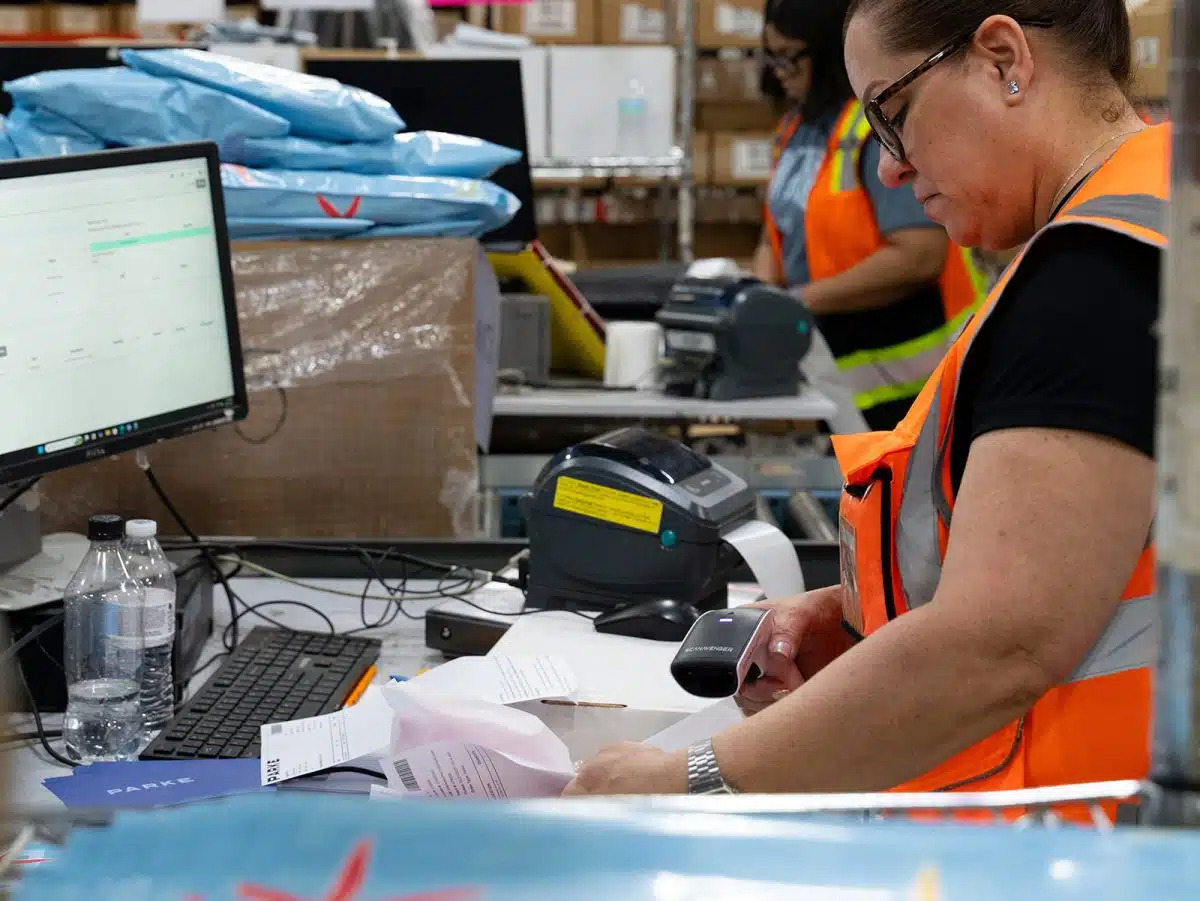
a worker assembles an order at a ship station

What to Look for in an eCommerce Fulfillment Partner

Not every provider fits every brand. Use these criteria to compare eCommerce fulfillment companies and find the one that matches how you operate.

  1. Technology and integrations. Look for a strong WMS, real-time inventory, and seamless integration with your store and sales channels. Omnichannel support matters if you sell across your site, marketplaces, and retail.
  2. Location and delivery reach. Where a provider’s warehouses sit determines how fast and how affordably you reach your customers. Strategic geography near shipping hubs optimizes speed while split distribution across multiple locations shortens delivery windows and lowers shipping cost.
  3. Accuracy and pick and pack quality. Ask about order accuracy rates. A small error rate at scale means a lot of frustrated customers and a lot of avoidable returns.
  4. Scalability for peak season. Your partner should handle your busiest weeks without dropping service. Ask how they staff and plan for peak, and how they manage SKU depth and SKU velocity as your catalog grows.
  5. Cross-border and landed cost. If you sell internationally, look for cross-border shipping experience and clear landed cost visibility, so there are no surprises for you or your customer.
  6. Returns and reverse logistics. A strong reverse-logistics process quickly identifies, inspects, refurbishes when necessary, and returns sellable products to inventory. This protects the customer experience while recovering inventory value and reducing the amount of capital tied up in returned merchandise.
  7. Transparency and communication. You want proactive communication and transparency, not a black box. Clear reporting and a proactive client success team can be as important as the physical warehouse operation.

Questions to Ask Before You Sign

A short conversation up front saves a lot of friction later. Before you commit, ask:

  • Can you demonstrate your WMS, client portal, and reporting capabilities?
  • What does your pricing include, and how do I calculate my fulfillment cost per order?
  • Do you charge peak-season storage, labor, account-management, technology, or project fees?
  • How do you select carriers and service levels for each shipment?
  • How do you integrate with my platform, and how quickly will inventory sync?
  • What are your average order accuracy and on-time shipping rates?
  • How quickly are returns inspected and returned to available inventory?
  • Who will manage our account, and where is that person located?
  • How have you performed against SLAs during your busiest periods?
  • What does onboarding look like, and how long until I am live?

A confident partner answers these plainly. Vague answers are a signal worth paying attention to.

The Boxzooka Approach

Boxzooka is a technology-enabled 3PL built to help growing consumer brands deliver a consistently strong customer experience as they scale. We combine advanced warehouse technology and real-time visibility with high-touch operational and client success support.

Our teams understand the complexity that comes with deep SKU catalogs, branded packaging, personalization, retail distribution, seasonal peaks, and high return volumes. Rather than forcing every client into a standardized operating model, we build solutions around each brand’s products, channels, customers, and growth plans.

Our goal is to be the best fulfillment partner for our clients, not simply the biggest provider in the market. That means staying close to the operation, communicating proactively, and continuously identifying ways to improve service, efficiency, and the customer experience.

Let’s Talk About Your Fulfillment

If your current setup is starting to hold you back, let’s talk. Book a consultation with our team and we will walk through your volume, your goals, and how the right fulfillment partner can help your business scale and thrive.

Frequently Asked Questions

What is eCommerce fulfillment?

eCommerce fulfillment is the full process of getting an online order from your storefront to your customer. It covers receiving and storing inventory, picking and packing orders, shipping them with tracking, and handling any returns.

What are the main steps in the eCommerce fulfillment process?

There are four core steps: receiving and storing inventory in a warehouse, picking and packing each order, shipping it through the right carrier with tracking, and processing returns through reverse logistics.

When should a brand switch from in-house fulfillment to a 3PL?

The switch usually makes sense when fulfillment starts limiting growth: orders ship more slowly, errors increase, peak season becomes a scramble, or shipping costs climb. A 3PL provides the warehouse, technology, labor, and carrier rates so you can focus on the brand.

How do you choose the right eCommerce fulfillment partner?

Compare providers on technology and integrations, warehouse location and delivery reach, order accuracy, peak season scalability, cross-border and landed cost visibility, returns handling, and transparency. The best fit depends on how your brand operates and where your customers are.

How do you calculate fulfillment cost per order?

To calculate fulfillment cost per order, total all fulfillment-related expenses for a defined period, including receiving, storage, pick and pack, packaging, account fees, shipping, and applicable surcharges, and divide that amount by the number of orders shipped during the same period. Because 3PLs structure and label fees differently, all costs should be normalized before comparing providers.

Categories
eCommerce Fulfillment

5 Back-to-School Fulfillment Tips for eCommerce

The end of summer brings with it the start of school, and many retailers set this as the preparation season for the holidays. If you are in the school apparel or school supplies industry, the start of school means something very different. With back-to-school campaigns in full swing, warehouses are bursting with supplies, and fulfillment services work overtime to get everything delivered for the first day back at school. 

For eCommerce sites that perform well during back-to-school campaigns, it’s a careful balance between creating sales campaigns. With 67% of parents starting back-to-school shopping in early July, ensuring there’s enough stock on hand to fulfill these orders is crucial. 

This busyness reflects that if there was ever a time to drive your back-to-school sales campaigns, it’s now. The global back-to-school market was estimated at $172 million in 2024, and if it meets the predicted CAGR of 4.8%, it may reach $230 million by 2030. 

Prioritizing fulfillment during this season is key. You’ll need to pay close attention to your inventory, the ease of delivery and returns, and invest in resources that ensure your back-to-school fulfillment runs smoothly. 

Why Back-to-School Fulfillment Is So Challenging 

Understanding the high-stakes demands of the back-to-school fulfillment process will help companies better prepare for this season. It requires a careful balance between urgency and still producing goods and services at a standard that your customers expect.

Examining the challenges retailers face and why it’s tough to navigate also helps you improve fulfillments. 

Tight Seasonal Window

The back-to-school shopping season is a quick sprint from mid-July to early August, and even with the best planning in place, the tight season creates a fulfillment bottleneck. Parents often wait for the end of the summer break to order their back-to-school supplies and apparel, as many retailers offer flash sales. There’s also sales tax holidays to consider, which has an even shorter window. 

Once parents place their orders, there’s a very clear expectation that the delivery will happen before school starts. The date is largely inflexible as kids need to be ready when schools open. It’s important to manage these expectations, as even slight mishaps or minor delays can result in client dissatisfaction.

Demand Volatility and Forecasting Complexity 

It’s not always simple to map out demand or forecast correctly, as school district instructions can change. Weather also has a significant impact. For instance, an unusual seasonal demand such as an unpredictable rainy season or cold could place pressure on school clothing fulfillment. Additionally, some parents admit to wanting to splurge on first-day school outfits. 

You might also face a higher demand for items that have suddenly grown popular. These may include accessories or new gadgets and electronics that are gaining traction on social media. As a retailer, you’ll have to walk the tight rope between overstocking, which could lead to excess inventory and storage costs, or understocking, which results in stockouts and lost sales.

High Stock Keeping Unit (SKU) Diversity 

Back-to–school shopping crosses several categories, as you have to consider school clothing, stationery supplies, lunchbox planning, technology, and dorm supplies. Warehouse fulfillment can find this challenging as it puts pressure on the pick-pack process. This could result in higher errors, missed items, and stock discrepancies. A quick influx of orders that span several categories demands warehouse efficiency and real-time inventory systems. 

High Expectations for Speed and Transparency

A need for fast deliveries is not restricted to only parents. Consumers in general want both cost-effective and faster deliveries. For this to work, retailers need to pay close attention to their last-mile delivery partnerships and make use of regional fulfillment services to reduce transit time. 

Returns and Exchanges Surge

School clothing fulfillments can be challenging when it comes to returns. Clothing is the highest return item in eCommerce, with Gen Z and Millennials returning as much as 30% of purchases. Bracketing is another trend to consider, as parents may order several variants of the same product to compare. 

As the retailer, you need to still maintain a high level of trust with your customers and have a clear returns policy. Simplify the returns process to avoid broken trust during this peak stress season. Additionally, ensure you have a good system in place to account for all reverse logistics costs. 

Personalization and Custom Orders

School items often need personalization to make them easier to identify, such as names on clothing, bags, lunchboxes, and water bottles. This can lead to extra handling, which slows the process down. These orders can disrupt regular workflows and often can’t be returned, which may cause a customer service hiccup. 

Sustainability and Packaging Pressure 

Environmental awareness is turning into environmental responsibility, and the pressure is on everyone to make a difference. Parents feel the same, preferring sustainably sourced clothing for their children. Part of the back-to-school prep for retailers is to keep the environment in mind and have those options available to parents. 

Omnichannel and Buy Online, Pick Up In Store (BOPIS)

When shoppers choose to pick up their orders instead of waiting for delivery, it requires finesse in terms of coordination. While it might take some of the pressure off the last-mile fulfillment leg for retailers, it adds a layer of complexity. Retailers need to have the stock on hand, have a pick-up process that’s convenient for shoppers, and manage the logistics of the fulfillment process carefully. 

Five Tips for Back-to-School eCommerce Fulfillments 

Fulfillments can quickly become challenging as parents and students gear up for the new academic year. These five tips can help you successfully manage deliveries with the speed, accuracy and flexibility parents require.

1. Start Planning in Early Summer 

It’s tempting to wait until after Independence Day to start planning your back-to-school campaigns, but starting earlier has its advantages. 

If you’re hoping to capture a large portion of the back-to-school market, it’s best to start your campaign in early June. A report released by the National Retail Federation shows that 67% of back-to-school shoppers start buying items for the new school year in early July. 

Starting your marketing campaign at least 4 to 6 weeks before early July can help boost your campaigns. Ensure you have the back-to-school fulfillment logistics to support your orders ahead of time. This way, you can capture the high-intent buyers who are willing to spend more per order. 

Back-to-school items often have a substantial lead time due to personalization, and it’s important to account for this when planning the fulfillment cycle. The logistics network can easily become clogged leading up to school’s opening. By starting earlier, you can prepare your fulfillment strategy, align your shipping partners, and test a fulfillment run ahead of time. 

You have the opportunity to capture the value seekers by starting your campaign earlier. When consumers know their delivery isn’t urgent, they’re willing to wait a bit longer — especially if it’s going to cost less. These shoppers are comparing prices and looking for the best deal. Be sure to have bundled deals, early bird specials, or tiered pricing options available.

2. Batch Inventory by Category or Age Group

During the high-volume season, you’re looking for ways to speed up your fulfillment process and still remain accurate. Batching your inventory into logical groups is one of the best ways to do this. The benefits include: 

  • Reduces picking paths: Workers collect similar items from the same zone.
  • Optimizes packaging: Same-category items often fit standard box sizes.
  • Helps with inventory management: You know exactly which stock zones are running low.

A good example of inventory batching happens during apparel fulfillment for the school season. You can have your SKUs batched according to categories: 

Category Example SKUs
Apparel Shirts, uniforms, shoes, jackets
Stationery Notebooks, pens, binders
Electronics Tablets, headphones, calculators
Backpacks Backpacks, lunchboxes, water bottles
Dorm supplies Lamps, organizers, linens


You can also batch your inventory by age group: 

Age/Grade Group Common Items
K-2 primary Crayons, wide-ruled paper, kids’ backpacks, safety scissors, art aprons
3rd to 5th grade Notebooks, lunch kits, colored pencils, sports gear
Middle school Binders, calculators, notepads, pens 
High school Graphic calculators, apparel, laptop sleeves, large backpacks
College/University Dorm kits, tech accessories, laptops, personalized binders 

3. Design Packaging for Speedy Returns

It may seem counterintuitive to include returns in your back-to-school fulfillment processes, but returns come with the territory. Your returns policy may also determine whether consumers will buy from you at all, as 43% of shoppers prioritize easy returns.

School clothing fulfillment is one of the areas where retailers can make it easier for shoppers to return goods, as sizing, color, and school preference play a role in whether shoppers want to, or are able, to keep their goods. Ways you can make returns easier include: 

  • Having a clear, plain language return policy that’s easy to find 
  • Including prepaid return shipping labels in the package 
  • Offering box-free or drop-off returns 
  • Including a self-service return portal
  • Allowing both exchanges and refunds 
  • Automating return status notifications 

4. Avoid Common Back-to-School Logistics Mistakes

Prioritizing 3PL services and technologies is an excellent way to boost strategies around your fulfillment. The sooner you onboard, the better, as back-to-school logistics mistakes cost revenue and retention. 

Every vacation and school season is busy, and partnering with a good 3PL service too late is a mistake that costs time and money. 3PL companies follows several processes to fulfil inventory: 

  • Receiving the shipment 
  • Counting and inspect SKUs
  • Entering inventory in the internal warehouse management system 
  • Allocating storage space

Partnering with a 3PL service provider allows you to be ready for apparel fulfillment for the school season. 

Another common mistake is not preparing for onboarding. Some of the processes you can test to familiarize yourself with 3PL include: 

  • Setting up integrations with shipping tools 
  • QA testing 
  • Order simulation
  • Error troubleshooting 
  • Exploring the 3PL’s software and service standard operating procedures SOPs

5. Use a Specialized Apparel Fulfillment Partner

The key to a successful back-to-school fulfillment season is partnership with a reliable 3PL company. Boxzooka offers enterprise-grade fulfillment, lightning-fast onboarding, and the kind of hands-on support that keeps your BTS operations running like clockwork.

The several advantages to working with a specialized apparel fulfillment partner ahead of busy seasons:

Risk of Waiting Impact Boxzooka Advantage
Capacity limitations Risk of waitlisting Guaranteed fulfillment space with early onboarding
Delayed inventory receiving Missed delivery windows Streamlined receiving, which means inventory is ready sooner
Rushed integrations System errors, poor tracking Fast QA testing with major platforms 
No staff training window Customer service errors, process breakdown Dedicated onboarding team for smooth handoff
Misaligned shipping SLAs Broken delivery promises Transparent SLAs and regional delivery optimization
Inaccurate demand prep Stockout or overstock Collaborative planning with real-time insights

With Boxzooka, you’re not just shipping boxes — you’re delivering a better customer experience. Whether you’re launching pre-packed school kits, managing flash sales, or scaling direct-to-consumer campaigns and marketplace channels, Boxzooka has the infrastructure, speed, and team to help you win the season.

Conquer The Back-to-School Season with Smarter Fulfillment Services From Boxzooka

Back-to-school is no longer just a retail moment — it’s an eCommerce hurdle that highlights gaps in the supply chain, fulfillment network, and customer experience. With shopping starting earlier, consumers are expecting faster and cheaper delivery. 

Ready to simplify your back-to-school logistics? Let Boxzooka handle the complexity while you scale your sales. With Boxzooka’s 3PL fulfillment services and technologies, you can navigate the back-to-school run successfully. Contact us today to request a 3PL services quote.

Frequently Asked Questions

What makes Boxzooka a good 3PL partner for back-to-school fulfillment?

Boxzooka is built for busy seasons like back-to-school. They offer fast onboarding, flexible storage, and regional shipping options that help retailers keep up with tight delivery deadlines. Whether you’re shipping back-to-school clothes, supplies, or accessories, Boxzooka helps everything run smoothly behind the scenes.

What Are Some Bonus Tips And Tricks for 2025 Back-to-School Fulfillments?

You can get fulfillment-ready before the rush and dive into key trends to meet your fulfillment objectives with these bonus eCommerce tips and tricks:  

  • Satisfy your tech-savvy consumers: A collection of AI statistics and trends shows that 54% of consumers believe AI will improve customer experience. Leveraging advanced 3PL technologies can be a competitive advantage. 
  • Focus on early shopping trends: Early shopping isn’t only for those who want to capitalize on deals and sales tax exemptions. Some want to get their shopping done before tariff increases. 

How does Boxzooka handle apparel fulfillment during the school season?

Apparel fulfillment can be challenging, especially with sizing, bundling, and high return rates. Boxzooka helps by organizing inventory smartly, speeding up the picking process, and minimizing packing errors. That means fewer delays and happier customers during the rush.

Can Boxzooka help reduce returns during the back-to-school rush?

Yes, Boxzooka makes returns easier for both retailers and shoppers. They offer options like prepaid return labels, real-time tracking, and drop-off flexibility, so you can handle bracketing and size swaps without customer frustration.

Does Boxzooka support personalized or custom school items?

Definitely. If your products need names, initials, or custom touches, Boxzooka can handle it. They know how to fold personalized orders into the workflow without slowing things down or disrupting standard shipments.

How early should I onboard with Boxzooka for back-to-school campaigns?

The earlier, the better. Onboarding before school begins gives you time to test systems, train your team, and avoid the last-minute scramble. It sets you up for a smoother, more profitable season.

Categories
Fulfillment Technology

Tech-First Fulfillment: Boxzooka CEO on Building Better Logistics

The Kid With the Briefcase

An 11-year-old boy walks through his neighborhood, carrying a briefcase and handing out flyers for his car-washing and lawn-mowing business. The other kids are playing video games. He’s launching his first venture.

Fast forward a few decades, and that same drive has led to the creation of one of the most innovative fulfillment companies in eCommerce. When Brendan Heegan sat down with Jason Greenwood on The eCommerce Edge Podcast, their conversation offered an insightful look at how modern fulfillment works. Heegan, founder and CEO of Boxzooka, reimagined what a 3PL could be, starting with tech at the core, then shaping the fulfillment operation around that.

What Boxzooka’s CEO Revealed About Next-Gen Logistics

The conversation with Heegan went beyond the typical logistics jargon and explored how modern fulfillment should work in a digitally-evolving world. 

The Reverse Engineering Approach to Fulfillment

Boxzooka designed its warehouse management system (WMS) before opening a fulfillment center, which was an innovative and unexpected approach. Most 3PLs try to add technology after the fact,  but Heegan took the opposite path.

“Technology is the core of everything,” Heegan emphasized. “With great technology, the 3PL can be successful.”

This foundation helps them manage scenarios that could easily stump traditional providers:

  • Managing 40-60 different brands in one warehouse (imagine 60 different head chefs trying to use one kitchen!)
  • Coordinating orders across 35-38 different carrier options
  • Connecting seamlessly with platforms like Shopify, WooCommerce, BigCommerce, and Magento

When Builders Use Their Own Tools

Boxzooka operates fulfillment centers in New Jersey, Pennsylvania, and Las Vegas, using the same software it offers to other 3PLs. This daily use leads to constant improvements based on real-world challenges.

As Heegan puts it, it’s “built by operators for operators,” which means the system works effectively even when things get complex, and not only in unrealistically ideal conditions.

Simple Orders Aren’t Simple

Greenwood raised a key point: most people have no idea how complex warehouse operations can be. Until you’ve dealt with chaotic putaway systems or tried to optimize pick routes for different delivery speeds, it’s easy to underestimate what goes into getting packages out the door on time.

Why Boxzooka Works

What makes Boxzooka stand out isn’t just smart software or fast shipping. It is a blending of intelligent technology with human expertise, which creates a flexible, transparent, and reliable fulfillment experience. 

People Plus Technology

While many fulfillment companies pursue full automation, Boxzooka follows a more practical path. They use technology to help their teams work better, not replace them.

“Chemistry is just huge,” Heegan noted when discussing what brands should consider when choosing a 3PL. “We’re all human behind the scenes. If you don’t have good chemistry, you’re not going to have a good working relationship.”

Versatility in Practice

It’s easy to claim you can accommodate anything. Boxzooka proves it:

  • Smart kitting: Orders for bundled products generate pick lists for individual components automatically
  • Personalization at scale: Customer customization data flows seamlessly from checkout to warehouse operations
  • True versatility: Whether you’re dispatching individual packages or full pallets, the system adapts

Built-In Transparency

Their software includes features many systems skip:

  • Labor management tools integrated from day one
  • Live visibility into inventory and orders
  • Sophisticated returns processing
  • Analytics that fuel better decisions

As Heegan pointed out, “You can only manage what you measure.”

Smart Technology for Smarter Operations

The conversation also explored how Boxzooka approaches artificial intelligence with practical goals in mind. Instead of robots replacing workers, they’re implementing AI to:

  • Create more innovative training programs for warehouse staff
  • Optimize where products get stored
  • Predict patterns that improve efficiency
  • Help operators find answers quickly through natural language search

This practical mindset mirrors their overall approach: solve real problems without creating new ones.

Consider how this philosophy works in practice: One fashion brand, Heegan mentioned, manages 60,000 SKUs through Boxzooka’s system. Traditional bicoastal distribution would be impossible with that many products, but Boxzooka’s technology handles the complexity through intelligent batching and virtual SKU mapping. 

What Forward-Thinking Brands Need to Know

The podcast’s insights point to a simple truth: technology alone won’t solve your logistics needs. Success comes from finding a partner who understands your business and can grow with you.

Whether you’re managing a handful of SKUs or tens of thousands, shipping directly to consumers or wholesale to retailers, the lesson remains the same: good fulfillment requires the right mix of technology, experience, and partnership. As Heegan explained during the podcast, some brands share tariff costs with suppliers, others pivot to new sourcing countries, and many adjust pricing strategically — but all need a fulfillment partner who can adapt alongside them.

Is Your Fulfillment Holding You Back?

  • Do you get more customer service emails about shipping than about products?
  • Have you ever lost a sale because you couldn’t fulfill from multiple locations?
  • Does the phrase “inventory sync error” make you break into a cold sweat?

If you answered yes to any of these, you’re not alone, and you’re exactly who Boxzooka was built for.

Boxzooka addresses these realities through built-in flexibility:

  • Virtual SKUs that automatically break down into parts
  • Systems that process product personalization without manual intervention
  • Equal capability for both B2B wholesale and B2C direct-to-consumer shipments
  • AI that delivers tangible improvements to operations

The technology proves its worth daily. When orders come in for customized products, for example, the system automatically routes them through personalization workflows without manual sorting — a process that would typically require dedicated staff and separate systems.

The Core Principle That Changes Everything

If you take away just one insight from Heegan’s conversation with Greenwood, make it this: The best fulfillment technology doesn’t force you to change how you work — it adapts to how you already work, then makes it better.

That’s the opposite of what most 3PLs offer. They hand you their playbook and tell you to adjust. Boxzooka wrote their playbook around what works in the real world, where orders are unstructured, customers have high expectations, and every brand is different.

The conversation revealed a different perspective on fulfillment technology. Rather than pushing customers to adopt new systems, success comes from building tools that work with how businesses already operate. While competitors push customers toward new portals and platforms, the most innovative solutions emerge in software that adapts to existing workflows.

“You can only manage what you measure, but you can only improve what you truly understand.” – The valuable insight that drives Boxzooka’s approach.

The complete Ecommerce Edge Podcast episode offers additional insights into scaling operations, navigating today’s shifting shipping landscape, and finding the right fulfillment partner for your business growth. After listening, you will have gained a new approach to solving operational challenges across your business.

Ready to see how tech-first fulfillment could transform your operations? Visit Boxzooka’s website or reach out directly at info@boxzooka.com for a personalized consultation. 


Categories
eCommerce Fulfillment

Boxzooka’s Tom Behnke on Why Early Back-to-School Shoppers Are Reshaping Fulfillment Strategy in 2025

As U.S. families rush to beat potential price hikes tied to tariffs, the 2025 back-to-school season is seeing unprecedented early activity, and brands are feeling the pressure. Tom Behnke, a senior advisor here at Boxzooka, revealed that pressure is also playing out in the logistics space. Fulfillment timelines are tighter, and inventory turnover is accelerating. “Brands are trying to hold prices,” Behnke says in a recent Forbes feature, “but the tariffs present challenges.”

The message is clear for businesses looking to stay competitive this season — a smart fulfillment strategy, driven by speed and precision, is more essential than ever. 

Shoppers Are Buying Early, and Here’s Why It Matters

Back-to-school shopping is record breaking this year. Data from the National Retail Federation and Prosper Insights and Analytics shows that 67% of parents had started shopping for their back-to-school purchases by early July. That’s up from 55% last year, and marks the highest early shopping rate since 2018. 

Widespread economic concerns explain the rush, with 51% of families shopping early due to concerns about rising prices as new tariffs roll out. High-ticket items like electronics are popular purchases for college-bound students, and among the most affected. 

“At Boxzooka, we’ve seen an uptick in early season order volumes across categories like school supplies, apparel, and especially electronics—a category directly affected by tariff pressures. Brands are working hard to hold prices and preserve margins, but speed and efficiency are critical to remain competitive.”

This shift in consumer behavior is more than a retail phenomenon — it’s a fulfillment challenge. When shoppers order earlier, they also expect faster shipping and fewer stockouts. A tech-driven and flexible 3PL partner becomes a critical advantage. 

Sales Tax Holidays — An Opportunity Worth Leveraging

Consumers are responding to another powerful incentive alongside tariff-driven urgency — sales tax holidays. These tax-free periods vary by state, and allow shoppers to avoid sales tax when purchasing school-related items. 

Tax exemptions are a major draw for early and budget-conscious shoppers, and retailers that align promotions with these dates amplify sales while offering greater value. Here’s a breakdown of the 2025 sales tax holidays across participating states: 

  • Alabama (July 18–20): Tax-free on clothing, computers, school supplies, and books.
  • Arkansas (August 2–3): Includes clothing, accessories, electronics, and school/art supplies.
  • Connecticut (August 17–23): Applies to clothing and footwear under $100.
  • Florida (August 1–31): Covers school supplies, clothing, and computers under $1,500.
  • Florida (Sept 8–Dec 31): Also includes qualifying outdoor and recreational items.
  • Iowa (August 1–2): Applies to clothing and footwear under $100 per item.
  • Louisiana (September 5–7): Includes firearms, ammunition, and hunting gear.
  • Maryland (August 10–16): Tax-free on clothing and footwear up to $100.
  • Massachusetts (August 9–10): Applies to most personal items under $2,500.
  • Mississippi (July 11–13): Exempts clothing and footwear under $100 per item.
  • Missouri (August 1–3): Includes clothing, supplies, software, and electronics.
  • Nevada (October 31–Nov 2): For National Guard members and relatives on select purchases.
  • New Mexico (July 25–27): Covers clothing, school supplies, computers, and backpacks.
  • Ohio (August 1–14): Exempts most items under $500, excluding certain restricted categories.
  • Oklahoma (August 1–3): Tax-free on clothing and footwear under $100.
  • South Carolina (August 1–3): Includes clothing, shoes, school supplies, and computers.
  • Tennessee (July 25–27): Exempts clothing, school supplies, and computers under $1,500.
  • Texas (August 8–10): Includes clothing, backpacks, and school supplies under $100.
  • Virginia (August 1–3): Covers school supplies, clothing, hurricane preparedness, and energy-efficient items.
  • West Virginia (August 1–4): Applies to clothing, electronics, school supplies, and some sports equipment.

Retailers operating or selling online to people in these states can prepare for a spike in demand. For DTC brands especially, pairing these moments with efficient shipping through Boxzooka’s nationwide fulfillment network can create a winning combination — fast delivery, no tax, and high customer satisfaction.

Logistics Implications — Why Fulfillment Must Be Fast, Flexible and Accurate

When orders come in fast and early, fulfillment operations must up their game. The focus must center around tight inventory control, scalable capacity, and real-time data.

“Consumers are resourceful and will hunt for deals, especially online,” Behnke notes. That behavior demands agility from the brands serving them.”

Boxzooka’s proprietary warehouse management system (WMS) offers clients complete visibility into their inventory, order statuses, and shipping performance. The team helps brands ship faster and more reliably through strategically located fulfillment centers in New Jersey, Pennsylvania, and Las Vegas. A bicoastal footprint allows us to offer efficient two-day shipping coverage across the country, even during peak shopping periods. 

Accuracy is as important as turnaround times, particularly for high-value items. As tariffs push margins down, fulfillment errors become increasingly costly. Boxzooka maintains industry-low error rates and provides the transparency brands need to maintain trust with customers.

How Brands Can Compound Value During This Year’s Back-to-School Season

Retailers and DTC brands that want to win the back-to-school fulfillment race must act fast, and smart. The following strategies can help you stay ahead of the curve:

  • Leverage tax holidays in your promotions and ads: Shoppers are more likely to convert if they get a tax-free deal. 
  • Forecast using real-time insights: Examine your early July sales data to identify which stock-keeping units (SKUs) are trending up so you can stock accordingly. 
  • Scale with a flexible fulfillment partner: Let Boxzooka help with managing overflow inventory or improving delivery speed. 
  • Bundle and upsell strategically: Combine school supplies with accessories to streamline the consumer experience. 

Fulfillment Readiness is a Competitive Advantage

Back-to-school shopping used to start in August. Now, it’s hitting full stride before July is over — and that changes the game for everyone in the supply chain. While tariffs and sales tax holidays may shape customer behavior, fulfillment readiness is what determines who captures those sales.

With Boxzooka’s scalable tech, national coverage, and white-glove support, brands can deliver the speed and service today’s early shoppers expect — without compromising quality or control. If you’re ready to adapt and thrive this season, contact the Boxzooka team and see how our fulfillment solutions can power you back to school success!