

Categories
Apparel Fulfillment

How to Choose an Apparel Fulfillment Company: 12 Questions Fashion Brands Should Ask Before Signing

Key Takeaways

  • A strong apparel fulfillment company proves its garment handling, returns speed, and variant accuracy with specifics, not general promises.
  • NRF and Happy Returns estimated that 19.3% of online sales would be returned in 2025, and online apparel returns run higher, so returns workflow belongs at the top of any evaluation.
  • The 12-question scorecard in this guide rates each answer from 0 to 2, for a total out of 24, so you can compare providers on the same terms.
  • The most telling questions cover returns turnaround, peak season staffing, and how a provider tests your real order rules before go-live.
  • Brands that sell through both DTC and wholesale should look for one unified view of inventory, with the ability to allocate stock by channel when needed.

The right apparel fulfillment company is the one that can show you, in specifics, how it handles your garments, your returns, and your launch calendar. Plenty of apparel fulfillment companies say they understand fashion. Fewer can walk you through how a sample order moves from the receiving dock to your customer’s door.

This guide gives you 12 questions to ask every apparel 3PL on your shortlist, plus a simple scoring method to compare their answers. If you are still building that shortlist, start with our side-by-side comparison of apparel 3PLs. If you are down to your final few, this is the guide to use in the room.

Apparel Puts More Pressure on a 3PL Than Most Categories

Think about the math first. A single hoodie in five sizes and four colors is 20 SKUs before you add a second style. A 50-style catalog can pass 1,000 active SKUs, and every one of them has to be picked, packed, and returned correctly.

Returns raise the stakes. NRF and Happy Returns estimated that 19.3% of online sales would be returned in 2025. Apparel runs higher. Coresight Research put online apparel returns at 24.4% in 2023, with size and fit as the leading cause. Shoppers also notice how your brand handles it: 82% of consumers told NRF that free returns are an important consideration when they shop online.

A provider built for apparel fulfillment treats these realities as daily work. A provider that treats them as edge cases will cost you margin and customer trust. The questions below separate the two.

How to Score the 12 Questions

Rate each provider’s answer on a simple 0 to 2 scale. Give a 2 when the answer is specific and the provider can show it, through a floor walkthrough, a report, or a client reference. Give a 1 when the answer sounds reasonable but stays general, or depends on building something new. Give a 0 when the answer is vague, deflects, or does not exist. Add the points for a total out of 24.

Illustrative guidance, not validated benchmarks.

Total score (illustrative) What it may mean
20 to 24 Likely a strong fit. Move on to client references and a site visit.
14 to 19 Promising, with gaps. Request written answers on every question that scored a 0 or 1.
Under 14 Significant gaps. Keep looking, or ask for a written plan to close them. Gaps like these tend to show up later as errors, delays, or surprise costs.

The ranges above are illustrative guidance, not validated benchmarks, so adjust them to your own risk tolerance. Treat the score as a conversation tool, not a verdict. Weight the questions by what matters to your business. A brand that earns a large share of revenue from wholesale, for example, should count Question 9 double. A brand built on a premium unboxing experience should do the same with Question 10.

To make this easier to use, we built a simple scorecard you can fill in for up to four providers. It includes the 12 questions, what to listen for, red flags, a weight for each question, and automatic totals. Download the scorecard (Excel).

Garment Handling: Can They Protect the Product?

1. How do you store and handle garments that cannot be folded?

Structured jackets, knits, and delicate fabrics need the right storage from day one. Folding a tailored blazer onto a shelf can undo the work your design team put in.

Listen for: A provider that asks about your product types before it answers, then describes garment-on-hanger (GOH) storage, folding standards, and poly bagging as standard processes. Ask to see them on the floor.

Red flag: “We can do hangers if you need them,” with no process behind the offer.

2. What happens to a garment between the dock door and the shelf?

Receiving errors become picking errors. A wrong style, size, or color caught at the dock is a quick fix. The same error found by a customer is a return and a review. Ask exactly what gets checked on inbound shipments, and whether item-level quality inspection of new goods is included, offered as a value-added service, or not available.

Listen for: Style, size, and color verification before stocking, a clear statement of what is and is not inspected on new inbound goods, and a discrepancy report sent back to you quickly.

Red flag: Receiving described as counting boxes, or an inspection promise with no defined scope.

Inventory and Technology: Will the Data Hold Up at Scale?

3. How does your WMS track style, size, and color?

Your inventory system is where accuracy lives or dies. At apparel volumes, it has to manage variants without manual workarounds, especially when a new collection drops. Our guide to managing high SKU counts across seasonal collections shows what that looks like in practice.

Listen for: Barcode-driven picking, lot tracking, FIFO and FEFO rotation where it applies, and a live demo of variant-level inventory in their warehouse management system.

Red flag: Spreadsheets, manual reconciliation, or “we’ll configure that later.”

4. How fast does inventory sync across every channel you sell on?

If your Shopify store, Amazon listing, and wholesale portal show different numbers, you will oversell. Overselling means cancelled orders and frustrated customers.

Listen for: Near real-time sync, a list of integrations the provider runs today, and a clear owner when a connection breaks.

Red flag: Daily batch uploads, or integrations you have to build and maintain yourself.

5. What can I see in your client portal without calling anyone?

Visibility is the difference between managing a partner and chasing one.

Listen for: Live inventory across facilities, order tracking from import to delivery, SKU history and adjustments, and performance reporting by channel.

Red flag: Monthly PDF reports, or answers that start with “just email your account rep.”

Returns: Where Apparel Margin Is Won or Lost

6. How long does a return take to become sellable inventory again?

Every day a returned item sits in a bin is a day it cannot sell. With apparel return rates this high, speed here protects both cash flow and availability, especially in the weeks after a big sale or the holidays. Strong returns processing is a margin lever, not an afterthought.

Ask for the provider’s target in business days, the actual average, and how both change in January.

Listen for: A defined inspection and grading process, restocking into available inventory that feeds your sales channels, and status you can see in real time.

Red flag: Returns that wait in a staging area until a weekly batch.

7. What do returns cost, and what is included?

Per-return fees, inspection, relabeling, repackaging, and disposal can each carry a charge. You should know every one of them before you sign.

Listen for: An itemized rate for each step and a clear definition of what counts as a return.

Red flag: “It depends,” with no rate card.

Capacity and Channels: Will They Flex as You Grow?

8. What is your plan for my launch weeks and peak season?

Apparel demand spikes around drops, collaborations, and the holidays. The provider that handled your base volume in March has to handle far more in November without service slipping.

Listen for: Dedicated seasonal labor planning, reserved space, published order cutoffs, and a reference from a client with a similar peak.

Red flag: “We always find a way,” with no plan to show.

9. Can you see DTC and wholesale inventory in one view and allocate it by channel?

Brands that add department store and boutique accounts often discover that wholesale runs as a separate operation, sometimes with its own stock and its own system. Some brands do best with one shared pool. Others do better allocating inventory by channel on purpose, with units set aside for wholesale commitments and the rest open to DTC and marketplaces. Either approach can work. The ideal is one unified view of inventory, with the ability to allocate by channel when your business calls for it. Trouble starts when you cannot see wholesale stock at all, or when the setup forces you to carry duplicate safety stock you did not plan for. Our overview of B2B fulfillment explains how wholesale requirements differ from DTC.

Listen for: A unified inventory view across channels, the ability to allocate or reserve stock by channel when needed, parallel DTC and wholesale workflows, routing guide compliance, carton labeling, and EDI-compliant shipping documentation.

Red flag: Wholesale treated as a special project instead of a standard workflow, or channel inventory you cannot see in one place.

Brand Experience and Partnership: Will They Act Like Your Team?

10. How do you keep packaging and unboxing consistent?

Your packaging is part of your product. Custom tissue, stickers, and inserts have to land in the box the same way on the thousandth order of the day as on the first. See how a 3PL improves apparel fulfillment for more on custom boxes, branded tape, and inserts.

Listen for: A documented packaging standard, quality checks on inserts and branded materials, and sustainable packaging options.

Red flag: Inserts added “when we remember.”

11. How do you onboard a new client, and who do I call after launch?

Onboarding shows you how a provider works when the stakes are real. We replatformed an apparel brand’s fulfillment operation, including two Shopify stores and several thousand SKUs, in eight weeks after its previous 3PL announced a shutdown. We hosted the brand’s team onsite to test order holds, custom inserts, gift messages, and wholesale requirements before go-live. Standard onboarding runs eight to twelve weeks when the timeline allows phased testing.

After launch, you should know the name of the person who answers your questions. Great 3PLs act as an extension of your brand and team.

Listen for: A named Customer Success Manager, a written onboarding plan, and testing against your real order rules.

Red flag: Onboarding that amounts to “send us a spreadsheet.”

12. How is pricing structured, and what does the agreement require?

A low rate on one line item can hide higher costs elsewhere. Ask for a sample invoice based on your actual order profile, then compare providers line by line. Clarity matters more than contract length: you should know the minimums, the pricing structure, and every possible fee before you sign.

Listen for: Itemized rates for receiving, storage, pick and pack, returns, and value-added services, plus clearly stated minimums, contract terms, and how pricing works when your volume rises or falls.

Red flag: Unclear contract terms, minimums that are not disclosed up front, inflexible pricing structures, or unexpected fees that appear after signing.

How We Answer These Questions at Boxzooka

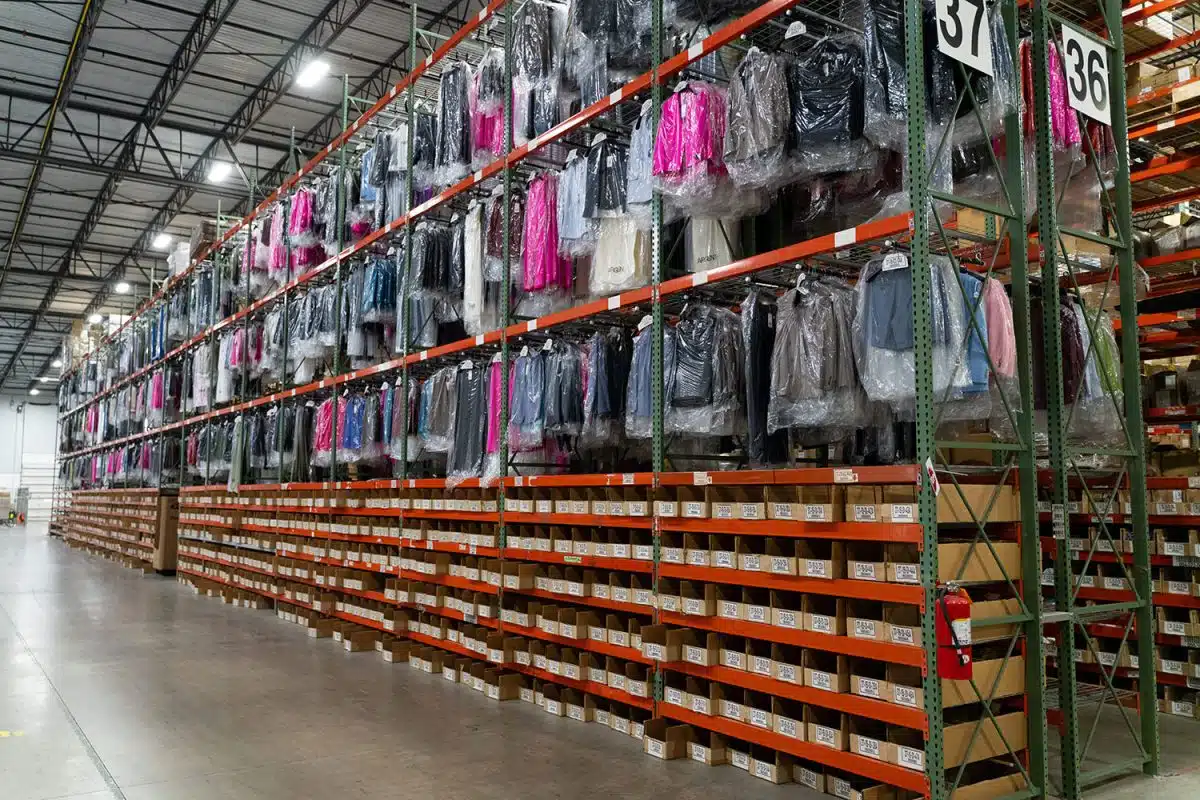
We hold ourselves to the same scorecard. Boxzooka runs four fulfillment centers across Secaucus, New Jersey; Middletown, Pennsylvania (two facilities); and Henderson, Nevada, and we ship 99.8% of orders on time. Our apparel fulfillment services include GOH storage, style, size, and color verification before stocking, inspection of returned merchandise, and a barcode-driven workflow that keeps picks accurate across large catalogs. That is the foundation of our fashion fulfillment work.

Every client works with an experienced, on-site Customer Success Manager that is intimately familiar with their products and eager to help their businesses succeed. Inside our CXP (client experience portal), you can view inventory in real time across our warehouses, track orders from import to delivery, and review SKU history and performance by channel. DTC and wholesale orders run as parallel workflows from a unified view of inventory, so one SKU can serve a direct order, a retail replenishment order, and a marketplace order with minimal manual reconciliation.

On pricing, we use transaction-based costing for inbound, outbound, storage, and other services, so you can see what drives your invoice. We work on term agreements and keep our minimums approachable for growth-stage brands. Every setup is different, so we build the plan around your catalog, return volume, and channel mix instead of applying one process to every client.

Frequently Asked Questions

What should I look for in an apparel fulfillment company?

Look for garment-specific handling such as garment-on-hanger storage, a WMS that tracks style, size, and color without workarounds, a fast and transparent returns process, and a clear plan for launches and peak season. Strong clothing fulfillment services also give you one view of inventory across DTC and wholesale, with the option to allocate stock by channel. The 12 questions in this guide cover each of these areas.

How is an apparel fulfillment company different from a general 3PL?

A general 3PL stores and ships many product types. An apparel fulfillment company builds its processes around clothing: size and color variance, returned-garment inspection, garment-on-hanger storage, higher return rates, and volume swings tied to drops and seasons.

How long does it take to switch to a new apparel fulfillment company?

Standard onboarding runs eight to twelve weeks when the timeline allows phased testing. A forced move on a fixed deadline can compress that schedule, and it works best when the provider starts WMS integration and warehouse preparation in parallel.

Should I choose an apparel fulfillment company based on price?

Price matters, but compare it line by line against your own order profile. Returns handling, storage, and value-added services often decide the true cost, so ask for a sample invoice before you sign.

Bring the Scorecard to Your Next Call With Us

Run these 12 questions on every provider you are considering, including us, and use the downloadable scorecard to keep the results in one place. Contact our team with your SKU count, return volume, and channel mix, and we will walk through each question using your catalog. Partner with Boxzooka to see how we can help your brand scale and thrive, and don’t get boxed in by a provider that can’t show its work.
Categories
Apparel Guides

How to Manage High SKU Counts Across Seasonal Collections Without Killing Your Accuracy Rate

Key Takeaways

  • A single apparel style offered in multiple sizes and colorways can generate 40 or more SKUs. A seasonal capsule can add hundreds of active SKUs at once, making apparel one of the most complex categories in eCommerce fulfillment.
  • Inventory accuracy and order accuracy are different metrics. Inventory accuracy (system counts match physical stock) depends on receiving, cycle counting, adjustments, and returns processing. Order accuracy (the right item ships to the right customer) depends on pick and pack controls such as barcode verification. High-SKU apparel operations need both.
  • Most accuracy problems trace back to upstream issues. Incomplete SKU data and weak receiving processes undermine inventory accuracy, while poor slotting of visually similar items drives mispicks.
  • Barcode scan-verify at both pick and pack is one of the most effective process controls for order accuracy in high-SKU apparel operations. It significantly reduces mispicks, and relying on visual confirmation by pickers is not a reliable substitute.
  • Apparel brands that maintain accuracy through seasonal transitions submit finalized SKU files at least 10 business days before launch, conduct a pre-launch inventory audit after receiving, and track both inventory accuracy and order accuracy at the SKU level rather than relying on an overall rate alone.
  • Choosing an apparel fulfillment partner with technology-native operations, including real-time inventory visibility and integrated returns processing, reduces the risk of oversell, mispick, and restock delays as SKU counts grow.

For apparel brands, a new season can mean a new set of problems. Dozens, and sometimes hundreds, of size-color SKU combinations drop at once, and the pressure to ship accurately from day one is immediate. Getting this wrong costs you more than a bad pick rate. It costs you customer trust and diminished brand sentiment.

Apparel is one of the most operationally complex categories in eCommerce fulfillment. A single style launched in five colors and four sizes generates 20 SKUs. As an illustration, a seasonal capsule of 15 styles at that same mix adds up to 300 SKUs overnight, many of which look nearly identical on a shelf. Your own collection may be smaller or larger, but the math scales quickly.

Brands that handle this well don’t do it through brute force. They do it through systems, processes, and a fulfillment partner that was built to handle this level of complexity. Here’s what that actually looks like in practice.

Why Apparel SKU Complexity Is Different From Everything Else

Most fulfillment challenges are about volume. Apparel fulfillment is about variety. The same pick-and-pack operation that handles a single-SKU supplement brand has to completely change its logic when it moves to a brand running several hundred active SKUs across multiple collections.

The variables that create complexity in apparel are well understood, but they compound quickly:

  • Size and color proliferation. A single style offered in XS through 3XL and six colorways generates 42 SKUs before you’ve made a single other decision.
  • Seasonal turnover. Collections rotate on a regular cycle, which means you’re constantly onboarding new SKUs, retiring old ones, and managing both simultaneously during transition periods.
  • Visual similarity. A navy polo and a black polo can look identical at arm’s length. In a busy warehouse, that matters.
  • Return rates. Online apparel return rates average roughly 24% in the US, according to Coresight Research (2023). For context, NRF estimates that retailers saw 16.9% of total 2024 sales returned across all channels. Rates vary by brand, price point, and return policy, but the volume means your reverse logistics operation is processing a steady stream of size-exchange items that need to go back into stock accurately.

24.4%

average US online apparel return rate, versus 16.9% of total retail sales returned across all channels

Coresight Research, 2023|NRF, 2024

300

SKUs in one illustrative capsule: 15 styles, 5 colors, 4 sizes

Illustrative example, not an industry benchmark

99.5%

order accuracy rate Boxzooka maintains across active apparel accounts*

Boxzooka internal data

None of this is unique to large brands. Mid-market apparel companies and DTC labels face the same operational pressure at a smaller scale, and often with less margin to absorb mistakes.

Inventory Accuracy and Order Accuracy Are Two Different Metrics

Before we get into fixes, it helps to separate two measures that often get lumped together. Both matter, but they break in different places and call for different controls.

  • Inventory accuracy. This measures whether the counts in your system match what is physically on the shelf, by SKU and by location. It depends on receiving, cycle counting, inventory adjustments, and returns processing. When it slips, you see oversells and backorders on items you thought you had.
  • Order accuracy. This measures whether the right items, in the right sizes and colors, go to the right customer. It depends on pick and pack controls, including barcode verification. When it slips, you see wrong-size shipments and exchanges.

The two are connected, but fixing one does not fix the other. A brand can have clean counts and still ship the wrong size, or pick flawlessly and still oversell because the system count was off. Throughout this post, we flag which metric each control supports so you can confirm your 3PL covers both.

The Real Source of Accuracy Problems

When accuracy rates drop during a seasonal launch, the instinct is to blame the warehouse team. More often, the root cause is upstream.

Accuracy problems in high-SKU apparel fulfillment typically trace back to one of four places. Each one affects inventory accuracy, order accuracy, or both:

1. SKU data that arrives incomplete or inconsistent

If your 3PL receives a new SKU file with inconsistent naming conventions, missing barcodes, or mismatched UPCs, that confusion gets baked into receiving counts and every pick decision downstream. This one affects both inventory accuracy and order accuracy. A clean, standardized SKU onboarding process is not a nice-to-have. It’s a prerequisite for accuracy.

2. Slotting decisions that weren’t made with apparel in mind

General-purpose 3PLs often slot products by size or weight. Apparel needs to be slotted with visual differentiation in mind. Similar styles in the same colorway should not be adjacent. Size variants for the same style, on the other hand, benefit from proximity to reduce travel time and reduce mispicks. Slotting mainly protects order accuracy.

3. No systematic scan-verify step at pick and pack

In a high-SKU environment, picker memory is not a reliable control. Barcode scanning at pick, and again at pack, is one of the most effective process interventions for order accuracy. The brands that maintain 99%+ order accuracy rates don’t rely on pickers to visually confirm the right item. They rely on a system that blocks or flags a wrong item before it ships, which significantly reduces mispicks.

No scan step catches everything. Damaged barcodes, mislabeled product, and manual overrides still create exceptions, so exception handling and quality checks matter too. Scan-verify also protects order accuracy only. It cannot confirm the count on the shelf, which is where receiving comes in.

4. Inadequate receiving processes for new seasonal drops

New collections arrive with new SKUs that haven’t yet been mapped to locations. If the receiving process doesn’t include a rigorous count-and-verify step against the expected SKU manifest, errors enter the system before a single order is picked. Receiving is where inventory accuracy is won or lost, and a bad count stays bad until a cycle count catches it.

How to Structure SKU Management for Seasonal Collections

There’s no single tactic that solves high-SKU complexity. It’s a combination of data integrity, process design, and technology that compounds over time. Here’s the framework we use with apparel brands at Boxzooka:

Build a SKU governance process before the season starts

Every new collection should go through a structured pre-launch review that covers: complete SKU file submission, barcode verification, expected units by SKU, and slotting instructions. The earlier this happens, the more time the fulfillment operation has to set up correctly. Brands that submit final SKU files two weeks before a launch tend to have smoother launches than those that send them two days before. Timelines can compress, though. In one case study, a women’s apparel brand moved two Shopify stores and several thousand SKUs to Boxzooka in eight weeks.

Use location-based logic, not memory-based logic

Every SKU should map to a fixed location in the warehouse. Pick instructions should tell pickers where to go, not just what to get. When new seasonal SKUs are added, they should be slotted into a logical location relative to similar items, with clear visual cues at the bin level. It supports both metrics.

Treat returns as a SKU management challenge, not just a shipping challenge

Apparel returns are high volume and time-sensitive. A size exchange that sits in a returns queue for five days is inventory that can’t be resold. Your returns process should include a grading and restocking decision at item receipt, not just a label-generation step. The apparel brands that maintain high inventory accuracy during peak returns periods tend to be the ones whose 3PL integrates returns processing directly into the active inventory workflow. Returns processing is an inventory accuracy issue first. An item that isn’t graded, scanned, and put away in the right location is stock your system can’t see or shows in the wrong place. For the cost side, see how retailers can keep growing returns costs in check.

Run cycle counts and document every inventory adjustment

Receiving gets counts right on day one. Cycle counting keeps them right. Count a rotating set of SKUs on a regular schedule instead of waiting for an annual physical inventory, starting with fast-moving sizes and new-collection SKUs, where variance builds fastest. Give every adjustment a reason code so you can tell whether a variance started at receiving, pick, or returns.

Track inventory accuracy and order accuracy separately, and by SKU category

A 99% overall order accuracy rate can mask a 92% rate on a specific size run within a new collection. The same applies to inventory accuracy, where a clean overall count can hide drift in fast-moving sizes. Tracking both metrics at the SKU category level during the first 30 days of a new season lets you identify and address problem areas before they compound.

The Boxzooka Approach

Our apparel fulfillment operations include item-level barcode scanning at pick and pack to support order accuracy, dedicated receiving lanes for seasonal drops to support inventory accuracy, and real-time inventory visibility through our platform. Our Client Experience Portal (CXP) allows brands to get a single view of active SKU counts, location data, and order accuracy metrics without needing to log into three separate systems.

What to Look for in an Apparel Fulfillment Partner

If you’re evaluating 3PLs specifically for apparel, the right questions aren’t just about square footage or carrier rates. They’re about whether the operation was actually designed to handle the unique challenges of apparel fulfillment at scale.

Ask any prospective apparel fulfillment company these questions:

  • What is your active SKU count for apparel clients, and how do you manage seasonal transitions?
  • Walk me through your receiving process for a new seasonal drop. At what point in that process does a new SKU become available to pick?
  • How do you handle near-identical SKUs at the bin level to prevent mispicks?
  • What is your current order accuracy rate for apparel accounts specifically?
  • What is your inventory accuracy rate for apparel accounts, and how often do you cycle count?
  • How are returns processed, and what does the restock timeline look like for a size exchange?
  • What technology does your team use to verify picks before an order ships?

A 3PL that can answer these questions with specific operational detail is one that has solved these problems before. A 3PL that answers in generalities has not. For the technology side of that conversation, see our six questions to ask before you trust a 3PL and its WMS.

Technology’s Role in Inventory and Order Accuracy

Neither inventory accuracy nor order accuracy in a high-SKU environment is something you solve with a better spreadsheet. The operations that perform well on both run technology that keeps every layer of the process in sync.

At minimum, that means:

  • A warehouse management system (WMS) that enforces barcode scan-verify at pick and pack, which significantly reduces mispicks
  • Real-time inventory visibility that syncs to your sales channels, which significantly reduces the risk of overselling a size that just went out of stock
  • Automated SKU onboarding workflows that flag data issues before they reach the warehouse floor
  • Returns management that feeds directly back into live inventory counts, supporting inventory accuracy

Beyond the warehouse, SKU inventory management also benefits from tight integration between your eCommerce platform and your fulfillment operation’s WMS. When a size sells through, your 3PL should know before your customer sees a discrepancy. New to the topic? Start with what a warehouse management system does.

Even so, no system eliminates errors. Integration delays, damaged barcodes, and manual mistakes still happen, so the strongest operations pair technology with exception handling, cycle counts, and regular audits.

This is where technology-first fulfillment providers operate differently from traditional 3PLs. The technology isn’t a bolt-on. It’s built into every step of the process, which helps accuracy hold up as SKU counts grow.

The Seasonal Launch Checklist

If you’re preparing a seasonal drop and want to protect accuracy from day one, here’s what that preparation looks like in practice:

  1. Submit final SKU files at least 10 business days before launch. Include complete attributes: style, color, size, UPC, expected units per SKU.
  2. Confirm your 3PL’s receiving schedule and make sure inbound shipments arrive before the pre-launch setup window closes.
  3. Request a pre-launch inventory audit once your product is received and slotted. Verify counts by SKU before the first order is placed.
  4. Confirm every new SKU is scannable and mapped before the first order. Scan-verify only works if each barcode is in the system and matches the right item.
  5. Set up real-time low-stock alerts for each SKU so you can suppress channels or update PDPs and reduce the risk of overselling.
  6. Define your returns handling process for the collection before launch. Agree on restock timelines and grade criteria upfront.
  7. Agree on a cycle count schedule for the first 30 days. Prioritize new-collection SKUs and fast-moving sizes.
  8. Review accuracy reporting setup with your 3PL, covering both inventory accuracy and order accuracy, so you know exactly where to look if an issue emerges in the first 72 hours.

Accuracy Is a Competitive Advantage

In a market where apparel customers have no shortage of options, the operational details matter more than most brands realize. A customer who receives the wrong size doesn’t just initiate a return. They make a judgment about your brand.

The apparel brands that scale successfully tend to have one thing in common: they treat fulfillment as a core part of the customer experience, not a logistics afterthought. That means working with an apparel fulfillment partner that understands the specific demands of high-SKU seasonal operations and has the processes and technology to execute them reliably. For more on the details that shape the customer experience, see how a 3PL improves apparel fulfillment and our tips for packaging apparel for shipping.

High SKU counts don’t have to mean lower accuracy. With the right infrastructure and processes in place, a high-SKU operation can hold both inventory accuracy and order accuracy steady, because every step is built to accommodate the complexity.

Ready to improve your apparel fulfillment accuracy?

Talk to our team about how Boxzooka manages high-SKU apparel operations for growing eCommerce brands. Get in touch with us today.

Categories
Apparel Fulfillment

Top 3PLs for Apparel Fulfillment in 2026: How to Choose the Right Partner

The top 3PLs for apparel fulfillment include Boxzooka, ShipBob, ShipMonk, Buske Logistics, and Bergen Logistics, each built around a different combination of catalog complexity, return volume, and channel mix. The right fit for your growing business depends less on brand size and more on how well a provider handles garment-specific requirements like size and color variants, garment-on-hanger storage, and fast return processing.

Key Takeaways

  • Apparel fulfillment is judged on garment handling, return processing, and SKU or variant complexity, not general warehousing capability.
  • Apparel return rates run 20 to 30 percent industry-wide, so reverse logistics speed and cost matter as much as outbound shipping.
  • A single apparel style can multiply into 15 to 20-plus SKUs once size and color variants are added, which strains inventory systems built for simpler catalogs.
  • The five providers compared here range from apparel-focused operators to broader 3PLs with apparel as one of several strengths, including Boxzooka’s high-touch, bi-coastal model built for premium DTC and omnichannel apparel brands.
  • The right 3PL depends less on brand size alone and more on catalog complexity, return volume, and whether you need DTC-only or combined DTC and wholesale support.

Apparel fulfillment is one of the more demanding categories in eCommerce logistics. A single hoodie in five sizes and four colors becomes 20 SKUs before you’ve shipped a single order. Return rates run 20 to 30 percent industry-wide, well above most other product categories, which means your 3PL’s reverse logistics process directly affects your margin.

Not every 3PL is built for this. Some specialize in heavy, bulky goods. Others are optimized for high-SKU subscription boxes or electronics that never touch a return truck. Choosing a fulfillment partner based on brand size or price alone, without checking how they handle garment-specific requirements, is one of the more common and costly mistakes apparel brands make.

This guide compares five 3PLs that serve apparel brands, including where each one is strongest and where it isn’t the right fit. It’s built around real, verifiable capabilities: facility footprints, published accuracy guarantees, and apparel-specific service details, not marketing claims.

What Makes Apparel Fulfillment Different

Apparel logistics has a few characteristics that don’t show up in general merchandise fulfillment.

SKU density is the first. Size, color, and style variants multiply fast. A 50-product catalog can turn into 1,000-plus active SKUs, and a 3PL’s warehouse management system needs to handle that volume without slowing down pick accuracy.

Returns are the second. Shoppers routinely order multiple sizes to compare fit at home, which drives apparel return rates well above the eCommerce average. A 3PL that can inspect, restock, and get returned inventory back into sellable condition quickly protects both your margin and your available inventory.

Garment care is the third. Some apparel needs specialized garment-on-hanger (GOH) storage instead of flat pack to prevent wrinkling. Other lines need poly bagging, tissue wrapping, or branded packaging inserts applied consistently across every order.

How We Evaluated These 3PLs

We looked at four things for each provider: apparel-specific handling capabilities (GOH, variant picking, packaging standards), returns workflow speed, facility footprint and shipping coverage, and technology integrations with the platforms apparel brands actually sell on, primarily Shopify, Amazon, and TikTok Shop.

The goal is an honest comparison you can use to build your own shortlist, not a ranked list designed to point you toward one answer.

Top 3PLs for Apparel Fulfillment at a Glance

Provider Best For Facility Footprint Apparel-Specific Strength
Boxzooka Premium, high-touch DTC and omnichannel apparel brands with complex returns and wholesale distribution needs 4 bi-coastal facilities (NJ, PA x2, NV) 99.8% on-time shipping, consistently high fulfillment accuracy, GOH storage, barcode-driven variant picking, kitting, proprietary CXP client portal and technology systems, numerous integrations
ShipBob DTC apparel brands scaling into international markets 60+ fulfillment centers across 6 countries 2-day shipping across 100% of the continental US from a single facility, AI-driven demand forecasting, native Shopify/WooCommerce integration
ShipMonk Growth-stage and subscription-driven DTC apparel brands 12+ owned and operated facilities, 3M+ sq ft across the US, Canada, Mexico, and Europe 99.9% order accuracy, Cubiscan dimensional scanning, deep Shopify sync, kitting for bundled SKUs
Buske Logistics Established apparel brands needing DTC plus large-scale retail distribution 40 facilities across the US and Canada, 7.5M+ sq ft Over 100 years in operation, GOH plus flat and temperature-controlled storage, EDI-compliant retail distribution
Bergen Logistics Fashion, footwear, and accessories brands needing wholesale plus DTC at global scale Facilities across 11 countries (US, Canada, EU, UK, APAC) 25+ years apparel-specific: hanger application, embroidery, price tagging, steaming; 99.5% order accuracy

The 5 Best 3PLs for Apparel Fulfillment

1. Boxzooka

Best for: Premium and emerging DTC and omnichannel apparel brands that need high-touch fulfillment, dependable reverse logistics, and support across both DTC and wholesale channels.

Boxzooka runs four bi-coastal fulfillment centers, in Secaucus, New Jersey (headquarters), Middletown, Pennsylvania (two facilities), and Henderson, Nevada (Las Vegas), giving apparel brands coast-to-coast coverage without splitting inventory across a sprawling network. We maintain a 99.8% on-time shipping rate and hold every facility to a consistently high standard for order accuracy.

Apparel gets dedicated handling here rather than a generic pick and pack workflow. Boxzooka’s WMS supports GOH (garment-on-hanger) storage, custom item serialization, poly bagging, hang tags, lot tracking, and FIFO/FEFO rotation, the inventory logic apparel brands with seasonal drops and fast-moving styles actually need. Every order runs through a barcode-driven workflow built to reduce picking errors across high-variant catalogs, and a custom fulfillment plan is built around each brand’s size range, packaging style, and seasonal promotion calendar rather than applying one process to every client.

Returns get treated with the same urgency as outbound orders rather than as a backlog item, which matters given how high apparel return rates run. Our team inspects, relabels, or repackages returned items for quick restocking, with real-time visibility into that process through our CXP (Client Experience Portal). We also take on the value-added customization apparel brands ask for most, including monogramming, embroidery, and branded packaging, positioning Boxzooka as a partner that says yes to high-touch requests many general 3PLs turn down.

Boxzooka isn’t a DTC-only operation. Our B2B Retail Fulfillment capabilities support wholesale and omnichannel distribution alongside DTC volume, including retailer-specific routing guide compliance, carton labeling, and EDI-compliant shipping documentation, so brands adding department store, boutique, or specialty retail accounts to their channel mix can run DTC and wholesale orders through the same team and the same inventory pool rather than standing up a separate operation.
That combination of apparel-specific inventory logic and brand-protective service is built for premium and emerging DTC and omnichannel labels that can’t afford fulfillment mistakes to undercut the experience they’ve built everywhere else. Because the network is concentrated across four facilities rather than dozens, brands get a consistent, hands-on relationship with the same team that manages their inventory day-to-day, inside a controlled network built for accountability rather than a sprawling one.

2. ShipBob

Best for: DTC apparel brands scaling into international markets.

Founded in 2014 by Dhruv Saxena and Divey Gulati, ShipBob has grown into one of the largest fulfillment networks serving small and mid-sized eCommerce brands, now operating more than 60 fulfillment centers across the US, Canada, the UK, the EU, and Australia. That scale gives apparel brands a real path to international fulfillment without negotiating separate warehouse contracts in each region.

For apparel specifically, ShipBob’s AI-driven demand forecasting helps plan around the seasonal and trend-driven spikes that are common in fashion, and the platform supports polybag and boxed packaging workflows. ShipBob is a Shopify Plus Certified app partner and integrates natively with Shopify and WooCommerce, and the network can deliver 2-day shipping across 100% of the continental US from a single fulfillment center, with faster coverage available once inventory is split across multiple locations.

ShipBob publishes a minimum of 250 orders per month, which puts it in reach of growing brands rather than only enterprise accounts. One thing to check during evaluation: ShipBob’s network blends company-operated Innovation Centers with a partner network it calls the ShipBob Fulfillment Network (SFN), so service levels and apparel handling standards can vary by location. It’s worth asking which specific centers would handle your inventory before you sign.

3. ShipMonk

Best for: Subscription box and growth-stage DTC apparel brands that want automated fulfillment with deep Shopify integration.

Unlike other larger providers that lean on a partner network, ShipMonk runs 100% owned-and-operated fulfillment centers, more than 12 facilities and over 3 million square feet across the US, Canada, Mexico, and Europe. A 2025 expansion added two Las Vegas facilities and a Pittston, Pennsylvania campus, over 1 million additional square feet, giving the network combined capacity to process more than 300,000 orders a month and scale well beyond that during peak season.

ShipMonk built its platform around robotic automation, Cubiscan dimensional SKU scanning, and real-time inventory tracking, and publishes a 99.9% order accuracy rate. Flexible automation rules and no published order minimums make it accessible for brands still scaling their order volume, and if your apparel business includes subscription or bundled products, ShipMonk’s kitting and order management depth are a genuine strength.

The tradeoff: automated systems are tuned for standardized products. Merchant reports also flag billing complexity and, in some cases, long offboarding timelines when brands switch providers. If your apparel line includes irregularly shaped items, like bulky outerwear or footwear boxes, ask specifically how ShipMonk’s automated systems handle them before signing.

4. Buske Logistics

Best for: Established apparel brands that need combined DTC and wholesale fulfillment at scale.

Buske Logistics has operated as a privately held 3PL since 1923, which gives it more institutional history than almost any other provider apparel brands will evaluate. That longevity shows up in scale: Buske runs roughly 40 warehouse locations across the US and Canada, totaling more than 7.5 million square feet, with key sites in Louisville, Houston, Edwardsville, Fort Worth, Cartersville, and Windsor, Ontario.

Buske’s apparel-specific infrastructure includes GOH racking alongside flat storage and temperature-controlled zones built to protect fabric quality across seasons. On the retail side, Buske handles EDI-compliant shipping, carton labeling, and ASN documentation to help apparel brands avoid chargebacks when selling into big-box and department store accounts, a capability that matters once a DTC apparel brand adds wholesale distribution to its channel mix.

As with any large contract warehouser, Buske’s public materials are lighter on garment-level packaging detail than providers built apparel-first, and the company doesn’t publish a standard minimum order volume. Its sales process is oriented toward mid-market and enterprise complexity rather than self-serve onboarding, so brands evaluating Buske should confirm current apparel client references and expected onboarding timelines directly.

5. Bergen Logistics

Best for: Fashion, footwear, and accessories brands that need combined wholesale and DTC fulfillment across a global footprint.

Bergen Logistics has focused on fashion, footwear, and lifestyle brands since 1998, and joined the Elanders Group, a global third-party logistics and supply chain solutions company, in 2024. Its network spans facilities across 11 countries, including the US, Canada, the UK, and the EU, which supports brands shipping both domestically and cross-border. The company reports 99.5 percent order accuracy and 95 percent on-time 2-day shipping across a client base of more than 2,000 brands.

What sets Bergen apart for apparel specifically is the depth of garment-focused value-added services: hanger application, price tag application, embroidery, custom packing, and steaming, all run through its proprietary WMS. That’s a level of garment-handling detail that general-purpose 3PLs typically don’t offer as standard, and it’s paired with the operational backing of a parent company that runs logistics at a much larger global scale, which can matter for apparel brands planning international wholesale expansion.

How to Choose the Right Apparel 3PL for Your Brand

The best 3PL for your brand isn’t the biggest name on this list. It’s the one that matches how your apparel line actually operates. A few questions worth asking every provider you shortlist:

Garment handling. Does the provider offer garment-on-hanger storage, or is everything folded and poly-bagged? Ask them to walk through their process for your specific product types.

Returns speed. Apparel return rates run 20 to 30 percent. Ask how quickly returned items are inspected, restocked, and made sellable again, and whether per-return fees apply.

SKU and variant complexity. A 50-product catalog with size and color options can mean 1,000-plus active SKUs. Ask about pick accuracy rates at that scale.
Seasonal scalability. Q4 volume can run two to three times your average. Confirm seasonal staffing plans and warehouse capacity headroom, not just base-case throughput.

Tech integrations. Most apparel brands sell across Shopify, Amazon, and increasingly TikTok Shop. Confirm native integrations for every channel you use, plus EDI support if you sell wholesale or retail.

Contract flexibility. Ask about minimums, storage pricing structure, and what happens if your volume changes significantly in either direction.

For a deeper dive, we put together a 12-question apparel fulfillment scorecard.

Find the Right Fit for Your Brand

The right apparel 3PL depends on your catalog, your return volume, and how much brand experience you want built into every unboxing. If you’re evaluating partners, let’s start with your SKU complexity, return volume, channel mix, and fulfillment requirements. Talk to our team and we’ll help you map out the apparel fulfillment setup that fits your brand, so you can stay out of the fulfillment weeds.

Frequently Asked Questions

What is an apparel 3PL?

An apparel 3PL stores, picks, packs, ships, and manages returns for clothing, footwear, and accessories, with added capabilities for size and color variants, branded packaging, and return inspection that general merchandise 3PLs don’t always offer.

How many SKUs does apparel fulfillment typically involve?

A single product with five sizes and four colors becomes 20 SKUs before a second product is added, which is why apparel brands with even modest catalogs can end up managing 1,000 or more active SKUs.

What return rate should apparel brands expect?

Apparel return rates typically run 20 to 30 percent, well above the eCommerce average, largely because shoppers order multiple sizes to compare fit at home.

Do all 3PLs support garment-on-hanger storage?

No. GOH storage is a specialized capability that prevents wrinkling for structured or delicate garments, and not every 3PL offers it. Brands with GOH needs should confirm this directly rather than assume it’s standard.

When should an apparel brand switch to a 3PL?

Most apparel brands consider outsourcing once in-house fulfillment starts limiting growth, typically when order volume, SKU complexity, or return volume make it hard to maintain shipping speed and accuracy without full-time warehouse staff.

Categories
Apparel Fulfillment

7 Tips for Packaging Apparel for Shipping

Consumers continue to move from in-store to online fashion shopping. By 2030, the global apparel market is estimated to reach $2.26 trillion, and 51% of families are shopping early to avoid rising prices due to tariffs. A clear trend exists in the need for more efficient apparel shipping.

An effective fulfillment plan is essential for retailers to navigate this market successfully. Thoughtful strategy can help you meet your customers’ demands, even when those expectations include same-day delivery. A strong strategy will result in fewer returns, better branding, and more loyalty. These seven tips for packaging apparel for shipping can help boost your fulfillment and grow your brand.

1. Choose the Right Packaging Materials for Fashion SKUs

Choosing the right packaging material is an excellent way to enhance your customers’ retail experience. Consider the following for selecting the best packaging materials:

  • Prioritizing brand identity: Packaging has a significant impact on the consumer’s impression of your brand. By using the right colors, logos, and designs, you can attract your ideal customer by addressing consumer preferences and market trends.
  • Choosing sustainable materials: Sustainable materials are a priority for consumers who are mindful of the environment. An increasingly greater number of consumers are willing to pay more for sustainable packaging. 
  • Protecting the product: While being lightweight and easy-to-ship are major requirements, it shouldn’t come at the expense of protecting the product. Choose materials that are durable and weather-resistant. 
  • Choosing the tight-size packaging: Excessive packaging can impact your operations and your consumers. From a business perspective, it’s more costly. For consumers, it’s challenging to dispose of. 
  • Enhance the unboxing experience: The unboxing experience helps you connect with your customer. It’s their first tangible experience with your brand, so it is best to make it memorable. 

2. Protect Delicate Fabrics

Knowing how to ship delicate fabrics is vital in fashion fulfillment. It also addresses some of the pain points that both you and your customers may experience. 

  • Damage during transit: Fragile fabrics are prone to snag, tear, or crease. To ensure they reach their destination in the best condition, fulfillment service providers recommend using padded mailers, tissue, and rigid outer boxes.
  • Moisture and humidity exposure: Moisture-prone areas or longer shipping distances may result in high humidity, which could lead to mold, stains, or odor. Some mailers are excellent for protection from handling, including inner moisture protection is advisable. This simple addition can save you time, effort, and refund costs.
  • Inconsistent brand presentation: Perception is key in branding, especially if you are establishing a boutique or high-end brand. Delicates often fall into these categories, and if the packaging is wrong, damaged, or the cause of a wrinkled garment, the entire brand image can be affected.

3PL fulfillment service providers like Boxzooka offer their customers packaging solutions that protect delicate garments. These solutions may include: 

  • Using void fill and a biodegradable bubble wrap for padding 
  • Wrapping the inner contents with cellulose for visibility and protection 
  • Making custom packaging adjustments based on stock keeping unit (SKU) sensitivity — for instance, shipping lace or silk

3. Fold and Present Like It’s On a Shelf

Unboxing is a social media trend often found on YouTube, TikTok, and Instagram. One of the first things viewers notice is the presentation of the packaged goods. One survey showed that 40% of consumers would share products online because of how it was packaged.

Reasons why you should fold apparel neatly when shipping it include: 

  • You reduce the chances of the product creasing excessively 
  • Your customer has a positive retail experience  
  • It offers an efficient use of the packing space 
  • It presents your brand as professional 
  • Neatly folding the item might prevent returns, especially for items such as wedding dresses or expensive suits that require specialized care to remove creases 

Some tips for packaging apparel for shipping this way are: 

  • Fold neatly and consider the natural crease lines for the garment 
  • Try to reduce tag visibility 
  • Use presentation inserts to enhance the appearance of the packaged goods 

4. Label Accurately

Accurate shipping labels help ensure the safety of your packages and make deliveries quicker and more efficient. The accuracy of your shipping labels will determine whether your apparel fulfillment service can deliver on the promise you made to your customer.  

Some of the reasons why you should improve your label accuracy include: 

    • The correct delivery: Your packages end up where they should, which reduces delivery returns.
    • Faster delivery times: Correct labels simplify the sorting and routing process, which reduces the need to intervene or reprocess manually. 
  • Cost efficiency: a smooth, on-time delivery means you don’t have to worry about re-shipping fees, return shipping, or refund processing. The correct label reduces the time customer service has to spend resolving label-related issues.
  • Reduced risk of lost packages: When packages get lost, both the business and the consumer lose, especially when you’re on a tight timeline, like delivering back-to-school apparel. A precise label ensures traceability throughout the entire supply chain process, especially when it includes additional features such as barcodes, packing slips, SKUs, or smart trackers. 
  • Legal and customs compliance: If your shipments are going across the border, your shipment labels need to be in the right format and include customs details. If not, customs on either side can fine you, or hold or confiscate the goods.
  • Inventory and fulfillment accuracy: A good shipping label helps your business through the most intensive and expensive part of the fulfillment process, also known as the supply chain last mile. The last mile involves getting the goods from the warehouse to the consumer and involves several logistics hurdles to jump through. Your shipping label acts as a wayfinder to get your package to the right destination.

5. Plan for Returns

Returns are a natural order of business, and even the trendiest brands have a consumer-centered returns policy. Having a good return policy is essential, as it deeply impacts consumer decision-making. Naturally, tips for packaging apparel for shipping should include an easy way to return those goods, for instance, include resealable packaging and clear return instructions. 

A frictionless process boosts customer satisfaction and reduces the load on your customer service team. An easy-to-execute returns process allows consumers to take charge without feeling frustrated. A clear policy gives your service team the autonomy they need to make decisions about the returns. 

6. Consider Climate and Transit

Not all your packages are going to handle the shipping process the same way. Two of the reasons products need tailored packaging solutions are climate and transit. For instance, one of your products could be heat sensitive and travel a short distance in an arid, hot region. Another could be delicate and have a long and challenging haul to its destination. 

Consider all the elements that might affect your packaging, and adjust to accommodate these. For instance, add moisture barriers or protective sleeves. 

Transit considerations are not only weather-related. You also need to factor in whether there are several hand-off points in the process. Solutions for these instances can include durable packaging and tamper-evident seals.

7. Work With a Fashion 3PL

Consumers are turning to e-commerce businesses to fulfil their fashion needs, and as such, the apparel logistics market size is expected to grow at a CAGR of 6.5% from 2024 to 2030. Efficient deliveries are a priority, and that’s where a specialized fashion 3PL service steps in. It offers expertise and infrastructure tailored to the unique needs of clothing and accessories. 

More than just warehousing and shipping, a fashion 3PL like Boxzooka brings precision, flexibility, and brand protection to every step of the fulfillment process. Here’s how a fashion 3PL delivers added value.

Inventory Accuracy Built for Fashion

Fashion SKUs move fast, change frequently, and require meticulous organization. An apparel fulfillment partner like Boxzooka uses item-level barcode scanning, multi-SKU bundling, and real-time inventory tracking to ensure 99.9% fulfilment accuracy.

Packing That Protects the Brand

In fashion, packaging is part of the product experience. A top-tier 3PL service offers on-brand, flexible packing options: from eco-friendly polybags to branded tissue and custom kitting. A good 3PL will also prioritize solutions like climate-controlled packaging and the ability to split or combine orders with minimal touchpoints.

Compliance With Retailer Requirements

Big-box retailers and marketplaces each have strict compliance rules: carton labeling, ASN timing, EDI integration, and more. If you’re working with a fashion brand and you don’t meet these requirements, you risk chargebacks and penalties.

Boxzooka’s apparel fulfillment services include pre-configured routing guides for major retailers, EDI mapping, and automated compliance checks. That means your products land on shelves, or at customers’ doorsteps, without friction.

Take the Next Step in Smarter Apparel Shipping

Smarter apparel shipping that delights your customers and increases the likelihood of return business starts with smart tips for packaging apparel for shipping. Proper packaging does more than protect your products; it safeguards your brand, enhances the unboxing experience, and reduces costly returns. 

When you work with a fashion-focused 3PL like Boxzooka, you gain access to precise inventory control, retailer-ready compliance, and flexible packing solutions designed specifically for the apparel industry.

Now is the perfect time to review your current fulfillment and packaging setup. Is it scalable? Is it brand-consistent? Is it protecting your margins as well as your merchandise? Explore our apparel fulfillment services and see how Boxzooka can elevate your logistics game.