
Categories
Fulfillment Guides

Top 3PLs in Las Vegas for 2026: 10 Fulfillment Partners Compared

Last updated: September 2026

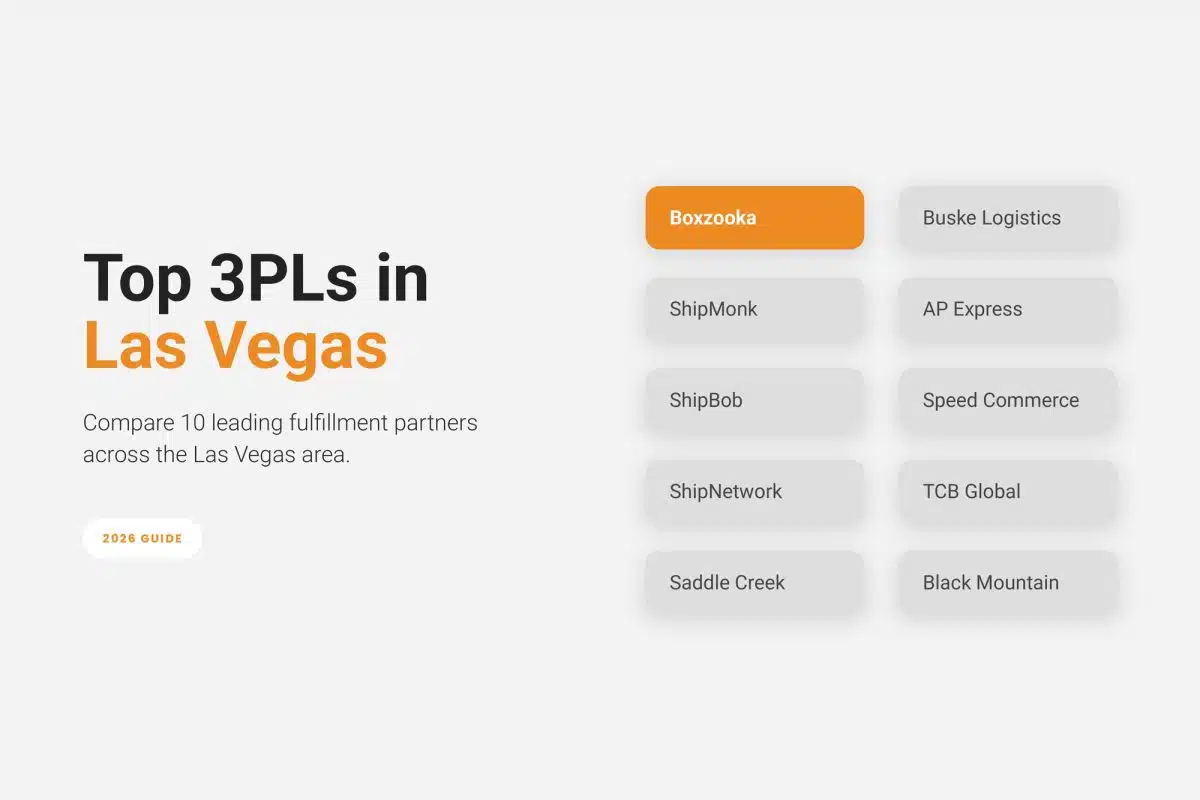
The short answer: The top 3PLs in the Las Vegas area for 2026 include Boxzooka, ShipMonk, ShipBob, ShipNetwork, Saddle Creek Logistics Services, Buske Logistics, AP Express Logistics, Speed Commerce, TCB Global, and Black Mountain Fulfillment. Each runs a facility in Las Vegas, Henderson, or North Las Vegas, but they serve very different brands, so the right pick depends on your volume, channels, and products.

Key Takeaways

  • Ten 3PLs with facilities in Las Vegas, Henderson, or North Las Vegas stand out for 2026, ranging from enterprise contract logistics operators to local, hands-on fulfillment shops. They are not ranked. We organize them by the use cases each serves best.
  • Henderson provides 1-2 day ground access to much of California, Arizona, and the Mountain West.
  • Henderson hosts Boxzooka and ShipNetwork; North Las Vegas hosts ShipMonk, ShipBob, Saddle Creek, and Speed Commerce.
  • Match the provider to your model: high-touch DTC, high-volume automated DTC, retail and wholesale distribution, regulated products, and port-to-warehouse freight each point to different 3PLs.

A quick note on who wrote this. Boxzooka runs a fulfillment center in Henderson, so we’re one of the providers on this list. We’ve described every other company using its own published materials and public records, and we’ve been specific about where each one fits best, including where we may not. We don’t score providers, so the order on this page isn’t a ranking.

Top 3PLs in Las Vegas by Use Case

These providers are listed in no particular order. We organized them around the use cases each serves best, not by score.

  • Boxzooka: Best for high-touch, brand-sensitive DTC and omnichannel brands in apparel, beauty and cosmetics, health and nutraceuticals, and CPG.
  • ShipMonk: Best for high-volume DTC brands that want heavy automation and regulated-product certifications.
  • ShipBob: Best for brands that want one platform across a large multi-node network.
  • ShipNetwork: Best for growing brands that want Henderson fulfillment plus EDI retail services.
  • Saddle Creek Logistics Services: Best for high-volume retail replenishment and cross-docking.
  • Buske Logistics: Best for food, beverage, and regulated CPG with retail compliance needs.
  • AP Express Logistics: Best for importers moving freight from the Los Angeles and Long Beach ports.
  • Speed Commerce: Best for omnichannel brands that also want outsourced customer care.
  • TCB Global: Best for beverage, CPG, and trade show-driven brands.
  • Black Mountain Fulfillment: Best for small and growing DTC and subscription brands that want a local partner.

Las Vegas 3PLs at a Glance

Las Vegas 3PLs at a Glance
3PL Las Vegas-Area Location Channels Standout Capability
Boxzooka Henderson DTC, B2B/EDI, wholesale High-touch fulfillment, custom kitting, proprietary WMS, bi-coastal facilities
ShipMonk North Las Vegas (2 sites) DTC, marketplace, B2B 772,000 sq ft campus, FDA registered, bonded
ShipBob North Las Vegas DTC, B2B, marketplace 60+ fulfillment centers on one platform
ShipNetwork Henderson DTC, B2B, subscription EDI retail services, 1-to-2-day Southwest delivery
Saddle Creek North Las Vegas (2 sites) Retail, B2B, DTC 583,000 sq ft temperature-controlled cross-dock
Buske Logistics Near Las Vegas B2B, retail, DTC FDA-certified, food-grade, lot control
AP Express Las Vegas Retail, B2B, DTC 74 asset-based trucks, port transloading
Speed Commerce North Las Vegas DTC, retail/EDI Fulfillment plus in-house customer care
TCB Global Las Vegas / Henderson B2B, DTC, events Beverage/CPG programs, trade show logistics
Black Mountain Las Vegas DTC, subscription, B2B Same-day shipping on orders by noon PST

Why Brands Choose a 3PL in Las Vegas

Las Vegas provides a strategic location for fulfillment. Henderson provides 1-2 day ground access to much of California, Arizona, and the Mountain West, so brands can reach Western customers quickly from a single node. Exact transit times depend on the destination, carrier, and service level. We walk through the delivery-zone math in our West Coast fulfillment hub guide.

The market also has room to grow. Colliers reports that industrial vacancy fell to 9.1% in Q2 2026, with 762,333 square feet of net absorption concentrated in warehouse and distribution space, and weighted average asking rent at $1.10 per square foot on a triple net basis. Together, those numbers point to a scalable logistics market with available capacity for brands that need space as they grow. Nevada also has no corporate income tax, no inventory tax, and no franchise tax, which matters when you hold deep inventory.

That combination has pulled national 3PL fulfillment networks and local specialists into the same valley. The result is plenty of choice, and plenty of room to pick the wrong partner for your model.

How We Selected These Las Vegas 3PLs

  1. Las Vegas-area footprint. Every provider on this list runs a facility in Las Vegas, Henderson, or North Las Vegas, not just a sales office.
  2. Channel coverage. DTC, marketplace, B2B, retail, and wholesale capabilities, including EDI and retail compliance where published.
  3. Infrastructure and technology. Facility size and certifications, storage environments, automation, WMS, and integrations.
  4. Service fit. The brand size, product categories, and service model each provider is built around.

We use these criteria to decide which providers belong on the list and where each fits best. We don’t score or rank providers. All details reflect publicly available information as of September 2026. Capabilities and pricing change, so confirm specifics directly before you sign.

Top 3PLs in Las Vegas, Henderson, and North Las Vegas: 10 Profiles

The profiles below are not ranked. We list Boxzooka first because we wrote this guide, and the other nine follow the same order as the table above.

Boxzooka

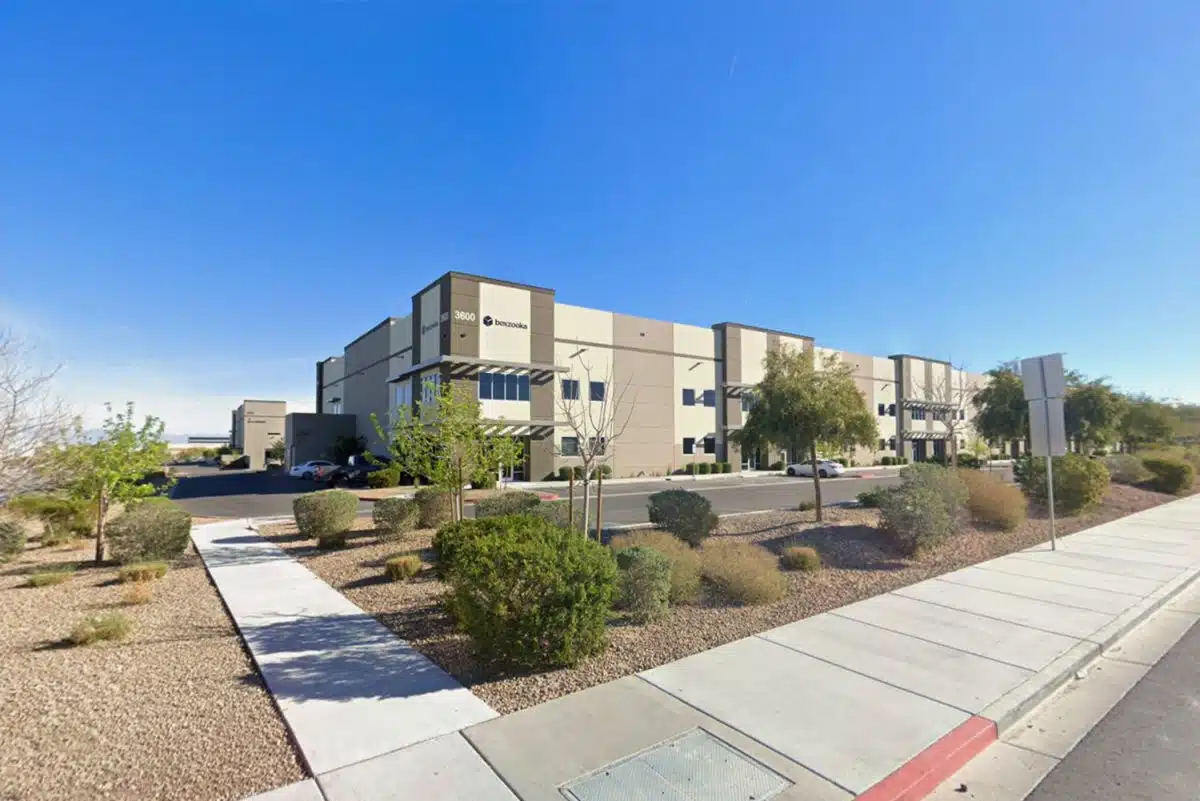
Las Vegas-area location: Henderson, NV (3600 East Dale Avenue)

Network: Secaucus, NJ; two facilities in Middletown, PA; Henderson, NV

Channels: DTC, B2B/EDI, wholesale, marketplace, and subscription

Standout capability: High-touch fulfillment on a proprietary WMS, with custom kitting, premium unboxing, and prioritized reverse logistics

Best for: Premium, brand-sensitive DTC and omnichannel brands in apparel, beauty, cosmetics, health and nutraceuticals, CPG, and subscription box

We built our Henderson facility for brands where presentation and accuracy carry as much weight as speed. We hold a 99.8% on-time shipping rate, and every client works with an on-site client success manager. In an independent assessment, West Monroe benchmarked our WMS at or above par against six platforms, with standout strengths in returns management, value-added services, and labor management, and counted 82 direct integrations against a category average of about 50.

For omnichannel brands, our Henderson west coast fulfillment hub runs B2B and DTC orders through separate workflows, with EDI for purchase orders, ASNs, and invoices and a transportation management system that manages retail delivery appointments. We work well with growth-stage brands who desire an elevated fulfillment experience with high-touch service.

Consider another option if: You run pure, full-truckload bulk distribution with no consumer channel, or you’re just starting out and shipping a handful of orders a week.

ShipMonk

Las Vegas-area location: North Las Vegas (NV1 and NV3, including 4970 E. North Belt Road)

Channels: DTC, marketplace, and B2B/EDI

Standout capability:772,000 square feet of owned and operated space, FDA registered and bonded, with NV1 GFSI-certified to the BRCGS standard

Best for: High-volume DTC brands, especially in health, nutrition, and beauty

ShipMonk’s Las Vegas campus is one of the larger dedicated eCommerce fulfillment operations in the valley. The company says the Las Vegas and Pennsylvania campuses together can handle more than 300,000 orders per month on average, with capacity to scale past one million during peak.

ShipBob

Las Vegas-area location: North Las Vegas (LAS-1)

Channels: DTC, B2B retail distribution, and marketplaces

Standout capability: A network of 60+ fulfillment centers managed on one platform

Best for:
Brands that want to distribute inventory across many nodes and manage it in one system

ShipBob’s Las Vegas site sits inside its West Coast hub alongside Reno, Phoenix, and Southern California facilities. That makes it a natural fit for brands that plan to spread inventory across multiple regions as they grow.

ShipNetwork

Las Vegas-area location: Henderson, NV

Channels: DTC, B2B and retail via EDI retail services, subscription boxes

Standout capability: Same-day pick and pack with 1-to-2-day ground delivery across the Southwest

Best for: Growing brands that want a Henderson node inside a multi-state network

ShipNetwork runs fulfillment centers in Nevada, California, Utah, Texas, Illinois, Georgia, Pennsylvania, and New York. Its Las Vegas page highlights subscription box experience and in-house returns management.

Saddle Creek Logistics Services

Las Vegas-area location: North Las Vegas (North 5th Street and Vantage North in Apex)

Channels: Retail distribution, B2B, parcel, and returns

Standout capability: A 583,320 square foot cross-dock building with 78 dock positions, described as temperature-controlled

Best for: Established CPG manufacturers and retailers with large, steady B2B volume

Saddle Creek’s network spans 33 million square feet across 31 markets. Its Las Vegas dock capacity suits programs that move full pallets on tight retail replenishment cycles.

Buske Logistics

Las Vegas-area location: Fulfillment center near Las Vegas

Channels: B2B, retail, pallet and truckload, and DTC

Standout capability: FDA-certified, food-grade warehousing with FIFO/FEFO and lot tracking

Best for: Food, beverage, supplement, and CPG brands selling into big-box retail

Buske handles retail compliance for Amazon, Walmart, and Target, including labeling, pallet configuration, ASN generation, and routing guide requirements. The company has more than 100 years in logistics.

AP Express Logistics

Las Vegas-area location: Las Vegas, NV

Channels: Retail distribution, B2B, eCommerce, and Amazon

Standout capability: 74 asset-based trucks and 2.1 million square feet across Los Angeles, the Inland Empire, and Las Vegas

Best for: Importers moving freight from the Los Angeles and Long Beach ports

Owning the linehaul between the ports and Las Vegas gives AP Express more control over transloading and delivery timing. The family-owned company has operated since 1992.

Speed Commerce

Las Vegas-area location: North Las Vegas (4980 Statz Street), headquartered in Las Vegas

Channels: DTC and retail/EDI fulfillment, kitting, and returns

Standout capability: Fulfillment paired with an in-house customer care operation

Best for: Omnichannel brands that want fulfillment and customer support under one contract

Speed Commerce is one of the longest-standing 3PLs headquartered in the Las Vegas market, with integrations for Shopify, BigCommerce, WooCommerce, and EDI.

TCB Global

Las Vegas-area location: Las Vegas hub with a Henderson office

Channels: Wholesale and bulk distribution, DTC, FBA prep, and events

Standout capability: Beverage and CPG programs with lot tracking, plus trade show logistics

Best for: Beverage and CPG brands, and brands with a heavy trade show calendar

TCB Global runs Las Vegas and Orlando hubs on one WMS, so brands can split inventory for coast-to-coast coverage. It also brokers parcel, LTL, FTL, and drayage.

Black Mountain Fulfillment

Las Vegas-area location: Las Vegas, NV (North Lamb Boulevard)

Channels: DTC, subscription box, and B2B

Standout capability: Same-day shipping on orders received by 12 p.m. PST and returns processed within one business day

Best for: Small and growing DTC and subscription brands that want a local, hands-on team

Black Mountain integrates with Amazon, Shopify, and WooCommerce and assigns dedicated account managers, a good match for brands that want direct access to the people running their inventory.

How to Choose the Right Las Vegas 3PL

A good shortlist gets you to three or four calls. These questions narrow it to one:

  • What does a typical client look like? Ask for order volume, category, and channel mix. A provider built for millions of automated parcels runs very differently from one built for custom kitting.
  • How do you handle retail orders? If you sell wholesale, ask which retailers they already ship to. Chargebacks hit an estimated 5% to 15% of manufacturer invoices, so EDI and routing guide experience matters. Our B2B fulfillment guide covers the basics.
  • Who will I actually work with? Find out whether you get a dedicated account team on site or a shared support queue.
  • What does the data look like? Ask for a live look at the client portal before you sign.

For a deeper checklist, read our guide on what to look for in a Las Vegas 3PL partner.

Find Your Fit in Henderson

There’s no single best 3PL in Las Vegas, only the best fit for your brand. If you move full trailers into big-box DCs, a large contract logistics operator will likely serve you well. If you ship millions of standardized parcels, heavy automation wins.

But if your brand lives on presentation, accuracy, and a team that knows your products by name, that’s exactly why we built our Boxzooka Henderson fulfillment center.

Not sure which fulfillment model is right for your brand? Talk with our team about your order profile, channels, and requirements to see whether Boxzooka’s Henderson operation is the right fit.

Frequently Asked Questions About Las Vegas 3PLs

What are the top 3PLs in Las Vegas?

The top 3PLs in the Las Vegas area for 2026 include Boxzooka, ShipMonk, ShipBob, ShipNetwork, Saddle Creek Logistics Services, Buske Logistics, AP Express Logistics, Speed Commerce, TCB Global, and Black Mountain Fulfillment. We don’t rank them, and the best choice depends on your order volume, sales channels, and product category.

What are the top 3PLs near Las Vegas, including Henderson and North Las Vegas?

Henderson is home to Boxzooka and ShipNetwork, and TCB Global runs its Las Vegas office there. North Las Vegas hosts ShipMonk, ShipBob, Saddle Creek, and Speed Commerce. AP Express and Black Mountain Fulfillment operate in Las Vegas proper, and Buske runs a fulfillment center near Las Vegas.

Which Las Vegas 3PL is best for DTC eCommerce brands?

For premium, brand-sensitive DTC brands that need custom packaging and high-touch service, Boxzooka is a strong fit. For high-volume DTC with heavy automation, ShipMonk and ShipBob are common choices. For small and growing sellers who want a local, hands-on partner, Black Mountain Fulfillment is worth a look.

Which Las Vegas 3PL is best for B2B and wholesale distribution?

Saddle Creek suits high-volume retail replenishment, Buske suits food and regulated CPG with retail compliance needs, AP Express suits importers moving freight from Los Angeles and Long Beach, and Boxzooka suits brands running wholesale and DTC from one facility.

Why use a 3PL in Las Vegas instead of California?

Henderson provides 1-2 day ground access to much of California, Arizona, and the Mountain West, and Las Vegas is a scalable industrial market with available warehouse capacity. That combination lets brands reach Western customers quickly and add space as they grow.
Categories
Fulfillment

Amazon FBA vs. 3PL: Which Fulfillment Model Is Right for Your Brand?

Key Takeaways

  • Amazon raised FBA fulfillment fees by an average of $0.08 per unit in January 2026 and added a 3.5% fuel and logistics surcharge in April 2026.
  • Amazon ended its U.S. FBA prep and labeling services on January 1, 2026, shifting that work onto sellers or their fulfillment partners.
  • FBA storage fees run $0.75 to $2.40 per cubic foot depending on the season, and aged inventory surcharges climb sharply after 271 and 365 days in storage.
  • A dedicated 3PL gives brands control over branding, packaging, and order flow across every sales channel, not just Amazon.
  • The right model often comes down to order complexity. Amazon FBA is genuinely competitive on simple, single-item orders, while a 3PL’s cost advantage tends to grow as units per order, returns, and customization increase.
  • Many growth-stage brands run a hybrid model, using FBA for fast-moving Amazon SKUs and a 3PL for DTC, wholesale, other marketplaces, overflow inventory, and FBA replenishment.

What Is Amazon FBA?

Fulfillment by Amazon (FBA) is Amazon’s program for handling fulfillment on a seller’s behalf. You ship inventory to Amazon’s fulfillment centers, and Amazon takes it from there: storage, picking and packing, shipping, customer service, and returns.

In plain terms, Amazon FBA meaning comes down to a trade: you pay Amazon’s fees, and in return your listings get the Prime badge, a better shot at winning the Buy Box, and access to one of the largest fulfillment networks in the world. For a lot of sellers, especially early on, that trade has made sense.

What’s changed is the math behind it, and the question itself. FBA and a 3PL aren’t strictly either/or. A lot of brands use FBA to keep their fastest-moving Amazon SKUs Prime eligible, while a 3PL handles everything FBA was never built for: DTC orders, wholesale accounts, other marketplaces, overflow inventory, and even the replenishment shipments that feed FBA itself. The real question isn’t whether FBA works. It’s whether FBA alone is still the most efficient way to fulfill your whole catalog.

Why More Brands Are Rethinking FBA in 2026

If you’ve felt your Amazon fulfillment costs creep up this year without a clear explanation, you’re not imagining it. 2026 brought some of the most significant FBA changes in years, and they hit hardest on the SKUs that were already running thin margins.

Fulfillment and Fuel Fees Are Climbing

Amazon confirmed it would raise U.S. fulfillment fees by an average of $0.08 per unit starting January 15, 2026, then added a 3.5% fuel and logistics surcharge on top of that starting April 17, 2026. On their own, either change looks small. Stacked together, and multiplied across thousands of monthly units, they add real, budget-relevant cost.

Referral fees still run 8% to 20% depending on category, with a $0.30 minimum per item, and fulfillment fees range from roughly $3.30 for small standard items up to $75 or more for large oversize products. None of that is new. What’s new is how many smaller charges now sit on top of it.

Storage Costs Punish Slow-Moving Inventory

FBA storage fees are billed per cubic foot per month, typically $0.75 to $2.40 depending on size tier and season, with Q4 rates running two to three times higher than the rest of the year. If your inventory sits longer than planned, aged inventory surcharges kick in starting around 271 days in storage and increase sharply after 365 days, on top of the regular monthly charge.
For a seasonal product, a slower-moving SKU, or anything you’re testing before it proves out, that penalty structure works against you. It rewards fast, predictable turnover and quietly punishes everything else.

Restock Limits Tied to Inventory Performance

Amazon caps how much inventory you can send into FBA based on your Inventory Performance Index (IPI) score, and scores below 400 trigger storage capacity limits. Fall below the threshold, and your storage capacity shrinks, sometimes at the exact moment you’re trying to build inventory ahead of a launch or peak season. It’s a system built around Amazon’s warehouse efficiency, not necessarily around your growth plans.

FBA Prep Services Are Gone

Amazon ended its U.S. prep and item labeling services on January 1, 2026. Sellers who relied on Amazon to handle compliance now need to do that work themselves or bring in a fulfillment partner that can. For brands that hadn’t built that capability in-house, it’s one more operational gap to close.

What a 3PL Fulfillment Partner Offers Instead

A 3PL (third-party logistics) provider is a company you outsource warehousing and fulfillment to, across every channel you sell on, not just Amazon. That’s the core difference: FBA is built to fulfill Amazon orders, while a 3PL is built to fulfill your business.

Control Over Branding and Packaging

FBA fulfillment means standardized Amazon packaging. A 3PL gives you room for branded boxes, custom inserts, and a premium unboxing experience, the kind of high-touch fulfillment that matters most for beauty, apparel, and subscription box brands where the unboxing moment is part of the product.

Omnichannel Reach Beyond Amazon

A 3PL fulfills orders from your DTC website, wholesale accounts, subscription program, and marketplaces from the same inventory pool. FBA itself is built primarily for Amazon marketplace orders. Amazon does offer Multi-Channel Fulfillment (MCF), a separate service that ships non-Amazon orders out of FBA inventory, but those orders still move through Amazon’s standardized network, packaging, and pricing. An independent 3PL gives you more flexibility and control across DTC, wholesale, subscription, and marketplace channels, from branded packaging to how inventory is allocated and reported. If Amazon is one channel among several, a 3PL puts you back in the driver’s seat of how inventory flows across all of them.

Storage That Scales With Your SKU Velocity

Instead of an algorithmic score determining how much inventory you’re allowed to hold, a 3PL scales storage to your actual SKU velocity and seasonal patterns. That flexibility matters most heading into peak season, when the last thing a growing brand needs is an artificial ceiling on inventory.

Why the Math Depends on Order Complexity

It’s tempting to reduce this to one question: is a 3PL cheaper than FBA. Our own pricing analysis says that’s the wrong question to ask. Amazon is genuinely competitive on simple fulfillment. A 3PL becomes more competitive as an order gets more complex.

  • On a single-item, 8 oz. order, Amazon priced about 12% lower than our standard rack rate in a recent comparison.
  • Add a second item to that order and the edge disappears fast. On a two-item, 16 oz. order, Boxzooka priced about 14% lower.
  • By a three-item, 2 lb. order, the gap widened further: Boxzooka priced roughly 34% lower.
  • Returns follow a similar pattern. Amazon’s return fees start around $3.22 per unit, while Boxzooka typically processes apparel returns for $2.50 to $3.00.
  • Storage works differently too. Amazon’s per cubic foot storage fees can more than triple during Q4, while a velocity based storage model scales with what you’re actually moving instead of a flat cubic foot rate.

None of this means a 3PL is automatically cheaper, and it doesn’t mean FBA is either. It means the right answer depends on your units per order, storage profile, return volume, and how much customization your brand requires. That’s worth running against your own catalog rather than a blanket percentage.

How Boxzooka Helps Brands Move Beyond FBA’s Limits

We built our own warehouse management system in-house rather than licensing someone else’s rigid platform, and we don’t offshore any of our development. That matters in practice: it means our WMS evolves around what our clients actually need, not around a vendor’s roadmap.

Our CXP (Client Experience Portal) gives brands real-time visibility into inventory and order status across every channel they sell on, with ERP and eCommerce integrations that connect the platforms you’re already using. Instead of piecing together reports from Seller Central and a separate warehouse system, you get one view of your inventory, wherever it’s selling.

On execution, we run a same-day ship SLA of over 99% coverage, with 99.8% actual on-time performance. As a technology-enabled 3PL, our goal is to give growth-stage brands the transparency and reliability of an enterprise fulfillment operation without the rigidity that usually comes with it.

Built for Complexity, Not Just Volume

A standardized network works fine until your catalog stops being standard. Our model runs the other direction: the more complex your order profile gets, the more it plays to what we built for.

  • Multi-item and multi-SKU orders, handled by a team that knows your catalog, not a rotating warehouse floor
  • Returns and reverse logistics built around your product, not a standardized Amazon returns process
  • Branded packaging and custom kitting for unboxing experiences that matter to premium and DTC brands
  • Dedicated support from people who know your account, plus ERP and eCommerce integrations that connect the platforms you already use
  • Configurable workflows that adapt to your business instead of forcing your business to adapt to a fixed system

Amazon FBA vs. 3PL: Side-by-Side Comparison

Here’s how the two models stack up across the factors that matter most when you’re making the decision.

Factor Amazon FBA 3PL Fulfillment Partner
Sales channels supported Amazon marketplace only, with Prime eligibility Every channel you sell on: DTC site, wholesale, subscription, marketplaces
Branding and packaging Standardized Amazon packaging and inserts Custom branded packaging, inserts, and unboxing experience
Storage flexibility Restock limits tied to your Inventory Performance Index score Storage scaled to your actual SKU velocity
Fee structure Referral fees, fulfillment fees, storage fees, and surcharges billed separately Negotiated rates, often bundled by service
Inventory visibility Seller Central reporting Real-time WMS and portal visibility across every channel
Returns handling Standardized Amazon returns process Custom reverse logistics built around your product and volume
Cost by order complexity Most price-competitive on simple, single-item orders Cost advantage grows with units per order, returns, and customization

The Hybrid Model: Using FBA and a 3PL Together

This doesn’t have to be an all-or-nothing decision. A growing number of brands run a hybrid model: fast-moving, high-velocity SKUs stay in FBA to keep Prime eligibility and Buy Box performance, while everything else, slower movers, oversized items, wholesale inventory, subscription fulfillment, routes through a 3PL.

This shift is already well underway, largely as a way to avoid aged inventory surcharges and Q4 storage spikes on inventory that doesn’t need to sit inside Amazon’s network. A 3PL can also act as a staging point, sending smaller, more frequent replenishment shipments into FBA instead of one large inbound shipment that trips storage limits or aged inventory penalties.

Think about it this way: FBA can still be the right tool for your bestsellers. It just doesn’t have to be the only tool in your fulfillment strategy.

How to Decide Which Model Fits Your Brand

A few questions tend to surface the right answer faster than a generic pros-and-cons list:

  • How much of your revenue comes from Amazon versus your own site, wholesale, or other marketplaces?
  • How fast does your inventory actually turn, SKU by SKU, and how much of your catalog is seasonal or slow-moving?
  • How exposed is your margin to another round of FBA fee increases next year?
  • How important is a branded, high-touch unboxing experience to your customer relationship?
  • Do you need real-time inventory visibility across every channel, or is Amazon-only reporting enough?

The good news is that this isn’t a decision you have to make alone, or get perfectly right on the first try. Brands shift the balance between FBA and a 3PL all the time as their channel mix and order volume evolve.

Ready to Talk Fulfillment Strategy?

Choosing between FBA and a 3PL isn’t about picking a winner. It’s about matching your fulfillment model to how your brand actually sells, ships, and grows.

The right answer isn’t the same for every brand, and it doesn’t have to be permanent. Whether that’s FBA, Amazon MCF, an independent 3PL, or some combination of the three, the fit should come down to your order profile, inventory, channels, and growth plans, not a one-size-fits-all recommendation. Contact us today and let’s get started evaluating what makes sense for your business.

Common Questions About FBA and 3PL Fulfillment

What is Amazon FBA in simple terms?

Amazon FBA (Fulfillment by Amazon) is a program where sellers send inventory to Amazon’s fulfillment centers and Amazon handles storage, picking, packing, shipping, customer service, and returns in exchange for fees.

Is a 3PL cheaper than Amazon FBA?

It depends on your SKU velocity, product mix, and how many channels you sell on. Brands with slow-moving or oversized inventory, or who sell beyond Amazon, often see lower total fulfillment costs with a 3PL. There’s no universal answer that fits every catalog.

Can you use Amazon FBA and a 3PL at the same time?

Yes. Many brands run a hybrid model, keeping fast-moving Amazon SKUs in FBA for Prime eligibility while routing the rest of their inventory through a 3PL for other channels and overflow storage.

What is the biggest Amazon FBA fee change for 2026?

Amazon raised FBA fulfillment fees by an average of $0.08 per unit in January 2026, added a 3.5% fuel and logistics surcharge in April 2026, and ended U.S. FBA prep and labeling services on January 1, 2026.

Categories
Fulfillment

Las Vegas: Boxzooka’s West Coast Fulfillment Center

Key Takeaways

  • A Las Vegas, Nevada fulfillment center reaches much of California, Arizona, and the Mountain West within one to two days by ground. Major Pacific Northwest markets like Portland and Seattle are generally reachable within two to three business days.
  • Coastal warehouse space runs $18 to $22 per square foot annually in Los Angeles and San Francisco, compared to roughly $14 per square foot in Las Vegas. That gap is one reason Henderson works well as a location for a large, scalable operation, though total fulfillment costs depend on transportation, labor, and other factors, not real estate alone.
  • Positioning inventory in Henderson, rather than shipping every West Coast order out of a single East Coast warehouse, reduces the number of shipping zones most orders cross, which tends to cut transit times and parcel costs.
  • The Ports of Los Angeles and Long Beach handle roughly a third of all U.S. containerized imports, and a Henderson facility sits close enough to reach them without paying port-adjacent lease premiums.
  • Boxzooka’s west coast fulfillment services already run entirely through its Henderson / Las Vegas facility, giving one warehouse footprint broad West Coast reach.

This post breaks down what makes Boxzooka’s Henderson, Nevada facility function as a real West Coast fulfillment center: the cost math behind the location, how positioning inventory closer to customers helps compress delivery zones, and which markets a Henderson-based warehouse can actually reach.

It matters more than a footnote on a location page suggests. Brands evaluating West Coast fulfillment options often default to assuming “in the city” and “fast” are the same requirement, and price themselves out of margin chasing a warehouse inside Los Angeles or San Francisco city limits when a hub one state over ships nearly as fast, with far more room for a 3PL to build and scale the operation behind it. Understanding why the hub model works is the first step in deciding whether it fits your brand.

What Makes a West Coast Fulfillment Center Work Without Being Coastal

The instinct is to assume West Coast fulfillment means a warehouse physically in California. In practice, the better question is transit time, not city limits. A facility that reaches the major West Coast population centers within one to two days by ground delivers nearly the same customer experience as a warehouse sitting inside any one of those cities, while giving a 3PL more room to build and scale the facility behind it.

Henderson, Nevada, next to Las Vegas, sits roughly four hours from Los Angeles, five from Phoenix, and within a day’s drive of San Francisco, San Diego, and Sacramento. For eCommerce brands, that translates to one-to-two-day ground delivery across much of California, Arizona, and the Mountain West. Portland and Seattle sit further out and generally land within two to three business days by ground, still a strong window for most brands, without Henderson absorbing coastal lease rates, coastal labor costs, or coastal warehouse scarcity.

This is the same logic behind regional distribution strategy generally: a warehouse does not need to sit inside a market to serve it well, it needs to sit within that market’s delivery window. National carriers already price and route shipments by zone, not by whether the origin warehouse happens to share a city name with the destination. A hub positioned correctly inside that zone structure can serve several major metros as effectively as several separate small warehouses, without the overhead, inventory splitting, and coordination complexity of managing that many separate facilities.

Why Las Vegas Specifically Works as a Hub

The Cost Math

Coastal industrial real estate carries a real premium. Warehouse space in Los Angeles and San Francisco runs $18 to $22 per square foot annually, compared to roughly $14 per square foot in Las Vegas. That gap is one of the reasons Las Vegas works well as a location for a large, scalable fulfillment operation: it gives 3PLs room to build and grow a sizable footprint without competing for the tightest, most expensive submarkets on the coast.

Transportation, labor, drayage, inventory handling, and technology also factor into fulfillment pricing as well, but optimizing real estate allows 3PLs to be strategic and remain competitive when everything is accounted for.

Port Proximity Without Port Pricing

The Ports of Los Angeles and Long Beach together handle roughly a third of all U.S. containerized imports, which is why so much West Coast warehousing clusters directly around the San Pedro Bay complex. That clustering is also exactly why port-adjacent space is some of the most expensive and hardest to find industrial real estate in the country. Henderson sits close enough to reach those ports by truck for import-heavy brands, while sidestepping the premium that comes with sitting directly on top of them.

Room to Grow

Las Vegas industrial vacancy eased to 8.8% in the first quarter of 2026, giving fulfillment operators more available capacity than most coastal California submarkets currently offer. That matters directly for brands: a 3PL with room to expand in its home market can scale a client’s footprint without a disruptive facility move.

Reducing Shipping Zones by Positioning Inventory Closer to Customers

The core idea behind a West Coast hub is simple: the fewer shipping zones a package has to cross, the faster and typically cheaper it is to deliver. National carriers price ground shipments by zone, and a package that starts its journey three states from the customer, instead of on the opposite side of the country, crosses fewer zones by definition.

Positioning inventory in Las Vegas instead of shipping every West Coast order out of a single East Coast warehouse shortens that distance for a large share of orders, which tends to reduce both transit time and parcel shipping costs. The exact impact depends on a brand’s specific carrier mix, order geography, and package profile, so we would rather point to the mechanism than attach a blanket savings number to it.

The Markets Boxzooka Reaches From Henderson / Las Vegas

Our Henderson, Nevada facility currently anchors fulfillment for:

  • Los Angeles, including the broader Southern California market
  • Phoenix and the greater Southwest
  • San Diego and the border region
  • Denver and the broader Mountain West
  • Sacramento and San Francisco, reached within the same one-to-two-day ground delivery window
  • Portland and Seattle, generally reached within two to three business days by ground

For a brand selling nationally, pairing this West Coast hub with Boxzooka’s East Coast facilities in Secaucus, New Jersey and Middletown, Pennsylvania closes the loop: broad ground delivery coverage across the country from just two warehouse footprints, instead of piecing together a patchwork of regional 3PLs.

The Bicoastal Model: An Efficient Option for Many National Brands

Brands scaling West Coast shipping tend to land on one of two extremes. The first is shipping everything from a single East Coast warehouse, which keeps operations simple but stretches delivery times to four or five days for West Coast customers and inflates parcel costs on every long-zone shipment. The second is stitching together a network of small regional warehouses, city by city, which solves the speed problem but multiplies inventory splitting, minimum stock requirements, and coordination overhead at every additional location.

For many national brands, a two-hub bicoastal model lands in a practical middle ground. Inventory divides between an East Coast facility and a West Coast facility based on where demand actually is, and each hub covers a wide radius of one-to-two-day delivery, extending to two-to-three-day for the furthest West Coast markets, rather than a single metro. That keeps SKU management simpler than a network of six or eight locations, while still improving on the delivery speed of a single-warehouse setup.

The right network for a brand depends on more than hub count, though. Order geography, SKU depth and velocity, inventory requirements, and how fast a brand’s customers expect delivery all factor into whether two hubs, one hub, or a more distributed network fits best. A bicoastal model is a strong option for many growth-stage brands with national demand and a moderate SKU count. A brand with concentrated regional demand, very deep SKU catalogs, or same-day delivery requirements in a specific metro may need a different configuration.

How Boxzooka’s West Coast Hub Actually Works

Boxzooka directly owns and operates the Las Vegas facility rather than operating through a third-party network, which means hub decisions, dock scheduling, staffing, and carrier negotiations happen in-house. Every West Coast order routes through a proprietary Transportation Management System that shops rates and methods across carriers in real time, so a brand does not have to manage carrier selection itself.

Our facility runs dedicated, separate workflows for B2B and DTC orders, supports Amazon FBA prep and Seller Fulfilled Prime, and gives every client real-time visibility into inventory, orders, and shipments through Boxzooka’s proprietary WMS. Performance across the hub holds to the same standard as every Boxzooka facility: 100% on-time receiving, 99.8% on-time shipping, and 99.9% inventory accuracy, the operational backbone that makes serving multiple markets from one warehouse actually reliable instead of just theoretically efficient.

Is a West Coast Hub Model Right for Your Brand?

A Henderson-based hub tends to make the most sense for brands that fit a few patterns:

  • Selling into multiple West Coast or Mountain West markets, rather than a single hyper-local metro
  • Shipping shelf-stable goods that do not require same-day, hyperlocal delivery inside one specific city
  • Importing through West Coast ports and needing warehousing near, but not directly on top of, port infrastructure
  • Prioritizing cost efficiency and delivery speed together, rather than paying a coastal premium for marginal transit-time gains

Brands that need true same-day delivery within a single dense metro, think hyperlocal meal kits or same-day pharmacy, are the exception where a warehouse physically inside that city still wins. For many eCommerce brands shipping nationally or across the West Coast, the hub model delivers most of the delivery speed of a coastal warehouse while giving a 3PL more room to run an efficient, scalable operation behind it. The clearest way to know which camp a brand falls into is to map current customer geography against a one-to-two-day (or two-to-three-day, for the Pacific Northwest) delivery radius from Las Vegas: if the large majority of West Coast orders already fall inside that radius, the case for a single hub is strong. If a meaningful share of volume depends on hyperlocal, same-day delivery inside one specific metro, a hub model will not replace that need on its own.

Scale Your West Coast Fulfillment From One Hub

A single, well-placed warehouse can do the work of several regional facilities when the location, technology, and carrier strategy are built around it deliberately. Boxzooka’s Henderson West Coast fulfillment center was built to do exactly that. For more on evaluating the facility itself, see What to Look for in a Las Vegas 3PL Partner.

Get a quote from Boxzooka and let’s map out what a West Coast hub strategy could do for your delivery times and your margins.

Common Questions About Hub-and-Spoke Fulfillment

Does shipping from Nevada instead of California actually slow down delivery?

Not meaningfully for most West Coast markets. The relevant number is transit time to the customer, not distance on a map. A one-to-two-day ground delivery window from Las Vegas to Los Angeles, San Francisco, or Phoenix matches what most coastal warehouses promise for the same routes, since carrier network routing, not warehouse city, determines most of the actual transit time. Portland and Seattle sit outside that one-to-two-day window and generally land within two to three business days.

What happens to import-heavy brands that need to be near the ports?

For brands receiving multiple ocean containers a month, an added short-haul leg from the ports to Henderson is a real, if modest, cost. For most direct-to-consumer brands that palletize inbound freight and move it via standard LTL or FTL freight, that added cost is small relative to the ongoing warehousing and labor advantages of operating outside coastal California.

Can a hub model handle both B2B and DTC volume for the same brand?

Yes, provided the facility runs dedicated, separate workflows for each order type rather than treating them identically. A single hub with proper B2B and DTC segmentation can serve a wholesale account and a direct-to-consumer storefront from the same building without either order type slowing the other down.

Categories
Apparel Fulfillment

Top 3PLs for Apparel Fulfillment in 2026: How to Choose the Right Partner

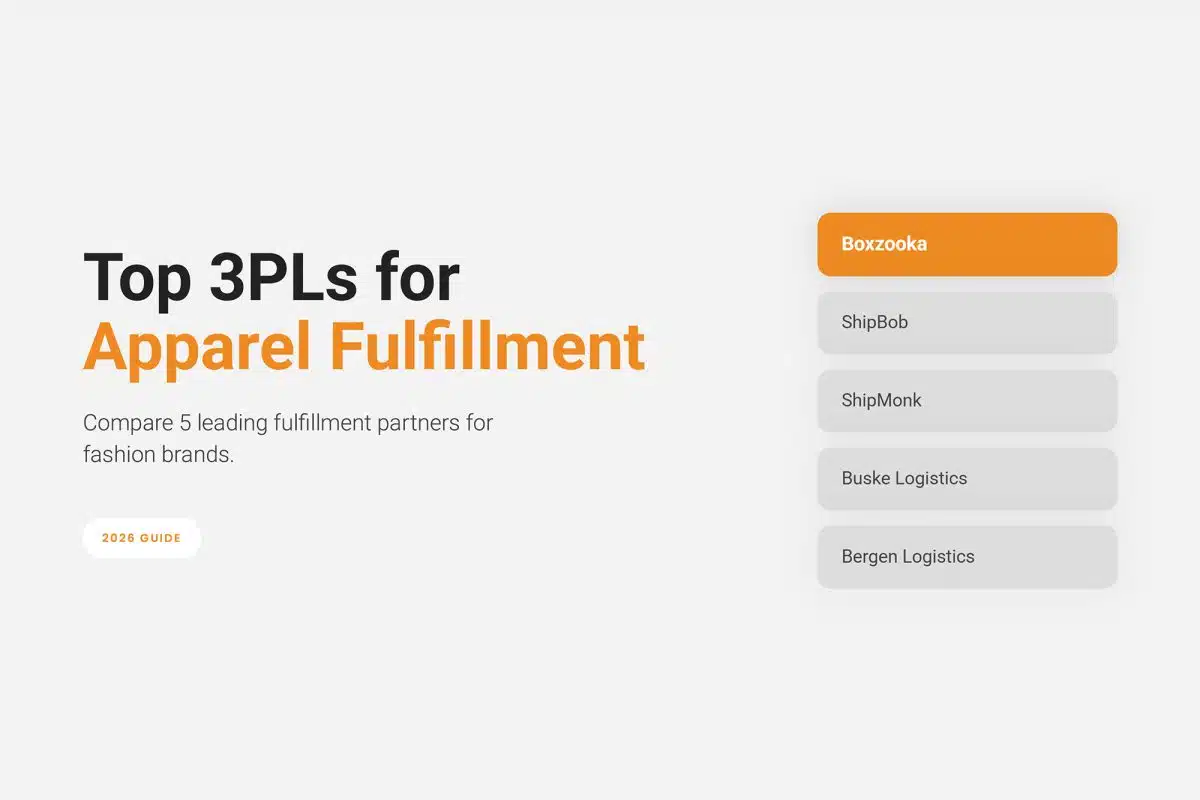
The top 3PLs for apparel fulfillment include Boxzooka, ShipBob, ShipMonk, Buske Logistics, and Bergen Logistics, each built around a different combination of catalog complexity, return volume, and channel mix. The right fit for your growing business depends less on brand size and more on how well a provider handles garment-specific requirements like size and color variants, garment-on-hanger storage, and fast return processing.

Key Takeaways

  • Apparel fulfillment is judged on garment handling, return processing, and SKU or variant complexity, not general warehousing capability.
  • Apparel return rates run 20 to 30 percent industry-wide, so reverse logistics speed and cost matter as much as outbound shipping.
  • A single apparel style can multiply into 15 to 20-plus SKUs once size and color variants are added, which strains inventory systems built for simpler catalogs.
  • The five providers compared here range from apparel-focused operators to broader 3PLs with apparel as one of several strengths, including Boxzooka’s high-touch, bi-coastal model built for premium DTC and omnichannel apparel brands.
  • The right 3PL depends less on brand size alone and more on catalog complexity, return volume, and whether you need DTC-only or combined DTC and wholesale support.

Apparel fulfillment is one of the more demanding categories in eCommerce logistics. A single hoodie in five sizes and four colors becomes 20 SKUs before you’ve shipped a single order. Return rates run 20 to 30 percent industry-wide, well above most other product categories, which means your 3PL’s reverse logistics process directly affects your margin.

Not every 3PL is built for this. Some specialize in heavy, bulky goods. Others are optimized for high-SKU subscription boxes or electronics that never touch a return truck. Choosing a fulfillment partner based on brand size or price alone, without checking how they handle garment-specific requirements, is one of the more common and costly mistakes apparel brands make.

This guide compares five 3PLs that serve apparel brands, including where each one is strongest and where it isn’t the right fit. It’s built around real, verifiable capabilities: facility footprints, published accuracy guarantees, and apparel-specific service details, not marketing claims.

What Makes Apparel Fulfillment Different

Apparel logistics has a few characteristics that don’t show up in general merchandise fulfillment.

SKU density is the first. Size, color, and style variants multiply fast. A 50-product catalog can turn into 1,000-plus active SKUs, and a 3PL’s warehouse management system needs to handle that volume without slowing down pick accuracy.

Returns are the second. Shoppers routinely order multiple sizes to compare fit at home, which drives apparel return rates well above the eCommerce average. A 3PL that can inspect, restock, and get returned inventory back into sellable condition quickly protects both your margin and your available inventory.

Garment care is the third. Some apparel needs specialized garment-on-hanger (GOH) storage instead of flat pack to prevent wrinkling. Other lines need poly bagging, tissue wrapping, or branded packaging inserts applied consistently across every order.

How We Evaluated These 3PLs

We looked at four things for each provider: apparel-specific handling capabilities (GOH, variant picking, packaging standards), returns workflow speed, facility footprint and shipping coverage, and technology integrations with the platforms apparel brands actually sell on, primarily Shopify, Amazon, and TikTok Shop.

The goal is an honest comparison you can use to build your own shortlist, not a ranked list designed to point you toward one answer.

Top 3PLs for Apparel Fulfillment at a Glance

Provider Best For Facility Footprint Apparel-Specific Strength
Boxzooka Premium, high-touch DTC and omnichannel apparel brands with complex returns and wholesale distribution needs 4 bi-coastal facilities (NJ, PA x2, NV) 99.8% on-time shipping, consistently high fulfillment accuracy, GOH storage, barcode-driven variant picking, kitting, proprietary CXP client portal and technology systems, numerous integrations
ShipBob DTC apparel brands scaling into international markets 60+ fulfillment centers across 6 countries 2-day shipping across 100% of the continental US from a single facility, AI-driven demand forecasting, native Shopify/WooCommerce integration
ShipMonk Growth-stage and subscription-driven DTC apparel brands 12+ owned and operated facilities, 3M+ sq ft across the US, Canada, Mexico, and Europe 99.9% order accuracy, Cubiscan dimensional scanning, deep Shopify sync, kitting for bundled SKUs
Buske Logistics Established apparel brands needing DTC plus large-scale retail distribution 40 facilities across the US and Canada, 7.5M+ sq ft Over 100 years in operation, GOH plus flat and temperature-controlled storage, EDI-compliant retail distribution
Bergen Logistics Fashion, footwear, and accessories brands needing wholesale plus DTC at global scale Facilities across 11 countries (US, Canada, EU, UK, APAC) 25+ years apparel-specific: hanger application, embroidery, price tagging, steaming; 99.5% order accuracy

The 5 Best 3PLs for Apparel Fulfillment

1. Boxzooka

Best for: Premium and emerging DTC and omnichannel apparel brands that need high-touch fulfillment, dependable reverse logistics, and support across both DTC and wholesale channels.

Boxzooka runs four bi-coastal fulfillment centers, in Secaucus, New Jersey (headquarters), Middletown, Pennsylvania (two facilities), and Henderson, Nevada (Las Vegas), giving apparel brands coast-to-coast coverage without splitting inventory across a sprawling network. We maintain a 99.8% on-time shipping rate and hold every facility to a consistently high standard for order accuracy.

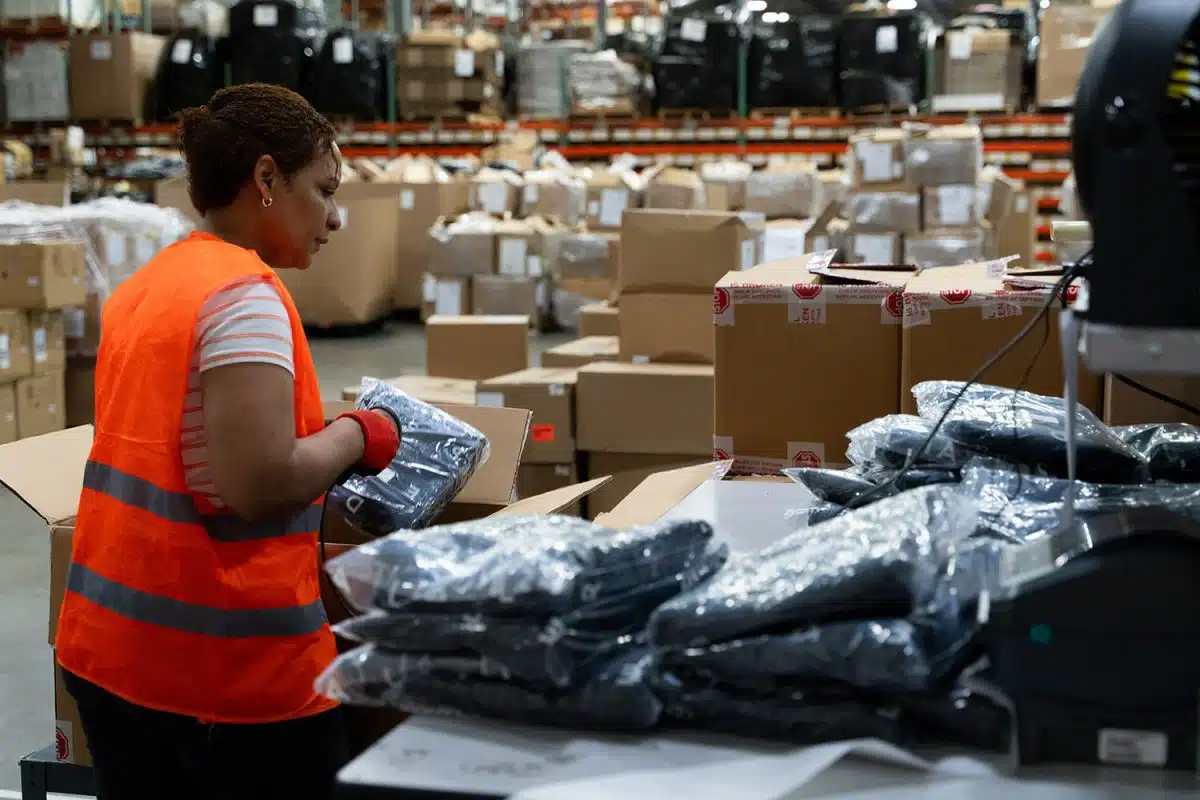
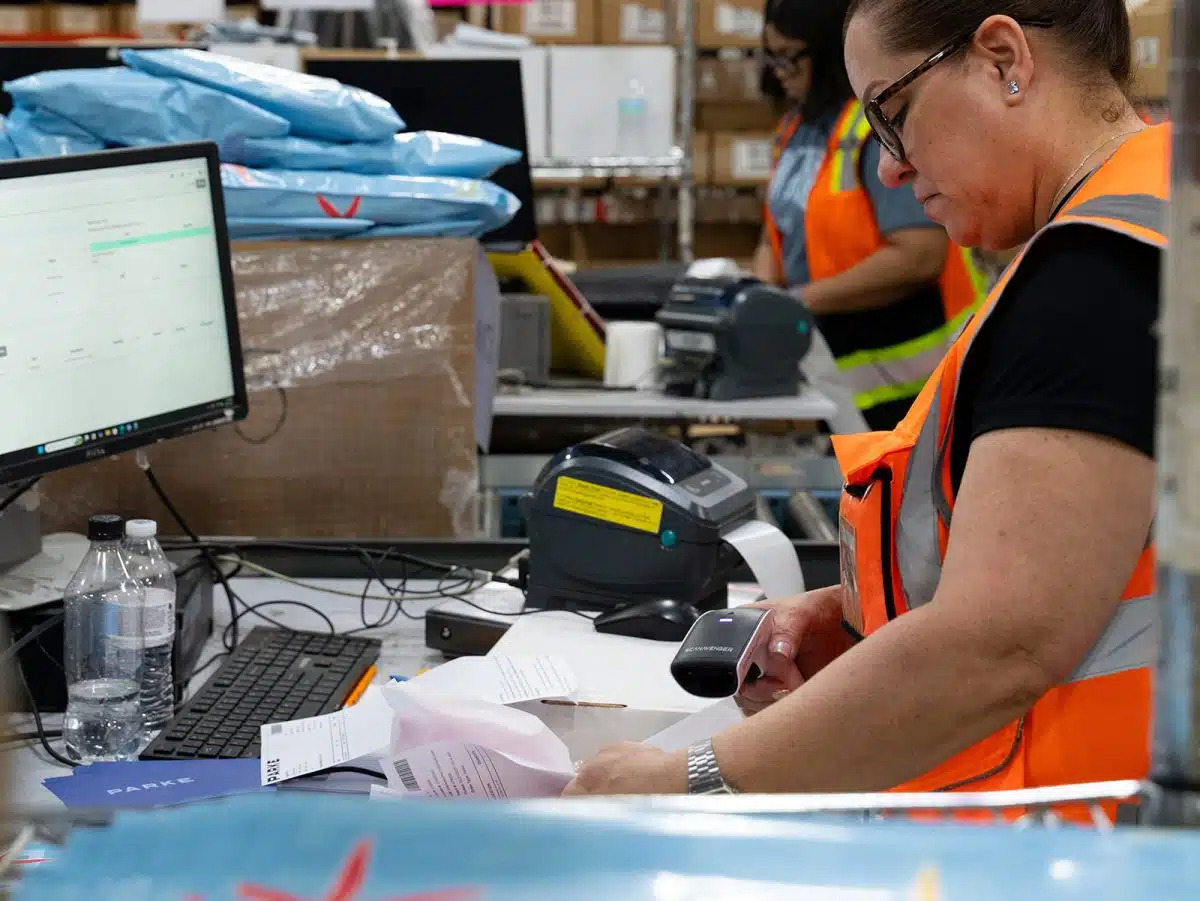
Apparel gets dedicated handling here rather than a generic pick and pack workflow. Boxzooka’s WMS supports GOH (garment-on-hanger) storage, custom item serialization, poly bagging, hang tags, lot tracking, and FIFO/FEFO rotation, the inventory logic apparel brands with seasonal drops and fast-moving styles actually need. Every order runs through a barcode-driven workflow built to reduce picking errors across high-variant catalogs, and a custom fulfillment plan is built around each brand’s size range, packaging style, and seasonal promotion calendar rather than applying one process to every client.

Returns get treated with the same urgency as outbound orders rather than as a backlog item, which matters given how high apparel return rates run. Our team inspects, relabels, or repackages returned items for quick restocking, with real-time visibility into that process through our CXP (Client Experience Portal). We also take on the value-added customization apparel brands ask for most, including monogramming, embroidery, and branded packaging, positioning Boxzooka as a partner that says yes to high-touch requests many general 3PLs turn down.

Boxzooka isn’t a DTC-only operation. Our B2B Retail Fulfillment capabilities support wholesale and omnichannel distribution alongside DTC volume, including retailer-specific routing guide compliance, carton labeling, and EDI-compliant shipping documentation, so brands adding department store, boutique, or specialty retail accounts to their channel mix can run DTC and wholesale orders through the same team and the same inventory pool rather than standing up a separate operation.
That combination of apparel-specific inventory logic and brand-protective service is built for premium and emerging DTC and omnichannel labels that can’t afford fulfillment mistakes to undercut the experience they’ve built everywhere else. Because the network is concentrated across four facilities rather than dozens, brands get a consistent, hands-on relationship with the same team that manages their inventory day-to-day, inside a controlled network built for accountability rather than a sprawling one.

2. ShipBob

Best for: DTC apparel brands scaling into international markets.

Founded in 2014 by Dhruv Saxena and Divey Gulati, ShipBob has grown into one of the largest fulfillment networks serving small and mid-sized eCommerce brands, now operating more than 60 fulfillment centers across the US, Canada, the UK, the EU, and Australia. That scale gives apparel brands a real path to international fulfillment without negotiating separate warehouse contracts in each region.

For apparel specifically, ShipBob’s AI-driven demand forecasting helps plan around the seasonal and trend-driven spikes that are common in fashion, and the platform supports polybag and boxed packaging workflows. ShipBob is a Shopify Plus Certified app partner and integrates natively with Shopify and WooCommerce, and the network can deliver 2-day shipping across 100% of the continental US from a single fulfillment center, with faster coverage available once inventory is split across multiple locations.

ShipBob publishes a minimum of 250 orders per month, which puts it in reach of growing brands rather than only enterprise accounts. One thing to check during evaluation: ShipBob’s network blends company-operated Innovation Centers with a partner network it calls the ShipBob Fulfillment Network (SFN), so service levels and apparel handling standards can vary by location. It’s worth asking which specific centers would handle your inventory before you sign.

3. ShipMonk

Best for: Subscription box and growth-stage DTC apparel brands that want automated fulfillment with deep Shopify integration.

Unlike other larger providers that lean on a partner network, ShipMonk runs 100% owned-and-operated fulfillment centers, more than 12 facilities and over 3 million square feet across the US, Canada, Mexico, and Europe. A 2025 expansion added two Las Vegas facilities and a Pittston, Pennsylvania campus, over 1 million additional square feet, giving the network combined capacity to process more than 300,000 orders a month and scale well beyond that during peak season.

ShipMonk built its platform around robotic automation, Cubiscan dimensional SKU scanning, and real-time inventory tracking, and publishes a 99.9% order accuracy rate. Flexible automation rules and no published order minimums make it accessible for brands still scaling their order volume, and if your apparel business includes subscription or bundled products, ShipMonk’s kitting and order management depth are a genuine strength.

The tradeoff: automated systems are tuned for standardized products. Merchant reports also flag billing complexity and, in some cases, long offboarding timelines when brands switch providers. If your apparel line includes irregularly shaped items, like bulky outerwear or footwear boxes, ask specifically how ShipMonk’s automated systems handle them before signing.

4. Buske Logistics

Best for: Established apparel brands that need combined DTC and wholesale fulfillment at scale.

Buske Logistics has operated as a privately held 3PL since 1923, which gives it more institutional history than almost any other provider apparel brands will evaluate. That longevity shows up in scale: Buske runs roughly 40 warehouse locations across the US and Canada, totaling more than 7.5 million square feet, with key sites in Louisville, Houston, Edwardsville, Fort Worth, Cartersville, and Windsor, Ontario.

Buske’s apparel-specific infrastructure includes GOH racking alongside flat storage and temperature-controlled zones built to protect fabric quality across seasons. On the retail side, Buske handles EDI-compliant shipping, carton labeling, and ASN documentation to help apparel brands avoid chargebacks when selling into big-box and department store accounts, a capability that matters once a DTC apparel brand adds wholesale distribution to its channel mix.

As with any large contract warehouser, Buske’s public materials are lighter on garment-level packaging detail than providers built apparel-first, and the company doesn’t publish a standard minimum order volume. Its sales process is oriented toward mid-market and enterprise complexity rather than self-serve onboarding, so brands evaluating Buske should confirm current apparel client references and expected onboarding timelines directly.

5. Bergen Logistics

Best for: Fashion, footwear, and accessories brands that need combined wholesale and DTC fulfillment across a global footprint.

Bergen Logistics has focused on fashion, footwear, and lifestyle brands since 1998, and joined the Elanders Group, a global third-party logistics and supply chain solutions company, in 2024. Its network spans facilities across 11 countries, including the US, Canada, the UK, and the EU, which supports brands shipping both domestically and cross-border. The company reports 99.5 percent order accuracy and 95 percent on-time 2-day shipping across a client base of more than 2,000 brands.

What sets Bergen apart for apparel specifically is the depth of garment-focused value-added services: hanger application, price tag application, embroidery, custom packing, and steaming, all run through its proprietary WMS. That’s a level of garment-handling detail that general-purpose 3PLs typically don’t offer as standard, and it’s paired with the operational backing of a parent company that runs logistics at a much larger global scale, which can matter for apparel brands planning international wholesale expansion.

How to Choose the Right Apparel 3PL for Your Brand

The best 3PL for your brand isn’t the biggest name on this list. It’s the one that matches how your apparel line actually operates. A few questions worth asking every provider you shortlist:

Garment handling. Does the provider offer garment-on-hanger storage, or is everything folded and poly-bagged? Ask them to walk through their process for your specific product types.

Returns speed. Apparel return rates run 20 to 30 percent. Ask how quickly returned items are inspected, restocked, and made sellable again, and whether per-return fees apply.

SKU and variant complexity. A 50-product catalog with size and color options can mean 1,000-plus active SKUs. Ask about pick accuracy rates at that scale.
Seasonal scalability. Q4 volume can run two to three times your average. Confirm seasonal staffing plans and warehouse capacity headroom, not just base-case throughput.

Tech integrations. Most apparel brands sell across Shopify, Amazon, and increasingly TikTok Shop. Confirm native integrations for every channel you use, plus EDI support if you sell wholesale or retail.

Contract flexibility. Ask about minimums, storage pricing structure, and what happens if your volume changes significantly in either direction.

Find the Right Fit for Your Brand

The right apparel 3PL depends on your catalog, your return volume, and how much brand experience you want built into every unboxing. If you’re evaluating partners, let’s start with your SKU complexity, return volume, channel mix, and fulfillment requirements. Talk to our team and we’ll help you map out the apparel fulfillment setup that fits your brand, so you can stay out of the fulfillment weeds.

Frequently Asked Questions

What is an apparel 3PL?

An apparel 3PL stores, picks, packs, ships, and manages returns for clothing, footwear, and accessories, with added capabilities for size and color variants, branded packaging, and return inspection that general merchandise 3PLs don’t always offer.

How many SKUs does apparel fulfillment typically involve?

A single product with five sizes and four colors becomes 20 SKUs before a second product is added, which is why apparel brands with even modest catalogs can end up managing 1,000 or more active SKUs.

What return rate should apparel brands expect?

Apparel return rates typically run 20 to 30 percent, well above the eCommerce average, largely because shoppers order multiple sizes to compare fit at home.

Do all 3PLs support garment-on-hanger storage?

No. GOH storage is a specialized capability that prevents wrinkling for structured or delicate garments, and not every 3PL offers it. Brands with GOH needs should confirm this directly rather than assume it’s standard.

When should an apparel brand switch to a 3PL?

Most apparel brands consider outsourcing once in-house fulfillment starts limiting growth, typically when order volume, SKU complexity, or return volume make it hard to maintain shipping speed and accuracy without full-time warehouse staff.

Categories
Fulfillment

3PL Onboarding in Las Vegas: What to Expect

Key Takeaways

  • A standard mid-market 3PL onboarding runs six to twelve weeks industry-wide, per Racklify; Boxzooka’s standardized process typically gets Las Vegas brands live in less than six weeks.
  • Las Vegas has a seasonal rhythm most cities don’t: over 22,000 conventions and roughly 6 million attendees a year, according to LVCVA data, which tightens hotel, staffing, and warehouse labor capacity around major shows like CES.
  • Onboarding covers five phases: discovery, product and service configuration, technology integration, inventory transfer, and process training, and skipping any of them is where most delays start.
  • Direct switching costs between 3PLs can run $25,000 to $100,000, covering contract termination, inventory transfer, and overlapping facility expenses, which makes a clean first onboarding worth getting right.
  • The most common onboarding failures are avoidable: messy product data, an unclear SKU catalog, and starting the transition right before a demand spike instead of ahead of it.

Signing with a new 3PL is the easy part. Getting your products, systems, and team actually ready to ship from a new Las Vegas warehouse is where most of the real work happens, and where most of the risk lives. Brands that treat onboarding as an afterthought tend to find out the hard way: missed inventory, delayed launches, and a first peak season spent firefighting instead of scaling.

This guide walks through what a real 3PL onboarding looks like in Las Vegas specifically, why the city’s own calendar affects your timing more than you might expect, and the mistakes worth avoiding before you sign anything.

It is worth taking seriously. Direct switching costs between 3PLs, contract termination, inventory transfer, overlapping facility expenses, and system integration, can run $25,000 to $100,000, according to industry data compiled by Fulfill.com. A messy first onboarding does not just cost time. It sets you up to pay those costs again a year later when the relationship does not work out.

Why 3PL Onboarding Matters More Than People Think

Onboarding a 3PL means using a structured process to transfer inventory management, order fulfillment, and delivery activity to a new partner. That means physically moving goods, but it also means syncing your eCommerce platforms with new logistics software, training staff on new workflows, and putting quality control in place before day one.

Done properly, the outcomes show up in the numbers. Boxzooka’s Las Vegas operations run on a 100% on-time receiving rate, 99.8% on-time shipping, and 99.9% inventory accuracy, results that depend directly on the operational groundwork laid during onboarding, not something bolted on afterward.

The 3PL Onboarding Process, Step by Step

Step 1: Discovery and Requirements Mapping

This phase documents order volumes, seasonal trends, and growth projections, and assigns a dedicated client success manager to oversee communication going forward. These metrics guide warehouse space allocation, staffing levels, and technology capacity from day one, so the setup can grow alongside the business instead of needing to be rebuilt in six months.

Step 2: Configuring Products and Services

Products that need special handling get assigned dedicated areas, and high-velocity SKUs get placed in the most efficient picking spots. Service level agreements get built around the promises made to customers. If a brand offers same-day shipping with a noon cutoff, picking waves and order cutoffs are configured to actually hit that window, not just approximate it.

Step 3: Integrating and Setting Up Technology

Data needs to flow cleanly between your eCommerce platform and the 3PL’s warehouse management system to avoid overselling or shipping delays. Direct connections to Shopify, Amazon, and NetSuite handle most of this automatically. A sandbox environment allows full end-to-end testing of inventory decrements and tracking updates before anything goes live. API connections, authentication, and webhook setup are handled by the implementation team, but it is worth asking upfront which integrations are pre-built versus custom, since custom integrations are almost always where onboarding timelines slip.

Step 4: Inventory Transfer and Receiving

Advance shipment notices communicate what is inbound (SKU, case pack, handling instructions) before it arrives, and every shipment gets inspected on arrival for accuracy. Velocity-based placement puts the most popular items near packing stations, while seasonal-only inventory stays in overflow until demand picks up.

Step 5: Tailoring Processes and Training

Custom kitting instructions preserve the presentation of gift sets and bundles, packaging protocols protect the unboxing experience, and warehouse staff get trained on branded inserts and any personalization requirements. Returns processing gets defined here too, including inspection criteria, restocking rules, and disposal of unsellable items.

Why Onboarding Timing Matters Specifically in Las Vegas

Most cities have one predictable demand spike a year: peak retail season. Las Vegas has two calendars running at once. On top of normal eCommerce peak season, the city hosts more than 22,000 conventions and trade shows annually, drawing roughly 6 million attendees, with single events like CES pulling in over 140,000 people in a single January week.

That matters for onboarding because those weeks put real pressure on the local labor market, hotel capacity, and even warehouse staffing availability, since hospitality and event-driven work competes for the same workforce. A brand that starts onboarding two weeks before a major convention is stacking a new, unstable process on top of the exact week the local labor and logistics market is under the most strain. The fix is simple: plan onboarding around Las Vegas’s own event calendar, not just your retail calendar.

A useful rule of thumb: treat the two weeks before and during a major convention the same way you would treat the two weeks before and during your own peak retail season, and avoid scheduling a go-live inside that window. January (CES) and the busiest spring and fall trade show stretches tend to be the tightest points on the Las Vegas convention calendar, while summer generally offers more room to run a clean onboarding without competing for local attention.

The upside of the market more than offsets this if you plan around it. Industrial vacancy eased to 8.8% in the first quarter of 2026, giving brands more available capacity and negotiating room than the market has offered in years, and Henderson’s workforce has grown steadily enough to support staffing up for a new client without the tight labor constraints some coastal markets face.

Your 3PL Onboarding Timeline for Las Vegas Businesses

Here is what a typical six-week onboarding looks like end to end.

Week 1: Discovery and Planning

Product catalogs, order volumes, and communication channels get established with the implementation team. This foundation connects business goals to actual fulfillment requirements before any technical work starts.

Weeks 2 to 3: Technology Setup and Testing

Platform integrations (Shopify, Amazon, NetSuite) get configured, and a sandbox environment is built for testing order flows. This phase confirms accurate data, smooth inventory updates, and real-time tracking visibility before go-live.

Week 4: Inventory Transfer

Shipments get coordinated across the country and delivery appointments confirmed. Advance shipping notices and receiving protocols keep stock accuracy intact and prevent order interruptions during the move.

Weeks 5 to 6: Go-Live Execution

Product arrives and final validation testing wraps up. A controlled go-live starts with a limited batch of orders, catching any minor issues before scaling to full volume. By the end of week six, the Las Vegas operation is running at full capacity.

How Boxzooka Handles 3PL Onboarding in Las Vegas

Boxzooka’s Henderson facility runs the same standardized onboarding process used across our New Jersey and Pennsylvania operations, backed by a dedicated client success manager from day one instead of a rotating support queue. Because Boxzooka directly manages the Henderson building rather than operating through a third-party network, onboarding decisions, from dock scheduling to staffing for a new client, happen in-house instead of through a layer of subcontracted operators.

Every client gets access to Boxzooka’s proprietary WMS for real-time inventory, order, and shipment visibility from the first sandbox test through ongoing operations, plus support for Amazon FBA prep, Seller Fulfilled Prime, and dedicated B2B and DTC workflows from the same Henderson facility.

Three Common Onboarding Mistakes in Las Vegas (and How to Avoid Them)

1. Starting Onboarding Right Before a Major Convention

Launching two or three weeks ahead of CES or another major Las Vegas convention stacks new-process risk on top of the exact week local staffing and logistics capacity are most stretched. Check the Las Vegas Convention and Visitors Authority calendar before you set a go-live date, and build in a buffer.

2. Messy Product Data and an Unclean SKU Catalog

Hidden data errors typically surface during the move, not before it. Audit product data and consolidate duplicate SKUs before onboarding starts rather than during it, and run a short parallel-systems period to catch discrepancies early. If legacy platforms do not integrate cleanly, simple file transfers or middleware can bridge the gap until a full upgrade is practical.

3. Skipping a Returns Test Before Go-Live

Returns usually get treated as an afterthought during onboarding, tested only once real customer returns start arriving. That is backwards. Ask your 3PL to run a handful of simulated returns through the full inspection, restocking, and disposal workflow during the sandbox phase, before your actual customers are the ones finding out whether the process works.

What to Ask Your 3PL During Onboarding

A few pointed questions during onboarding, not just before you sign, catch problems while they are still cheap to fix.

Who is my point of contact, and what happens if they are unavailable?

A named client success manager should own your account throughout onboarding. If the answer is a shared support inbox, expect slower resolution when something goes wrong mid-transition.

Can I see the sandbox environment before go-live?

A real onboarding process includes hands-on testing of order flows, inventory decrements, and tracking updates before any live orders are at risk. If a 3PL cannot show you a sandbox, that is a sign the technical integration is not as buttoned-up as it sounds.

What does a partial go-live look like if something is not ready?

Ask specifically how the 3PL handles a delayed SKU category or a system that is not fully tested. A provider with a real staged go-live process can launch part of your catalog on schedule instead of holding the entire launch hostage to one lagging piece.

Building a Long-Term Partnership Beyond Onboarding

Successful onboarding is the foundation, not the finish line. Boxzooka’s client success managers runs regular performance reviews, refine processes over time, and keep operations aligned as product lines and order volumes grow. As Las Vegas’s industrial market and workforce continue to mature, that ongoing relationship, not just the six-week setup, is what keeps fulfillment scaling smoothly through every peak season and every convention calendar to come.

That means quarterly business reviews that look at more than accuracy rates: carrier performance, cost-per-order trends, and whether current warehouse space still fits your growth trajectory. Brands that outgrow their original onboarding configuration, more SKUs, new sales channels, added kitting requirements, should be able to reconfigure without repeating the full six-week process from scratch. A good 3PL treats that kind of change as a scoped adjustment, not a second onboarding.

Ready to Start Onboarding in Las Vegas?

A clean onboarding sets the tone for everything that follows. Boxzooka’s Henderson facility, standardized process, and dedicated client success team are built to get Las Vegas and West Coast brands shipping accurately from day one, without the guesswork. For a deeper look at what to evaluate before you sign, see What to Look for in a Las Vegas 3PL Partner.

Get a quote from Boxzooka and let’s build an onboarding plan that fits your product, your timeline, and Las Vegas’s own calendar.

Categories
eCommerce Fulfillment

ShipBob Alternatives: How a Boutique 3PL Stacks Up on Service

A practical, fair comparison for growth-stage brands weighing scale against service.

Key Takeaways

  • ShipBob is a large, platform-first global 3PL with more than 50 fulfillment centers across the US, Canada, UK, EU, and Australia, built for high-volume DTC brands that want standardized, scalable technology.
  • Boutique 3PLs like Boxzooka compete on high-touch service, direct account access, and customized fulfillment across a focused US network (New Jersey, Pennsylvania, and Las Vegas) with 2-day delivery coverage..
  • Common reasons brands evaluate ShipBob alternatives include pricing that is now quote-only, reported 2026 rate increases, tiered support, and a one-size-fits-all model that can strain as catalogs and SKU velocity grow.
  • The US 3PL market reached roughly $220 billion in 2025, and tariff and de minimis changes are pushing more brands toward domestic fulfillment, so choosing a partner aligned to your service needs matters more than ever.
  • Boxzooka is built for growth-stage fashion, beauty, apparel, and subscription brands that want a hands-on partner, with approachable minimums and term agreements built for a long-term partnership. Our goal is to be the best, not the biggest.

Choosing a fulfillment partner is one of the highest-stakes operational decisions an eCommerce brand makes. You can have a great product, sharp marketing, and a beautiful store, but if orders ship late, inventory counts drift, or returns turn into a headache, the customer feels it first and the brand pays for it later.

ShipBob is one of the names that comes up most often when brands start shopping for a 3PL, and for good reason. It is large, well-known, and built to scale. But large and well-known is not the same as right for you. If you have landed here searching for ShipBob alternatives, you are likely weighing a real tradeoff: the standardized scale of a platform versus the attention and flexibility of a boutique partner.

Here is the honest version. Both models work. The right one depends on what your brand actually needs as it grows. Let’s break it down.

Why Your Fulfillment Partner Decides Your Customer Experience

The 3PL industry is large and getting larger. The US third-party logistics market was valued at roughly $220 billion in 2025 and continues to grow, with retail and eCommerce as its biggest and fastest-moving segment (Source: Mordor Intelligence; Market Data Forecast, 2026). Recent trade policy has added pressure: the 2025 suspension of duty-free de minimis imports has pushed many brands to shift more inventory into domestic fulfillment, making the choice of 3PL even more consequential.

That makes your 3PL the operational backbone of your brand. It owns the unboxing moment, the delivery promise, and the returns experience. Get it right and fulfillment becomes a competitive advantage that puts retailers in the driver’s seat. Get it wrong and it quietly erodes everything you spend to acquire customers.

Most options fall into two camps. On one side are platform-first, scale players like ShipBob that standardize fulfillment across a huge network. On the other are boutique, technology-enabled operators like Boxzooka that compete on service, customization, and partnership. Both are legitimate. The question is where do your priorities lie?

A platform built for repeatability is, by design, less suited to brands that need custom kitting, intricate SKU depth, or white-glove handling. If your fulfillment is straightforward and high-volume, that repeatability is a feature. If your brand experience depends on the details, it can become a ceiling.

What ShipBob Does Well, and Where It Can Frustrate Growing Brands

The strengths are real

ShipBob earned its reputation. It operates a large distributed network of more than 50 fulfillment centers across the US, Canada, UK, EU, and Australia, and its node density in the continental US is a genuine operational advantage that helps brands place inventory closer to customers for 2-to-3-day ground shipping (Source: Ecommerce Times, 2026). Its self-serve platform is mature, the integration library is broad, and recent additions like the Spring 2026 Delivery Promise and expanded Foreign-Trade Zone space with a De Minimis Defense Program show it is actively adapting to tariff pressure.

It also runs with no long-term contracts, which suits a lean team that wants to spin up fulfillment quickly and manage it from a dashboard. For straightforward, high-volume DTC operations, that combination of reach and repeatability is a real advantage.

Where the tradeoffs show up

The flip side of scale is standardization. As brands grow, support is often tiered or ticket-based, so a fast-moving brand with a time-sensitive issue may not get a dedicated human on demand. That gap tends to hurt most during peak season, exactly when you can least afford it.

Cost predictability is the other common friction point. ShipBob removed its published pricing in 2026 and moved to custom quotes, and merchants told Ecommerce Times they received pick-and-pack rate increase notices averaging 8 to 14 percent in the first half of 2026, attributed to labor and carrier costs (Source: Ecommerce Times, 2026). None of this makes ShipBob a poor choice. It makes it a specific one.

Here is the thing: a platform built for repeatability is, by design, less suited to brands that need custom kitting, intricate SKU depth, or white-glove handling. If your fulfillment is straightforward and high-volume, that repeatability is a feature. If your brand experience depends on the details, it can become a ceiling.

How Boxzooka Helps Brands That Want a Boutique 3PL

Boxzooka was built around a different premise: that growth-stage brands deserve enterprise-grade technology and high-touch service at the same time. We are technology-enabled, but we are not a faceless platform. Here is what that looks like in practice.

A focused US network built for speed

Boxzooka operates from its New Jersey headquarters plus fulfillment centers in Pennsylvania and Las Vegas, including a Class-A West Coast flagship in Henderson, Nevada. That footprint enables 2-day delivery coverage across the continental US, and we can use split distribution to place inventory where it performs best and cut shipping zones and cost. Over the past three years we have expanded our footprint by more than 250,000 square feet to keep pace with client growth.
High-touch service instead of a ticket queue

This is the core difference. With Boxzooka, you get direct account access and white-glove support, not a number in a help-desk line. Our CSMs learn your catalog, your delivery rules, and your customer expectations, then run to those standards. We are in the brand protection business, so proactive communication and transparency are how we operate, not features we upsell.

Technology that does the heavy lifting

Our proprietary WMS gives you real-time inventory visibility from day one, with integrations to Shopify, NetSuite, Amazon, and more. Our TMS scans top carriers and compares service, fees, and delivery expectations in real time to select the most cost-effective option for every order. You get the automation of a platform with the judgment of a partner.

Customization that protects your brand

For fashion, beauty, and subscription brands, the package is part of the product. Boxzooka handles custom kitting, subscription box assembly, gift sets, and branded unboxing with branded boxes, tissue, inserts, and eco-friendly materials. We can also handle personalization in house, including embossing, monogramming, and embroidery to give your products that hand-touched finish, so the details that make a product feel like a gift do not have to route through an outside vendor and add days to your timeline. We are also Amazon Seller Fulfilled Prime (SFP) certified and support FBA prep and FBM, so you can run omnichannel B2C and B2B without bolting on another vendor.

Pricing you can actually plan around

Like ShipBob, our pricing is tailored by quote, because real fulfillment costs depend on your SKU profile, order mix, and volume. The difference is what surrounds it: transparency and clarity up front so the invoice matches the estimate. We do carry minimums, and we set them at a level growing brands can realistically meet, so you know exactly what you are committing to before you sign rather than after.

The honest considerations

Here is where a boutique model asks something of you. Our network is US-focused, so if you need owned facilities across the UK, EU, or Australia today, a global platform may fit your near-term map better. We are also selective by design: Boxzooka is built for brands that value partnership over a pure set-it-and-forget-it dashboard. We also work on term agreements rather than month to month, because standing up a high-touch program means learning your catalog, building custom packaging and personalization workflows, and staffing to your service standards. That work pays off over a longer horizon. If you want a hands-off, self-serve platform and nothing more, we may not be your match, and that is okay.

ShipBob vs Boxzooka at a Glance

Use this as a quick reference, then weigh it against what actually matters for your business.

Criteria ShipBob Boxzooka
Model Platform first, self-serve at scale Boutique, high-touch 3PL partner
Network 50+ fulfillment centers across the US, Canada, UK, EU, and Australia Focused US network: New Jersey, Pennsylvania, and Las Vegas (Henderson, NV)
Delivery speed 2 to 3 day ground to most of the US; 2-day on eligible orders 2-day delivery coverage across the continental US via split distribution
Support model Often tiered or ticket-based as you scale Direct account access and white-glove support; a team that learns your catalog
Pricing Custom quotes (published pricing removed in 2026); merchants reported 8 to 14% pick-and-pack increases in early 2026 Custom, transparent quotes that eliminate any surprise charges later on
Contracts and minimums No long-term contracts; month-to-month flexibility Approachable minimums and term agreements built for a long-term partnership
Customization Standardized processes built for repeatability Custom kitting, subscription assembly, and branded unboxing
Technology Mature self-serve platform, broad integrations, Inventory Placement, Spring 2026 Delivery Promise Proprietary WMS with expansive integration support plus TMS for real-time carrier and rate shopping
Amazon programs FBA prep and channel integrations Seller Fulfilled Prime (SFP) certified, plus FBA prep and FBM
Best fit High-volume DTC brands wanting global, standardized self-serve Growth-stage fashion, beauty, apparel, and subscription brands wanting a hands-on partner

Comparison reflects publicly available information and Boxzooka service details as of July 2026.

Who Each Option Is Actually Best For

ShipBob is the stronger fit when: you are a high-volume DTC brand that wants a global, standardized, self-serve platform, your fulfillment is relatively uniform, and you prefer to manage operations from a dashboard with minimal hand-holding.

Boxzooka is the stronger fit when: you are a growth-stage fashion, mid-market, beauty, apparel, CPC, or subscription brand that wants high-touch service, custom fulfillment, fast US delivery, and a partner who scales with you instead of slotting you into a template.

The Case for High-Touch Fulfillment as You Scale

For brands where the customer experience is the brand, fulfillment quality is not a thing to be overlooked. It is a growth lever. A late shipment or a sloppy unboxing does not just cost one order, it costs trust, repeat purchases, and word of mouth. That is the math that makes high-touch service worth it.
This is the philosophy Boxzooka is built on: when our clients grow, we grow. We would rather be the best partner for a focused set of brands than the biggest name on a list. As your SKU velocity climbs and peak season pressure builds, a 3PL that already knows your business and picks up the phone is the difference between scaling smoothly and scrambling.

If you want fulfillment that matches your ambition, don’t get boxed in by a one-size-fits-all platform.

Let’s Pressure-Test Your Shortlist

If you are evaluating 3PLs right now, the most useful thing we can do is not pitch you. It is to walk you through this same evaluation applied to your business: your SKU profile and order mix, the delivery promise you want to make, your peak curve, the personalization your packaging requires, and where your current setup is most likely to break first.

We will do that whether or not Boxzooka ends up being the right answer. If a platform model fits your business better, we will tell you so, and you will still leave with a clearer framework than you came in with. If we are the right fit, you will know exactly why, and so will we. Contact us to set up a fulfillment evaluation, and let’s figure out what your brand actually needs to scale and thrive.

Frequently Asked Questions

What are the best ShipBob alternatives for growing brands?

It depends on what you value. Brands that want a large, self-serve, global platform may stay with a scale player. Brands that want hands-on service, custom fulfillment, and direct account access often choose a boutique 3PL like Boxzooka, with fulfillment centers in New Jersey, Pennsylvania, and Las Vegas and 2-day delivery coverage across the continental US.

Is a boutique 3PL better than ShipBob?

Neither is universally better. ShipBob is built for standardized scale and global self-serve fulfillment across more than 50 centers. A boutique 3PL like Boxzooka is built for high-touch service, customization, and partnership, which tends to suit growth-stage fashion, beauty, apparel, and subscription brands.

How is Boxzooka different from ShipBob?

Boxzooka is a technology-driven boutique 3PL focused on high-touch service. Instead of a tiered ticket queue, clients get direct account access, plus custom kitting, subscription box assembly, and branded unboxing, all backed by a proprietary WMS and TMS.

Does Boxzooka have order minimums or require a long-term contract?

Yes to both, and we are upfront about it. Boxzooka sets minimums at a level growth-stage brands can meet rather than enterprise-only thresholds, and clients sign a term agreement because a high-touch program is built around your catalog, your packaging, and your service standards. Your minimum and your term are confirmed in your quote before you sign anything.

Does Boxzooka offer 2-day shipping like ShipBob?

Yes. Boxzooka provides 2-day ground delivery coverage across the continental US from its New Jersey, Pennsylvania, and Las Vegas fulfillment centers, using split distribution to place inventory closer to customers and reduce shipping zones and cost.

Can Boxzooka handle subscription boxes and custom kitting?

Yes. Boxzooka builds custom kits, assembles subscription boxes and gift sets, and offers branded packaging, inserts, and eco-friendly materials to elevate the unboxing experience for fashion, beauty, and subscription brands.

Categories
Fulfillment

What to Look for in a Las Vegas 3PL Partner

Key Takeaways

  • A Henderson, Nevada fulfillment center puts eCommerce brands within one to two days of Los Angeles, San Francisco, Phoenix, and San Diego by ground, cutting West Coast transit time compared to shipping from an East Coast-only warehouse.
  • Nearly 6 in 10 eCommerce companies now outsource some or all of their fulfillment, up from about 3 in 10 in 2020, according to Radial, which has made 3PL selection a core operating decision rather than a back-office one.
  • Roughly a third of brands switch 3PL providers within their first two years, per the Council of Supply Chain Management Professionals (via Verde Fulfillment USA), most often over misaligned expectations rather than capacity problems.
  • The strongest Las Vegas 3PL partners document real performance numbers, such as on-time receiving and shipping rates and inventory accuracy, and support both B2B and DTC order types from the same facility.

Las Vegas is not just a tourism and hospitality economy with a warehouse or two on the side anymore. The Henderson and North Las Vegas submarkets have become a genuine West Coast fulfillment corridor, and eCommerce brands selling into California, Arizona, and the broader Mountain West are increasingly asking the same question: who should run fulfillment out of Las Vegas, and what actually separates a strong 3PL partner from a forgettable one.

That question carries more weight than it used to. Nearly 6 in 10 eCommerce companies now outsource some or all of their fulfillment, up from roughly 3 in 10 in 2020. Choosing the wrong partner does not just mean a clunky onboarding. It means missed delivery windows, inventory discrepancies during your busiest season, and a scramble to re-platform six months later. In fact, about a third of brands switch 3PLs within their first two years, and misaligned expectations set during the sales process are usually the cause, not a lack of capacity.

This guide breaks down what a Las Vegas 3PL partner should bring to the table, why the city’s industrial market makes this a good time to evaluate options, and the specific questions worth asking before you sign a contract. We’ve also put together a list of the top 3PLs in Las Vegas if you’d like to see some actual names based on their capabilities.

What Actually Separates a Strong 3PL From a Forgettable One

Before getting into the Las Vegas market specifics, it is worth stating plainly what to look for when evaluating a 3PL. These are the standards we hold ourselves to everyday.

First, transparency. A 3PL should be able to hand you real, current numbers on request, not a general sense of how things usually go. Second, dedicated infrastructure. Order types, workflows, and staffing should be built around how your business actually operates, not forced into a generic process. Third, proactive communication. You should hear about a problem from your 3PL before you hear about it from a customer.

Those three things, more than warehouse square footage or a long client logo list, are what put a retailer in the driver’s seat. They are also the lens worth using for every criterion in this guide.

What a 3PL Partner Actually Does, and Why Las Vegas Specifically Matters

A 3PL, or third-party logistics provider, manages your supply chain logistics on your behalf: storing inventory, picking and packing orders, shipping, and often handling returns. Think of it as an extension of your operations that scales up or down as demand changes, without you having to lease a warehouse, hire a receiving team, or negotiate carrier contracts yourself.

Most eCommerce brands turn to a 3PL when in-house fulfillment becomes too costly or too complex to manage alongside product development and marketing. The right partner improves order accuracy, shortens delivery windows, and frees the team to focus on growth instead of warehouse operations. Businesses that outsource to a 3PL report a 43% reduction in delivery costs on average, and for brands targeting West Coast customers, warehouse location is one of the biggest levers behind that number.

Location is where Las Vegas earns its place in the conversation. A fulfillment center in Henderson or North Las Vegas sits within a one to two day ground shipment of Los Angeles, San Francisco, Phoenix, and San Diego, four of the largest consumer markets on the West Coast. For a brand shipping from a single East Coast warehouse, that same order can take four to five days and cost meaningfully more in zone-based parcel rates. Splitting inventory between coasts, or moving West Coast-bound inventory to a Las Vegas facility specifically, is often the fastest way to shorten that gap.

Why Las Vegas Has Become a Serious West Coast Fulfillment Market

Within the Las Vegas metro, submarkets serve different purposes. North Las Vegas and Apex handle the large, big-box distribution deals most people picture when they think of eCommerce warehousing. Henderson skews smaller and more service-oriented: median deal size in East Henderson ran around 5,500 square feet in the first quarter of 2026, and the submarket is known for supporting flexible, high-service logistics operations that prioritize speed and reliability over sheer scale, exactly the profile most growth-stage eCommerce brands need.

The labor market backs this up. Boxzooka’s Las Vegas facility sits in a workforce that has grown steadily, up 0.71% annually over the last few decades and 2.91% since 2020, giving fulfillment operators room to staff up for peak season without the labor constraints some coastal California markets face. Add in Nevada’s favorable tax environment and access to Harry Reid International Airport for international freight, and the case for a Las Vegas fulfillment strategy gets stronger every quarter.

What to Look for in a Las Vegas 3PL Partner

Once you have a shortlist, evaluate every candidate against the same criteria. Here is where to focus.

Location and Network

Confirm exactly where the facility sits, not just the city name on the website. Henderson and North Las Vegas both reach the major West Coast metros in one to two days, but ask for specific transit maps or carrier zone charts rather than taking “Las Vegas” at face value. If you sell nationally, ask whether the 3PL can pair a Las Vegas facility with East Coast coverage for national two-day delivery.

A CPG brand working with Boxzooka leverages fulfillment from our Las Vegas and Pennsylvania facilities to reduce their cost and transit time to customers. Previously shipping from just the East Coast, ground delivery times would take 3+ days to reach the west coast. That was reduced to 2 days and under with the addition of Las Vegas fulfillment.

Technology and Warehouse Management System

A modern warehouse management system, or WMS, should give you real-time visibility into inventory levels, order status, and shipment tracking, not a report that updates once a day. Ask what platforms the 3PL integrates with out of the box, Shopify, Amazon, NetSuite, and whether custom API integration is available for anything outside that list.

Scalability for Peak Season

Over 80% of shoppers now prefer same-day shipping, and two-day delivery has become the baseline expectation rather than a differentiator. That bar gets harder to clear during peak season, when order volume can spike well beyond normal daily throughput. A strong Las Vegas 3PL should have a documented plan for additional staffing, extended hours, and advance inventory prep ahead of major demand spikes, not just a promise that they will figure it out.

Amazon FBA/FBM and Compliance Support

If Amazon is part of your sales mix, confirm the 3PL can handle FBA prep, labeling, and barcoding to Amazon’s standards, and ask specifically about Seller Fulfilled Prime (SFP) support if you want two-day Prime delivery without storing inventory in an Amazon warehouse. SFP has strict shipping speed and quality requirements, so a 3PL that already meets them saves you the compliance risk of finding out the hard way.

B2B and DTC Order Handling

Wholesale and retail orders have different labeling, packaging, and routing requirements than direct-to-consumer shipments. A 3PL that treats both the same way tends to slow down on one or the other during busy periods. Ask whether B2B and DTC orders run through separate, dedicated workflows within the same facility.

Documented Performance Metrics

This is the single best filter for separating a strong 3PL from an average one. Ask for actual, current numbers on on-time receiving rate, on-time shipping rate, inventory accuracy, and fulfillment accuracy. A partner that answers with specifics is telling you something real. A partner that answers with “we pride ourselves on great service” is not.

Pricing Transparency

Understand the full pricing model before you sign anything: inbound receiving, storage, pick and pack, outbound shipping, and any accessorial fees for kitting, special handling, or returns. The best providers can walk you through a sample invoice line by line without hesitation.

3 Signs You’re Talking to the Wrong 3PL

Most of a 3PL evaluation comes down to what a provider can show you. But a few warning signs tend to show up early in the conversation, well before a contract is on the table.

  1. They cannot give you a specific number. Ask about on-time shipping rate or inventory accuracy and get a general answer like “we pride ourselves on service” instead of a percentage, that is worth noting.
  2. They describe every client the same way. If a provider cannot speak to how your SKU mix, order profile, or B2B and DTC split changes their operation, they likely have not thought about it.
  3. Peak season planning is vague. “We will figure it out when it happens” is not a plan. A strong 3PL can point to a specific example from a past peak season.

None of these are automatic disqualifiers on their own, but two or three together are worth a second look before you sign.

How Boxzooka Helps with Las Vegas 3PL Fulfillment

Boxzooka operates a directly managed fulfillment center in Henderson, Nevada, built specifically to give eCommerce brands a fast, tech-driven West Coast option alongside our New Jersey and Pennsylvania facilities. The numbers back it up: a 100% on-time receiving rate, a 99.8% on-time shipping rate, 99.9% inventory accuracy, and a 100% fulfillment accuracy rate, the exact kind of documented performance data every brand should be asking for.

The Henderson facility maintains dedicated, separate areas for B2B and DTC orders, so a wholesale shipment for a retail partner and a direct-to-consumer order headed to a customer’s doorstep each move through the workflow built for it. We support Amazon FBA prep, labeling, and barcoding, along with Seller Fulfilled Prime capability, so brands can offer two-day Prime shipping without warehousing inventory inside Amazon itself. Kitting, custom pack-outs, and branded inserts are available for brands that want their packaging to reflect their brand, not just get the product there.

Every client gets access to Boxzooka’s proprietary WMS, giving real-time visibility into inventory, order status, and shipment tracking from the first consultation through ongoing operations, plus a dedicated client success manager rather than a rotating support queue.

Questions to Ask Before You Sign With a Las Vegas 3PL

Come to every 3PL conversation with the same short list of questions. How a provider answers matters as much as what they say.

What is your on-time receiving and shipping rate, and can you show me the data?

A strong 3PL states specific, current percentages. Vague answers about “reliable service” without numbers are a signal to keep looking.

Where exactly is your Las Vegas facility, and what does it actually reach in one to two days?

Ask for a carrier transit map, not just a city name. Henderson and North Las Vegas both reach LA, San Francisco, Phoenix, and San Diego quickly, but confirm it rather than assume it.

How do you handle B2B and DTC orders differently?

Listen for a description of separate workflows, not a single process applied to both order types.

What happens during peak season?

Look for specifics: additional staff brought on ahead of time, extended hours, and advance prep, ideally with an example from a past peak season rather than a hypothetical.

Can you support FBA/FBM and Seller Fulfilled Prime requirements?

Confirm this directly if Amazon is part of your channel mix. Not every 3PL maintains the compliance standards Amazon’s SFP program requires.

Scale Your West Coast Fulfillment From Henderson

Choosing a 3PL is a pivotal decision, and Las Vegas has earned a real seat at the table for brands serving West Coast customers. Boxzooka’s Henderson facility combines documented performance metrics, dedicated B2B and DTC workflows, FBA and SFP support, and a proprietary WMS built to give you visibility from day one, not generic promises about great service.

We’d rather you make an informed decision than a fast one. Contact us and we’ll walk you through the same evaluation framework outlined above, location and network reach, technology, peak season readiness, documented performance metrics, and pricing transparency, even if we’re not ultimately the right fit. That’s a conversation worth having either way, and it beats finding out the hard way six months into a contract.

Categories
Fulfillment

What is a 3PL? What eCommerce Brands Need to Know Before They Outsource Fulfillment

If your team is spending more time packing boxes than building your brand, it is likely time to take a serious look at third-party logistics. The term “3PL” gets used constantly in eCommerce circles, but what it actually means, and what a good 3PL relationship looks like in practice, is worth unpacking carefully. Here is what you need to know before you make that decision.

Key Takeaways

  • A 3PL, or third-party logistics provider, manages warehousing, order fulfillment, shipping, and returns on behalf of eCommerce brands.
  • A full-service 3PL can support receiving, inventory storage, pick and pack, carrier management, returns processing, and value-added services such as kitting, bundling, personalization, and subscription box assembly.
  • For many growing brands, outsourcing fulfillment can convert fixed warehouse, labor, and technology costs into a more variable operating model.
  • Warehouse location and network design are major factors in 3PL selection. The right footprint can reduce shipping zones, improve delivery speed, and lower transportation costs.
  • Key criteria for evaluating a 3PL include industry fit, technology, eCommerce integrations, demonstrated operational performance, pricing transparency, communication, and the ability to scale during peak season.

A 3PL Manages the Operational Work Between You and Your Customer

3PL stands for third-party logistics. When you work with a 3PL, you ship your inventory to their warehouse. From there, they handle everything downstream: receiving and storing your products, picking and packing individual orders, and shipping them directly to your customers.

Consider this. Every order your business ships requires warehouse space, trained staff, packaging materials, carrier accounts, and software to track it all. A 3PL handles all of these logistics for you, operating as an extension of your business.

You retain full visibility into your inventory and order status. The 3PL absorbs the infrastructure, the labor, and the carrier relationships. You focus on your product and your customers.

The Services a Full-Service 3PL Actually Provides

Not every provider offers the same scope of services, so it is worth knowing what to ask for. A full-service 3PL typically handles everything from inbound to outbound logistics:

  • Receiving and putaway: When your inventory arrives, the warehouse team unloads it, inspects it for accuracy and damage, and assigns it a storage location tracked in a warehouse management system (WMS). You can see exactly how many units you have and where they are at any time.
  • Pick and pack: When an order comes in through your eCommerce platform or marketplace, warehouse staff pull the correct items, package them according to your specifications, and prepare them for shipment. For brands that care about the unboxing experience, this step is where your 3PL either earns your trust or loses it.
  • Carrier management and shipping: The 3PL generates shipping labels, coordinates with carriers like UPS, FedEx, and USPS, and applies negotiated rates that benefit from their shipping volume. Because 3PLs aggregate shipping volume across multiple clients, they may be able to provide access to competitive carrier rates and a broader mix of shipping options than many brands can secure on their own.
  • Returns processing: Reverse logistics are handled on your behalf. A strong reverse-logistics process helps brands recover value by quickly inspecting returned products, determining disposition, refurbishing or repackaging when appropriate, and returning sellable inventory back to stock.
  • Kitting and assembly: Subscription boxes, product bundles, gift sets, promotional inserts, and custom assembly work can all be managed at scale. For brands running monthly subscription programs or seasonal gift campaigns, this is a meaningful differentiator.

The Economics Make More Sense Than Most Brands Expect

When you fulfill orders in-house, your costs are largely fixed. You pay for warehouse space, staff, and systems whether you ship 200 orders a month or 2,000. You carry those costs through slow months and then scramble to find additional capacity when volume spikes during peak season.

A 3PL converts most of those fixed costs into variable ones. You pay for the storage space you actually use, the orders that ship, and the labor involved in processing them. When volume is lower, your costs drop. When it spikes, the 3PL absorbs it without you having to hire seasonal staff or find temporary warehouse space on short notice.

For most eCommerce brands, the crossover point where a 3PL becomes more cost-effective than in-house fulfillment comes earlier than expected. Once you factor in the true cost of your own time, the overhead of a warehouse lease, the loaded cost of labor, and the carrying cost of inefficient inventory placement, a 3PL often wins on unit economics well before you hit high order volumes. For many brands, outsourcing starts to make economic sense once monthly order volume becomes consistent enough to justify a more formal fulfillment operation. Some brands begin evaluating 3PLs around a few hundred orders per month, but the right timing depends on order complexity, SKU count, storage needs, shipping profile, and internal labor constraints.

The real comparison is not just 3PL fees versus internal labor. Brands should compare the fully loaded cost of in-house fulfillment, including warehouse rent, labor, payroll burden, packaging, systems, equipment, management time, error costs, returns handling, and shipping.

The Signals That Tell You It Is Time to Make the Switch

There is no single right moment to bring in a 3PL partner. But a few signals tend to come up consistently:

  • You are shipping to customers across the country from a single location, and long transit times are hurting your customer satisfaction scores or conversion rate.
  • Your team is hitting capacity limits and peak seasons are creating genuine operational strain.
  • The cost of managing fulfillment in-house is climbing faster than your order volume.
  • You are launching on a new channel, such as Amazon, a retail wholesale program, or a subscription model, and your current setup cannot support it cleanly.
  • You want to expand internationally and need a partner with cross-border shipping experience.

Any one of these is a reasonable trigger. The combination of two or more usually means the window to act is now.

Location, Technology, and Communication Are What Separate Good 3PLs from Great Ones

A 3PL’s warehouse location directly affects your customers’ experience. The right 3PL footprint depends on your customer base, order profile, and inventory strategy. Some brands benefit from one strategically located facility near major parcel hubs. Others benefit from a distributed network that places inventory closer to customers and reduces average shipping zones.

Technology is equally important, and it is where many 3PLs fall short. Strong 3PLs maintain a strong WMS and client portal that provide visibility into:

  • Real-time inventory by SKU and location
  • Order status
  • Shipment tracking
  • Receiving status
  • Returns status
  • Inventory adjustments
  • Reporting by channel, SKU, order type, and exception

Your fulfillment partner should also integrate directly with your eCommerce platform, whether that is Shopify, BigCommerce, WooCommerce, Magento, or a marketplace like Amazon. Orders should flow automatically from your storefront to the warehouse floor. Technology development should be speedy and responsive to your pain points and needs.

Proactive communication and transparency are not optional features. They are the foundation of a working partnership. Ask any prospective 3PL how they handle exceptions, what their order accuracy rate is, and how they communicate when something goes wrong. The answers will tell you a great deal about whether the relationship will hold up at scale.

What Else to Evaluate Before You Commit

Beyond location and technology, a few other factors are worth weighing:

  • Industry fit: A 3PL that specializes in bulky industrial goods is not the right partner for a fashion or beauty brand. Look for a provider with demonstrated experience handling your product category, including any relevant compliance or handling requirements.
  • Scalability: Ask how the 3PL handles peak-season volume increases and what their capacity headroom looks like. A provider that is already operating near capacity is a risk. A partner that is equipped to scale with you is key.
  • Pricing transparency: Ask for a full rate card upfront, including storage fees, per-order fees, receiving fees, return processing fees, and any minimums. Hidden fees are one of the most common sources of frustration in 3PL relationships.
  • References: A reputable 3PL should be willing to connect you with current clients in a similar product category. A conversation with a brand that has worked with a provider for two or three years will tell you more than any sales presentation.
  • Client success and communication: Ask who will manage your account, how often you will review performance, how exceptions are escalated, and whether the support team is close enough to the operation to solve issues quickly.

Questions to Ask a 3PL

A strong 3PL eCommerce fulfillment partner should be ready and able to answer these questions:

  • Can you show us your WMS and client portal?
  • What performance metrics do you track and share with clients?
  • What are your order accuracy and on-time shipping rates?
  • How do you prepare for peak season?
  • What fees are not included in standard pick, pack, storage, and receiving charges?
  • How do you handle returns inspection, disposition, and restocking?
  • Who manages our account, and how are exceptions escalated?
  • What product categories do you specialize in?
  • Can you provide references from brands with similar order profiles or SKU complexity?

We Built Boxzooka Around the Brands That Need This Most

At Boxzooka, we work with growth-stage fashion, beauty, and lifestyle brands that need more than a generic fulfillment house. Our fulfillment centers span coast to coast, so we can position your inventory closer to your customers and shrink the average shipping zone across your order base. For most of our clients, that translates directly into lower shipping costs and faster delivery times.

Our technology-enabled platform integrates seamlessly with Shopify, BigCommerce, WooCommerce, Magento, and other major platforms, so orders flow from your storefront to our warehouse floor automatically. Through our Client Experience Portal (CXP), you get real-time visibility into every unit in storage and every order in process, plus the reporting you need to make decisions with confidence.

As a boutique, high-touch 3PL, we handle the full range of eCommerce fulfillment: kitting and assembly, subscription box programs, branded and custom packaging, personalization, returns management, and cross-border shipping. We are also built for complexity, whether that means deep SKU profiles, wholesale and retail orders running alongside your DTC channel, or specialized handling for premium products. Because we built our operation around eCommerce from day one, our team understands what it takes to protect your brand at every touchpoint.

What sets us apart is simple: we shape our operation around your business, not the other way around. Many providers force brands into a one-size-fits-all model, and we do the opposite, building flexible workflows that fit how you actually sell. Our goal is to be the best, not the biggest, so we are selective about the clients we take on and genuinely invested in helping each one scale and thrive. When our clients grow, we grow, and that alignment drives everything we do.

Let’s Talk About Your Operation

Whether you are actively evaluating 3PL partners or just beginning to assess whether outsourcing makes sense, Boxzooka can help you understand your current fulfillment model, identify cost and service opportunities, and determine what the right next step looks like. Contact us today and let’s get started.

Categories
eCommerce Fulfillment

The Complete Guide to Merchandise Fulfillment for eCommerce Brands

Key Takeaways

    Fulfillment costs can be significant but are controllable. They typically run 12 to 20% of total revenue, making them one of the largest and most manageable cost levers in an eCommerce business.
  • Merchandise fulfillment for apparel and branded goods requires specialized handling. Size runs, colorways, polybags, hangtag placement, and kitting requirements go beyond what a generalist 3PL is built to handle.
  • Returns are a revenue opportunity, not just a cost. With online apparel return rates reaching 25% or higher, a fulfillment partner with a fast inspect-grade-restock process gets units back on the shelf and generating revenue instead of sitting in a queue.
  • Technology integrations are non-negotiable. Your 3PL needs certified connections to Shopify, NetSuite, and EDI systems. Manual workarounds create errors and slow down the process.
  • Understand your all-in cost. In addition to standard line items for receiving, storage, pick and pack, kitting, returns processing, and client success management, account for additional items such as peak surcharges, minimum commitments, and account setup fees when evaluating your fulfillment provider.

Fulfillment brings your product to your customer’s doorstep, and if you’re like many other founders, the cost is often a gray area in the process. You know your COGS down to the cent. But can you say the same for your all-in fulfillment cost per order?

According to Capital One’s e-Commerce Fulfillment Statistics, fulfillment costs run between 12 to 20% of total revenue. Your fulfillment cost is one of the largest, but also one of the most controllable costs in your business.

Every leg of the fulfillment process affects these costs, and with this guide, you’ll know every lever you can pull to tighten your fulfillment leg. Companies offering apparel fulfillment services that understand the nuance of pricing in merchandise can provide you with a comprehensive picture of everything entailed throughout the fulfillment process.

What Is Merchandise Fulfillment?

Merchandise fulfillment is an important supporting layer of eCommerce and covers the complete process of turning your merchandise and branded goods from a concept into a concrete deliverable. Your fulfillment supply chain for merchandise includes:

  • Receiving goods
  • Storing goods
  • Picking and packing
  • Generating the label
  • Handing off to a courier
  • Processing any returns that come back

Your brand can win a repeat customer at each step in this process. If you have apparel or branded merchandise, this supply chain is longer and more complex than standard product categories such as electronics or home goods.

How Merchandise Fulfillment Differs From Standard Order Fulfillment

Standard order fulfillment treats all deliveries the same with no real concern over brand image or the unboxing experience. With merchandise fulfillment, especially at the apparel and branded goods level, you treat each SKU as a brand asset.

A standard third-party logistics (3PL) provider optimizes for throughput, but when you work with an apparel fulfillment specialist, you receive the benefit of optimization for more:

  • Throughput and unboxing standards
  • Size accuracy
  • Hangtag placement
  • Polybag specs
  • Returns grading

These details are what separate a forgettable delivery from a repeat customer. The difference shows up in your accuracy rates: a generalist 3PL operating at 99% pick accuracy sounds strong, but at 5,000 orders per month, that’s 50 errors. Fifty return labels, fifty customers whose experience fell short of your marketing promise.

Why Apparel and Branded Goods Need Specialized Handling

There’s a lot that happens behind the scenes with apparel fulfillment, as it carries complexity that most SKUs don’t. Your 3PL needs to consider size runs, colorways, seasonal variants, and polybags. If you include branded merchandise, the list grows to corporate gifting kits and influencer packages. Each of these has its own kitting requirements and presentation layers that a generalist warehouse isn’t equipped to handle.

A merchandise fulfillment specialist receives a shipment of 500 hoodies and sorts them immediately by size, colorway, and SKU into dedicated bin locations mapped to pick paths. When peak season arrives, pickers pull the right size on the first reach because the storage system was built around apparel logic from the start.

Types of Merchandise Fulfillment Services

Not every merchandise brand needs the same fulfillment setup. The right service model depends on your product type and your sales channels. It’s all about the unboxing experience and exceeding customers’ expectations.

General Merchandise Clothing Fulfillment

General merchandise clothing fulfillment covers the full DTC and wholesale apparel cycle: receiving your goods, packing them to your brand’s specifications, and getting orders out the door. This end-to-end coverage is the baseline, and the quality gap between providers is wider than most brands expect.

Branded Merchandise Fulfillment

Branded fulfillment raises the stakes beyond pick-and-pack accuracy. Corporate gifting programs and swag box subscriptions all require you to assemble items in a specific configuration, so you can include custom inserts and personalized cards. 3PLs offering this service should ideally become an extension of your brand marketing team at the physical layer.

Precision matters here more than in standard eCommerce, because these packages often go to high-value contacts. A correctly assembled influencer kit reflects well on your brand in a way that no paid placement can replicate. Common branded merchandise fulfillment configurations include:

  • Corporate gifting sets with custom tissue, branded boxes, and personalized cards
  • Influencer kits with curated product selections and presentation-grade packaging
  • Employee welcome packs with onboarding materials and company swag
  • Event merchandise bundles pre-assembled for conference or trade show distribution

Brands investing in this level of detail are building customer loyalty through the experience itself.

Accessory Fulfillment

Goods such as sunglasses, jewelry, belts, and small leather goods require a different packaging approach than apparel or branded kits. You’ll need bin-level small-part organization and accurate bundle assembly. Even if the items are at a lower price point, you still have to meet high presentation expectations. Getting the small details right reinforces relationships with your customers with every delivery.

DTC vs. B2B and Wholesale Merchandise Fulfillment

When you run your storefront through platforms like Shopify, you’ll likely have many individual consumer orders, and even if you have high volumes, the unit value per shipment is often low. Your customers expect fast turnaround, which is the core offering of DTC fulfillment.

B2B and wholesale fulfillment work a little differently. You offer retail replenishment, which means fewer orders in larger shipments. Your products get sent to retail distribution centers or brick-and-mortar locations, which often require electronic data interchange (EDI) compliance and retailer routing guides.

Some 3PLs are better suited to handling B2B and wholesale fulfillment. If your brand sells in both channels, confirm that your fulfillment partner can provide documented experience with the retailer’s compliance requirements before signing a contract.

How Merchandise Fulfillment Works End-to-End

The service type you choose matters, but execution at each stage is what determines whether your customers get the experience your brand promises.

Receiving, Inspection, and Storage

The receiving process for inbound freight sets the stage for successful fulfillment. During receiving, carton counts are verified, SKUs are confirmed, product condition is inspected, and putaway is completed into the warehouse management system. Your merchandise fulfillment operation runs at brand-grade standards. Your 3PL team also logs discrepancies, including damaged units and count shorts, so nothing goes unrecorded.

How accurately your team receives inventory determines how smoothly everything downstream runs, starting with where and how your goods are stored. Your apparel inventory needs to be sorted by style, size, and colorway so pickers can pull the right item on the first reach, even during high-volume periods. Your 3PL’s warehouse should provide climate control, hanging versus folded storage, and poly or non-poly storage as a bare minimum.

Pick, Pack, Kitting, and Quality Control

Not every 3PL runs the same quality control checkpoints, so ask what verification happens before a package leaves the warehouse. In a best-practice operation, a picker pulls the correct items from bin locations, a packer prepares each order to spec: confirming polybag selection, tissue paper, branded inserts, and hangtag verification.

For high-volume SKU bundles, kitting lets you pre-build your most common combinations before orders arrive. That reduces each bundled order to a single scan at fulfillment, which pays off fast when seasonal spikes hit. This way pick, pack, and QC build as one sequence, and kitting stands as a distinct efficiency play.

Deliveries, Returns, and Reverse Logistics

Your 3PL’s carrier relationships are one of the biggest cost advantages of outsourcing fulfillment. Because your provider ships at high volume across multiple carriers, they access negotiated rates that a single brand typically cannot match.

The practical benefit: your lightweight parcels go USPS, larger or time-sensitive orders route through UPS or FedEx, and dense urban markets may use regional carriers for faster, cheaper last-mile delivery. You don’t have to manage those relationships or rate-shop every order. But the delivery is only half the equation.

Your returns are where a well-run merchandise fulfillment operation earns its keep. Online apparel return rates reach 25% or higher, and each return costs between 20% and 65% of the item’s original value. The volume of returns represents a real revenue opportunity when reverse logistics run well: your restocked inventory sells again, and graded returns feed secondary channels. A fast refund experience builds customer loyalty.

A good returns process should follow four steps:

  • Scan in on receipt
  • Inspect and grade each item
  • Re-tag if needed
  • Restock within 48 hours

Your fulfillment team flags unsalable units for your review before they write anything off. A 3PL that can tell you its average time from return receipt to resalable inventory is one that takes reverse logistics seriously. The faster a return gets inspected, graded, and restocked, the sooner that unit is generating revenue again instead of sitting in a processing queue.

Standard Fee Categories for Merchandise Order Fulfillment

Once you understand how the fulfillment process works, the next question is what each stage costs and how those costs add up across your order volume. Merchandise fulfillment is component-based.

  • Receiving: Typically charged per hour, per pallet, or per item.
  • Storage: Typically charged per pallet, per cubic foot, or per bin.
  • Pick and pack: A per-order base fee for a single-item order, with an additional per item for multi-item orders.
  • Kitting: Typically charged per hour or per unit with pricing per unit depending on complexity.
  • Returns processing: Structured as a base fee plus a fee per item.
  • Client success management: A monthly fee that ranges depending on the provider and level of support included.

Know what to look for beyond the standard rate card to be aware of any other costs. Watch for:

  • Long-term storage charges
  • Peak season surcharges
  • Minimum order commitments
  • Non-standard packaging fees
  • Account setup fees

These line items give you a baseline for comparing provider quotes. The next decision is whether a provider’s operational fit justifies the total cost.

How to Choose a Merchandise Fulfillment Partner

The right provider for your brand comes down to more than price. Location and category experience each carry equal weight in the decision.

Evaluating Order Fulfillment Companies: Location, Capacity, and Vertical Fit

Geography affects your cost per delivery and your transit time promises. A fulfillment center in New Jersey places your inventory within one to two days’ ground delivery of the most densely populated region in the United States. If your customers are concentrated in the Northeast and Mid-Atlantic, that footprint translates into faster delivery promises and lower express delivery reliance.

Vertical fit also matters more than location for many brands. A 3PL processing 10 million apparel units already solves the challenges you might encounter when you scale. One that primarily handles electronics or vitamins will need time to build that expertise, so it’s worth verifying category experience during your evaluation.

Order Fulfillment System Requirements: Shopify, NetSuite, ERP, and EDI Integrations

At minimum, your 3PL needs a certified Shopify integration that syncs orders in real time, pushes tracking numbers back automatically, and updates inventory levels without manual intervention. If you’re on NetSuite or another ERP, confirm that a direct integration exists. If you’re selling into wholesale or retail channels, confirm EDI capability.

SLAs, Brand-Care Standards, and Apparel eCommerce Fulfillment Expertise

An SLA protects your brand and ensures that you have clear expectations of your fulfillment relationship. Some of the SLAs you should negotiate include:

  • Same-day or next-day pick and pack cutoff
  • 99.8% or higher order accuracy in writing
  • Returns processing within 48 to 72 hours
  • Photos of packed orders from current apparel clients
  • Packing spec changes mid-season

A 3PL that answers these with concrete examples is one operating at genuine apparel eCommerce fulfillment standards.

Your Quick Decision Framework for Choosing a Merchandise Fulfillment Partner

Before you request proposals from 3PLs, score each candidate against these five variables:

  1. Apparel and merchandise experience: Can they show documented volume and client references from brands in your category?
  2. Location fit: Does their fulfillment center footprint cover your customer base within your delivery promise?
  3. Technology: Does their WMS integrate with your eCommerce platform and ERP without a manual workaround?
  4. Cost transparency: Can they produce a complete landed cost per order that includes storage, pick, pack, returns, and client success management?
  5. Peak capacity: Do they have written capacity commitments for your peak season volume?

A provider that scores well on all five is worth a deeper conversation. Opt for one that answers each question with concrete data and client references in your category.

Get a Custom Merchandise Fulfillment Quote From Boxzooka Today

Every decision in this guide points to your fulfillment strategy. Does your fulfillment operation support the brand you’re building, or is it holding your brand back? The right 3PL handles all the variables, from receiving standards and returns grading to peak season capacity.

Build a fulfillment operation your brand can grow into. Get your custom apparel and merchandise fulfillment quote and see your all-in cost per order from a specialist who has handled it before.

Frequently Asked Questions

What is merchandise fulfillment?

A: Merchandise fulfillment is the end-to-end process of receiving, storing, picking, packing, shipping, and processing returns for physical goods. For apparel and branded merchandise, it includes specialized handling such as size sorting, polybag selection, hangtag verification, and kitting for corporate gifts or influencer packages.

How much does merchandise fulfillment cost?

Merchandise fulfillment costs typically run between 12% and 20% of total eCommerce revenue. Component-level pricing break downs include receiving, storage, pick and pack, kitting, returns processing, and client success management. Additional costs to account for include applicable peak surcharges, long-term storage fees, and minimum order commitments.

What is the difference between merchandise fulfillment and standard order fulfillment?

Standard order fulfillment optimizes for throughput without regard for brand presentation or product-specific handling. Merchandise fulfillment, especially for apparel and branded goods, adds layers including size run accuracy, polybag specifications, hangtag placement, unboxing standards, and returns grading. A generalist 3PL may operate at 99% pick accuracy, but at 5,000 orders per month that equals 50 errors per month. A merchandise fulfillment specialist builds its operation around apparel and branded goods logic from the start.

How do I choose an apparel merchandise fulfillment partner?

A: Evaluate merchandise fulfillment partners against five variables: apparel and merchandise category experience with verifiable client references; fulfillment center location relative to your customer base (a New Jersey facility, for example, reaches over 50% of the U.S. population within two days via ground shipping); technology integrations with your eCommerce platform and ERP; a fully itemized landed cost per order; and written peak-season capacity commitments. Prioritize providers who answer each question with concrete data, not general assurances.

What integrations should a merchandise fulfillment partner support?

At minimum, your 3PL needs a certified Shopify integration that syncs orders in real time, pushes tracking numbers automatically, and updates inventory without manual intervention. If your brand runs on NetSuite or another ERP, confirm a direct native integration exists. For brands selling into wholesale or retail channels, EDI capability is required. Manual workarounds at the integration layer create errors and slow fulfillment.

What are common hidden fees in merchandise fulfillment pricing?

Beyond the standard rate card, watch for long-term storage charges (typically triggered after 90 to 180 days of low inventory movement), peak season surcharges applied during Q4 and major sale events, minimum monthly order commitments, non-standard packaging fees for custom boxes or branded inserts, and one-time account setup fees. Ask any prospective 3PL to produce a complete cost estimate that includes all line items before signing a contract.

What SLAs should I require from a merchandise fulfillment partner?

Key SLAs to negotiate include: same-day or next-day pick and pack cutoff times, 99.8% or higher order accuracy in writing, returns processing within 48 to 72 hours, documented packing specifications with photos from current apparel clients, and the ability to execute packing spec changes mid-season. A 3PL that commits to these standards in writing is one operating at genuine apparel eCommerce fulfillment standards.

When should an eCommerce brand move from in-house fulfillment to a 3PL?

Clear signals that you have outgrown in-house fulfillment include: shipping volume that consistently overwhelms your team, inability to scale labor during peak season without significant cost, return processing backlogs that delay restocking, and growing errors in pick accuracy. After moving to a 3PL, most brands see improvement in per-order cost, delivery speed, and order accuracy, while freeing operations leadership to focus on growth rather than daily shipping logistics.

What is reverse logistics and why does it matter for apparel brands?

Reverse logistics covers the process of receiving, inspecting, grading, and restocking returned merchandise. For apparel brands, online return rates reach 25% or higher, and each return costs between 20% and 65% of the item’s original value. A well-run reverse logistics operation inspects and grades each return on receipt, re-tags units where needed, and restocks resalable inventory within 48 hours. The faster a return moves through this process, the sooner that unit generates revenue again.

Categories
eCommerce Fulfillment

What is eCommerce Fulfillment (and How to Choose the Right Partner)?

A plain-language guide for growth-stage brands in fashion, beauty, and apparel

Key Takeaways

  • eCommerce fulfillment is the full process of storing inventory, picking and packing orders, shipping them to customers, and handling returns after an online sale.
  • Most growing brands hit a point where in-house fulfillment caps their growth. A 3PL provides warehouse space, technology, and a shipping network without the capital cost of building it yourself.
  • Strong fulfillment can improve delivery speed, order accuracy, customer experience, and total cost per order.
  • When comparing eCommerce fulfillment companies, weigh technology and integrations, location and delivery reach, accuracy, peak season scalability, and transparency.
  • Ask to see the provider’s WMS and reporting tools. The technology behind the operation directly affects inventory visibility, order accuracy, and the ability to scale.

Your marketing brings the order in. Fulfillment is the part of the experience your customer actually feels. The box on the doorstep, on time and intact with a great unboxing experience, is what turns a first purchase into a repeat one.

For growth-stage brands in fashion, beauty, and apparel, fulfillment quietly determines whether you can scale. Get it right and you free up cash, shorten delivery windows, and keep customers coming back. Get it wrong and shipping costs, stockouts, and late deliveries chip away at the brand you worked hard to build.

Here is what eCommerce fulfillment actually involves and how to choose a partner that fits the way your business is growing.

What eCommerce Fulfillment Actually Means

eCommerce fulfillment is the entire process of getting an online order from your storefront into your customer’s hands. It starts the moment a shopper clicks “buy” and ends when the product arrives or comes back as a return. Four core steps sit inside that process:

  • Receiving and storage: Inventory arrives at the fulfillment center, gets counted, and is logged into a warehouse management system (WMS) so stock levels stay accurate across every sales channel.
  • Inventory management and order processing: Products are organized by the warehouse management system (WMS) to allow for workers to pick and pack as orders flow.
  • Pick and pack: When an order comes in, the team pulls the right items, packs them to protect the product and reflect your brand, and preps them for carrier handoff.
  • Shipping: Orders go out through the carrier and service level that balance speed and cost, with tracking passed back to the customer.
  • Reverse logistics: Returns are received, inspected, and either restocked or processed, so revenue and inventory data stay clean.

When executed well, all of this is invisible to the customer. They simply see a fast, accurate delivery. Done poorly, every step becomes a place where the experience breaks down: a delayed shipment, the wrong item, a return that takes weeks to process. Fulfillment is where your brand promise is either kept or broken, one order at a time.

Why Fulfillment Decides Whether You Scale or Stall

Think about this. Fast, reliable delivery used to be a perk. After the Amazon effect, it is the baseline shoppers expect from all businesses, including independent brands.

That expectation puts pressure on three numbers that follow you everywhere: how fast you deliver, how accurately you ship, and what each order costs to fulfill. Strong fulfillment moves all three in the right direction at the same time.

It also protects your cash. Holding your own warehouse, hiring seasonal labor, and negotiating carrier rates as a small shipper ties up money and attention you could be spending on product and marketing. When your business reaches the point when outsourcing becomes economically and operationally practical, you can refocus your time and resources on your brand rather than fulfillment.

There is an upside worth naming, too. When fulfillment runs well, it stops being a cost center and starts working as a competitive advantage. Faster delivery and reliable tracking lift customer experience, which drives repeat purchases and better reviews. Accurate inventory keeps your bestsellers in stock during the times that matter most. Handled right, logistics puts brands in the driver’s seat instead of leaving them reacting to problems.

In-House vs. a 3PL: When to Make the Switch

Plenty of brands start by shipping orders from a garage, a back room, or a small warehouse. That works until it does not. The signs are familiar: orders take longer to go out, mistakes creep in, peak season turns into a scramble, and shipping costs climb because you do not have the volume to earn better rates.

A third-party logistics provider (3PL) takes on the warehouse, the technology, the labor, and the carrier relationships for you. Instead of building all of that, you tap into infrastructure that already exists and a team that does this every day. Because a 3PL ships for many brands at once, it earns carrier rates and buys packaging at a scale most individual companies cannot reach on their own. A technology-enabled 3PL connects directly to your store, syncs inventory in real time, and gives you one place to see what is happening across every channel.

The switch usually makes sense when fulfillment starts pulling your attention away from growing the business. If you are spending more time in the warehouse than on the brand, it is time to look at outside help.

a worker assembles an order at a ship station

What to Look for in an eCommerce Fulfillment Partner

Not every provider fits every brand. Use these criteria to compare eCommerce fulfillment companies and find the one that matches how you operate.

  1. Technology and integrations. Look for a strong WMS, real-time inventory, and seamless integration with your store and sales channels. Omnichannel support matters if you sell across your site, marketplaces, and retail.
  2. Location and delivery reach. Where a provider’s warehouses sit determines how fast and how affordably you reach your customers. Strategic geography near shipping hubs optimizes speed while split distribution across multiple locations shortens delivery windows and lowers shipping cost.
  3. Accuracy and pick and pack quality. Ask about order accuracy rates. A small error rate at scale means a lot of frustrated customers and a lot of avoidable returns.
  4. Scalability for peak season. Your partner should handle your busiest weeks without dropping service. Ask how they staff and plan for peak, and how they manage SKU depth and SKU velocity as your catalog grows.
  5. Cross-border and landed cost. If you sell internationally, look for cross-border shipping experience and clear landed cost visibility, so there are no surprises for you or your customer.
  6. Returns and reverse logistics. A strong reverse-logistics process quickly identifies, inspects, refurbishes when necessary, and returns sellable products to inventory. This protects the customer experience while recovering inventory value and reducing the amount of capital tied up in returned merchandise.
  7. Transparency and communication. You want proactive communication and transparency, not a black box. Clear reporting and a proactive client success team can be as important as the physical warehouse operation.

Questions to Ask Before You Sign

A short conversation up front saves a lot of friction later. Before you commit, ask:

  • Can you demonstrate your WMS, client portal, and reporting capabilities?
  • What does your pricing include, and how do I calculate my fulfillment cost per order?
  • Do you charge peak-season storage, labor, account-management, technology, or project fees?
  • How do you select carriers and service levels for each shipment?
  • How do you integrate with my platform, and how quickly will inventory sync?
  • What are your average order accuracy and on-time shipping rates?
  • How quickly are returns inspected and returned to available inventory?
  • Who will manage our account, and where is that person located?
  • How have you performed against SLAs during your busiest periods?
  • What does onboarding look like, and how long until I am live?

A confident partner answers these plainly. Vague answers are a signal worth paying attention to.

The Boxzooka Approach

Boxzooka is a technology-enabled 3PL built to help growing consumer brands deliver a consistently strong customer experience as they scale. We combine advanced warehouse technology and real-time visibility with high-touch operational and client success support.

Our teams understand the complexity that comes with deep SKU catalogs, branded packaging, personalization, retail distribution, seasonal peaks, and high return volumes. Rather than forcing every client into a standardized operating model, we build solutions around each brand’s products, channels, customers, and growth plans.

Our goal is to be the best fulfillment partner for our clients, not simply the biggest provider in the market. That means staying close to the operation, communicating proactively, and continuously identifying ways to improve service, efficiency, and the customer experience.

Let’s Talk About Your Fulfillment

If your current setup is starting to hold you back, let’s talk. Book a consultation with our team and we will walk through your volume, your goals, and how the right fulfillment partner can help your business scale and thrive.

Frequently Asked Questions

What is eCommerce fulfillment?

eCommerce fulfillment is the full process of getting an online order from your storefront to your customer. It covers receiving and storing inventory, picking and packing orders, shipping them with tracking, and handling any returns.

What are the main steps in the eCommerce fulfillment process?

There are four core steps: receiving and storing inventory in a warehouse, picking and packing each order, shipping it through the right carrier with tracking, and processing returns through reverse logistics.

When should a brand switch from in-house fulfillment to a 3PL?

The switch usually makes sense when fulfillment starts limiting growth: orders ship more slowly, errors increase, peak season becomes a scramble, or shipping costs climb. A 3PL provides the warehouse, technology, labor, and carrier rates so you can focus on the brand.

How do you choose the right eCommerce fulfillment partner?

Compare providers on technology and integrations, warehouse location and delivery reach, order accuracy, peak season scalability, cross-border and landed cost visibility, returns handling, and transparency. The best fit depends on how your brand operates and where your customers are.

How do you calculate fulfillment cost per order?

To calculate fulfillment cost per order, total all fulfillment-related expenses for a defined period, including receiving, storage, pick and pack, packaging, account fees, shipping, and applicable surcharges, and divide that amount by the number of orders shipped during the same period. Because 3PLs structure and label fees differently, all costs should be normalized before comparing providers.