

Categories
Fulfillment

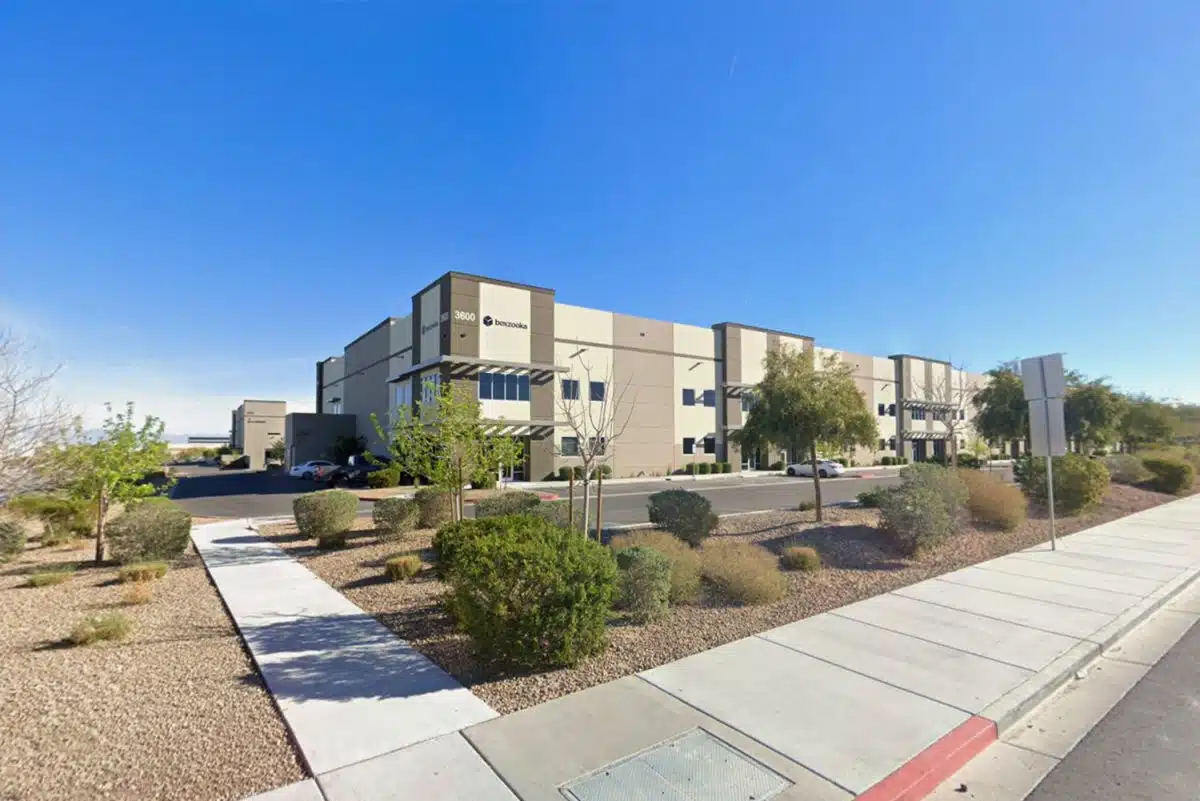
Las Vegas: Boxzooka’s West Coast Fulfillment Center

Key Takeaways

  • A Las Vegas, Nevada fulfillment center reaches much of California, Arizona, and the Mountain West within one to two days by ground. Major Pacific Northwest markets like Portland and Seattle are generally reachable within two to three business days.
  • Coastal warehouse space runs $18 to $22 per square foot annually in Los Angeles and San Francisco, compared to roughly $14 per square foot in Las Vegas. That gap is one reason Henderson works well as a location for a large, scalable operation, though total fulfillment costs depend on transportation, labor, and other factors, not real estate alone.
  • Positioning inventory in Henderson, rather than shipping every West Coast order out of a single East Coast warehouse, reduces the number of shipping zones most orders cross, which tends to cut transit times and parcel costs.
  • The Ports of Los Angeles and Long Beach handle roughly a third of all U.S. containerized imports, and a Henderson facility sits close enough to reach them without paying port-adjacent lease premiums.
  • Boxzooka’s west coast fulfillment services already run entirely through its Henderson / Las Vegas facility, giving one warehouse footprint broad West Coast reach.

This post breaks down what makes Boxzooka’s Henderson, Nevada facility function as a real West Coast fulfillment center: the cost math behind the location, how positioning inventory closer to customers helps compress delivery zones, and which markets a Henderson-based warehouse can actually reach.

It matters more than a footnote on a location page suggests. Brands evaluating West Coast fulfillment options often default to assuming “in the city” and “fast” are the same requirement, and price themselves out of margin chasing a warehouse inside Los Angeles or San Francisco city limits when a hub one state over ships nearly as fast, with far more room for a 3PL to build and scale the operation behind it. Understanding why the hub model works is the first step in deciding whether it fits your brand.

What Makes a West Coast Fulfillment Center Work Without Being Coastal

The instinct is to assume West Coast fulfillment means a warehouse physically in California. In practice, the better question is transit time, not city limits. A facility that reaches the major West Coast population centers within one to two days by ground delivers nearly the same customer experience as a warehouse sitting inside any one of those cities, while giving a 3PL more room to build and scale the facility behind it.

Henderson, Nevada, next to Las Vegas, sits roughly four hours from Los Angeles, five from Phoenix, and within a day’s drive of San Francisco, San Diego, and Sacramento. For eCommerce brands, that translates to one-to-two-day ground delivery across much of California, Arizona, and the Mountain West. Portland and Seattle sit further out and generally land within two to three business days by ground, still a strong window for most brands, without Henderson absorbing coastal lease rates, coastal labor costs, or coastal warehouse scarcity.

This is the same logic behind regional distribution strategy generally: a warehouse does not need to sit inside a market to serve it well, it needs to sit within that market’s delivery window. National carriers already price and route shipments by zone, not by whether the origin warehouse happens to share a city name with the destination. A hub positioned correctly inside that zone structure can serve several major metros as effectively as several separate small warehouses, without the overhead, inventory splitting, and coordination complexity of managing that many separate facilities.

Why Las Vegas Specifically Works as a Hub

The Cost Math

Coastal industrial real estate carries a real premium. Warehouse space in Los Angeles and San Francisco runs $18 to $22 per square foot annually, compared to roughly $14 per square foot in Las Vegas. That gap is one of the reasons Las Vegas works well as a location for a large, scalable fulfillment operation: it gives 3PLs room to build and grow a sizable footprint without competing for the tightest, most expensive submarkets on the coast.

Transportation, labor, drayage, inventory handling, and technology also factor into fulfillment pricing as well, but optimizing real estate allows 3PLs to be strategic and remain competitive when everything is accounted for.

Port Proximity Without Port Pricing

The Ports of Los Angeles and Long Beach together handle roughly a third of all U.S. containerized imports, which is why so much West Coast warehousing clusters directly around the San Pedro Bay complex. That clustering is also exactly why port-adjacent space is some of the most expensive and hardest to find industrial real estate in the country. Henderson sits close enough to reach those ports by truck for import-heavy brands, while sidestepping the premium that comes with sitting directly on top of them.

Room to Grow

Las Vegas industrial vacancy eased to 8.8% in the first quarter of 2026, giving fulfillment operators more available capacity than most coastal California submarkets currently offer. That matters directly for brands: a 3PL with room to expand in its home market can scale a client’s footprint without a disruptive facility move.

Reducing Shipping Zones by Positioning Inventory Closer to Customers

The core idea behind a West Coast hub is simple: the fewer shipping zones a package has to cross, the faster and typically cheaper it is to deliver. National carriers price ground shipments by zone, and a package that starts its journey three states from the customer, instead of on the opposite side of the country, crosses fewer zones by definition.

Positioning inventory in Las Vegas instead of shipping every West Coast order out of a single East Coast warehouse shortens that distance for a large share of orders, which tends to reduce both transit time and parcel shipping costs. The exact impact depends on a brand’s specific carrier mix, order geography, and package profile, so we would rather point to the mechanism than attach a blanket savings number to it.

The Markets Boxzooka Reaches From Henderson / Las Vegas

Our Henderson, Nevada facility currently anchors fulfillment for:

  • Los Angeles, including the broader Southern California market
  • Phoenix and the greater Southwest
  • San Diego and the border region
  • Denver and the broader Mountain West
  • Sacramento and San Francisco, reached within the same one-to-two-day ground delivery window
  • Portland and Seattle, generally reached within two to three business days by ground

For a brand selling nationally, pairing this West Coast hub with Boxzooka’s East Coast facilities in Secaucus, New Jersey and Middletown, Pennsylvania closes the loop: broad ground delivery coverage across the country from just two warehouse footprints, instead of piecing together a patchwork of regional 3PLs.

The Bicoastal Model: An Efficient Option for Many National Brands

Brands scaling West Coast shipping tend to land on one of two extremes. The first is shipping everything from a single East Coast warehouse, which keeps operations simple but stretches delivery times to four or five days for West Coast customers and inflates parcel costs on every long-zone shipment. The second is stitching together a network of small regional warehouses, city by city, which solves the speed problem but multiplies inventory splitting, minimum stock requirements, and coordination overhead at every additional location.

For many national brands, a two-hub bicoastal model lands in a practical middle ground. Inventory divides between an East Coast facility and a West Coast facility based on where demand actually is, and each hub covers a wide radius of one-to-two-day delivery, extending to two-to-three-day for the furthest West Coast markets, rather than a single metro. That keeps SKU management simpler than a network of six or eight locations, while still improving on the delivery speed of a single-warehouse setup.

The right network for a brand depends on more than hub count, though. Order geography, SKU depth and velocity, inventory requirements, and how fast a brand’s customers expect delivery all factor into whether two hubs, one hub, or a more distributed network fits best. A bicoastal model is a strong option for many growth-stage brands with national demand and a moderate SKU count. A brand with concentrated regional demand, very deep SKU catalogs, or same-day delivery requirements in a specific metro may need a different configuration.

How Boxzooka’s West Coast Hub Actually Works

Boxzooka directly owns and operates the Las Vegas facility rather than operating through a third-party network, which means hub decisions, dock scheduling, staffing, and carrier negotiations happen in-house. Every West Coast order routes through a proprietary Transportation Management System that shops rates and methods across carriers in real time, so a brand does not have to manage carrier selection itself.

Our facility runs dedicated, separate workflows for B2B and DTC orders, supports Amazon FBA prep and Seller Fulfilled Prime, and gives every client real-time visibility into inventory, orders, and shipments through Boxzooka’s proprietary WMS. Performance across the hub holds to the same standard as every Boxzooka facility: 100% on-time receiving, 99.8% on-time shipping, and 99.9% inventory accuracy, the operational backbone that makes serving multiple markets from one warehouse actually reliable instead of just theoretically efficient.

Is a West Coast Hub Model Right for Your Brand?

A Henderson-based hub tends to make the most sense for brands that fit a few patterns:

  • Selling into multiple West Coast or Mountain West markets, rather than a single hyper-local metro
  • Shipping shelf-stable goods that do not require same-day, hyperlocal delivery inside one specific city
  • Importing through West Coast ports and needing warehousing near, but not directly on top of, port infrastructure
  • Prioritizing cost efficiency and delivery speed together, rather than paying a coastal premium for marginal transit-time gains

Brands that need true same-day delivery within a single dense metro, think hyperlocal meal kits or same-day pharmacy, are the exception where a warehouse physically inside that city still wins. For many eCommerce brands shipping nationally or across the West Coast, the hub model delivers most of the delivery speed of a coastal warehouse while giving a 3PL more room to run an efficient, scalable operation behind it. The clearest way to know which camp a brand falls into is to map current customer geography against a one-to-two-day (or two-to-three-day, for the Pacific Northwest) delivery radius from Las Vegas: if the large majority of West Coast orders already fall inside that radius, the case for a single hub is strong. If a meaningful share of volume depends on hyperlocal, same-day delivery inside one specific metro, a hub model will not replace that need on its own.

Scale Your West Coast Fulfillment From One Hub

A single, well-placed warehouse can do the work of several regional facilities when the location, technology, and carrier strategy are built around it deliberately. Boxzooka’s Henderson West Coast fulfillment center was built to do exactly that. For more on evaluating the facility itself, see What to Look for in a Las Vegas 3PL Partner.

Get a quote from Boxzooka and let’s map out what a West Coast hub strategy could do for your delivery times and your margins.

Common Questions About Hub-and-Spoke Fulfillment

Does shipping from Nevada instead of California actually slow down delivery?

Not meaningfully for most West Coast markets. The relevant number is transit time to the customer, not distance on a map. A one-to-two-day ground delivery window from Las Vegas to Los Angeles, San Francisco, or Phoenix matches what most coastal warehouses promise for the same routes, since carrier network routing, not warehouse city, determines most of the actual transit time. Portland and Seattle sit outside that one-to-two-day window and generally land within two to three business days.

What happens to import-heavy brands that need to be near the ports?

For brands receiving multiple ocean containers a month, an added short-haul leg from the ports to Henderson is a real, if modest, cost. For most direct-to-consumer brands that palletize inbound freight and move it via standard LTL or FTL freight, that added cost is small relative to the ongoing warehousing and labor advantages of operating outside coastal California.

Can a hub model handle both B2B and DTC volume for the same brand?

Yes, provided the facility runs dedicated, separate workflows for each order type rather than treating them identically. A single hub with proper B2B and DTC segmentation can serve a wholesale account and a direct-to-consumer storefront from the same building without either order type slowing the other down.

Categories
Fulfillment

3PL Onboarding in Las Vegas: What to Expect

Key Takeaways

  • A standard mid-market 3PL onboarding runs six to twelve weeks industry-wide, per Racklify; Boxzooka’s standardized process typically gets Las Vegas brands live in less than six weeks.
  • Las Vegas has a seasonal rhythm most cities don’t: over 22,000 conventions and roughly 6 million attendees a year, according to LVCVA data, which tightens hotel, staffing, and warehouse labor capacity around major shows like CES.
  • Onboarding covers five phases: discovery, product and service configuration, technology integration, inventory transfer, and process training, and skipping any of them is where most delays start.
  • Direct switching costs between 3PLs can run $25,000 to $100,000, covering contract termination, inventory transfer, and overlapping facility expenses, which makes a clean first onboarding worth getting right.
  • The most common onboarding failures are avoidable: messy product data, an unclear SKU catalog, and starting the transition right before a demand spike instead of ahead of it.

Signing with a new 3PL is the easy part. Getting your products, systems, and team actually ready to ship from a new Las Vegas warehouse is where most of the real work happens, and where most of the risk lives. Brands that treat onboarding as an afterthought tend to find out the hard way: missed inventory, delayed launches, and a first peak season spent firefighting instead of scaling.

This guide walks through what a real 3PL onboarding looks like in Las Vegas specifically, why the city’s own calendar affects your timing more than you might expect, and the mistakes worth avoiding before you sign anything.

It is worth taking seriously. Direct switching costs between 3PLs, contract termination, inventory transfer, overlapping facility expenses, and system integration, can run $25,000 to $100,000, according to industry data compiled by Fulfill.com. A messy first onboarding does not just cost time. It sets you up to pay those costs again a year later when the relationship does not work out.

Why 3PL Onboarding Matters More Than People Think

Onboarding a 3PL means using a structured process to transfer inventory management, order fulfillment, and delivery activity to a new partner. That means physically moving goods, but it also means syncing your eCommerce platforms with new logistics software, training staff on new workflows, and putting quality control in place before day one.

Done properly, the outcomes show up in the numbers. Boxzooka’s Las Vegas operations run on a 100% on-time receiving rate, 99.8% on-time shipping, and 99.9% inventory accuracy, results that depend directly on the operational groundwork laid during onboarding, not something bolted on afterward.

The 3PL Onboarding Process, Step by Step

Step 1: Discovery and Requirements Mapping

This phase documents order volumes, seasonal trends, and growth projections, and assigns a dedicated client success manager to oversee communication going forward. These metrics guide warehouse space allocation, staffing levels, and technology capacity from day one, so the setup can grow alongside the business instead of needing to be rebuilt in six months.

Step 2: Configuring Products and Services

Products that need special handling get assigned dedicated areas, and high-velocity SKUs get placed in the most efficient picking spots. Service level agreements get built around the promises made to customers. If a brand offers same-day shipping with a noon cutoff, picking waves and order cutoffs are configured to actually hit that window, not just approximate it.

Step 3: Integrating and Setting Up Technology

Data needs to flow cleanly between your eCommerce platform and the 3PL’s warehouse management system to avoid overselling or shipping delays. Direct connections to Shopify, Amazon, and NetSuite handle most of this automatically. A sandbox environment allows full end-to-end testing of inventory decrements and tracking updates before anything goes live. API connections, authentication, and webhook setup are handled by the implementation team, but it is worth asking upfront which integrations are pre-built versus custom, since custom integrations are almost always where onboarding timelines slip.

Step 4: Inventory Transfer and Receiving

Advance shipment notices communicate what is inbound (SKU, case pack, handling instructions) before it arrives, and every shipment gets inspected on arrival for accuracy. Velocity-based placement puts the most popular items near packing stations, while seasonal-only inventory stays in overflow until demand picks up.

Step 5: Tailoring Processes and Training

Custom kitting instructions preserve the presentation of gift sets and bundles, packaging protocols protect the unboxing experience, and warehouse staff get trained on branded inserts and any personalization requirements. Returns processing gets defined here too, including inspection criteria, restocking rules, and disposal of unsellable items.

Why Onboarding Timing Matters Specifically in Las Vegas

Most cities have one predictable demand spike a year: peak retail season. Las Vegas has two calendars running at once. On top of normal eCommerce peak season, the city hosts more than 22,000 conventions and trade shows annually, drawing roughly 6 million attendees, with single events like CES pulling in over 140,000 people in a single January week.

That matters for onboarding because those weeks put real pressure on the local labor market, hotel capacity, and even warehouse staffing availability, since hospitality and event-driven work competes for the same workforce. A brand that starts onboarding two weeks before a major convention is stacking a new, unstable process on top of the exact week the local labor and logistics market is under the most strain. The fix is simple: plan onboarding around Las Vegas’s own event calendar, not just your retail calendar.

A useful rule of thumb: treat the two weeks before and during a major convention the same way you would treat the two weeks before and during your own peak retail season, and avoid scheduling a go-live inside that window. January (CES) and the busiest spring and fall trade show stretches tend to be the tightest points on the Las Vegas convention calendar, while summer generally offers more room to run a clean onboarding without competing for local attention.

The upside of the market more than offsets this if you plan around it. Industrial vacancy eased to 8.8% in the first quarter of 2026, giving brands more available capacity and negotiating room than the market has offered in years, and Henderson’s workforce has grown steadily enough to support staffing up for a new client without the tight labor constraints some coastal markets face.

Your 3PL Onboarding Timeline for Las Vegas Businesses

Here is what a typical six-week onboarding looks like end to end.

Week 1: Discovery and Planning

Product catalogs, order volumes, and communication channels get established with the implementation team. This foundation connects business goals to actual fulfillment requirements before any technical work starts.

Weeks 2 to 3: Technology Setup and Testing

Platform integrations (Shopify, Amazon, NetSuite) get configured, and a sandbox environment is built for testing order flows. This phase confirms accurate data, smooth inventory updates, and real-time tracking visibility before go-live.

Week 4: Inventory Transfer

Shipments get coordinated across the country and delivery appointments confirmed. Advance shipping notices and receiving protocols keep stock accuracy intact and prevent order interruptions during the move.

Weeks 5 to 6: Go-Live Execution

Product arrives and final validation testing wraps up. A controlled go-live starts with a limited batch of orders, catching any minor issues before scaling to full volume. By the end of week six, the Las Vegas operation is running at full capacity.

How Boxzooka Handles 3PL Onboarding in Las Vegas

Boxzooka’s Henderson facility runs the same standardized onboarding process used across our New Jersey and Pennsylvania operations, backed by a dedicated client success manager from day one instead of a rotating support queue. Because Boxzooka directly manages the Henderson building rather than operating through a third-party network, onboarding decisions, from dock scheduling to staffing for a new client, happen in-house instead of through a layer of subcontracted operators.

Every client gets access to Boxzooka’s proprietary WMS for real-time inventory, order, and shipment visibility from the first sandbox test through ongoing operations, plus support for Amazon FBA prep, Seller Fulfilled Prime, and dedicated B2B and DTC workflows from the same Henderson facility.

Three Common Onboarding Mistakes in Las Vegas (and How to Avoid Them)

1. Starting Onboarding Right Before a Major Convention

Launching two or three weeks ahead of CES or another major Las Vegas convention stacks new-process risk on top of the exact week local staffing and logistics capacity are most stretched. Check the Las Vegas Convention and Visitors Authority calendar before you set a go-live date, and build in a buffer.

2. Messy Product Data and an Unclean SKU Catalog

Hidden data errors typically surface during the move, not before it. Audit product data and consolidate duplicate SKUs before onboarding starts rather than during it, and run a short parallel-systems period to catch discrepancies early. If legacy platforms do not integrate cleanly, simple file transfers or middleware can bridge the gap until a full upgrade is practical.

3. Skipping a Returns Test Before Go-Live

Returns usually get treated as an afterthought during onboarding, tested only once real customer returns start arriving. That is backwards. Ask your 3PL to run a handful of simulated returns through the full inspection, restocking, and disposal workflow during the sandbox phase, before your actual customers are the ones finding out whether the process works.

What to Ask Your 3PL During Onboarding

A few pointed questions during onboarding, not just before you sign, catch problems while they are still cheap to fix.

Who is my point of contact, and what happens if they are unavailable?

A named client success manager should own your account throughout onboarding. If the answer is a shared support inbox, expect slower resolution when something goes wrong mid-transition.

Can I see the sandbox environment before go-live?

A real onboarding process includes hands-on testing of order flows, inventory decrements, and tracking updates before any live orders are at risk. If a 3PL cannot show you a sandbox, that is a sign the technical integration is not as buttoned-up as it sounds.

What does a partial go-live look like if something is not ready?

Ask specifically how the 3PL handles a delayed SKU category or a system that is not fully tested. A provider with a real staged go-live process can launch part of your catalog on schedule instead of holding the entire launch hostage to one lagging piece.

Building a Long-Term Partnership Beyond Onboarding

Successful onboarding is the foundation, not the finish line. Boxzooka’s client success managers runs regular performance reviews, refine processes over time, and keep operations aligned as product lines and order volumes grow. As Las Vegas’s industrial market and workforce continue to mature, that ongoing relationship, not just the six-week setup, is what keeps fulfillment scaling smoothly through every peak season and every convention calendar to come.

That means quarterly business reviews that look at more than accuracy rates: carrier performance, cost-per-order trends, and whether current warehouse space still fits your growth trajectory. Brands that outgrow their original onboarding configuration, more SKUs, new sales channels, added kitting requirements, should be able to reconfigure without repeating the full six-week process from scratch. A good 3PL treats that kind of change as a scoped adjustment, not a second onboarding.

Ready to Start Onboarding in Las Vegas?

A clean onboarding sets the tone for everything that follows. Boxzooka’s Henderson facility, standardized process, and dedicated client success team are built to get Las Vegas and West Coast brands shipping accurately from day one, without the guesswork. For a deeper look at what to evaluate before you sign, see What to Look for in a Las Vegas 3PL Partner.

Get a quote from Boxzooka and let’s build an onboarding plan that fits your product, your timeline, and Las Vegas’s own calendar.

Categories
Fulfillment

What to Look for in a Las Vegas 3PL Partner

Key Takeaways

  • A Henderson, Nevada fulfillment center puts eCommerce brands within one to two days of Los Angeles, San Francisco, Phoenix, and San Diego by ground, cutting West Coast transit time compared to shipping from an East Coast-only warehouse.
  • Nearly 6 in 10 eCommerce companies now outsource some or all of their fulfillment, up from about 3 in 10 in 2020, according to Radial, which has made 3PL selection a core operating decision rather than a back-office one.
  • Roughly a third of brands switch 3PL providers within their first two years, per the Council of Supply Chain Management Professionals (via Verde Fulfillment USA), most often over misaligned expectations rather than capacity problems.
  • The strongest Las Vegas 3PL partners document real performance numbers, such as on-time receiving and shipping rates and inventory accuracy, and support both B2B and DTC order types from the same facility.

Las Vegas is not just a tourism and hospitality economy with a warehouse or two on the side anymore. The Henderson and North Las Vegas submarkets have become a genuine West Coast fulfillment corridor, and eCommerce brands selling into California, Arizona, and the broader Mountain West are increasingly asking the same question: who should run fulfillment out of Las Vegas, and what actually separates a strong 3PL partner from a forgettable one.

That question carries more weight than it used to. Nearly 6 in 10 eCommerce companies now outsource some or all of their fulfillment, up from roughly 3 in 10 in 2020. Choosing the wrong partner does not just mean a clunky onboarding. It means missed delivery windows, inventory discrepancies during your busiest season, and a scramble to re-platform six months later. In fact, about a third of brands switch 3PLs within their first two years, and misaligned expectations set during the sales process are usually the cause, not a lack of capacity.

This guide breaks down what a Las Vegas 3PL partner should bring to the table, why the city’s industrial market makes this a good time to evaluate options, and the specific questions worth asking before you sign a contract. We’ve also put together a list of the top 3PLs in Las Vegas if you’d like to see some actual names based on their capabilities.

What Actually Separates a Strong 3PL From a Forgettable One

Before getting into the Las Vegas market specifics, it is worth stating plainly what to look for when evaluating a 3PL. These are the standards we hold ourselves to everyday.

First, transparency. A 3PL should be able to hand you real, current numbers on request, not a general sense of how things usually go. Second, dedicated infrastructure. Order types, workflows, and staffing should be built around how your business actually operates, not forced into a generic process. Third, proactive communication. You should hear about a problem from your 3PL before you hear about it from a customer.

Those three things, more than warehouse square footage or a long client logo list, are what put a retailer in the driver’s seat. They are also the lens worth using for every criterion in this guide.

What a 3PL Partner Actually Does, and Why Las Vegas Specifically Matters

A 3PL, or third-party logistics provider, manages your supply chain logistics on your behalf: storing inventory, picking and packing orders, shipping, and often handling returns. Think of it as an extension of your operations that scales up or down as demand changes, without you having to lease a warehouse, hire a receiving team, or negotiate carrier contracts yourself.

Most eCommerce brands turn to a 3PL when in-house fulfillment becomes too costly or too complex to manage alongside product development and marketing. The right partner improves order accuracy, shortens delivery windows, and frees the team to focus on growth instead of warehouse operations. Businesses that outsource to a 3PL report a 43% reduction in delivery costs on average, and for brands targeting West Coast customers, warehouse location is one of the biggest levers behind that number.

Location is where Las Vegas earns its place in the conversation. A fulfillment center in Henderson or North Las Vegas sits within a one to two day ground shipment of Los Angeles, San Francisco, Phoenix, and San Diego, four of the largest consumer markets on the West Coast. For a brand shipping from a single East Coast warehouse, that same order can take four to five days and cost meaningfully more in zone-based parcel rates. Splitting inventory between coasts, or moving West Coast-bound inventory to a Las Vegas facility specifically, is often the fastest way to shorten that gap.

Why Las Vegas Has Become a Serious West Coast Fulfillment Market

Within the Las Vegas metro, submarkets serve different purposes. North Las Vegas and Apex handle the large, big-box distribution deals most people picture when they think of eCommerce warehousing. Henderson skews smaller and more service-oriented: median deal size in East Henderson ran around 5,500 square feet in the first quarter of 2026, and the submarket is known for supporting flexible, high-service logistics operations that prioritize speed and reliability over sheer scale, exactly the profile most growth-stage eCommerce brands need.

The labor market backs this up. Boxzooka’s Las Vegas facility sits in a workforce that has grown steadily, up 0.71% annually over the last few decades and 2.91% since 2020, giving fulfillment operators room to staff up for peak season without the labor constraints some coastal California markets face. Add in Nevada’s favorable tax environment and access to Harry Reid International Airport for international freight, and the case for a Las Vegas fulfillment strategy gets stronger every quarter.

What to Look for in a Las Vegas 3PL Partner

Once you have a shortlist, evaluate every candidate against the same criteria. Here is where to focus.

Location and Network

Confirm exactly where the facility sits, not just the city name on the website. Henderson and North Las Vegas both reach the major West Coast metros in one to two days, but ask for specific transit maps or carrier zone charts rather than taking “Las Vegas” at face value. If you sell nationally, ask whether the 3PL can pair a Las Vegas facility with East Coast coverage for national two-day delivery.

A CPG brand working with Boxzooka leverages fulfillment from our Las Vegas and Pennsylvania facilities to reduce their cost and transit time to customers. Previously shipping from just the East Coast, ground delivery times would take 3+ days to reach the west coast. That was reduced to 2 days and under with the addition of Las Vegas fulfillment.

Technology and Warehouse Management System

A modern warehouse management system, or WMS, should give you real-time visibility into inventory levels, order status, and shipment tracking, not a report that updates once a day. Ask what platforms the 3PL integrates with out of the box, Shopify, Amazon, NetSuite, and whether custom API integration is available for anything outside that list.

Scalability for Peak Season

Over 80% of shoppers now prefer same-day shipping, and two-day delivery has become the baseline expectation rather than a differentiator. That bar gets harder to clear during peak season, when order volume can spike well beyond normal daily throughput. A strong Las Vegas 3PL should have a documented plan for additional staffing, extended hours, and advance inventory prep ahead of major demand spikes, not just a promise that they will figure it out.

Amazon FBA/FBM and Compliance Support

If Amazon is part of your sales mix, confirm the 3PL can handle FBA prep, labeling, and barcoding to Amazon’s standards, and ask specifically about Seller Fulfilled Prime (SFP) support if you want two-day Prime delivery without storing inventory in an Amazon warehouse. SFP has strict shipping speed and quality requirements, so a 3PL that already meets them saves you the compliance risk of finding out the hard way.

B2B and DTC Order Handling

Wholesale and retail orders have different labeling, packaging, and routing requirements than direct-to-consumer shipments. A 3PL that treats both the same way tends to slow down on one or the other during busy periods. Ask whether B2B and DTC orders run through separate, dedicated workflows within the same facility.

Documented Performance Metrics

This is the single best filter for separating a strong 3PL from an average one. Ask for actual, current numbers on on-time receiving rate, on-time shipping rate, inventory accuracy, and fulfillment accuracy. A partner that answers with specifics is telling you something real. A partner that answers with “we pride ourselves on great service” is not.

Pricing Transparency

Understand the full pricing model before you sign anything: inbound receiving, storage, pick and pack, outbound shipping, and any accessorial fees for kitting, special handling, or returns. The best providers can walk you through a sample invoice line by line without hesitation.

3 Signs You’re Talking to the Wrong 3PL

Most of a 3PL evaluation comes down to what a provider can show you. But a few warning signs tend to show up early in the conversation, well before a contract is on the table.

  1. They cannot give you a specific number. Ask about on-time shipping rate or inventory accuracy and get a general answer like “we pride ourselves on service” instead of a percentage, that is worth noting.
  2. They describe every client the same way. If a provider cannot speak to how your SKU mix, order profile, or B2B and DTC split changes their operation, they likely have not thought about it.
  3. Peak season planning is vague. “We will figure it out when it happens” is not a plan. A strong 3PL can point to a specific example from a past peak season.

None of these are automatic disqualifiers on their own, but two or three together are worth a second look before you sign.

How Boxzooka Helps with Las Vegas 3PL Fulfillment

Boxzooka operates a directly managed fulfillment center in Henderson, Nevada, built specifically to give eCommerce brands a fast, tech-driven West Coast option alongside our New Jersey and Pennsylvania facilities. The numbers back it up: a 100% on-time receiving rate, a 99.8% on-time shipping rate, 99.9% inventory accuracy, and a 100% fulfillment accuracy rate, the exact kind of documented performance data every brand should be asking for.

The Henderson facility maintains dedicated, separate areas for B2B and DTC orders, so a wholesale shipment for a retail partner and a direct-to-consumer order headed to a customer’s doorstep each move through the workflow built for it. We support Amazon FBA prep, labeling, and barcoding, along with Seller Fulfilled Prime capability, so brands can offer two-day Prime shipping without warehousing inventory inside Amazon itself. Kitting, custom pack-outs, and branded inserts are available for brands that want their packaging to reflect their brand, not just get the product there.

Every client gets access to Boxzooka’s proprietary WMS, giving real-time visibility into inventory, order status, and shipment tracking from the first consultation through ongoing operations, plus a dedicated client success manager rather than a rotating support queue.

Questions to Ask Before You Sign With a Las Vegas 3PL

Come to every 3PL conversation with the same short list of questions. How a provider answers matters as much as what they say.

What is your on-time receiving and shipping rate, and can you show me the data?

A strong 3PL states specific, current percentages. Vague answers about “reliable service” without numbers are a signal to keep looking.

Where exactly is your Las Vegas facility, and what does it actually reach in one to two days?

Ask for a carrier transit map, not just a city name. Henderson and North Las Vegas both reach LA, San Francisco, Phoenix, and San Diego quickly, but confirm it rather than assume it.

How do you handle B2B and DTC orders differently?

Listen for a description of separate workflows, not a single process applied to both order types.

What happens during peak season?

Look for specifics: additional staff brought on ahead of time, extended hours, and advance prep, ideally with an example from a past peak season rather than a hypothetical.

Can you support FBA/FBM and Seller Fulfilled Prime requirements?

Confirm this directly if Amazon is part of your channel mix. Not every 3PL maintains the compliance standards Amazon’s SFP program requires.

Scale Your West Coast Fulfillment From Henderson

Choosing a 3PL is a pivotal decision, and Las Vegas has earned a real seat at the table for brands serving West Coast customers. Boxzooka’s Henderson facility combines documented performance metrics, dedicated B2B and DTC workflows, FBA and SFP support, and a proprietary WMS built to give you visibility from day one, not generic promises about great service.

We’d rather you make an informed decision than a fast one. Contact us and we’ll walk you through the same evaluation framework outlined above, location and network reach, technology, peak season readiness, documented performance metrics, and pricing transparency, even if we’re not ultimately the right fit. That’s a conversation worth having either way, and it beats finding out the hard way six months into a contract.