

Categories
eCommerce Fulfillment

Same-day Delivery Expectations are Growing. How Can Online Retailers Compete? 

Same-day delivery has been around for a while – think flowers, Dominos, and auto parts. UberEATS, DoorDash, and your local grocery store dramatically expanded the same-day food delivery sector during the pandemic. And, thanks to Amazon, Target, and Walmart, people are receiving more than food every day to their front door. 100 million Prime members in the USA are spoiled with same-day options on virtually anything. Forgot a birthday? No problem, let’s see what we can get today.  

These heightened consumer expectations make it difficult for online brands and retailers to compete. Most eRetailers have a “same day shipping” option with a cut off time for purchases to be packaged and shipped using an overnight ship method (FedEx, UPS, DHL) to arrive the next day. Expensive, but effective and a cost that the consumer can choose.

It is worth noting that a customer may incorrectly view same-day shipping and same-day delivery as one and the same. These mistakes are easy to make, particularly with orders placed on mobile devices (+50% these days). It is important to make the delivery promise distinction clear at checkout so there is no confusion. Transparency is a best practice to help build customer loyalty. 

Same-day delivery options are less common for most online retailers and can be expensive. Amazon Prime is $139 per year – not free, but it feels like it when the option for same-day delivery pops up. In major metro areas in the USA, a handful of same-day couriers are available (check Google in your area). In most cases, these services cater to high-value items with a limited delivery area.    

Here are a few of the best practices for online retailers to consider to meet the rising consumer expectations. 

Offer Fast Shipping or Free Shipping – Not Both

eCommerce retailers can offer fast shipping options on every order as long as fulfillment operations are capable of shipping on the day the order is placed. Retailers generally offer Free Shipping at a price point that makes sense for the order value. Consumers understand these choices and are more tolerant of slower delivery when they get a “deal.” Setting expectations for the delivery date is important, and providing an expedited shipping method for a premium is a common practice. 

Prompt Delivery Updates and Tracking Information

Retailers are motivated to provide consistent and reliable updates to order status and delivery updates. Mobile purchases are the routine and naturally demand a steady flow of tracking messages. When presented effectively, order updates and tracking information are positive experiences that enhance your brand. For example, getting your company’s order tracking information via UPS or FedEx does not promote your brand as much as the carrier’s brand. There are methods for presenting tracking information in a window with your branding and messaging.  

Retailers that are not providing enough updates can be disappointing customers and opening the door to negative reviews.  

Optimized Warehouse Operations

Managing a productive warehouse operation or having a top-tier 3PL is necessary for meeting the expectations of today’s e-commerce shoppers. Warehouse operators must have their buildings optimized for workflow to minimize order processing time and get orders fulfilled accurately. There are dozens of opportunities for leveraging automation in fulfillment operations to streamline repetitious processes for material handling, packaging, and shipping. Same-day order processing has become the industry standard, which means people, processes, and technologies have to work flawlessly every day.  

Leverage Technology Wherever Possible

Today’s consumers have high expectations for quick answers and clean websites and apps. Having your technology platforms and partners effectively integrated is important to providing real-time updates and positive user experiences. Brands need to be thoughtful about what technologies (e.g., OMS, barcoding, AI, WMS, TMS) are integrated into fulfillment and transportation processes to enhance accuracy and speed.  

For instance, have you considered implementing route optimization software for delivery efficiency? There are several sophisticated Transportation Management Systems available to help manage the complexity and costs of shipping methods.  

Regional Distribution Centers Reduce Delivery Time and Expense

Having your products closer to your customers naturally cuts down on shipping time and expense. For most customers, 3-to-5-day delivery times are acceptable. Distribution Centers positioned for East Coast and West Coast order fulfillment can leverage less expensive transportation services and make the delivery promise.  

There are several important techniques for managing inventory to optimize your distribution network. Brands with low numbers of SKUs can manage split inventory with fewer complications than brands with high SKU counts. The goal is to make sure the majority of your products are fulfilled completely from the “local” warehouse and avoid any split shipments (one item from one warehouse and one item from another warehouse).  

Continuous Improvement

What mechanisms are in place for regular evaluation and improvement of fulfillment processes? How do you gather feedback from customers to enhance the overall delivery experience? Are your operations positioned to scale with the business? Having a continuous improvement mindset is a necessity to keep meeting customer expectations while controlling costs.  

Addressing these questions, businesses can develop strategies to not only meet but exceed customer expectations in this world of same-day delivery and information at your fingertips. 

Boxzooka is a quality-focused 3PL with great technology, lean operating processes, happy clients, and a vibrant culture.  

By Tom Behnke

Categories
eCommerce

What’s The Deal With “Black Friday?”

Shoppers in America christened the Friday after Thanksgiving as “Black Friday” long before the internet and eCommerce began to dominate the retail world. This year will be no different. However, the phenomenon is not a single-day experience – and it’s not just an American event. Here’s a quick look backward and forward on Black Friday and its impact on retail shopping in general and eCommerce specifically.  

Going way back to the 17th century (that’s 1600 to 1699), there was a saying referring to “Black Friday” as the “day on which an examination is held.” No kidding. Leave it to students to coin a new phrase with some slang. 

In 1869, according to the History Channel, Black Friday was used to describe the gold market crash on Friday, September 24. Obviously, neither of these historical references had anything to do with shopping. 

Post WWII in the 1950s, the day after Thanksgiving was becoming a big shopping day in the US, with people packing into stores for “deals” on Christmas presents. The police in Philadelphia started calling the day Black Friday because of all the chaos they had to deal with, shoppers crowding into stores and sometimes getting unruly. There is no reference to Eagles fans in this research, but the annual Army v Navy game the Saturday after Thanksgiving did contribute to some of the overcrowding.  

On a related note, some retailers described going from “being in the red” – accounting-wise – to “being in the black” with the surge in buying gifts. True enough that for years, many retailers have been banking on a good holiday shopping season to cover the leaner times throughout the year. This also has a more positive connotation for “black,” right?

The Black Friday shopping event was catching on, and along came the internet and the ecommerce retail bonanza. Since the turn of the century, eCommerce retail spending has risen continually with year-over-year increases in online revenues, while traditional brick-and-mortar retailers have seen modest growth at best. Naturally, online retailers began promoting “Black Friday Sales” events well ahead of the day. The months of November and December have become a powerful selling season for brands and retailers, and shoppers are well-prepared and trained to find bargains.  

In the early 2000s, the speed and reliability of internet connectivity was sketchy in many areas ( if you remember). A new phenomenon began when people started utilizing their faster connections at work to do their shopping, and, voila, Cyber Monday was born. Credit the NRF, National Retail Federation, for coining the term. And every year since then, the Monday following Thanksgiving sees a spike in revenue and online traffic. The dramatic increase in smartphones and mobile devices since 2008 has opened the door for “always on” retail promotions and access.  

The term “Cyber Five” hasn’t caught on as well – referring to the five days from Thanksgiving Thursday to Cyber Monday. Regardless, these web-based shopping trends continue to expand globally and have led to many more marketing techniques to entice shoppers. Christmas in July, Singles Day, Prime Day, and the like have created anticipation and a following on the same wavelength as Black Friday.   

Let’s hope that these trends are for the greater good of retailers, manufacturers, supply chain businesses, consumers, and the population in general… after all, it is the season for giving.  

Tom Behnke

Advisory Board Member

Boxzooka

Boxzooka is a quality-focused e-commerce fulfillment company with great technology, lean operating processes, happy clients, and vibrant culture. www.boxzooka.com 

Categories
eCommerce News

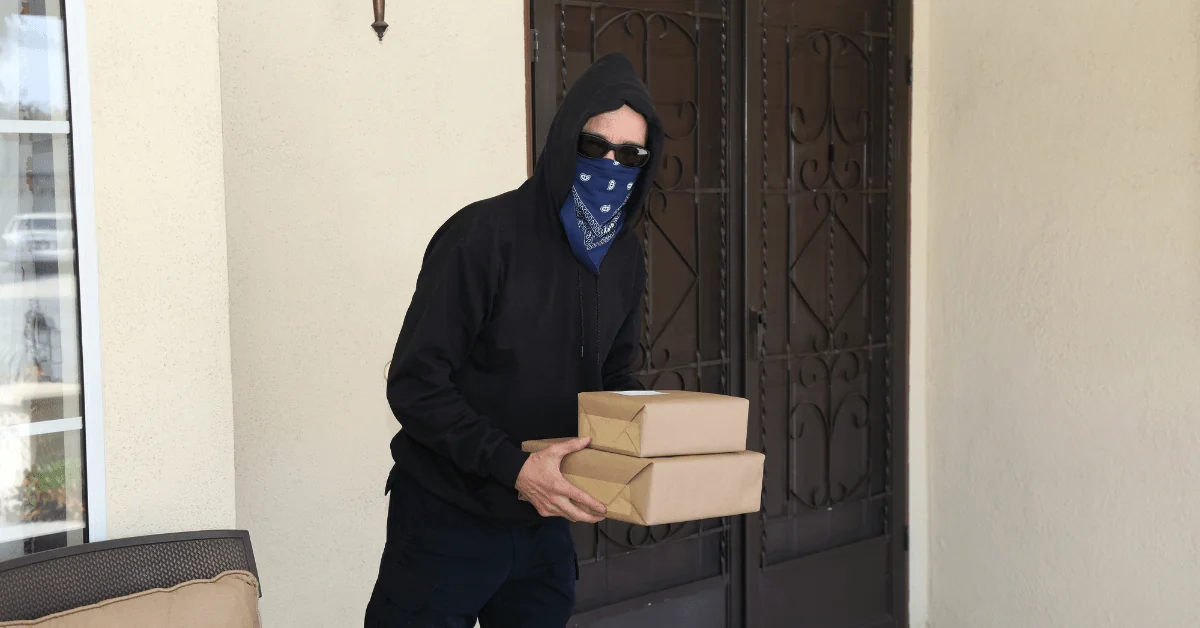
Porch Pirates on the Prowl This Holiday Season: Here’s How to Outsmart Them

Your package tracking app reports, “Delivered,” yet there’s no trace of the package by the front door. Has your parcel fallen prey to porch pirates? You’re not alone. According to a survey by C+R Research, about 14% of Americans have had packages stolen by the now-infamous porch pirates.

As consumers prepare their homes for the holidays, porch piracy poses an unfortunate threat to both online orders and the Christmas spirit. Many families look forward to decorating their homes with lights and inflatables, dressing up their trees with ornaments, and hiding gifts under the branches.

According to C+R Research, 22% of households have had two packages stolen, while 11% lost three or more packages to these scallywag’s. That amounts to millions of thefts nationwide when more people than ever are relying on e-commerce for holiday gifts and necessities.

U.S. Cities With Highest Parcel Theft

The risk of porch piracy isn’t equal everywhere. An analysis of FBI crime statistics by Safewise found the highest rates of package theft happen in larger, more densely populated metropolitan areas.

Seattle has the dubious honor of being number one, with 6.1 package thefts per 1,000 people. Other cities topping the list included San Francisco (5.9), Portland (5.6), and Los Angeles (4.9).

Rural areas tend to see lower incidences of porch piracy. The lowest rates were in locations like Rapid City, South Dakota (0.2 thefts per 1,000) and Bismarck, North Dakota (0.3).

Wherever they happen, these thefts collectively add up to substantial financial losses. On average, each stolen package is valued at around $112.30. The most commonly stolen packages are from Amazon, containing clothing, followed by books, toys, health/ personal care products, and groceries.

What Attracts Porch Pirates

What attracts the attention of porch pirates most? According to Brendan Heegan, CEO of Boxzooka, a leading fulfillment company, the top factor is flashy branding on packaging.

“The number one thing that draws thieves is big and colorful logos or labels on the outside of boxes and mailers,” says Heegan. As a company that works with retailers to enhance supply chain and warehousing, Boxzooka has insight into what makes parcels enticing targets.

Heegan’s advice? “Use generic outer shipping packaging to cover up any branding. Make the shipment look as boring and unappealing as possible to thieves.” Concealing prominent logos and labels helps prevent deliveries from standing out and catching the eye of opportunistic criminals on the prowl.

10 Ways to Outsmart Porch Pirates

Consumers must take precautions to ensure their preparations and presents are not ruined by theft. 

  • Opt for delivery to your workplace. Fewer packages sitting unattended at home means fewer opportunities for thieves. Consider asking neighbors if packages can be delivered to their homes if you know you won’t be home.
  • Require a signature for delivery so packages aren’t just left on the porch. However, requiring signatures can delay delivery if you’re not home.
  • Invest in a doorbell camera or outdoor security camera so any theft can be captured on video. Popular brands like Ring and Nest are relatively inexpensive deterrents. Consider multiple cameras covering multiple angles for complete protection.
  • Use a secure parcel drop box. Products like Loxx Boxx bolted to the home provide a safe space for couriers to leave deliveries out of sight from thieves.
  • Opt for the added security of Amazon Lockers or UPS Access Points for your packages. The use of these lockers is often free with their delivery services. If these aren’t nearby, explore having deliveries sent to your local grocery or pharmacy for a secure alternative.
  • Sign up for carrier text or email alerts so you know the exact delivery time and can try to be home. Work from home or have a friend pick up packages if you can’t be there.
  • Consider installing motion-activated lights around the perimeter of your home. Bright lights can scare off thieves looking to sneak up under the cover of darkness.
  • Fill out a vacation hold with your local post office so packages don’t accumulate if you’re away. Ask neighbors to keep an eye out and secure any deliveries as well.
  • Buy insurance when ordering more expensive items online. Look for the insurance offered by the vendor or delivery service, which may cost a few extra dollars. 
  • Buy online, pick up in-store. For more expensive items, collecting your item personally from the store may be the best method to avoid porch piracy.

What To Do if Your Parcel Is Stolen

If you become a victim of porch piracy, there are important steps to take.

  • Contact the delivery company immediately to report the theft and file a claim. Major carriers like UPS and FedEx offer insurance for lost or stolen packages.
  • File a police report. While packages may be a low priority, having a record of the theft could help if the criminal is caught. It may also qualify you for reimbursement from your renters’ or homeowners’ insurance.
  • Check with neighbors to find out if the package was mistakenly delivered to the wrong address. Thieves often target entire blocks.
  • Monitor local buy/sell sites and Craigslist in case the stolen goods are being resold locally. Collect evidence to provide to police.
  • Consider installing security cameras around the home as a preventative measure going forward. Video doorbells and outdoor cameras have helped identify culprits in many package theft cases.

Taking prompt action is key to recovering lost items or getting reimbursed when falling victim to a porch pirate’s crimes. Remaining vigilant is the best ongoing deterrent against this type of theft.

As online shopping booms, so do criminals’ attempts to steal unattended deliveries. Being vigilant and using common-sense security measures can help ensure packages arrive safely this holiday season.

By Tom Behnke

Also published on Media Decision.