
Categories
News

Navigating Geopolitical turbulence

REPRODUCED WITH PERMISSION
June 13, 2024
Derek Clouthier

Geopolitical disruptions are nothing new to the global supply chain sector over the past decade. Whether it’s the COVID-19 pandemic, Brexit, trade wars, or a natural disaster, logistics and supply chain companies need to be prepared for the inevitable.

Current tensions and events in the global supply chain are perfect examples of how industry, companies and consumers can be impacted, and how the resilience of logistics companies and shippers has become common.

With tensions high in the Red Sea due to Houthi militants in Yemen targeting commercial ships, and the ongoing impact of Baltimore’s Key Bridge collapse – which was recently destroyed in a controlled demolition – those in the supply chain have had to pivot to minimize the effect on delivery times and pricing.

Rerouting

Ports along the U.S. East Coast have made room for shippers unable to access the Port of Baltimore, but as Jena Santoro, senior manager of global risk intelligence for Everstream Analytics, highlights, this adds time, costs, and challenges to shippers.

“Added transit times both for shipping carriers and truck companies have unsurprisingly increased logistics costs,” says Santoro. “Vehicles typically transported from the Port of Baltimore to Dubai, for example, are now subject to an additional $1,050 fee for the transfer to the Port of Newark. Transporters have to choose to absorb these added costs or pass them on to customers and risk losing future business.”

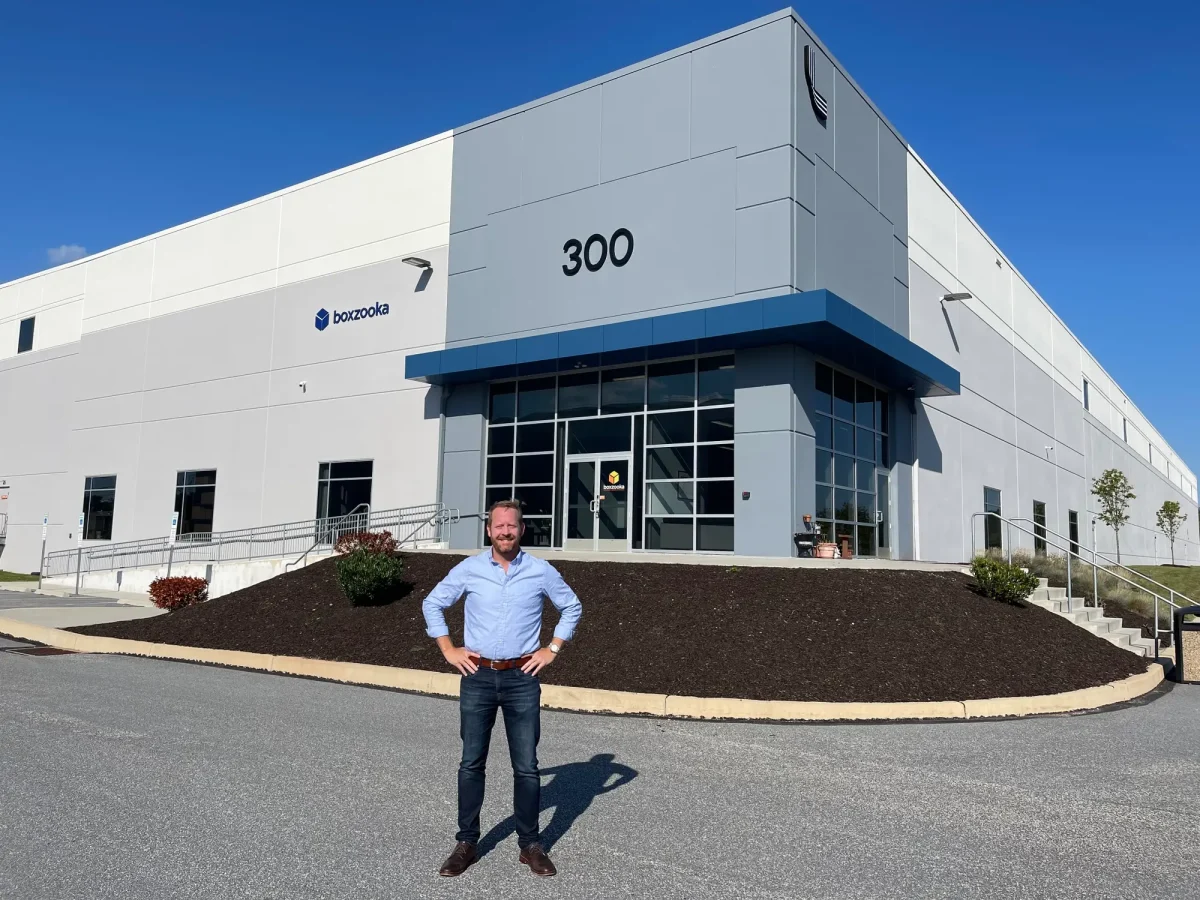
Brendan Heegan, Founder and Chairman

Brendan Heegan, founder and CEO of 3PL company Boxzooka, agrees, pointing out that space has become a premium along the East Coast, and that comes at a higher cost, particularly on landside and air transport in the Mid-Atlantic region.

“With these operators functioning as a ‘band-aid’ while fulfilling their already committed obligations,” explains Heegan, “it means the cost of this transportation is higher, in some cases much higher, compounded by higher costs for the longer workaround routes that are being used to get around the Port of Baltimore.”

Logistics companies have also needed to navigate the situation in the Red Sea, rerouting shippers to avoid conflict with Houthi militants.

“Their need to reroute is requiring operators to use more container ships adding both to their fuel costs and emissions, which are expected to increase by an estimated 42 per cent per ship for a typical Asia to North Europe weekly liner service,” says Matt Goker, CEO of ATA, a logistics and freight forwarding service provider.

In addition to alternative routes adding to costs, Goker says operators are now delaying plans to replace aging fleets with more fuel-efficient ships.

“While freight rates are currently remaining relatively stable, there is the anticipation that they could increase as more manufacturers elect to use air cargo instead of shipping, which is 10 to 20 per cent higher in costs than shipping,” he says.

And pricing continues to elevate. A recent report from Container XChange indicates that container leasing rates from China to North America surged in the first quarter of the year, including to Canada.

February and March saw a significant spike on the China to Canadian ports, with Yantian to Toronto rates increasing by 68 per cent, Ningbo to Toronto up 35 per cent, Shenzhen to Toronto 26 per cent, Tianjin to Toronto 23 per cent and Qingdao to Vancouver up 64 per cent. The highest container lease rate increase was the Ningbo to Oakland, Calif., route, which saw a 92 per cent bump from February to March.

“China to North America one-way container leasing rates have increased particularly in 2024, with the rise mostly driven by a widening container price delta between China and the U.S.,” commented Christian Roeloffs, cofounder and CEO of Container XChange, an online container trading and leasing platform, in a release. “China becoming ‘more expensive’ up until March versus U.S. container prices stagnating or decreasing.”

Delivery times have also increased, with traffic through the Suez Canal, which connects the Mediterranean and Red Sea, instead being sent around the Cape of Good Hope in South Africa.

“The freight data firm Xeneta reported an estimated 90 percent of the usual container ship capacity passing through the Red Sea and Suez Canal was rerouted around the southern tip of Africa,” says Goker. “This rerouting added on average 10 days to normal delivery times.”

Lisa Osorio, chief strategy officer at Quloi, a cloud-based supply chain solutions provider, says rerouting from the Suez Canal has resulted in shipping costs increasing by as much as five times, impacting imported goods.

She also says this could add to inflation. “Research from Morgan Stanley estimated the disruptions could add 0.7 percentage points to global core goods inflation,” says Osorio. “Container ship operators are now having to use more vessels and incur related increased costs.”

Keep on truckin’

Trucking was hit especially hard by the Key Bridge collapse, as carriers struggled to get their loads to destinations on time.

“Though alternate East Coast ports have been able to absorb the diverted cargo volumes from Baltimore, the trucking sector has struggled to meet the new demands,” says Santoro. “Truck driver shortages have made it difficult to get diverted cargo loads to their now further-away destinations in a timely manner without losing money or passing on the added transit costs to customers.”

Heegan adds that on top of the impact on the trucking sector, it’s costing more to store goods at alternate ports.

“The more this particular sector is under strain, even as an end may be in sight, this would be where we could still see the most impact,” says Heegan.

“Though alternate East Coast ports have been able to absorb diverted cargo volumes from Baltimore, the trucking sector has struggled to meet the new demands.”

– Jena Santoro,
senior manager of global risk intelligence,
Everstream Analytics

Positive outlook

Heegan, who grew up in the Baltimore area and is familiar with the local logistics industry, says things could have been a lot worse following the collapse of the Key Bridge.

Though he points out the event caused approximately 5,000 truckloads to be diverted each day, a significant impact on the local economy, larger supply chains have done their best to minimize the effect on their operations.

“It’s hurting the local communities that relied on that bridge for thousands of jobs and local commerce,” Heegan says of the loss of the Key Bridge. “For the larger supply chains, it absolutely could have been a lot worse. And let me be clear about this; even all of these weeks later, it’s still hard to predict with any high degree of confidence, so even what I say here today, could easily change tomorrow.”

Alternative modes of transportation have helped alleviate some of the backlog with the loss of the port, such as trains, planes, and trucks.

“But now, most of these other transport methods have maxed out and it’s very possible that, the longer this situation continues, the more we are going to witness more direct effects,” says Heegan.

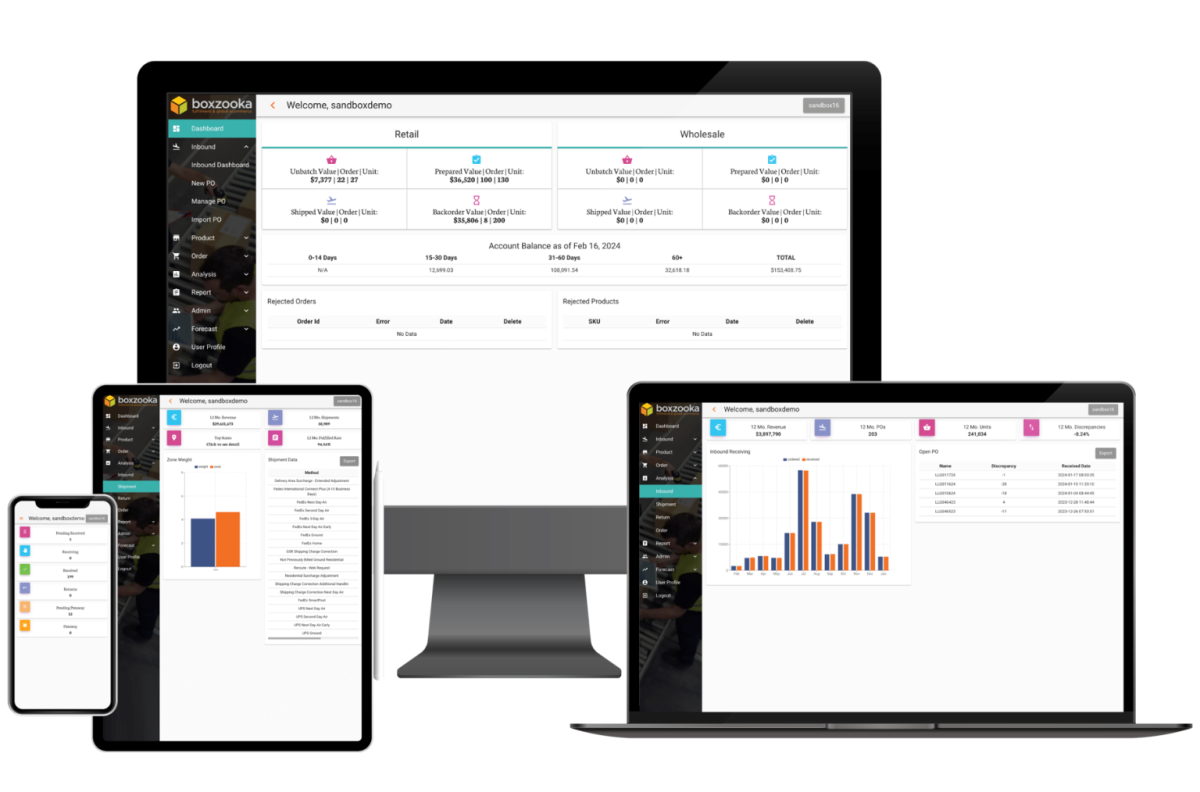
Boxzooka WMS dashboard shown across desktop, laptop, tablet, and phone

The importance of preparation

There is often a silver lining with any challenging time, and with the Baltimore and Red Sea situations, logistics companies will not only adapt, but will implement a contingency plan for similar future events.

Today’s digital technology is helping companies wade through the complexities of geopolitical disruptions, as is artificial intelligence (AI).

“Those who have experience and the necessary capabilities have been deploying new digital platforms powered by artificial intelligence and machine learning,” says Goker. “This is giving them end-to-end supply chain visibility enabling real-time decision making to best address disruptions and unexpected contingences, while facilitating optimum collaboration between all stakeholders from manufacturers, shippers and suppliers to forwarders and logistics service providers.”

Ensuring collaboration between all stakeholders will be key to implementing a successful strategic plan, and, as Osorio underscores, embracing a real-time, digital freight-forwarding business model will be vital.

“From it, they gain supply-chain visibility for efficient, real-time order tracking, more expedient quoting capabilities and analytics that help improve their performance and customer relationships,” she says.

Heegan also cautions carriers and logistics companies when it comes to liability.

“Contracts between forwarders, cargo carriers, ports, and their customers are almost certainly going under the microscope after the incident in Baltimore,” he says. “Expect to see new verbiage in those agreements on liability and the limits of liability. It also means we could see higher insurance premiums as a result on a move forward basis, which could drive up the costs associated with cargo and shipping.”

Auto Shipments diverted from Baltimore

Like various other products that were heading through the Port of Baltimore, automotive shippers are now using alternative ports further south – Mercedes Benz and Stellantis to Georgia or further north and GM and Ford to Newark, N.J.

“Though the Sparrows Point terminal at Baltimore has remained open and accessible to deep-sea car carriers,” says Santoro, “its handling capacity is about 10,000 finished vehicles every two weeks, compared with normal monthly vehicle imports at Baltimore of between 60,000-70,000.”

Heegan again points out that the impact the Key Bridge collapse has had on the trucking industry is trickling down to the automotive sector.

“Much of the burden since the collapse has been placed on the trucking industry to shuffle these vehicles around this closure,” says Heegan. “We’re seeing this play out though with other product sectors too, but not on the scale as automotive. Construction materials, salt, coal, sugar, farm equipment, all of these are major sectors that move through Baltimore, but the strain there has largely been mitigated.”

Categories
News

Whats behind Los Angeles retail’s shift back to brick and mortar

“People are looking for a destination to shop,” said Lele Sadoughi co-founder Armand Sadoughi. “They want a place to go, not to just go to one store, but to hang out for a little bit.”

By Isabel Sami – Staff Reporter, L.A. Business First

Apr 4, 2024

Since Armand and Lisa “Lele” Sadoughi launched their online accessories boutique 12 years ago, online shopping trends have ebbed and flowed. When they opened their first retail location in Newport Beach, California, in 2022, the couple’s decision signaled a greater impulse in retailers recommitting to brick-and-mortar stores.

Armand Sadoughi said they felt it was the time to become an “omnichannel” retailer, with a physical presence to supplement their online one. Their boutique, named Lele Sadoughi after its co-founder, was ready to take the leap to in-person sales.

“Our stores let people see everything together, and it’s part of what makes the brand shine,” he told L.A. Business First.

Lately, the trend of in-person shopping has seen a resurgence, including in Los Angeles County, and developers are priming the region for continued growth. Nearly 1.6 million square feet of retail space is under construction in Los Angeles County, according to a Q4 2023 Southern California retail market report by Avision Young, with another 4 million proposed.

The retail market still has some catching up to do, however. In Q4 2023, NAI Capital found occupied square footage remained more than 1 million square feet below what it was in Q4 2020. While retail space occupancy improved last year, with an increase of 715,000 square feet quarter-over-quarter, nearly 18 million square feet were left vacant at year-end, coming off an all-time high.

Meanwhile, the average sale price for retail space increased almost 7% in Los Angeles County to $426 per square foot, as the average asking rent for direct space rose by 2% over the same period. But sales volume in 2023 fell 45% below 2022, and leasing volume in 2023 dropped 9%.

Even before the pandemic accelerated e-commerce demand, Allen Matkins partner Jonathan Lorenzen said he noticed the shift to online shopping as far back as a decade.

Now, people are simply ready to be back in stores, he said.

“If someone wants to go out to the store, they want to see a really nice product that’s unique, and if they want convenience, they’ll still go to those types of retail locations,” he told L.A. Business First.

The pandemic, he said, “led people to think more strategically and more efficiently about how they visit retail centers, so they don’t take it for granted now.”

The trip to the store became an “intentional effort” for consumers, Lorenzen said, and retailers have responded to that urge.

E-tailers’ transition to brick and mortar maintains high 3PL demand

Brendan Heegan, CEO and founder of Boxzooka, a third-party logistics company (3PL) that holds inventory for retailers with both online and brick-and-mortar stores, has seen the success of e-commerce firsthand. When retailers that work with Boxzooka receive orders on their website or need their stores restocked, Boxzooka ships the orders from one of its several warehouses spread out across the U.S.

While demand for 3PL has continued to rise due to e-commerce, Heegan said, in-person shopping has also driven a need for such business models.

“It’s no secret that brick-and-mortar retail took a dip across the country during the pandemic and post-pandemic to some degree, but we’re seeing a resurgence of retail,” Heegan told L.A. Business First.

Brendan Heegan, Boxzooka Founder and Chairman
Brendan Heegan, CEO and founder of third-party logistics company Boxzooka, holds inventory for retailers with both online and brick-and-mortar stores.

Brendan Heegan, CEO and founder of third-party logistics company Boxzooka, holds inventory for retailers with both online and brick-and-mortar stores.

BOXZOOKA

For e-commerce brands that have established themselves online, the next “evolution” is to go brick-and-mortar, Heegan said, whether hosting a pop-up event or negotiating a short-term lease to dip a toe into the retail waters. Heegan said he’s seen several brands follow this model before signing long-term leases for a more permanent location.

Lele Sadoughi is one such example. Heegan worked with the Sadoughis to distribute their merchandise over the past few years and has watched as they opened five stores in the U.S., with the latest in Nashville. Armand Sadoughi said the “sheer density” of people in Los Angeles drew them to open in the area, reflecting the copasetic nature of retailers and consumers in the current retail environment.

How consumer preferences are shaping the retail market

With five Lele Sadoughi stores in L.A., New York, Nashville, Dallas and Houston, Armand Sadoughi said its clientele has comparable needs across all markets: a shopping experience with restaurants, entertainment and maybe a waterfront — an added bonus in Newport Beach, where foot traffic thrives along the coast.

“People are looking for a destination to shop,” he said. “They want a place to go, not to just go to one store, but to hang out for a little bit. It’s important to have other things going on so people sort of make a day or a half a day of it.”

Lorenzen of Allen Matkins has seen his clients respond to the same preferences from consumers. In his experience, the most deals are being brokered in areas with entertainment, the types of places where people go after work or over the weekend for “experiential retail,” a buzzword Lorenzen says came up often two years ago.

“It’s the same concept, but now I’m seeing it with historic-type towns, neighborhood areas that are unique but also have malls and larger developments,” he said.

Unique shopping centers and retailers, such as those with a specific niche or product customers can’t buy online, are finding added success, added Lorenzen.

Brick-and-mortar stores give customers a dose of instant gratification, Heegan said, spurred by both trying on and holding items and from taking a product home in the moment.

The only challenges Heegan could name were weather and location issues, such as parking, which is always a critical factor in retail, Lorenzen agreed. Shopping centers with challenging parking struggle more on average than those with ample parking for customers.

For Lele Sadoughi, sales flourished when the brand opened its first few brick-and-mortars. In 2023, the majority of the brand’s sales were done in-store, not online. Sadoughi pointed to the environment of “like-minded customers” where the stores operate, collectively drawing in more traffic.

“Similar brands attract a similar customer base to create a destination of sorts,” he said. “It’s important to create reasons for people to get out of the house and shop.”

Lorenzen said tenants seek locations that will generate visits, surrounded by other tenants that are also succeeding in the space and generating that “critical mass” of visits from customers.

Soft-goods retailers like apparel stores benefit from sitting beside quick-service restaurants and drive-thrus that bring consumers into a space frequently, with access and parking also playing critical roles, he said.

In L.A., Lorenzen said he’s seen growing success with clients in Venice’s Abbot Kinney and Century City. More than ever, his clients are seeking buildings with a “unique” feel, whether historic or older assets that can be morphed into creative spaces. 

“That’s been a lot of fun, and you see that in Abbot Kinney-type locations,” he said. “I see that in San Diego too, where some older neighborhoods and really unique assets are being repositioned. The developers and landlords are doing a fantastic job working side-by-side with the tenants and driving a lot of growth and a lot of visits.”

Sadoughi said Newport Beach has been a prime location for the brand, keeping with the “casual, beachy vibe” the brand emulates. 

He said in California, the brand sells a lot of sunglasses.

Categories
Guides News

Avoid Supply Chain Dominos by Navigating the Disruption Du Jour

By Tom Behnke, Total Retail

It can feel, at times, like a game of dominos. When there’s a global supply chain disruption, like those we’ve been seeing in recent months on the Red Sea and the Panama Canal, e-commerce companies and, ultimately, consumers feel the downstream ripples.

For those working on the inside, it’s nothing new. There have been plenty of similar events in recent years. During the pandemic, which had its own challenges for supply chains, events like the running aground of the large container ship “Ever Given” in the Suez Canal provide one of the best examples of how one event can add “insult to injury.”

Another occurred not long after Ever Given — severe labor shortages at vital ports like the one in Long Beach started to inject another complication.

The period during the pandemic truly was a perfect storm for supply chains. It gave a real-world case study on how seemingly separate and, on their own, manageable snags can combine to upend supply chains from the plant all the way to the customer’s door and how difficult it can be to unwind once started.

Today the pandemic’s worst effects have passed and now, as the world becomes an increasingly complicated place to do business, we’re seeing yet again how an “isolated” problem in one corner of the world can have an effect on billions.

‘Floating’ Economy at Risk in Turbulent World

A staggering 90 percent of the world’s trade is transported by ship, so the effects can be quite dramatic whenever a “choke point” becomes congested or there’s some other interruption on the “high seas.” For consumers, sometimes it’s noticeable in the lack of inventory in a particular category. Almost always, there’s an added cost from the delay, which is absorbed by the merchant and often passed to the customer.

As global trade grows, more ships burn more fuel and pay their crews more to be out at sea longer. This alone brings increased costs, but add in disruptions such as we’re seeing in the Red Sea region and it means those increased costs are unavoidable.

On top of this is growing uncertainty about the future of trade on the “high seas,” a notion that has propelled maritime traders for centuries. Today, as seen in the Red Sea area, forcing carriers away from the Suez Canal and instead around Africa’s Cape of Good Hope, terrorists are challenging free trade in their backyard and affecting consumers downstream.

Higher Costs Trickling Down

Last year saw relatively inexpensive ocean freight. Believing that pandemic volumes would carry into 2023, carriers bought bigger ships. As it turns out, this actually had the opposite effect. It resulted in too much supply, coupled with lower demand; the resulting cost of a 40-foot container from Shanghai to Long Beach stayed below $2,000.

As these latest snags throw yet more wrenches into the mix, container prices in the first month of 2024 doubled and in some cases even tripled. The world container index most recently had the price of a 40-foot container pushing $4,000.

The primary trade route between East Asia and North America has been especially challenged recently. As China prepared to shut down for the Lunar New Year, there was a rush to get products loaded and shipped. Then there’s the Red Sea. Some carrier traffic is being diverted through the Suez to avoid the Panama Canal, where drought has caused lower water levels. Others are going around the tip of Africa to avoid the threat of attacks and piracy. Suddenly a lot of vessels are taking more time to complete their cycles.

Be Supply Chain Aware 

As the world’s carriers work around disruptions, it’s important that any company working within the supply chain stays on top of it every minute of every day.

Visibility and Communication

Being in the know, understanding the situation and knowing how it may impact operations and product availability is key. Follow disruptions and understand their residual impact. If you can’t figure it out, reach out to your suppliers and ask questions. The more quickly action is taken the more effectively disruptions can be worked around.

Reimagine Warehouse Operations

Consider moving away from major distribution sites in metropolitan cities to several large hubs served by strategically located distribution centers. Having several major hubs within a two- to three-day delivery time of 95 percent of American households is the model that’s cost effective and service-oriented. This allows retailers to make up for lost time once delayed ships make it to port and product finally starts closing in on its final destination.

Find a Strong Partner

A third-party logistics (3PL) provider can be a strong solution for those with the resources. A true 3PL partner offers turnkey solutions and advice around warehousing, inventory efficiencies, SKU depth, and velocity, purchase planning, and other vital operations. Hire a 3PL with its finger on the pulse of the entire supply chain.

Technology is Your Friend

Technology is evolving all the time, and adapting to the latest warehouse management systems (WMS) technology is paramount. The upgrades can be daunting and pricey, but that shouldn’t deter any company working within the supply chain. A worthwhile WMS must help you grow your business and keep issues within your supply chain visible at all times.

If anything has been learned since 2020, it’s just how intricate our supply chains are and how one seemingly “unconcerning” issue in a faraway corner of the world can have a major impact down the chain on the other side of the globe, especially as additional disruptions arise.

No matter the supply chain sector we work in, being experts on the supply chain at any moment in time is critical in overcoming the hurdles that are thrown our way each and every day.

Tom Behnke is an advisor for Boxzooka, a cloud-based warehouse management software platform and fulfillment distribution center, and vice president of sales and marketing.

To see the original article, click here.

Categories
eCommerce News

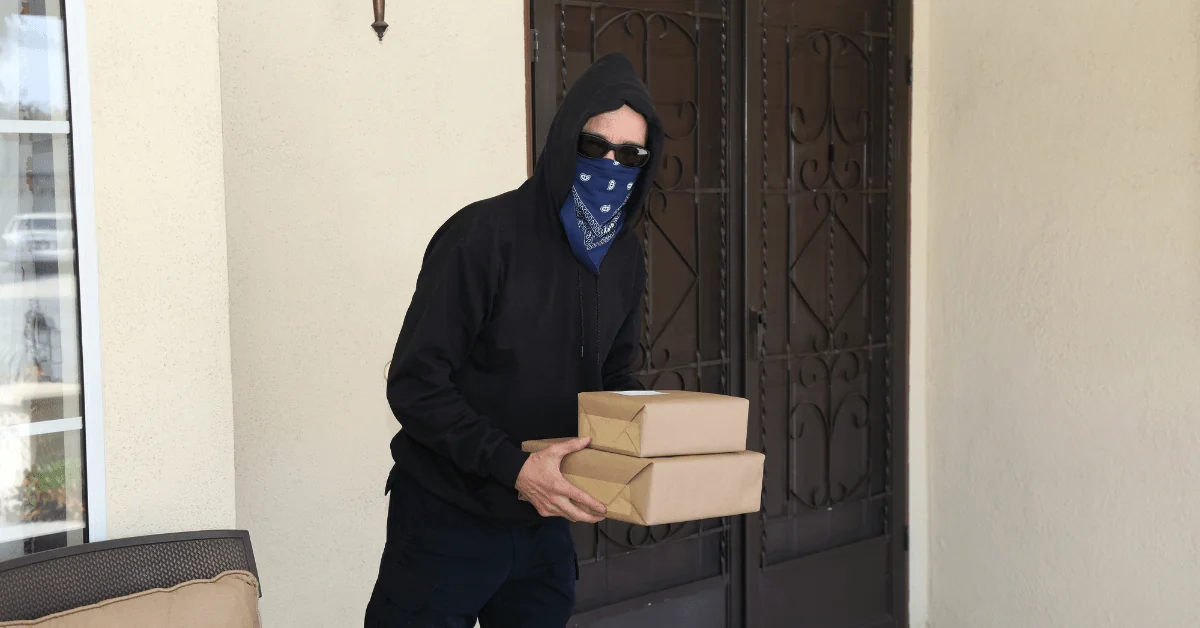
Porch Pirates on the Prowl This Holiday Season: Here’s How to Outsmart Them

Your package tracking app reports, “Delivered,” yet there’s no trace of the package by the front door. Has your parcel fallen prey to porch pirates? You’re not alone. According to a survey by C+R Research, about 14% of Americans have had packages stolen by the now-infamous porch pirates.

As consumers prepare their homes for the holidays, porch piracy poses an unfortunate threat to both online orders and the Christmas spirit. Many families look forward to decorating their homes with lights and inflatables, dressing up their trees with ornaments, and hiding gifts under the branches.

According to C+R Research, 22% of households have had two packages stolen, while 11% lost three or more packages to these scallywag’s. That amounts to millions of thefts nationwide when more people than ever are relying on e-commerce for holiday gifts and necessities.

U.S. Cities With Highest Parcel Theft

The risk of porch piracy isn’t equal everywhere. An analysis of FBI crime statistics by Safewise found the highest rates of package theft happen in larger, more densely populated metropolitan areas.

Seattle has the dubious honor of being number one, with 6.1 package thefts per 1,000 people. Other cities topping the list included San Francisco (5.9), Portland (5.6), and Los Angeles (4.9).

Rural areas tend to see lower incidences of porch piracy. The lowest rates were in locations like Rapid City, South Dakota (0.2 thefts per 1,000) and Bismarck, North Dakota (0.3).

Wherever they happen, these thefts collectively add up to substantial financial losses. On average, each stolen package is valued at around $112.30. The most commonly stolen packages are from Amazon, containing clothing, followed by books, toys, health/ personal care products, and groceries.

What Attracts Porch Pirates

What attracts the attention of porch pirates most? According to Brendan Heegan, CEO of Boxzooka, a leading fulfillment company, the top factor is flashy branding on packaging.

“The number one thing that draws thieves is big and colorful logos or labels on the outside of boxes and mailers,” says Heegan. As a company that works with retailers to enhance supply chain and warehousing, Boxzooka has insight into what makes parcels enticing targets.

Heegan’s advice? “Use generic outer shipping packaging to cover up any branding. Make the shipment look as boring and unappealing as possible to thieves.” Concealing prominent logos and labels helps prevent deliveries from standing out and catching the eye of opportunistic criminals on the prowl.

10 Ways to Outsmart Porch Pirates

Consumers must take precautions to ensure their preparations and presents are not ruined by theft. 

  • Opt for delivery to your workplace. Fewer packages sitting unattended at home means fewer opportunities for thieves. Consider asking neighbors if packages can be delivered to their homes if you know you won’t be home.
  • Require a signature for delivery so packages aren’t just left on the porch. However, requiring signatures can delay delivery if you’re not home.
  • Invest in a doorbell camera or outdoor security camera so any theft can be captured on video. Popular brands like Ring and Nest are relatively inexpensive deterrents. Consider multiple cameras covering multiple angles for complete protection.
  • Use a secure parcel drop box. Products like Loxx Boxx bolted to the home provide a safe space for couriers to leave deliveries out of sight from thieves.
  • Opt for the added security of Amazon Lockers or UPS Access Points for your packages. The use of these lockers is often free with their delivery services. If these aren’t nearby, explore having deliveries sent to your local grocery or pharmacy for a secure alternative.
  • Sign up for carrier text or email alerts so you know the exact delivery time and can try to be home. Work from home or have a friend pick up packages if you can’t be there.
  • Consider installing motion-activated lights around the perimeter of your home. Bright lights can scare off thieves looking to sneak up under the cover of darkness.
  • Fill out a vacation hold with your local post office so packages don’t accumulate if you’re away. Ask neighbors to keep an eye out and secure any deliveries as well.
  • Buy insurance when ordering more expensive items online. Look for the insurance offered by the vendor or delivery service, which may cost a few extra dollars. 
  • Buy online, pick up in-store. For more expensive items, collecting your item personally from the store may be the best method to avoid porch piracy.

What To Do if Your Parcel Is Stolen

If you become a victim of porch piracy, there are important steps to take.

  • Contact the delivery company immediately to report the theft and file a claim. Major carriers like UPS and FedEx offer insurance for lost or stolen packages.
  • File a police report. While packages may be a low priority, having a record of the theft could help if the criminal is caught. It may also qualify you for reimbursement from your renters’ or homeowners’ insurance.
  • Check with neighbors to find out if the package was mistakenly delivered to the wrong address. Thieves often target entire blocks.
  • Monitor local buy/sell sites and Craigslist in case the stolen goods are being resold locally. Collect evidence to provide to police.
  • Consider installing security cameras around the home as a preventative measure going forward. Video doorbells and outdoor cameras have helped identify culprits in many package theft cases.

Taking prompt action is key to recovering lost items or getting reimbursed when falling victim to a porch pirate’s crimes. Remaining vigilant is the best ongoing deterrent against this type of theft.

As online shopping booms, so do criminals’ attempts to steal unattended deliveries. Being vigilant and using common-sense security measures can help ensure packages arrive safely this holiday season.

By Tom Behnke

Also published on Media Decision.

Categories
News

Boxzooka Welcomes Onia and WeWoreWhat As Fulfillment Clients

By Tom Behnke, Boxzooka

Secaucus, NJ, Jan. 31, 2023 — Boxzooka, the leading tech-enabled 3PL fulfillment warehouse with a strong focus in wholesale and e-commerce distribution, is thrilled to announce the addition of two new clients, Onia and WeWoreWhat.

Boxzooka will exclusively be handling their drop-shipping and B2C fulfillment needs, as well as enabling international shipping with its proprietary landed-cost technology. The two brands will operate out of Boxzooka’s Middletown, PA warehouse. Boxzooka provides the high quality services in e-commerce shipping and warehouse fulfillment that these brands and their clients deserve.

Onia is a lifestyle brand founded by Carl Cunow and Nathan Romano that has gained popularity for their ability to be versatile yet minimalistic. WeWoreWhat was founded by Danielle Bernstein and has proven to be extremely successful in both the e-commerce and retail space. Both brands have an impressive portfolio in many categories of apparel including resort wear, ready to wear, swim, and athleisure. Boxzooka will bridge the two distinct e-commerce websites onto a single platform WMS for fulfillment and be responsible for overseeing all order fulfillment of these brands.

“When a client orders products from brands, such as Onia and WeWoreWhat, they expect top tier service from the moment they checkout,” said Boxzooka CEO Brendan Heegan. “Our focus is to make sure that customers receive their products in a timely manner and have a great customer experience. Since we are the first touchpoint, we need to ensure that the experience is seamless. First impressions are critical to everything.”

Boxzooka is thrilled to work with the teams at Onia and WeWoreWhat, and is excited to streamline their operational processes as their preferred 3PL fulfillment and technology partner.

About Boxzooka: Boxzooka is recognized as a leading technologically-advanced order fulfillment and international checkout platform for e-commerce retailers and wholesalers. Boxzooka is committed to going the extra mile to help solve daily operational challenges to exceed service level expectations. For more information, contact us today.

Categories
News

My Logistics Company Operates Warehouses in 2 of the Sector’s Hottest Markets

This as-told-to essay is based on a conversation with Brendan Heegan, the 45-year-old founder of Boxzooka. Insider has verified his business’ growth with documentation. The following has been edited for length and clarity. *Please note this article is written by Jenny Powers and is originally featured on Business Insider. My logistics company operates warehouses in 2 of the sector’s hottest markets. We made 8 figures in revenue last year thanks to the boom in e-commerce.

As a third-party logistics- and fulfillment-service provider, Boxzooka was deemed by government bodies to be an essential business at the onset of the coronavirus pandemic, which proved to be both a blessing and a challenge.

We partner with retailers, wholesalers, and subscription-box companies to provide logistics services, which include everything from inventory management to fulfilling deliveries and returns of goods for customers around the world.

Our business boomed during the pandemic — our business has grown by 194% from where it was in 2019 — and it’s made me value our team and clients more now than ever before.

After 20 years of working in transportation and third-party logistics distribution for organizations like Airborne Express and DHL, I started Boxzooka in 2014. In 2015, we opened a 40,000-square-foot fulfillment center in Secaucus, New Jersey, and in 2019 we opened a 140,000-square-foot facility in Harrisburg, Pennsylvania.

We have 125 full-time employees on payroll plus anywhere from 40 to 80 temporary workers at any given time.

During the pandemic, some clients had to close their brick-and-mortar stores, but they also saw a boom in e-commerce business

Empty retail storefront reflecting the pandemic-era shift to e-commerce

When COVID-19 hit, we could do nothing but watch as we lost some of our major retail clients, who struggled to pay rent on their brick-and-mortar stores and eventually had to shut down. At the same time, stay-at-home orders resulted in consumers turning to online shopping, which led to a significant boom for our e-commerce clients.

Because of this influx, our business has grown substantially. Last year, we hit the mid-eight-figure-earnings mark in annual revenue.

As we got busier, we focused on improving employee benefits and retention strategies

Aerial picture of the best e-commerce fulfillment team in the business.

Just as client and consumer demand increased, we saw spikes in turnover like never before. We had employees leave work because they or someone they knew got sick. They never returned to the job, and then later we saw them claiming unemployment benefits as if we had terminated their employment.

To combat this, over the past two years we’ve raised wages, increased our retirement-savings contributions and health-benefit plans, and improved our training processes.

We recently overhauled our health-insurance program to offer employees full-coverage medical insurance for less than $15 a paycheck and added both dental and vision coverage for less than a dollar more.

We’ve added more employee-engagement activities, like team breakfasts, employee-of-the-month contests, and health-and-wellness programs, like weight-loss and smoking-cessation classes, on-site flu shots, and biometric health screenings. We also offer staff paid time to volunteer in their communities and English-as-a-second-language, leadership-development, and financial-literacy classes.

At the end of the day, we know taking care of our employees is fundamental to our success, so these have been welcome improvements, and hiring has gotten better over the past six to nine months. On top of hiring more, we’ve extended our business hours to keep up with demand. As of April 2022, we increased operations to 10 hours a day, from eight, and transitioned from a six-day workweek to a seven-day workweek to keep up with demand.

Because of the pandemic, shipping delays, and backlogs, all of our costs have gone up

On average, we receive and ship out 100,000 units of merchandise every day. Everything just costs more now. Our labor costs alone have gone up 20 to 25% so we stay competitive and attract workers.

But we didn’t want to increase costs to clients and haven’t at all in the past two years. Instead, we brought on consultants to help analyze ways we could cut down on business expenses.

We partner primarily with mature brands that sell on their own websites — rather than marketplaces like Amazon and Etsy — and have small products with an average order value of more than $100. For these reasons, we work with a lot of fashion and cosmetic brands.

We’ve leased multiple spaces in the last 7 years

We first leased space in Secaucus in 2015. When we were up for our first renewal in Secaucus in 2020, the landlord wanted to double the rent for the fair-market value. They wouldn’t even change out the carpet, put a fresh coat of paint on our offices, or fix anything at all, so we went back to the market, found a newer space for about the same asking price as the renewal on our old place, and moved. To ensure we didn’t end up in the same predicament again, I negotiated a second five-year term at the lease’s standard annual increase so in 2025 we won’t have to deal with whatever fair-market value will be then.

When we leased the Harrisburg space, the market was just starting to warm up, but nothing like Secaucus. There was still enough vacant space available in the area to negotiate a favorable deal, and since we didn’t need the entirety of the space on day one, we were able to negotiate an economic phase-in where we paid a certain percentage of the total space at increasing intervals over the first year or two before paying for the entirety of the space. Now, rents appear to be up 20 to 30% since 2019, but we aren’t concerned right now.

Right now, I split my time each week between the two warehouses. I make my rounds, walk the floor, and make sure I know everything that’s going on.

Article written by Jenny Powers

Originally published on Business Insider

Categories
News

Boxzooka Announces Its New Class-A West Coast Flagship Hub in Las Vegas, Nevada

Boxzooka has signed a 75,349 sq. ft. industrial lease at 3600 E Dale Avenue in Henderson, NV. This brand-new facility, developed by Ares, is set to become our first directly managed West Coast distribution center — and our third location in the United States. At Boxzooka, our focus has always been on revolutionizing 3PL services, and this new site brings us another step closer to achieving our goal.

Why We’re Expanding to Las Vegas

So, why Las Vegas? Plain and simple, it’s all about helping eCommerce businesses thrive. This move strategically positions us to serve the entire Western U.S. more efficiently. We know that today’s consumers expect fast, reliable delivery — so being near a major logistics corridor is key. Las Vegas sits in a prime spot for optimizing service to and from the Los Angeles market and beyond. Our aim is to facilitate two-day ground shipping to a broad swath of the country, making it easier for our clients to delight their customers.

Over the last few years, we’ve seen robust activity in the region’s industrial real estate market. We knew it was time to step up and build a presence here — because if we’re not constantly moving forward, we’re leaving growth opportunities on the table for the eCommerce businesses that rely on us.

What the New West Coast Facility Means for Boxzooka

Our Henderson hub will operate as a Class-A distribution center, with ample space for storing, picking, packing, and shipping products of all shapes and sizes. The facility aligns perfectly with our high standards for order accuracy and speed. By investing in modern infrastructure and technology, we’re creating a 3PL environment that’s built to handle the evolving needs of online retailers.

“During the past three years, Boxzooka has expanded its footprint by over 250,000 square feet,” says Nicholas Klacik from CBRE, who guided us through this lease negotiation. “With this newest commitment, Boxzooka continues to strategically expand throughout North America in an economically feasible fashion, allowing the company to stay highly competitive in the industry.”

In other words, we’re growing — and that growth means we’re helping more eCommerce businesses flourish. Every time we open a new facility or upgrade our technology, we’re effectively giving brands a chance to reach customers faster and more affordably.

A Coast-to-Coast Network: Our Other Fulfillment Centers

The Las Vegas Fulfillment Center will join our other facilities, including our New Jersey Fulfillment Center and our Pennsylvania Fulfillment Center. Each of these locations has been carefully chosen for its proximity to major shipping routes and customer bases. This way, whether a retailer is based on the East Coast, West Coast, or somewhere in between, Boxzooka can deliver optimal service.

Our multi-facility approach also means that we’re better prepared to handle seasonal spikes and unexpected demand surges. By distributing inventory across several regions, we reduce shipping times and costs, all while maintaining a high standard of service. We like to think of it as a win-win for both our clients and their customers.

What Makes Boxzooka Different?

At Boxzooka, we blend cutting-edge technology with hands-on logistics expertise. Our proprietary WMS and TMS were built from the ground up to address the real challenges that eCommerce businesses face. From auto-routing orders to optimizing shipping methods, we look for every opportunity to streamline fulfillment.

  • Data-Driven Decisions: Our software provides real-time insights, ensuring brands stay informed about stock levels, shipping timelines, and overall performance.
  • Flexible Services: In addition to pick and pack, we also provide returns management, kitting, custom packaging, and more — empowering retailers to offer a superior unboxing experience.
  • Scalable Solutions: Whether you’re shipping a handful of orders per day or thousands, Boxzooka’s infrastructure grows alongside your brand.
  • Customer-First Approach: We see each order as more than just a transaction. For us, it’s an opportunity to build trust and loyalty between you and your customers.

What the Experts Are Saying

“We’re thrilled to be expanding our operations into Las Vegas,” says Brendan Heegan, Founder and CEO of Boxzooka. “This strategic location optimizes service to and from the LA market, and distribution to the entire western U.S., ensuring we offer the best industry-leading bicoastal fulfillment solutions for our clients.”

For us, that’s the heart of the matter — making sure our clients have the tools and resources they need to compete effectively in a fast-evolving eCommerce landscape.

The Award-Winning Boxzooka Team Behind the Scenes

Just like any major move, opening a new facility in Henderson isn’t something that happens overnight. It takes a village. We have an incredible team of engineers, logistics specialists, and customer support professionals who pour their passion into every facet of the operation. They are the reason Boxzooka has consistently delivered on its promises to clients for more than a decade — and they’re the reason we’re so confident about our new Las Vegas expansion.

Our people are problem-solvers at heart. They enjoy the challenge of adapting to changing market conditions, implementing cutting-edge technologies, and finding new ways to serve online retailers better. By combining industry expertise with a genuine desire to see our clients succeed, we’ve built a culture that stands out in the 3PL arena.

What’s Next for Boxzooka

Building on the momentum of this brand-new facility, we plan to continue innovating and expanding our services. We’re committed to finding new ways to offer even faster deliveries, better visibility, and more customized logistics solutions for online brands around the world.

As our distribution network grows, our clients can expect even more convenient shipping options, competitive rates, and top-notch customer service. After all, we see ourselves as more than just a 3PL — we’re a partner dedicated to helping eCommerce businesses make their dreams a reality. When our clients grow, we all win.

Better Your Business With Boxzooka

If you’re an eCommerce retailer looking to optimize your supply chain, you’re in the right place. Our goal is simple: make fulfillment a painless, profitable part of your business. From the East Coast to the West Coast — and now, right in the heart of Nevada — Boxzooka is here to help you ship smarter, scale faster, and keep your customers happy.

To learn more about what we do or request a quote, head over to contact us today. Let’s work together to ensure your online store has the fulfillment support it needs to stand out, survive, and surpass competitors — now and into the future.

Categories
News

Boxzooka Announces Nick Pellegrino as Chief Operating Officer

Secaucus, NJ, Sept. 8, 2022 — Boxzooka, a leading global logistics and fulfillment warehouse company with a strong focus in wholesale and e-commerce distribution, is proud to announce Nick Pellegrino as their new Chief Operating Officer. In his new role, Nick will be responsible for overseeing operations and the client experience, supporting Boxzooka’s further expansion.

Pellegrino most recently served as President of Security Vault Works and Facility Maintenance Services at Powerhouse, where he led post-acquisition integration and successfully scaled the businesses. Prior to Powerhouse, he served as Executive Vice President and General Manager of Fulfillment and Parcel Services at Newgistics (acquired by Pitney Bowes). In that position, he played a key role in orchestrating the company’s sale to Pitney Bowes. He continued to lead the companies’ post-merger integration while ultimately growing the business to nearly $650 million. He has also held prominent roles with companies including Inmar Supply Chain Services, ATC Logistics, Nestle and Coca Cola.

“Nick has tremendous experience running large-scale fulfillment networks” said Boxzooka CEO Brendan Heegan. “His leadership methodology of creating teams that perform, while scaling the business will help propel Boxzooka’s continued growth. Nick’s experience, background and demonstrated success in the industry will position Boxzooka to deliver exceptional customer experience and growth. We are excited to have Nick join the team.”

“Boxzooka is a great company with a strong foundation, excellent culture and an impressive trajectory in an exciting marketplace,” said Pellegrino. “I am honored to have the opportunity to provide strategic direction and leadership that will build upon past success and accelerate our future growth.”

Pellegrino holds a Bachelor of Science in Industrial and Management Engineering from Rensselaer Polytechnic Institute.

Boxzooka was just named 706 on Inc. Magazine’s fastest-growing companies annual list, with a growth rate of 889%. Additionally, Boxzooka just announced a new warehousing fulfimment facility opening on the west coast this fall, which will now enable a two-day ground delivery offering to a majority of the country.

Article featured on Multi Channel Merchant.

Categories
Guides News

5 Ways to Prepare for Supply Chain Disruptions

IF WE’VE LEARNED ANYTHING DURING THE PAST TWO YEARS, IT HAS BEEN ABOUT MARKET DISRUPTIONS—EVEN TO THE POINT OF THE DISRUPTIONS BEING DISRUPTED. WHILE ACCURATE CRYSTAL BALLS ARE TOUGH TO COME BY, LET’S EXPLORE FIVE TRENDS AND HOW THEY MAY PROVIDE CLUES TO SOLVE FOR CONTINUED SUPPLY CHAIN DISRUPTIONS.

1. DEMAND FOR LARGE ITEMS WILL NORMALIZE. The pandemic drove increased demand for home office furniture, electronics, do-it-yourself tools and projects, and related big-ticket or high-cost items as consumers put a priority on living and working from their homes.

Consumers will maintain this home-focused habit, especially as manufacturing production continues to return to normal levels. Make sure your category forecasts are buttoned up. Focus on large-volume SKUs, rather than overstocking fringe SKUs, so you can continue to serve these consumers.

The pandemic has accelerated e-commerce and U.S. consumers have become sensitive to out-of-stock situations. They are savvy enough to find and quickly jump to another retailer to satisfy their needs. Remember: Consumers’ brand loyalty is stronger than their vendor loyalty.

2. REIMAGINE YOUR WAREHOUSE OPERATIONS. Pressure to maintain popular items in stock has put a pinch on warehouses and their operations. This stress has driven down warehouse vacancy rates, which, for example, are at all-time lows in New Jersey.

It has also driven up rents to nearly $9 per square foot, on a national average, according to CBRE, and as much as $20 or more per square foot in premium geographies like northern New Jersey.

The solution for some is to move away from a few major distribution sites in major metropolitan cities to several large hubs, served by strategically located distribution centers.

Having several major hubs within a two- to three-day delivery time of 95% of American households is the model that is cost-effective and service-oriented. This will be a challenge even for the major players. With warehouse space hard to come by, smart players will closely examine their supply chain to maximize efficiency.

Another common practice is for manufacturers and suppliers to better coordinate inbound volume to maximize existing warehouse space. For example, during the past two years, major buyers have been placing purchase orders far in advance of demand as a way to preempt the shortage of goods.

For those without the resources of major players, third-party logistics (3PL) suppliers may be one solution. A true 3PL partner offers turnkey solutions and advice around warehousing, inventory efficiencies, SKU depth and velocity, purchase planning and other vital business operations.

If you explore 3PL partners, be wary of ones that focus too much on cost efficiency. No one wants to waste money. But, you also deserve a partner that has their pulse on the entire supply chain and business trends, and then can adapt within our seemingly ever-changing world. Your 3PL partner must take time to understand your particular challenges, process, people, and business objectives.

3. INVEST IN YOUR PEOPLE. The pandemic has accelerated what was already a tight labor market. Not only are wages important, but so, too, are employee expectations for training and workplace culture.

For your supply chain talent’s long-term success, fulfillment companies must offer competitive wages, as well as a strong work environment to take care of permanent employees and ensure high retention rates. HR departments—if they’re not already—need to look at ways to offer flexible work shifts, develop new training so employees can boost their skills and learn new ones, take action to show employees that they are valued, and other activities to enhance employee loyalty.

At the same time, supplement your workforce with temporaries to provide optimal staffing and keep customers satisfied.

4. TECHNOLOGY IS YOUR FRIEND. Technology is evolving all the time and adapting to the latest warehouse management systems technology or even the upgrades can be daunting. And pricey. But that shouldn’t stop your long-term view.

A worthwhile WMS must help you grow your business. It must improve your efficiency, data, and trending analysis to stimulate growth. It must also provide an intuitive user interface, while validating and enabling sound business decisions in concert with your ERP system, using APIs that make data exchanges seamless and productive.

5. DISRUPT YOUR OWN DISRUPTIONS. The past two years have been hard. Many companies have gone out of business. Numerous smaller fulfillment companies were bought and the big players keep getting bigger.

But, we’ve also seen innovation. These demanding times have cultivated creativity and driven us to work harder. We’ve become more sensitive to the workforce at large. Innovative solutions keep costs down while providing great services.

On the global front, we have seen remarkable innovation and the creation of new markets. Think about the food delivery business!

On the finance side, strong interest by venture capitalists and private equity firms in e-commerce offerings will no doubt create their own supply chain innovations.

And, we must contend with disruptions outside of business that affect the global supply chain. While these situations may be outside our control, we can control how we react and the crisis plans we have in place that allow us to be agile and pivot to maintain business operations.

Through it all, we must never take our eye off of our business and all of its components—and what we can expect tomorrow. A well-oiled supply chain ensures your long-term success.

Article written by Brendan Heegan, CEO of Boxzooka Fulfillment & Global E-commerce

Article featured here in Inbound Logistics

Categories
News

Boxzooka Ranks No. 706 on the 2022 Inc. 5000 Annual List

With Three-Year Revenue Growth of 889% Percent, Boxzooka Receives Ranking No. 706 Among America’s Fastest-Growing Private Companies

NEW YORK, Aug. 17, 2022 /PRNewswire/ — Inc. revealed that Boxzooka is No. 706 on its annual Inc. 5000 list, the most prestigious ranking of the fastest-growing private companies in America. The list represents a one-of-a-kind look at the most successful companies within the economy’s most dynamic segment—its independent businesses. Facebook, Chobani, Under Armour, Microsoft, Patagonia, and many other well-known names gained their first national exposure as honorees on the Inc. 5000.

“We are thrilled to have received the honor of ranking 706 on this year’s INC 5000 list. We are proud of our continued growth, combined with our clients’ support and trust to continue to grow not only our business, but their businesses as well. We also are proud to continue to create jobs and the ability to maintain stability for our employees,” explains Brendan Heegan, CEO of Boxzooka.

The companies on the 2022 Inc. 5000 have not only been successful, but have also demonstrated resilience amid supply chain woes, labor shortages, and the ongoing impact of Covid-19. Among the top 500, the average median three-year revenue growth rate soared to 2,144 percent. Together, those companies added more than 68,394 jobs over the past three years

Complete results of the Inc. 5000, including company profiles and an interactive database that can be sorted by industry, region, and other criteria, can be found at www.inc.com/inc5000. The top 500 companies are featured in the September issue of Inc. magazine, which will be available on August 23.

“The accomplishment of building one of the fastest-growing companies in the U.S., in light of recent economic roadblocks, cannot be overstated,” says Scott Omelianuk, editor-in-chief of Inc. “Inc. is thrilled to honor the companies that have established themselves through innovation, hard work, and rising to the challenges of today.”

About Boxzooka

Boxzooka Fulfillment & Global E-commerce, is committed to going the extra mile to help solve daily operational challenges to exceed service level expectations. Boxzooka is recognized as a leading, reliable, and technologically advanced warehouse order fulfillment and global selling business partner for e-commerce retailers and wholesalers. For more information, visit our website at www.boxzooka.com.

More about Inc. and the Inc. 5000

About Inc.

The world’s most trusted business-media brand, Inc. offers entrepreneurs the knowledge, tools, connections, and community to build great companies. Its award-winning multiplatform content reaches more than 50 million people each month across a variety of channels including websites, newsletters, social media, podcasts, and print. Its prestigious Inc. 5000 list, produced every year since 1982, analyzes company data to recognize the fastest-growing privately held businesses in the United States. The global recognition that comes with inclusion in the 5000 gives the founders of the best businesses an opportunity to engage with an exclusive community of their peers, and the credibility that helps them drive sales and recruit talent. The associated Inc. 5000 Conference & Gala is part of a highly acclaimed portfolio of bespoke events produced by Inc. For more information, visit www.inc.com.