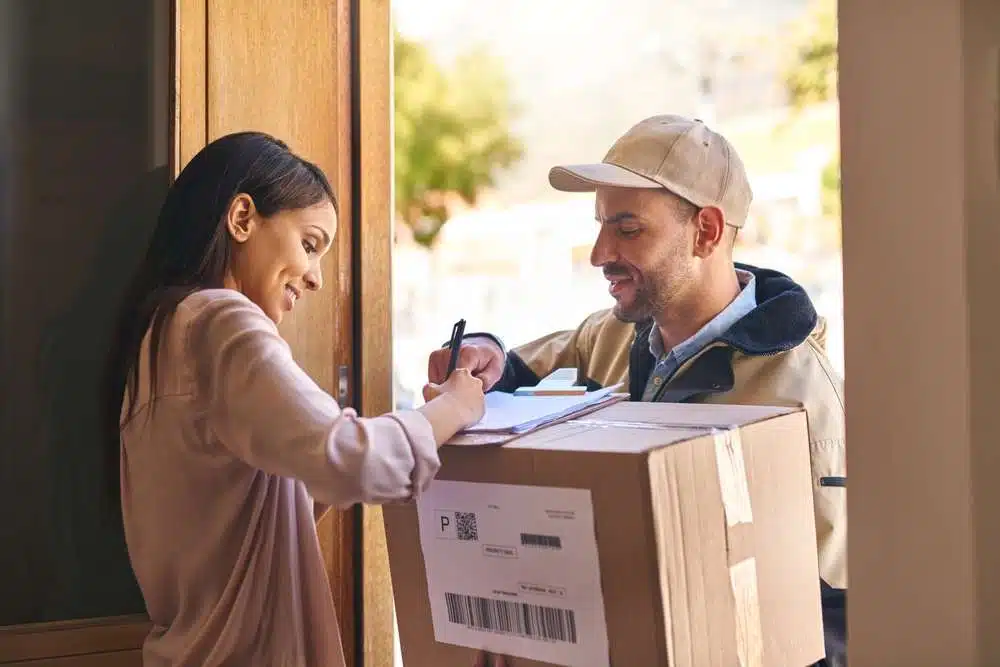


Picture a scenario where your eCommerce brand just secured a major retail partnership, and order volume has tripled overnight. Your current warehouse operation is stretched beyond capacity, and fulfillment delays are starting to impact customer satisfaction. A case like this represents a critical inflection point for growing Los Angeles businesses: the moment when internal logistics capabilities become a constraint on growth rather than a competitive advantage.
Los Angeles serves as a crucial nexus in global commerce, where Pacific trade routes converge with North American distribution networks. The twin ports of Los Angeles and Long Beach handle approximately 40% of all U.S. container imports, making the region America’s premier gateway for Trans-Pacific trade. Understanding the fundamental differences between third-party logistics (3PL) and fourth-party logistics (4PL) providers has become essential for companies navigating this complex market, especially as delivery expectations continue to intensify.
Examining the distinct characteristics, benefits, and applications of each model to help business leaders make informed decisions about their logistics strategy. A solid logistics model is vital in one of the world’s most demanding markets.
What Is a 3PL?
A third-party logistics provider functions as an operational extension of your business, managing the physical aspects of order fulfillment and distribution. These companies specialize in executing logistics operations with precision and efficiency, enabling businesses to focus on core competencies while maintaining the fast, accurate, and reliable service that modern consumers demand.
For local success, 3PL companies in Los Angeles typically offer comprehensive services, including:
- Warehousing in strategically located, climate-controlled facilities with advanced security
- Inventory management with real-time tracking and automated replenishment alerts
- Order fulfillment including pick, pack, and quality control processes
- Transportation management leveraging relationships with USPS, UPS, FedEx, and regional carriers
- Returns processing and reverse logistics that protect brand reputation
- Technology integration with popular eCommerce brands
The value proposition of 3PL providers extends beyond simple outsourcing. These organizations invest heavily in operational excellence, employing logistics professionals who understand that in the fashion and beauty sectors, presentation matters as much as punctuality. Their expertise translates into optimized warehouse layouts, refined packing processes that protect delicate items, and volume-based shipping rates that typically offer significant savings compared to individual business rates.
For businesses experiencing rapid growth or seasonal fluctuations, 3PL partnerships provide scalability without the capital investment required for warehouse expansion or proprietary technology infrastructure. Modern 3PLs also emphasize automation technologies that improve accuracy while reducing costs.
What Is a 4PL?
A Fourth-Party Logistics provider operates at a strategic level, serving as an architect and coordinator of comprehensive supply chain solutions. Rather than executing physical logistics operations, 4PLs design and manage complex networks that may involve multiple 3PL providers, carriers, and technology platforms across global markets.
The 4PL model emerged in response to increasingly complex global supply chains that require coordination across multiple stakeholders and geographies. These providers typically offer:
- Supply chain design and network optimization using advanced analytics
- Vendor management across multiple 3PL and carrier relationships globally
- Technology integration creating unified visibility across disparate systems
- Performance analytics and continuous improvement programs
- Risk management and contingency planning for supply chain disruptions
- Strategic consulting on market entry and supply chain transformation
Consider, for example, a consumer electronics company that manufactures in Asia, stores inventory in multiple U.S. regions, and distributes through major retailers and their own DTC channel. A 4PL would orchestrate this entire network, balancing inventory levels, coordinating transportation modes, and providing executive-level visibility into performance metrics.
Key Differences Between 3PL and 4PL
Understanding the operational and strategic differences between these models proves crucial for selecting the appropriate partner, especially in Los Angeles where industrial real estate remains highly competitive:
Comprehensive Comparison
Below shows a detailed comparison between the two models for evaluation criteria:
| Evaluation Criteria | 3PL Model | 4PL Model |
| Core Function | Executes logistics operations | Designs and manages supply chain strategy |
| Asset Investment | Owns/operates warehouses and equipment | Primarily non-asset based |
| Client Interface | Direct operational partnership | Strategic advisory relationship |
| Technology Focus | Proprietary WMS and order management | Supply chain visibility platforms |
| Pricing Structure | Activity-based (per order + storage) | Management fee plus pass-through costs |
| Ideal Client Size | Small to middle-market | Large-scale |
| Geographic Scope | Regional to national coverage | Global network orchestration |
| Implementation | Faster onboarding | Longer strategic planning |
| Brand Protection | Direct control over packaging/experience | 4PLs have less direct control over packaging CX unless intentionally involved in these strategies |
Operational Control
The degree of operational control is an important factor for determining the right fulfillment model, especially in fast-paced industries like beauty and fashion.
3PL Model: Provides direct operational control with immediate responsiveness to changing requirements. When a beauty brand needs to add a sample to orders during a social media campaign, or a fashion retailer requires special gift wrapping for holiday orders, communication flows directly to the fulfillment team. This immediacy proves invaluable in trend-driven markets.
4PL Model: Operates through a management layer coordinating multiple service providers. While reducing operational burden, this structure can introduce complexity when rapid changes are needed. Rush orders or special requests might require multiple approvals that don’t align with fast-paced market demands.
Technology and Data Management
Technology capabilities differ significantly between models, impacting the speed and application of operational data.
3PL Model: At Boxzooka, we invest in proprietary warehouse management systems offering real-time inventory visibility, predictive analytics, and mobile dashboards. These platforms integrate seamlessly with eCommerce tools, providing granular data from SKU velocity to carrier performance, enabling data-driven decisions that improve operational efficiency.
4PL Model: Emphasizes enterprise-level analytics aggregating data from multiple sources. While providing strategic insights for executive decisions, these platforms often lack the operational immediacy required for daily fulfillment management in fast-moving consumer goods sectors.
Cost Considerations
The pricing structures of 3PL and 4PL models differ in complexity and alignment with scaling businesses.
3PL Model: Transparent activity-based pricing correlates directly with business growth. Storage fees, pick-and-pack charges, and shipping costs scale predictably with volume. This transparency enables accurate unit economics crucial for maintaining healthy margins in competitive markets.
4PL Model: Adds management fees typically ranging from 10-20% above underlying service costs. While promising savings through network optimization, these benefits generally require significant scale to offset the additional management layer costs.
Which Is Right for Your Los Angeles Business?
The Los Angeles market presents unique logistics considerations. As one of the nation’s most congested metro areas, strategic warehouse placement and efficient route planning become critical for meeting delivery expectations — especially concerning last-mile delivery. The region’s diverse consumer base expects rapid fulfillment while demanding sustainable practices increasingly important to California consumers.
3PL Model Indicators
Your business aligns with the 3PL model if these characteristics apply to you:
- Your primary channel focuses on DTC, or major online retailers and eCommerce platforms.
- Your monthly volume ranges from hundreds to tens of thousands of orders.
- Your product categories include fashion, beauty, or lifestyle items requiring careful handling.
- The business’s growth trajectory demands flexibility for promotions and seasonal peaks.
- Operational needs require customization like kitting, gift messages, or special packaging.
- Geographic focus primarily serves North American markets with fast shipping expectations.
4PL Model Indicators
Consider the 4PL approach if your organization exhibits these traits:
- The supply chain spans multiple continents with varying regulatory requirements.
- Your channel complexity includes wholesale, retail, marketplace, and DTC operations.
- Your existing infrastructure involves managing three or more logistics providers.
- The annual logistics spend exceeds $10 million across all channels.
- Strategic initiatives prioritize supply chain transformation over operational excellence.
- Resource availability allows you to delegate the entire supply chain strategy.
Making Your Logistics Decision
The distinction between 3PL and 4PL providers extends beyond operational differences to fundamental questions about control, strategy, and growth. Los Angeles businesses must evaluate not only current needs but also the flexibility to capture unexpected opportunities, whether responding to viral social media moments or seasonal demand spikes.
For organizations prioritizing customer experience, operational flexibility, and direct control over brand presentation, the 3PL model offers compelling advantages. These providers combine professional expertise with the responsiveness that modern commerce demands, enabling businesses to scale efficiently while maintaining service excellence that builds customer loyalty.
Strategic Implementation for LA Success
Los Angeles businesses face unique challenges requiring specialized solutions. The region’s position as an entertainment and fashion capital creates demand for high-touch fulfillment that protects brand image. Environmental consciousness among California consumers makes sustainable packaging and responsible logistics practices increasingly important differentiators.
At Boxzooka, we understand these challenges intimately. Our proprietary platform provides the transparency brands need while maintaining flexibility to scale. We offer strategic coverage that enables efficient nationwide distribution. Our focus on fashion, beauty, and lifestyle brands, combined with our values emphasizing accountability and servanthood, ensures we understand that fulfillment extends beyond moving boxes to delivering exceptional customer experiences.
We’ve built our 3PL services around the principle that your success is our success, and our fast onboarding process means you can start shipping within weeks, not months. Our technology gives you complete visibility into your inventory and orders, while our team becomes an extension of yours, dedicated to protecting your brand with every shipment.
Elevate Your Logistics Operations With Boxzooka
In a market where competition ranges from local boutiques to global corporations, choosing the right logistics partner becomes a strategic differentiator. The best choice empowers you to compete on customer experience rather than just price, transforming fulfillment from a necessary cost into a competitive advantage that drives growth.
Ready to elevate your logistics operations? Boxzooka’s 3PL services and 3PL technologies equip your logistical growth. Contact us to discover how our technology-driven 3PL services can accelerate your business growth while delivering the exceptional experiences your customers deserve. You can also request a quote and learn more about how our fulfillment services help brands thrive in today’s competitive landscape.