The Fashion Returns Playbook: How a 3PL Handles Inspection, Restocking and Exchanges

Share:
-

-


Key Takeaways
- Fashion returns need their own workflow: every garment has to be received, inspected and routed before it can sell again, and each day it sits in a bin is lost sell-through.
- U.S. retailers expected $849.9 billion in returns in 2025, about 15.8% of annual sales and 19.3% of online sales, according to NRF and Happy Returns.
- Inspection tells the warehouse whether to restock, refurbish, route to a resale partner or recycle each returned unit.
- Exchange-first return flows keep revenue with the brand by offering a different size or color before a refund.
- Reason codes, photos and unit-level traceability turn returns into product data that shows where sizing, fit and quality problems start.
- The fastest way to compare 3PLs on returns is to ask how quickly a return reaches sellable stock and what you can see along the way.
Returns are not the end of a sale. For a fashion brand, they are the middle of one.
Think about this. NRF and Happy Returns estimated that U.S. shoppers would send back about $849.9 billion in merchandise in 2025, or 15.8% of annual retail sales. Online sales run hotter, with retailers estimating that 19.3% of online sales would come back. Apparel sits at the heavy end of that range because shoppers cannot try anything on before they buy, and apparel retailers can see returns above 20% of outbound order volume, as we covered in our look at streamlining the returns process.
That math changes how you should think about your 3PL. Outbound speed gets most of the attention, but the brands that protect their margins are the ones that get a returned jacket back on the shelf, or into the right resale channel, before the season moves on.
This playbook walks through what happens to a return inside a warehouse, step by step, and gives you the questions to ask a partner before you sign.
Why Fashion Returns Are a Different Problem
Returns look simple from the outside: a box comes back, a refund goes out. In fashion, four things make the work harder than it looks.
- Fit drives volume. Shoppers bracket, ordering two or three sizes and returning the ones that miss. Most of those returns are good
product that needs a fast path back to stock. - The season sets the clock. A coat that returns in October can sell again within days. The same coat in March may wait a year, so timing decides whether a return recovers full price or ends up marked down.
- SKU depth multiplies the risk. Every size and color is its own SKU, and a unit that lands in the wrong bin becomes a phantom stockout. Our guide to managing seasonal collections and deep SKU counts covers why that discipline starts at receiving.
- Condition varies unit by unit. Tags go missing, garments arrive wrinkled and some items show signs of wear. NRF and Happy Returns found that 9% of all returns are fraudulent, so a trained set of eyes on every unit matters.
At Boxzooka, we build our apparel fulfillment services around that reality. We process returns with the same urgency as outbound orders, because a return waiting in a bin is inventory you cannot sell.
The Reverse Logistics Process, Step by Step
Reverse logistics is the movement of goods from the customer back to the brand, plus every decision about what happens next. At Boxzooka, that flow runs through our returns management system (RMS), part of the Fulfillment Platform as a Service (FPaaS) we built in house. Because the RMS lives in the same WMS that runs outbound, a returned unit that passes inspection can move straight from reverse to forward processing. Here is how the flow works.
Step 1: Receive and identify every return
Every return starts at the dock door. The receiving team scans it into the WMS, where it connects back to the original order. Operators can search by any parameter to find where a return came from, and unit-level serialization gives you traceability from outbound fulfillment through the return.
That visibility matters more than it sounds. Returns that sit unscanned create a backlog, and a backlog hides both cash and product problems.
Step 2: Inspect every garment against your standards
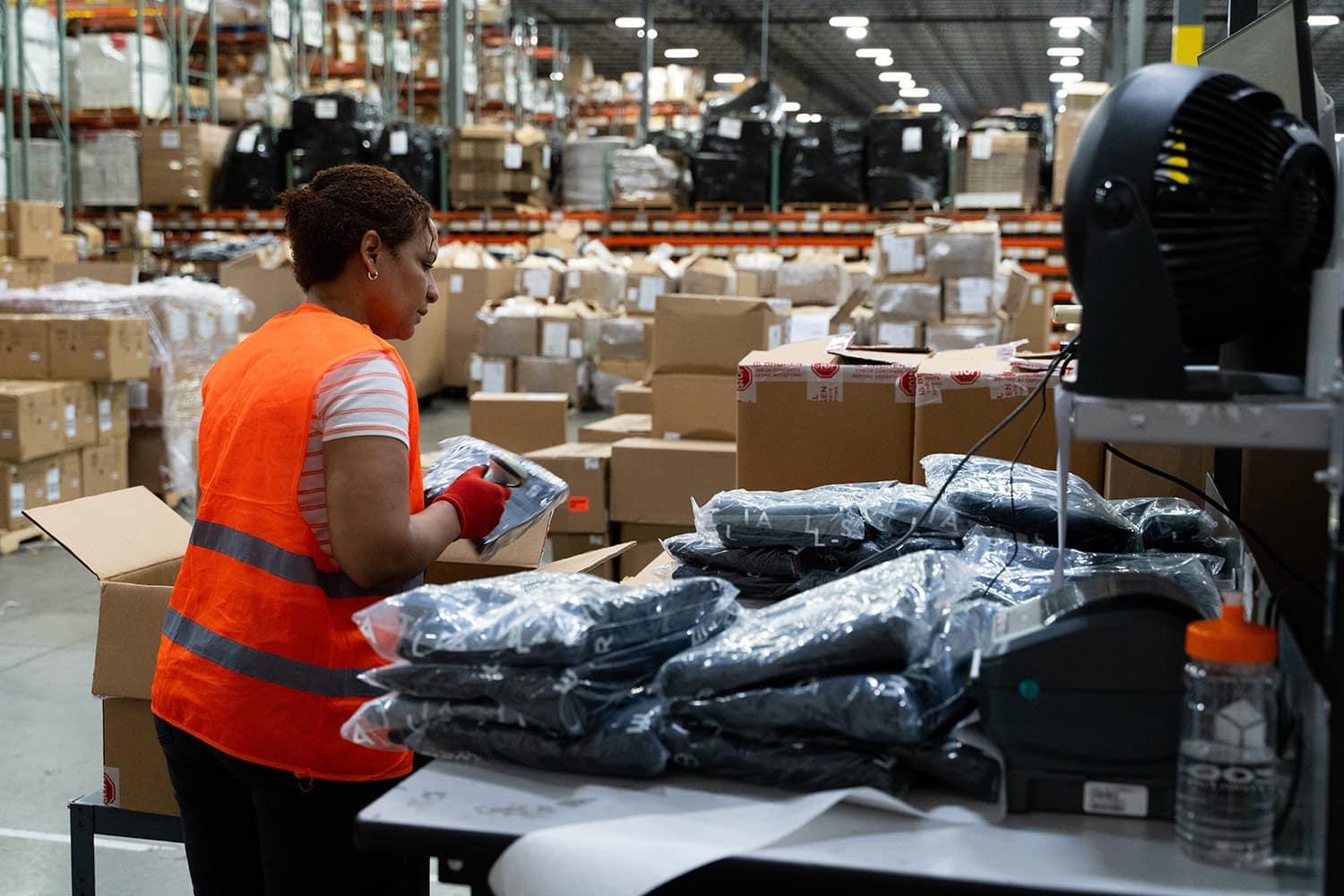
Inspection answers one question: what shape is this unit in? Our team checks each item for damage, wear and missing components, then checks it against the standards we agree on with you. The result points to the right next step for that unit.
We record what we find. The WMS holds thumbnail images, reason codes and sorting data for each return, so you can see what our team saw without sending a single email.
Step 3: Decide where each unit goes
Condition decides disposition. Units in sellable condition get rebagged and restocked. Units that need a light touch go through light refurbishment, when applicable, before they return to stock. For units that cannot go back on the shelf, we can work with repair and resale partners such as Revive, where that program fits your brand, so a damaged piece has a path back to revenue rather than becoming a write-off. Anything that cannot be recovered goes to recycling.
The point is to make that call on facts. A clear result replaces guesswork, and we work with you so the handling fits your product and your margins.
Step 4: Return sellable units to inventory within 48 hours
A return is not an asset until it is sellable stock in the system. We hold ourselves to a 48-hour restocking SLA: once a return arrives at our facility, sellable units are back in available inventory within 48 hours, ready to fill the next order. In fashion, that speed keeps unsold stock from sitting around at the end of a season. It also shortens what we call trunk time, the days a returned item spends out of your sellable count. Reliable tracking is what makes the speed possible, which is why we keep coming back to accurate tracking at every stage.
Exchanges First: Keep the Sale When the Size Is Wrong
Many apparel returns are really fit problems. If the shopper can swap for another size or color before a refund goes out, the brand keeps the revenue. Shoppers want that flexibility. NRF reported that 82% of consumers say free returns matter when they shop online, and 76% are more likely to choose a return option with an instant refund or exchange.
Exchange-first portals work by letting the shopper pick a replacement while the original item travels back. Refunds and store credit become the backup, not the default. Our RMS can integrate with returns partners such as Loop, whose white-labeled portal puts exchanges first, and Happy Returns, where shoppers drop off a return at a Return Bar location with a QR code and no box or label. Which portal and partner programs make sense depends on your brand, return policy and volume, and we scope the right setup with you during onboarding. Either way, the shopper experience stays yours while the warehouse work stays with us.
One practical note: an exchange ships from the same inventory pool as every other order. That makes accurate, real-time stock counts essential, and it is one more reason the returns process and the WMS need to be the same system.
Turn Returns Into Product Data
Every return carries information about your product. The question is whether you can see it.
Our Client Experience Portal includes a Return Analysis page with metrics on returns, top products returned and the customers who return most. Pair that with reason codes and photos from the WMS, and patterns show up quickly. If one SKU draws the same reason code week after week, you are looking at a sizing chart, a fabric or a fit issue your design and merchandising teams can fix.
That is how returns work moves from cost control to growth. Fewer avoidable returns means more full-price sales, and the data comes from work your 3PL is already doing.
Where Returns Processes Break Down
We see the same failure points across the industry. If your current setup shows any of these, it is worth a conversation.
- Backlogs. Returns pile up during peaks and refunds slow down. Shoppers notice, and so do your reviews.
- No condition visibility. You find out what came back only when the credit memo arrives.
- Wrong-bin restocks. Units go back under the wrong SKU, and the count drifts from reality.
- No reason data. The same fit problem repeats because nobody sees it.
- Handoffs between vendors. Portal, carrier, warehouse and storefront all hold part of the story, and none of them hold all of it.
Location can add to the strain. Transit time and cost depend on where the return starts, which is why we wrote about how Philadelphia-based brands should evaluate a 3PL for returns. The same principles carry beyond fashion, too. Our beauty product returns guide covers restock eligibility and disposal for products where formulas and packaging add another layer.
Plan for the January Wave Now
Retailers expect 17% of holiday sales to be returned, and the bulk of those returns arrive after the gifts are opened. In the same NRF and Happy Returns research, 49% of retailers said they plan to lean more on third-party logistics partners to manage holiday returns. With the peak season weeks away, we have a window to act.
If you handle returns in house today, the numbers are worth a hard look. Our post on the advantages of outsourcing returns to a fulfillment center covers when the switch pays off. Whichever route you choose, a few steps help:
- Share your holiday sales forecast so your 3PL can staff for the return surge.
- Agree on inspection standards and handling for damaged units before volume hits, so disposition decisions follow your margins.
- Confirm how exchanges, refunds and restocks reach your storefront and ERP.
- Set a target for how quickly returns reach sellable stock, and ask for a report against it.
Six Questions to Ask a 3PL About Returns
A demo can make any returns process look smooth. These questions get past the demo:
- How quickly does a return reach sellable stock, and is that backed by an SLA you report against?
- How do you inspect returned units, and can we shape the standards?
- What will I see in the portal: photos, reason codes, condition, trends?
- Which returns portals, storefronts and ERPs do you connect to?
- What happens to damaged or unsellable units?
- How do you staff and plan for the post-holiday spike?
Ask for specifics, and do not accept a generic answer to a specific question. When Boxzooka commissioned an independent assessment of our WMS in late 2024, West Monroe benchmarked it against six leading platforms and named returns management among its standout areas. You can read the full story in our CEO’s post on putting our technology under the microscope. The assessment reflects conditions at that time and is one part of the answer, not the whole answer, so we encourage you to ask us the same hard questions.
Let’s Make Returns Work for Your Brand
Returns are a fact of fashion eCommerce, and the right process turns them into recovered revenue and better product decisions. Our team would be glad to walk you through our RMS and the apparel returns flow, from receiving to restock within 48 hours. Explore our apparel fulfillment services, then reach out today and let’s get started. Don’t let returns box you in.
Frequently Asked Questions About Fashion Returns
What is reverse logistics in eCommerce?
Reverse logistics is the process of moving products from the customer back to the brand and deciding what happens next. For an apparel brand, that usually means receiving, inspection, restocking, light refurbishment, resale or recycling.
How does a 3PL process a returned garment?
A 3PL receives the return into its WMS, inspects the item, checks its condition, then routes it to restock, refurbishment, resale or recycling. Sellable units return to available inventory so they can fill new orders.
What is the difference between returns management and reverse logistics?
Returns management covers the return request, the policy, the portal and the refund or exchange. Reverse logistics covers the physical movement and processing of the goods. Strong brands connect the two, so the shopper experience and the warehouse work run on the same data.
Share:

Related Posts
How to Choose an Apparel Fulfillment Company: 12 Questions Fashion Brands Should Ask Before Signing
The right apparel fulfillment company is the one that can show you, in specifics, how it handles your garments, your returns, and your launch calendar. Plenty of apparel fulfillment companies say they understand fashion. Fewer can walk you through how a sample order moves from the receiving dock to your customer’s door. This guide gives you 12 questions to ask every apparel 3PL on your shortlist, plus a simple scoring method to compare their answers.
How to Manage High SKU Counts Across Seasonal Collections Without Killing Your Accuracy Rate
For apparel brands, a new season can mean a new set of problems. Dozens, and sometimes hundreds, of size-color SKU combinations drop at once, and the pressure to ship accurately from day one is immediate. Getting this wrong costs you more than a bad pick rate. It costs you customer trust and diminished brand sentiment.
Custom Packaging and Kitting Services: A Guide for eCommerce Brands
This guide breaks down what kitting and custom packaging actually involve, where they fit in an eCommerce operation, and how to evaluate a 3PL partner that can handle both.
Top 3PLs in Las Vegas for 2026: 10 Fulfillment Partners Compared
The top 3PLs in the Las Vegas area for 2026 include Boxzooka, ShipMonk, ShipBob, ShipNetwork, Saddle Creek Logistics Services, Buske Logistics, AP Express Logistics, Speed Commerce, TCB Global, and Black Mountain Fulfillment. Each runs a facility in Las Vegas, Henderson, or North Las Vegas, but they serve very different brands, so the right pick depends on your volume, channels, and products.