
How Boxzooka Stood Up a Replatforming Apparel Brand’s Fulfillment Operation in Weeks

Share:
-

-

Key Takeaways
- A fixed deadline tested both the software and the fulfillment partner. Pipe17 and Boxzooka completed the replatform in eight weeks and went live in late March 2026, one day before the hard cutover.
- A customer-specific integration was completed while the fulfillment program was being launched. Pipe17 configured the order layer while Boxzooka connected the Pipe17 workflow into its WMS, onboarding process, client success model, and warehouse operation to support the brand’s specific requirements.
- Testing used the brand’s real workflows. Boxzooka hosted the brand’s team onsite to test hold logic, order mapping, custom marketing inserts, gift messages, and wholesale vendor requirements, implementing solutions and customizations in real time.
- The combined system protects inventory and shipping accuracy. Pipe17 reserves inventory and governs order-release logic; Boxzooka’s WMS adds execution safeguards, including controls that stop wholesale orders from shipping on incorrect customer accounts.
- Operational performance matched the implementation promise. Boxzooka has maintained 100% SLA performance on all outbound orders and inbound POs since day one.
The Brand
The brand is a women’s apparel company known for signature knitwear and a playful, design-forward interpretation of classic American style. The company sells direct to consumers through its own eCommerce channel and operates a significant wholesale business serving department stores, boutiques, and specialty retailers across North America.
The customer experience may feel simple, but the apparel fulfillment operation behind it is not. The brand manages two Shopify stores, several thousand SKUs, shared inventory, seasonal launches, wholesale-specific requirements, gift messaging, order edits, and multiple annual barcode refreshes. Every system and fulfillment workflow must stay aligned so the right product reaches the right customer at the right time.
“We have built connectors to dozens of 3PLs. The typical pattern is that the 3PL treats the integration as someone else’s problem until the connector is done, then discovers the edge cases in production. Boxzooka did the opposite. Their technology and operations teams were in the work from week one, building WMS safeguards, testing real scenarios with the brand’s team onsite, and adapting their system to match the brand’s hold logic and wholesale requirements rather than asking the brand to simplify. That kind of engagement is what makes an eight-week replatform possible. Most 3PLs would have asked for twice the time.”
— Mo Afshar, CEO, Pipe17
The Challenge: Eight Weeks to Replace a Critical Operation
Earlier this year, the brand learned that the 3PL supporting its fulfillment and order operations was shutting down. The deadline was fixed, landing in late March 2026. If the brand was not live on a new technology and fulfillment stack by then, it risked losing the ability to ship orders.
A Full Replatform, Not a Simple System Swap
The brand needed to rebuild a connected operation spanning two independent Shopify stores, complex order-hold rules, shared inventory, wholesale routing, shipping-method logic, returns, order edits, barcode management, and physical fulfillment. The work had to be designed, integrated, tested, and validated in roughly eight weeks.
A Customer-Specific Integration and New Fulfillment Launch at the Same Time
The brand selected Boxzooka as its new fulfillment partner while the clock was already running. While Boxzooka had a connection to Pipe17, this implementation required a customer-specific integration to support the brand’s exact order rules, inventory flows, wholesale requirements, and exception logic.
That work had to happen while the broader launch was already underway. Pipe17 configured the order-operations layer while Boxzooka’s technology, client success, and operations teams prepared the physical operation, received inventory, configured workflows, trained the warehouse team, and validated execution against the brand’s real business scenarios.
Two Shopify Stores, One Physical Inventory Pool
The brand operates separate eCommerce and wholesale Shopify stores, both drawing from the same inventory at the same fulfillment location. Keeping these two channels synchronized required a true ecommerce wholesale integration, not two disconnected feeds. The wholesale store also relies on custom Shopify B2B workflows that do not map neatly to standard connector logic. Any delay or mismatch between systems could create overselling, incorrect account usage, or fulfillment errors.
The Solution: A 3PL Integration Built Around the Brand’s Real Workflows
Pipe17 and Boxzooka divided responsibility at the right layer while operating as one implementation team. Pipe17 became the order-operations layer for orders, reservations, fulfillment requests, and automation logic. Boxzooka’s WMS became the system of physical execution, applying those instructions to live inventory, enforcing warehouse-level controls, and returning status and inventory information upstream.
The success of the cutover depended on more than connecting APIs. Pipe17, Boxzooka, and the brand worked through configuration, testing, exception handling, and physical execution in parallel so the digital workflow and the warehouse process were ready together.
Testing Real Business Workflows Before Go-Live
Boxzooka hosted the brand’s team onsite for hands-on testing of the workflows that mattered most: order holds and releases, order mapping, custom marketing inserts, gift messages, and the specific requirements of the brand’s wholesale vendor accounts. The teams tested actual business scenarios against the live operating model rather than relying only on diagrams, sandbox assumptions, or generic fulfillment logic.
That onsite work reflected Boxzooka’s role as an extension of the brand. Every detail had a customer-facing implication, from whether the right insert landed in the right package to whether a wholesale order shipped against the correct account. When issues surfaced, Boxzooka’s technology, client success, and operations teams implemented solutions and customizations in real time.
The brand had planned a four-day onsite visit but completed the work in three days because the team was confident in the system, the onboarding process, and the operational execution.
Inventory Reserved as Soon as an Order Arrives
The brand carries shallow inventory across several thousand SKUs. Pipe17 reserves inventory when an order is ingested, not only when it is released to the warehouse, and its virtual inventory reservation functionality updates availability across both Shopify stores. Boxzooka’s WMS executes against the same inventory picture, aligning what shoppers can buy with what the warehouse can physically pick and ship.
Order-Hold Logic That Reflects the Business
Pipe17 automated the brand’s detailed order-hold framework, including:
- Wholesale orders held for up to 12 months using a dedicated wholesale hold tag, then released when the tag is removed.
- A one-hour default hold for ecommerce orders so customer service can make edits, with a rush tag for immediate release.
- Two-week holds for orders with medium- or high-fraud warnings, including review-required fallbacks.
- Two-week holds for pending or authorized payments, with automatic release when payment clears.
Warehouse-Level Safeguards That Prevent Costly Errors
Boxzooka added WMS logic to prevent wholesale orders from shipping on the wrong customer account. Previously, the brand could be left absorbing the cost when account information was incorrect. The new workflow flags and holds the order until the correct shipping-account information is confirmed, preventing the shipment from leaving the building with the wrong billing instructions.
Automation for Shipping, Gift Messages, Barcodes, and Order Edits
Pipe17 applies shipping-method rules for PO Boxes, military addresses, U.S. territories, Alaska, and Hawaii before the fulfillment request reaches Boxzooka. Gift messages are transferred into fields visible to the warehouse team. Seasonal barcode updates can coexist with prior UPCs without remastering the full catalog. When customer service removes an item from a Shopify order, the change flows through Pipe17 so Boxzooka does not pick an item the customer no longer wants.
“A launch like this is not just an integration project or an operations project. It takes technology, onboarding, client success, and warehouse execution all moving together. For this brand, our job was to understand its real workflows, connect Pipe17’s order logic into the Boxzooka system, validate the exceptions before go-live, and make sure the customer experience held up from day one. That is what we mean when we say we operate as an extension of the brands we serve.”
— Nick Pellegrino, CEO, President, & COO, Boxzooka
The Results: 100% SLA Performance From a Seamless Cutover
Live One Day Before the Deadline
The brand went live in late March 2026, one day before its previous 3PL’s shutdown deadline. The transition was completed without missed shipments, oversold inventory across the two Shopify stores, or customer-facing disruption during cutover week.
Meeting the deadline required both technology readiness and physical readiness. Pipe17 completed the order-orchestration layer and connector work while Boxzooka completed WMS configuration, onsite testing, inventory transition, warehouse preparation, and live fulfillment execution on the same compressed schedule.
100% SLA Performance Since Day One
Since the cutover, Boxzooka has met 100% of its service-level commitments for both outbound orders and inbound purchase orders. The result reflects the depth of testing before launch and the ability of Boxzooka’s technology and operations teams to turn complex business rules into repeatable warehouse execution.
Two Stores Kept Aligned Within Minutes
Inventory updates flow from Boxzooka to Pipe17 and then to each Shopify store, while order reservations occur as soon as orders are created. The eCommerce and wholesale stores remain aligned even though they operate as separate integrations against one shared inventory pool.
Operations Can Adapt Without Rebuilding the Stack
The brand’s operations team can adjust order-hold rules, fraud logic, shipping overrides, and payment workflows in Pipe17 without relying on engineering. When a physical workflow requires a change, Boxzooka’s flexible WMS and onsite teams can adapt the execution layer without a lengthy reimplementation.
Lessons for Brands Facing a Hard Replatform
- The order platform and fulfillment partner must be ready together. A connector alone does not ship an order. The software, WMS, inventory, facility, people, and exception workflows all have to be validated against the same deadline.
- Test actual business scenarios, not just happy paths. The brand’s onsite testing covered the exceptions that create real cost: long-term holds, account mapping, inserts, gift messages, vendor requirements, and order edits.
- Codify business rules, then enforce them at the warehouse level. Pipe17 governs when and how orders are released. Boxzooka adds the execution controls that ensure those instructions are followed correctly before a shipment leaves the building.
- Choose a fulfillment partner with technology flexibility, onboarding discipline, and brand ownership. The eight-week cutover required a partner willing to connect systems, test customer-specific workflows, customize the WMS, receive inventory, support the brand onsite, and launch physical operations in parallel.
- Judge the implementation by ongoing performance. The strongest proof is not the go-live date alone. It is the 100% SLA performance Boxzooka has maintained across outbound orders and inbound POs since launch.
About the Brand
This case study reflects a real Boxzooka client engagement. At the client’s request, the brand is not identified by name; general industry and business details have been adjusted to protect its identity while preserving the accuracy of the story.
About Boxzooka
Boxzooka is a technology-driven fulfillment partner for eCommerce and omnichannel brands with complex operational requirements. Its flexible, integration-ready WMS and high-touch implementation model help brands launch quickly, fulfill accurately, and scale without sacrificing service. Reach out to us to learn more.

About Pipe17
Pipe17 is an AI-native order operations platform that unifies orders, inventory, products, and fulfillments across commerce channels, marketplaces, ERPs, and fulfillment partners. Pipe17 helps brands and 3PLs reduce operational complexity, accelerate time to market, and scale profitably. Learn more at pipe17.com.

Frequently Asked Questions
How long does it typically take to switch 3PL providers?
A standard 3PL onboarding runs eight to twelve weeks when timelines allow for phased testing. A forced replatform, like the one in this case study, compresses that same scope into a fixed deadline, which is why integration readiness and onsite testing before go-live matter more than the calendar.
What does a 3PL integration actually involve?
A 3PL integration connects a brand’s order and inventory systems to the fulfillment partner’s WMS so orders, holds, and stock levels stay accurate across every sales channel. It typically includes API or middleware setup, WMS integration and configuration, workflow testing against real order scenarios, and warehouse staff training before any orders go live.
Can a Shopify B2B store and a standard Shopify store share one 3PL’s inventory?
Yes, with the right integration layer. A Shopify B2B integration built for shared inventory reserves stock the moment an order is created, not just when it is released to the warehouse, so both stores see accurate availability in real time and neither channel oversells.
What should a brand do if its current 3PL announces it is shutting down?
Move quickly to confirm the shutdown date, then start onboarding a new 3PL and order platform in parallel rather than sequentially. Prioritize a partner that can begin WMS integration and warehouse preparation before every system connection is finalized, since waiting for a perfect integration before starting physical readiness is the most common way brands miss a hard cutover.
What separates a smooth 3PL implementation from a risky one?
The strongest 3PL implementations test actual business rules, not just the happy path. That means validating order holds, account-specific shipping requirements, gift messaging, and exception handling with real data before launch, so the issues that would normally surface in production get caught and fixed during testing instead.
Share:

Related Posts

How to Manage High SKU Counts Across Seasonal Collections Without Killing Your Accuracy Rate
For apparel brands, a new season can mean a new set of problems. Dozens, and sometimes hundreds, of size-color SKU combinations drop at once, and the pressure to ship accurately from day one is immediate. Getting this wrong costs you more than a bad pick rate. It costs you customer trust and diminished brand sentiment.

Why I Put Our 3PL Fulfillment Technology Under the Microscope
Our WMS was rated at or above the level of the leading platforms in the market across the functions that actually run a warehouse: receiving, inventory, order fulfillment, reporting. Three areas stood out specifically: returns management, value-added services, and labor management, the parts of the job that are hardest to fake and easiest to notice when they go wrong.


6 Questions to Ask Before You Trust a 3PL and Their WMS
Most guides to warehouse management systems stop at the definition. That’s useful once. It doesn’t help you in the room when a 3PL is walking you through a demo and you need to know whether what you’re looking at will actually hold up at your order volume. This post covers the exact questions to ask, in order, before you sign with a 3PL.
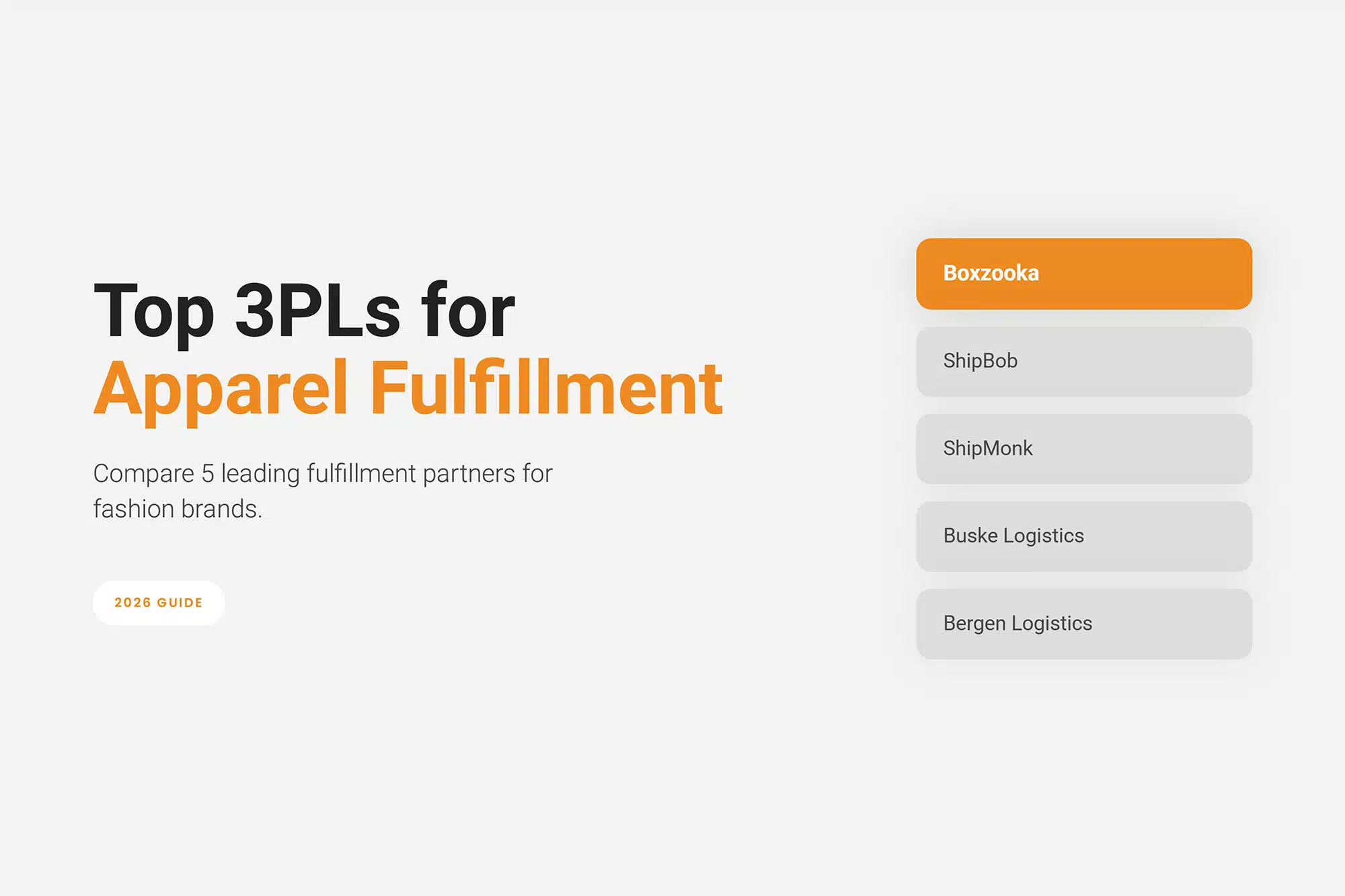
Top 3PLs for Apparel Fulfillment in 2026: How to Choose the Right Partner
The top 3PLs for apparel fulfillment include Boxzooka, ShipBob, ShipMonk, Buske Logistics, and Bergen Logistics, each built around a different combination of catalog complexity, return volume, and channel mix. The right fit for your growing business depends less on brand size and more on how well a provider handles garment-specific requirements like size and color variants, garment-on-hanger storage, and fast return processing.